badge icon

This article was automatically translated from the original Turkish version.

Article

Project Reality (Video Game)

Quote

Project Reality (PR) is a series of military tactical first-person shooter video game modifications centered on modern warfare and combined arms, emphasizing realism and team-based gameplay. The original version of the series, Project Reality: BF2 (PR:BF2), was first released in 2005 as a modification for Battlefield 2 and has since evolved through continuous updates into an independent game.


The game is developed and published by a community-focused team called the Project Reality Team. The project’s core philosophy is to provide players with an intense battlefield experience requiring strategic depth and cooperation. This approach has enabled the mod to transcend its status as merely a “mod” and become a standalone platform and community, laying the foundation for its longevity and influence. Project Reality has left a lasting impact on the tactical shooter genre and has drawn attention for its community-driven development model.


Project Reality: BF2 v1.8 Trailer (Project Reality)

History and Development

Project Reality’s journey originated from a desire to push beyond the boundaries of an existing game and create a new experience.


The Project Reality project was founded in 2004 by Noel Tock (nickname: Requiem). Initially launching as a basic version called Project Reality Mini Mod (PRMM), the project released this first version in July 2005. Within the same year, Eamonn Glass (nickname: eggman51) took over leadership of the project, and under his guidance, the mod’s community and gameplay innovations expanded significantly. This leadership transition and subsequent growth demonstrated the critical role of community management and visionary direction in sustaining and scaling large-scale volunteer projects. Battlefield 2’s expansive maps, vehicle combat capabilities, and existing engine features provided an ideal foundation for such a modification. Project Reality was built upon these foundations with the goal of creating a far deeper and more tactical experience than the base game offered.


The development process was long-lasting; after nearly eight years of work, Project Reality: BF2 v1.0 was released in August 2013. Over the years, the PR team expanded the mod’s scope by adding new maps, weapons, systems, and AI content. The developers also heavily incorporated community feedback; for example, player input was sought during beta testing phases, and community members contributed to the project through artistic and technical efforts such as map design and modeling.
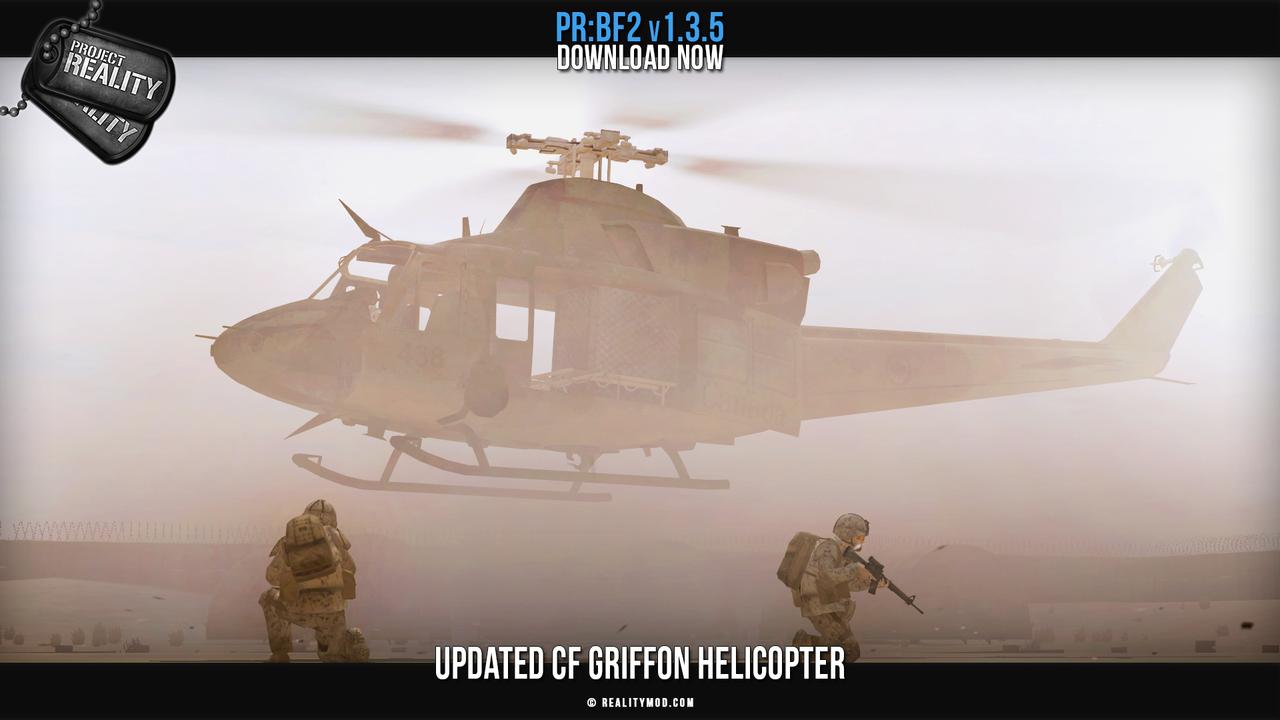

CH-146 Griffon Helicopter (Project Reality)

The transition from dependency on Battlefield 2 to becoming a standalone game marked a pivotal milestone for the project. As official support for Battlefield 2 ended (removed by EA), accessibility issues arose; thus, in June 2015, with the release of PR 1.3, the mod was made fully standalone. This update allowed PR to become a freely downloadable game without requiring the official client. This shift enabled the game to reach a broader audience and stand on its own. Continuous updates and a community-driven development philosophy formed the foundation of this independent version. The transition from a modification to a standalone game represents a level of maturity and self-sufficiency achieved by very few mods.

Gameplay Mechanics

The foundation of Project Reality’s success lies in its gameplay mechanics, which invite players into an experience distinct from conventional shooter games. These mechanics enforce a style of play that is deliberate, team-oriented, and grants players significant influence over shaping the battlefield. The mod’s purpose is defined as “creating a more realistic combat environment compared to standard BF2 and placing greater emphasis on teamwork.”
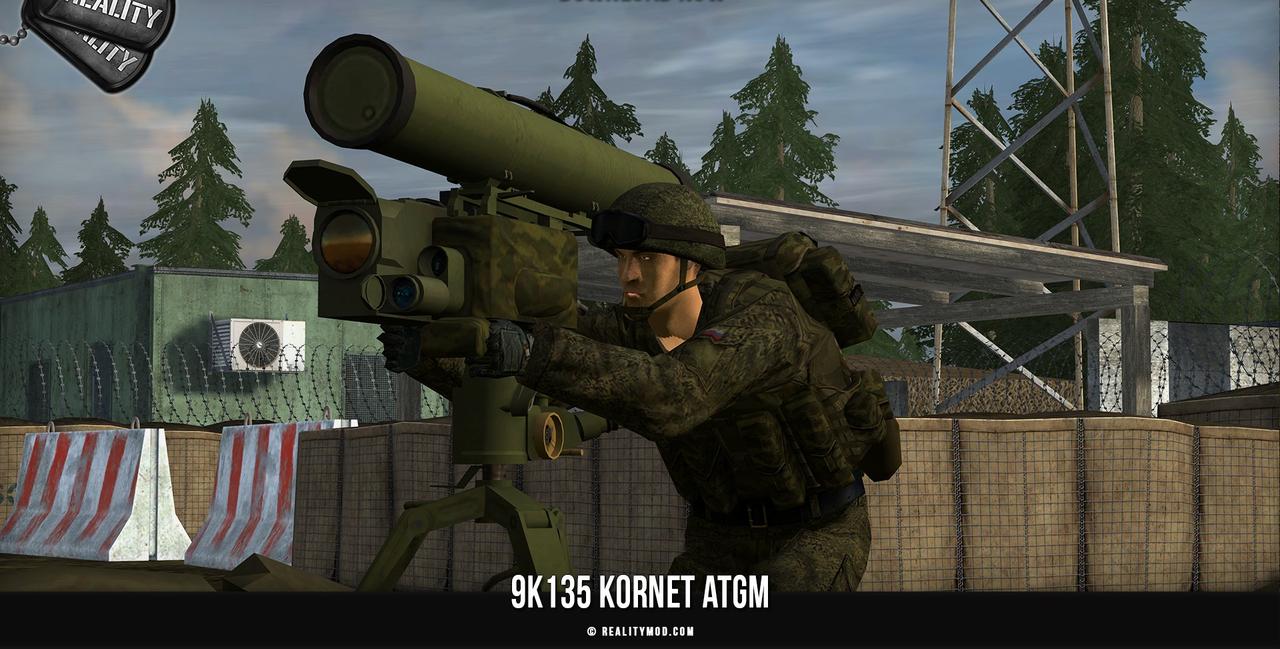

9K135 Kornet Anti-Tank Guided Missile (Project Reality)
  • Emphasis on Realism: Project Reality significantly alters the mechanics of the original Battlefield 2 to deliver a realistic combat experience. Many game elements have been revised to reflect real-world behavior. For example, ballistic modeling has been updated to accurately represent bullet velocity, damage, spread, and drop; vehicle and soldier movement has been made more realistic. Numerous systems, including armor calculations, sound, and field of view, have been overhauled. Heavy vehicles require a crew of driver and gunner. New features include deployable assets, adjustable tank sights, spare iron sights, thermal imaging, laser-guided systems, and suppression effects.


  • Teamplay and Communication: PR:BF2 emphasizes team-based gameplay mechanics. Each team consists of numerous 8–12 member squads, each led by a Squad Leader. Voice communication, organized squad structure, and coordinated efforts are vital to success. Victory depends not on individual skill but on the team’s ability to move as a unit and achieve strategic objectives. This approach fosters strong cooperation and a sense of responsibility among players. Integrated voice communication (VoIP) systems are used in-game. PR Mumble, a specialized voice program, enables communication through different channels such as local proximity, squad radio, and squad leader radio. All squad leaders and commanders can speak on global channels and also communicate directly with specific squad leaders using squad leader numbers. Local voice is audible only to nearby players. New players are encouraged to communicate, announce their status to their squad, and receive assistance from squad leaders. Mumble-related issues are often resolved by closing and reopening the program. Another useful feature is the “mute speakers” option, which temporarily disables all Mumble communication.


  • HUD (Heads-Up Display) Minimalism: Several HUD elements have been minimized to remove excessive on-screen information. Many standard Battlefield 2 HUD elements have been removed, including crosshairs, name tags, hit and kill indicators, health bars, ammo counters, and infantry mini-maps. Health counters are visible only on the map. There are no kill indicators, and scoreboards display delayed points; players must visually confirm when a target has been neutralized. This minimalism allows players to focus on the game and enhances the visibility of realistic graphics.


  • Kit (Class) System: Project Reality features a class system called Kits, allowing players to select specific roles. Kits can be picked up from the ground. Standard kits and alternative (often non-scope) versions exist. The most common kits are selectable from the spawn menu, while specialized kits can be requested from supply crates or specific vehicles. Kits can be dropped and picked up by friendly or enemy players. Holding an enemy kit for more than a few seconds causes the screen to darken and results in the player’s death. There is a cooldown period after requesting a kit. Players not in a squad can typically select only the basic Rifleman kit. The Rifleman kit is unlimited and recommended for beginners, but learning roles such as Medic is also beneficial.


  • Common Kits (Typically in Infantry Squads): Officer (Leader, can establish positions, mark enemies, provide laser designation for CAS), Grenadier (Indirect fire support), Rifleman (Versatile, can resupply ammo, unlimited), Automatic Rifleman (Direct fire support), Breacher (Close-quarters specialist, can use grappling hooks, place C4), Medic (Revive and heal, two per squad), Rifleman AT (Light anti-tank).


  • Specialized Kits (For specific purposes or squad support, limited quantities): Anti-Air (Neutralizes air threats), Anti-Tank (Neutralizes heavy armor), Combat Engineer (Construction and demolition, can place C4 and mines, repair vehicles), Machine Gunner (Heavy direct fire support), Marksman (Medium-range support), Rifleman AP (Can place anti-personnel mines), Sniper (Long-range support), Spotter (Reconnaissance, can use grappling hooks, provide laser designation for CAS). Vehicle-Specific Kits: Crewman (Required to operate heavy ground vehicles), Pilot (Required to fly aircraft, single-parachute kit).


  • Revive and Heal (Medic Kit): The primary purpose of the Medic kit is to revive and heal players while ensuring survival. The Medic’s equipment includes med bags, epinephrine auto-injectors (epipens), smoke grenades, and patches. Downed squad members appear on the map as a red symbol. The Medic must approach using a smoke grenade, lie over the body, and use the epipen. Revived players cannot immediately sprint and have blurred vision. If a player is shot again within two minutes, they enter a “dead dead” state and cannot be revived. The Medic cannot heal themselves; instead, they must use a patch or drop their kit and ask another player to heal them. Players needing healing appear on the map as a red cross. Players can be healed by passing their leg through a wall. Dragging corpses requires stamina. If the epipen fails, attempting to drag the body or knife the kit may succeed.


  • Spawn System: In Project Reality, players cannot spawn directly beside squad leaders or captured flags upon death. Instead, they must use permanent spawn points such as main bases, temporary rally points created by squad leaders, or Forward Operating Bases (FOBs) constructed by players. Rally points can be placed by squad leaders and are exclusive to that squad; they disappear if enemies are nearby. FOBs can be built by squad leaders and are usable by the entire team. This system increases the strategic importance of map control and supply lines.


  • Logistics and Base Construction: After FOBs are established, various defensive assets such as machine gun emplacements, barbed wire, foxholes, and bunkers can be constructed. These structures allow players to directly influence the tactical landscape. FOBs and assets are supported by supply and construction crates delivered via logistics vehicles. The logistics element plays a central role in supplying and maintaining these bases, adding an additional strategic layer to the game. As players control spawn points and positions, they create dynamic secondary objectives. Both teams will seek to disrupt the enemy’s spawn capabilities, defenses, and supply lines.


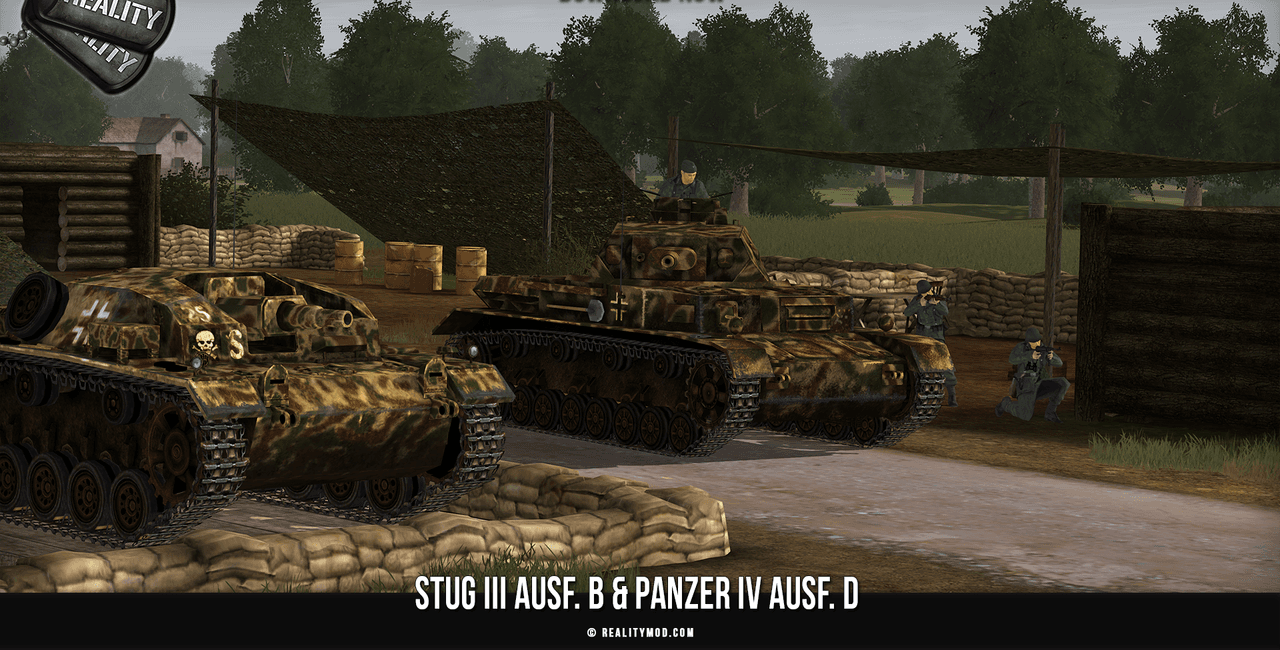
Stug III & Panzer IV (Project Reality)

Collectively, these mechanics slow the pace of the game compared to mainstream shooters, demanding patience, strategic planning, and communication. This niche appeal has cultivated a community that values these elements and views the game as an alternative to faster-paced, skill-centric titles.

Game Modes

Project Reality offers various game modes that encourage different strategic approaches.


  • Advance and Secure (AAS): In this mode, teams attempt to capture predetermined areas (control points or flags) in sequence. This resembles standard BF2 Conquest but increases replayability by randomizing flag positions each round. Teams in AAS have a set number of tickets; player deaths, lost vehicles, and lost flags reduce ticket counts. If the enemy captures all flags, ticket counts continue to decrease until a flag is recaptured. The currently capturable flag is displayed on the map as a blue or orange shield-like icon.


  • Insurgency: Project Reality’s asymmetric warfare mode. In this mode, one side (typically conventional forces, Blue 4) attempts to locate and destroy enemy weapon caches, while the other side (typically irregular forces, OpFor) defends them. Each map contains a set number of caches, but only two cache locations are visible at any time. Blue 4 has a ticket count, while OpFor does not. In return, Blue 4 typically possesses superior firepower, scoped weapons, and armored vehicles. On Blue 4’s map, caches appear as red diamonds, but only approximate locations are shown. On OpFor’s map, caches appear as known (blue diamond) or unknown (purple shield). Known caches are visible to Blue 4; unknown caches are not. Blue 4 accumulates Intel points by eliminating enemies; when sufficient points are reached, an unknown cache becomes known. Killing civilians causes loss of Intel points; civilians are a playable class for OpFor. Caches can be destroyed with C4. OpFor can resupply from caches and, in some factions, request kits. This mode creates a distinct strategic dynamic for insurgents compared to conventional forces, with mechanics such as weapon caches and destructible hideouts.


  • Other Modes: Additional modes include Vehicle Warfare, focused on heavy vehicle combat, and Command and Control (CnC), centered on constructing and defending Forward Operating Bases (FOBs). Skirmish focuses on small-scale infantry combat. The Co-op mode allows players to fight against bots or team up with others against bots, serving as a good practice environment for new players. This variety enhances replayability and caters to different playstyles.

Content

Project Reality: BF2 offers a wide range of factions and map options. The game includes scenarios spanning World War II, the Vietnam War, the Falklands War, and various modern or recent fictional and real conflicts.
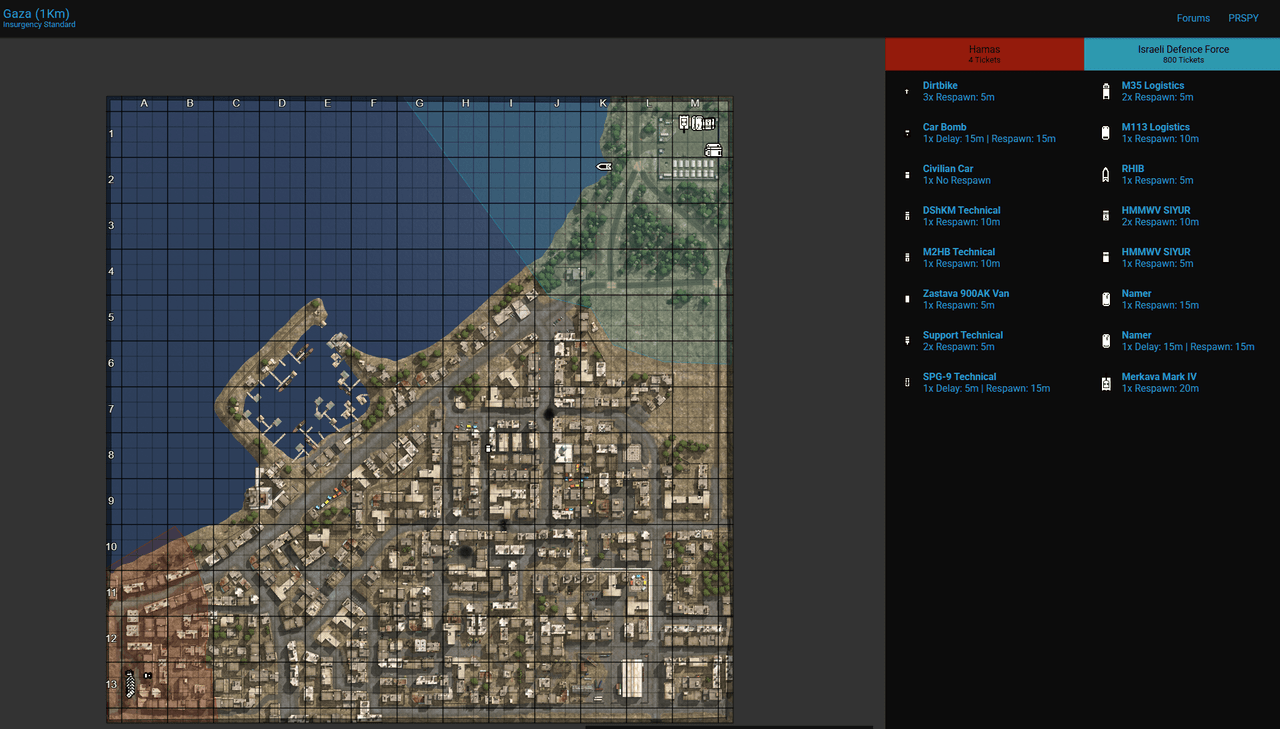

Gaza Map (Project Reality)

Project Reality has over 25 factions and more than 70 maps. Factions are designed based on real-world militaries, enabling asymmetric gameplay; one team may use modern equipment while the other uses older gear.

  • Conventional Forces: British Armed Forces, Canadian Armed Forces, Dutch Armed Forces, French Armed Forces, German Bundeswehr, Israeli Defense Forces, Middle East Coalition (a notable exception with no real-world equivalent), People’s Liberation Army, Russian Armed Forces, United States Army, United States Marine Corps (modern and Vietnam-era),


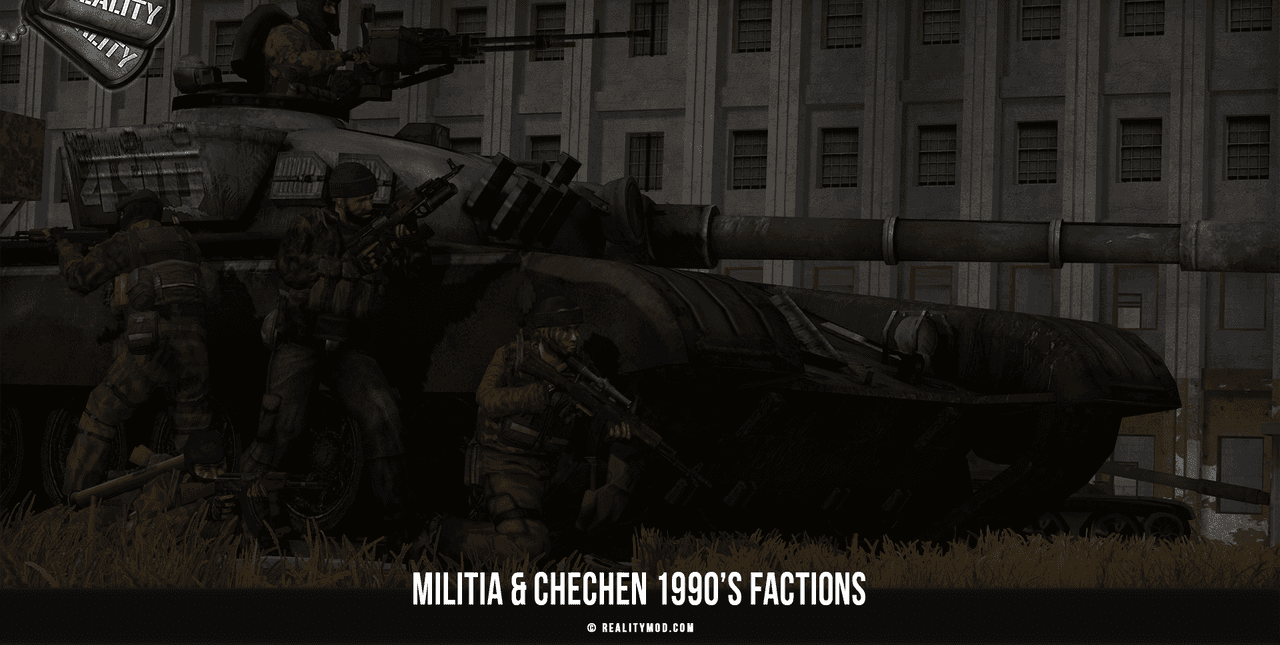
  • Irregular Forces: African Resistance Fighters, Chechen Militias, Hamas, Iraqi Insurgents, Taliban, Syrian Militias.


Chechen Militias - 1990 (Project Reality)

Community-developed factions such as Finnish, Norwegian, and Polish forces are also in development. Maps are typically based on real-world geographic locations and imagery. Vanilla BF2 maps are not preserved in Project Reality. PR maps are significantly larger than their vanilla BF2 counterparts, offering more realistic sightlines and broader battlefields.

Other Project Reality Projects

Following the success of PR:BF2, the Project Reality team has developed projects on other platforms.


  • Project Reality: ARMA: The Project Reality team developed a standalone mod called “Project Reality: ARMA 2” for Arma 2 and Arma 2: Operation Arrowhead. The beta version was released in 2011. Development was later shifted to Arma 3 in 2013 but was suspended in 2015.


  • Project Reality 2: The team also announced “Project Reality 2,” a standalone sequel planned to use the CryEngine 3 game engine. However, development of this project was halted around 2014 and the game was never released.

Awards and Recognition

Project Reality has received widespread acclaim within the modding community and has won numerous awards. These achievements reflect the project’s design philosophy being embraced by a significant segment of the gaming community and demonstrate the demand for hardcore tactical experiences.


  • ModDB Mod of the Year Awards: PR:BF2 has been honored multiple times on the ModDB platform. Most notably, in 2008, it won both the “Mod of the Year” (Player’s Choice) and “Best Multiplayer Mod” (Editor’s Choice) awards. It had previously placed second in the “Mod of the Year” category in earlier years (2006, 2007). Project Reality is also recognized by ModDB as one of “all-time best mods.”


  • Player Base and Impact: According to developers, Project Reality had tens of thousands of active players in the late 2000s and became one of the most-played mods for BF2. By 2009, it had achieved a significant player base and was among the most-played Battlefield 2 modifications. Today, it maintains an active player community, with reports indicating over 1,000 concurrent players in 2024. It is estimated that over 320,000 players have experienced Project Reality in the last four years, with over 80,000 new players joining in 2024 alone.


  • Media Reviews: External media has also praised PR. IGN stated that “all BF2 players should download this mod.” GameSpy declared that “the mother of all realism mods had arrived for BF2.” PC Zone evaluated Project Reality as “not only making virtual warfare more challenging but also adding fantastic new maps, vehicles, and weapons.”

Legacy: The Birth of Squad

One of Project Reality’s most important and enduring legacies is its role in the emergence of the popular tactical shooter game Squad.
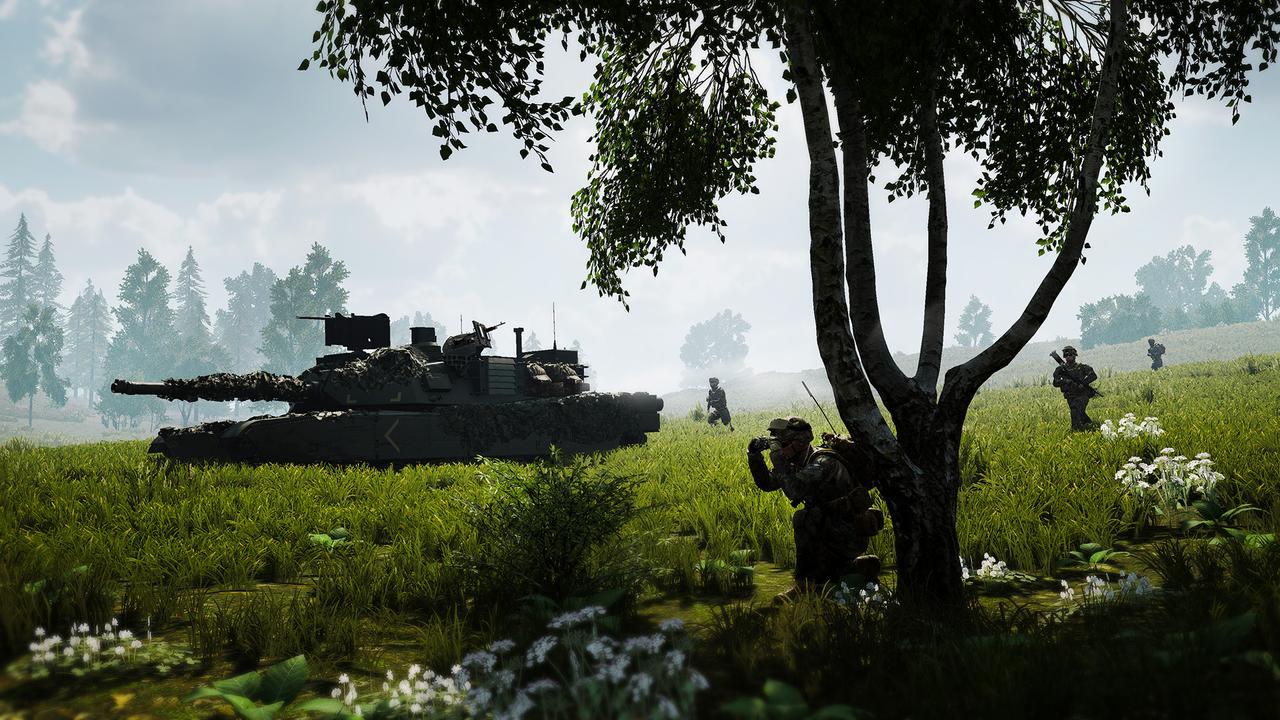

Inspiration and Developer Connections: Squad was inspired by Project Reality’s tactical gameplay and community-driven design. More importantly, the Offworld Industries team that developed Squad includes former and current Project Reality developers. This indicates not just inspiration, but a direct lineage of talent and vision.


Transmission of Core Concepts: Squad has adopted many fundamental gameplay concepts from Project Reality, including Forward Operating Bases (FOBs), rally points, squad-based communication, logistics, and emphasis on teamwork. Offworld Industries has described Squad as “a game based on the beloved mod Project Reality.”


Development Process: Squad was announced in 2014, developed using the Unreal Engine 4, initially funded via Kickstarter, and officially released on 23 September 2020. The funding raised through Kickstarter demonstrated the willingness of Project Reality’s community and its admirers to financially support its successor, proving the strength and loyalty of the player base cultivated by PR. The fact that some features from Project Reality have yet to be implemented in Squad indirectly highlights the depth and breadth achieved by PR during its long development process.


This relationship symbolizes the maturation of the transition from “mod scene to standalone game.” Project Reality proved its concept and built its community; Squad has leveraged this foundation by using modern technology (UE4) and a commercial development model to present a brighter, expanded version of the vision to a wider audience.

Current Status

Project Reality: BF2 remains an actively developed project. The development team continues to release regular updates; for example, in recent years, version 1.8.x updates have introduced new maps and nations. In late 2023, the developers held a Q&A session with community members, answering nearly 200 questions about future plans, demonstrating that the mod is still being updated and actively worked on in collaboration with its community. Additionally, the free and standalone version of Project Reality remains available for download via Steam, where a large player community enables hundreds of players to access the game simultaneously. In conclusion, this project, which evolved from a BF2 mod into an independent game, continues to be updated and sustained by its community as of 2025, with a history spanning over 20 years.

Bibliographies

Moddb. "Player’s Choice – Best Released Mod of 2008." Accessed June 15, 2025.https://www.moddb.com/mods/project-reality/features/players-choice-best-released-mod

Moddb. "Project Reality: BF2 v1.0 Released." Accessed June 15, 2025.https://www.moddb.com/news/project-reality-bf2-v10-released

Reality Mod. "About Project Reality." Accessed June 15, 2025.https://www.realitymod.com/about

Reality Mod. "Features of Project Reality." Accessed June 15, 2025.https://www.realitymod.com/features

Reality Mod. "Game Modes – Project Reality Manual." Accessed June 15, 2025.https://www.realitymod.com/manual/en/game_modes.html

Reality Mod. "History of Project Reality." Accessed June 15, 2025.https://www.realitymod.com/history

Squad. "Infantry Combat Overhaul." Accessed June 15, 2025.https://www.joinsquad.com/archive/infantry-combat-overhaul-10b70

Unreal Engine. "How 50 v 50 shooter Squad is staving off chaos with coordination." Accessed June 15, 2025.https://www.unrealengine.com/es-ES/developer-interviews/how-50-v-50-shooter-squad-is-staving-off-chaos-with-coordination

YouTube. "Project Reality: BF2 v1.8 Trailer." Accessed June 15, 2025.https://www.youtube.com/watch?v=mFEV8PUOfAw

Author Information

Avatar
AuthorMehmet Fatih AkılmaJuly 15, 2026 at 5:41 AM

Discussions

No Discussion Added Yet

Start discussion for "Project Reality (Video Game)" article

View Discussions

Contents

  • History and Development

  • Gameplay Mechanics

  • Game Modes

  • Content

  • Other Project Reality Projects

  • Awards and Recognition

  • Legacy: The Birth of Squad

  • Current Status