


This article was automatically translated from the original Turkish version.

Pratt & Whitney
Type | Aviation and Space | ||||||||
|---|---|---|---|---|---|---|---|---|---|
Establishment | 1925 | ||||||||
Founder | Frederick Rentschler | ||||||||
Products | Aircraft Engines and Gas Turbines | ||||||||
Website | https://www.prattwhitney.com/en | ||||||||
Pratt & Whitney was founded in 1925 in the city of Hartford, Connecticut, by Ohio-born aerospace engineer Frederick B. Rentschler. The company’s founding philosophy was based on the vision of shaping the aerospace industry around the best aircraft engines. Through the development of advanced propulsion technologies and highly reliable engines, Pratt & Whitney has established itself as a leader in the sector. Its products and services span a wide range of applications including military and commercial aviation, helicopters, business jets and general aviation.
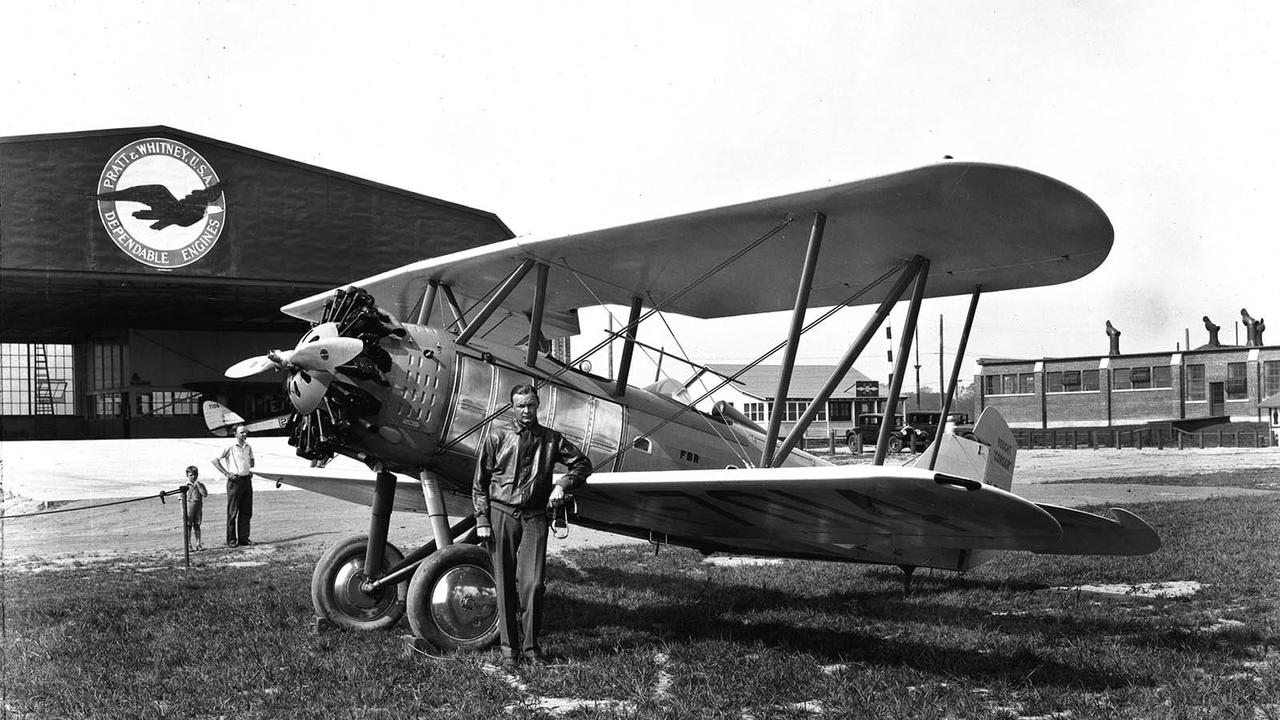
Frederick Rentschler, Kurucu, (Kaynak: Pratt & Whitney)
1920s: In 1925, Pratt & Whitney developed the R-1340 Wasp air-cooled radial engine. This engine transformed both military and commercial aviation with its superior power-to-weight ratio and remains in use in some applications today. In 1928, Pratt & Whitney Canada was established to support operations in Canada. Initially configured as a service center, production of Wasp engines was later moved there.
1940s: During World War II, the company accelerated its research and development in gas turbines and jet propulsion systems to support the Allied air forces. Over 300,000 engines were produced during the war. The wind tunnel, laboratory and engineering center constructed during this period significantly strengthened the company’s technological infrastructure.
1960s: In 1963, the PT6 turboprop engine was launched. This engine provided a powerful alternative to piston engines in the light aircraft segment and became widely adopted in agriculture, general aviation and business jets. In 1966, the JT15D turbofan engine was developed, marking the company’s entry into the business aviation segment.
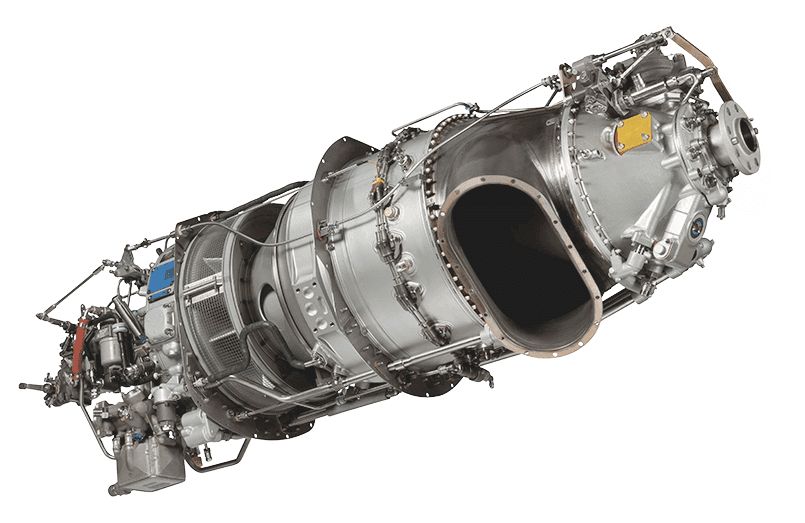
PT6A Turboprop Motor (Kaynak: PRD)
1980s: The use of the PT6A-34AG engine in agricultural aircraft increased productivity by 60 percent. In 1984, the PW100 engine family began powering the regional turboprop aircraft segment and quickly became the preferred choice. In 1989, the PW300 engine family was developed; these engines, designed for medium-sized business jets, stood out for their low fuel consumption and environmentally friendly design.
1990s and 2000s: In 1996, the PW500 engine family was introduced to serve light and medium-sized business jets. In 2000, the PW600 engine family was launched; these compact, fuel-efficient and eco-friendly engines became the preferred choice for new-generation light jets. During this period, the company also advanced customer service and digitalization through initiatives such as the establishment of the P&WC Customer Service Center in Germany (1992), the launch of a digital customer portal (2000), and the acquisition of Altair (2001).
2010 and Beyond: In 2011, the APS5000, developed for the Boeing 787 Dreamliner, entered service as the first fully electric auxiliary power unit (APU) for large commercial aircraft. In 2017, the PT6C-67A engine received type certification from Transport Canada and began operation in commercial tiltrotor aircraft. Also in 2017, the PW800 engine entered service in business jets. In 2019, the PT6 E-Series engine was introduced.
2020s: The company has focused on developing innovative solutions for sustainable aviation. In 2021, in partnership with Collins Aerospace, it developed a hybrid-electric flight demonstrator targeting a 30 percent improvement in fuel efficiency.
Pratt & Whitney has developed a broad range of engine technologies, from axial-flow turbojets and turbofans to turboprops and hybrid-electric flight solutions. The J58 turbojet engine, which enabled the SR-71 Blackbird to reach Mach 3 speeds, marked a turning point in aviation history. The company’s GTF (Geared Turbofan) engines have introduced innovations in fuel efficiency and emissions reduction.
Pratt & Whitney is focused on developing smarter technologies, cleaner fuels and greener operational practices to contribute to the aerospace industry’s goal of achieving net-zero carbon emissions by 2050.
With more than a century of legacy in innovation and reliability, Pratt & Whitney continues to shape the future of aerospace. This journey, initiated by Frederick Rentschler’s vision, now advances as a pioneer in technological progress and sustainability across both commercial and military aviation.
Pratt & Whitney. "Yeniliğin Tarihi." Accessed April 25, 2025.https://innovation.prattwhitney.com/
Pratt & Whitney. “Geleceğe Güç Vermenin 100 Yılı.” Accessed April 25, 2025.https://www.prattwhitney.com/en/our-company/100-years-of-powering-the-future.
Pratt & Whitney. “Hikayemiz.” Accessed April 25, 2025.https://www.prattwhitney.com/en/our-company/our-story.

Pratt & Whitney
Type | Aviation and Space | ||||||||
|---|---|---|---|---|---|---|---|---|---|
Establishment | 1925 | ||||||||
Founder | Frederick Rentschler | ||||||||
Products | Aircraft Engines and Gas Turbines | ||||||||
Website | https://www.prattwhitney.com/en | ||||||||
Historical Development
Technological Innovations and Contributions
Sustainability and Future Vision