


This article was automatically translated from the original Turkish version.
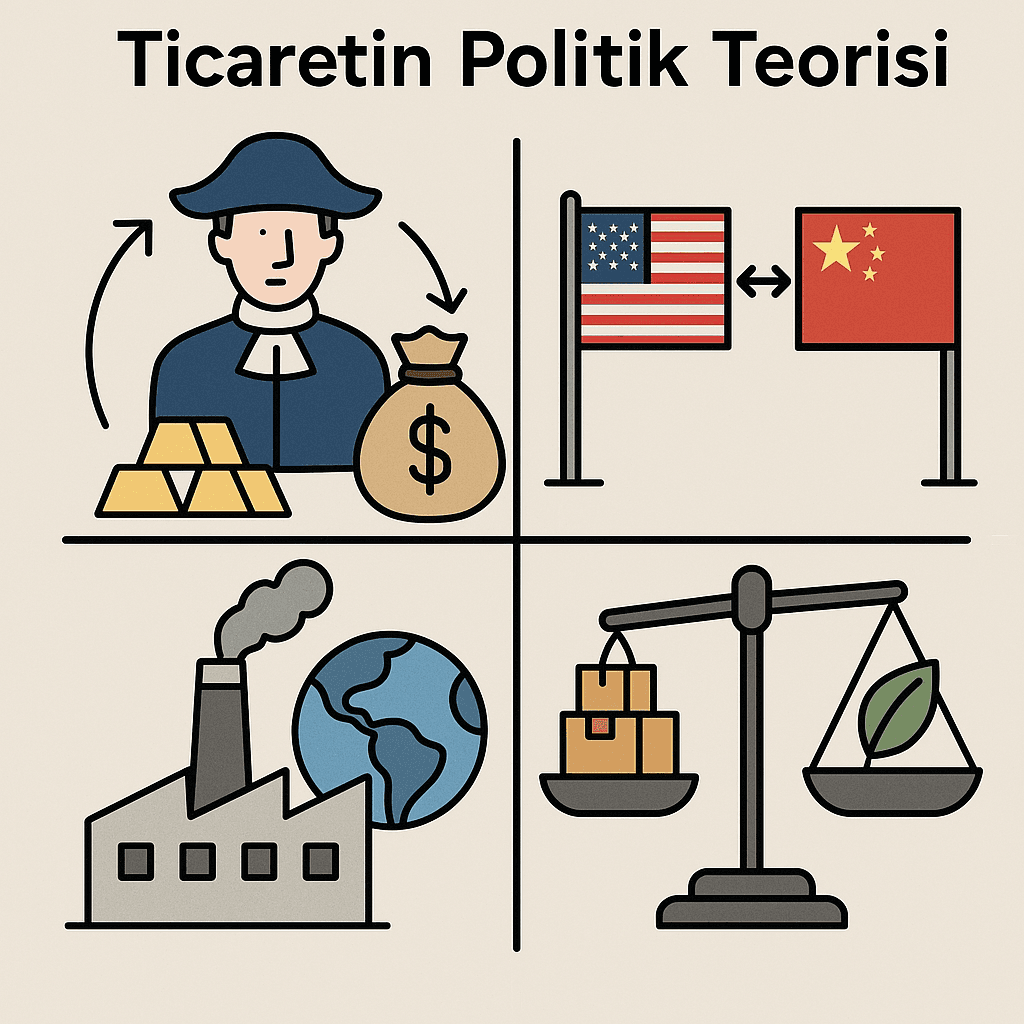
The Political Theory of Trade
Subject | International Trade Policy and Political Economy | ||||||||
|---|---|---|---|---|---|---|---|---|---|
Basic Approaches | Mercantilism and Neo-Mercantilism Classical and Neoclassical Theories Strategic Trade Theory Institutional and Geopolitical Approaches | ||||||||
Representatives | David Ricardo Jagdish Bhagwati Dani Rodrik Paul Krugman Adam Smith | ||||||||
Application Areas | Environmental regulations Trade wars Regional integrations Industrial policies | ||||||||
Current Implications | The European Union's environment-based trade mechanisms Rising protectionism in the United States China's state-supported global strategies | ||||||||
International trade is a complex structure that cannot be explained solely by economic interests and market mechanisms. The political theory of trade is an approach that analyzes how the interests of states institutions and actors are shaped and how trade policies are determined.
Historically, trade policies have passed through different stages from mercantilism to the concept of free trade and then to today’s strategic trade policies. States have used trade not only to increase economic welfare but also as a power instrument and have shaped their trade policies accordingly. Competitive advantages, geopolitical position, international institutions and economic blocs are among the key factors that determine the political dimension of trade.
Many different theoretical frameworks have been developed to explain the political dimension of trade. These frameworks provide an important basis for understanding why states support free trade or adopt protectionist policies.
The mercantilist understanding dominant in the 17th and 18th centuries argued that trade is a zero-sum game in which one country’s gain is another’s loss. According to this theory:
Today a modern version of mercantilism known as neo-mercantilism is observed. Major economies such as the United States and the European Union are developing state-supported strategic trade policies to protect their industries.
Developed under the leadership of Adam Smith and David Ricardo, classical trade theories argue that free trade benefits all parties involved.
According to these theories free trade offers consumers lower prices increases market efficiency and optimizes global production. However it is also acknowledged that free trade does not always provide equal benefits and some sectors may suffer losses.
From the 1980s onward Paul Krugman and other new trade theorists emphasized the importance of strategic trade policies. The New Trade Theory and Strategic Trade Policy include the following elements:
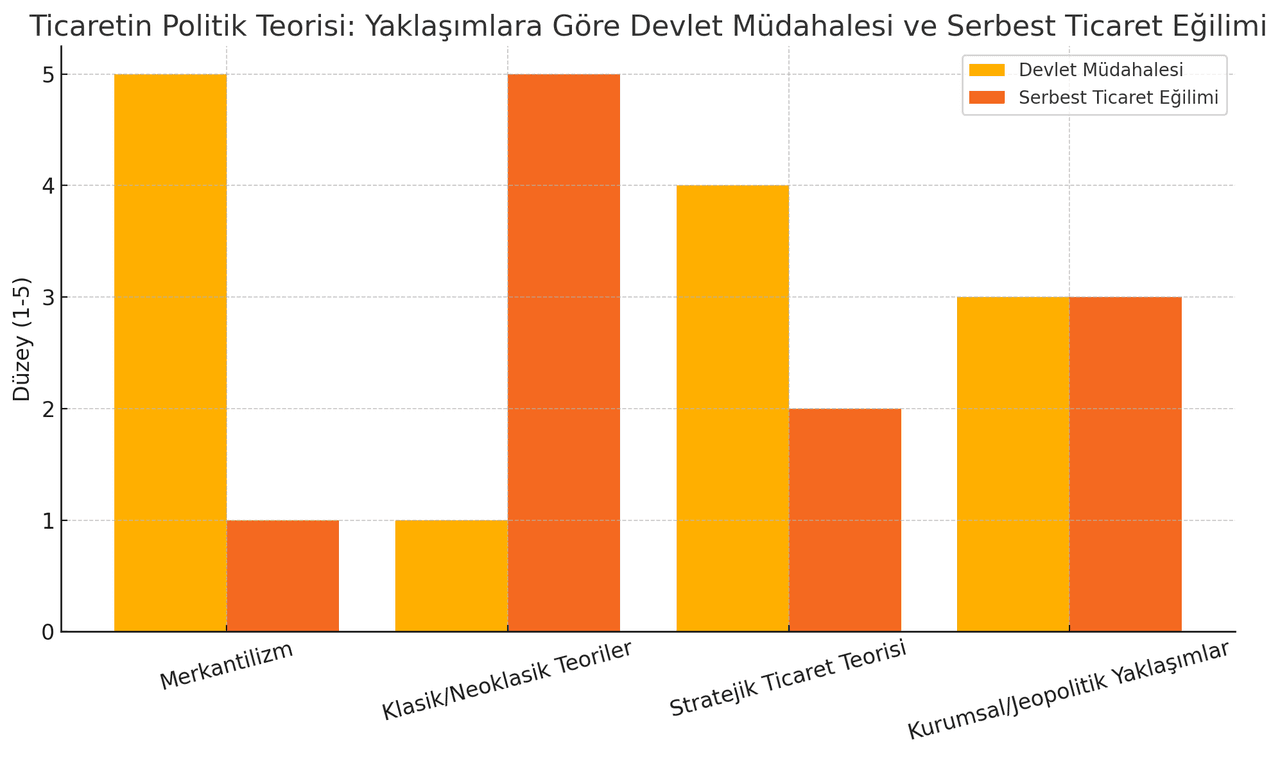
Generated by artificial intelligence.
This approach has increased the importance of industrial policies particularly in technology intensive sectors and brought state-supported innovation programs to the forefront. For example China’s Made in China 2025 program and the United States’ CHIPS and Science Act are evaluated within this framework.
International trade is shaped not only by economic factors but also by institutional structures and geopolitical balances.
Today the political dimension of trade has become even more pronounced due to trends such as anti-globalization movements economic nationalism and regionalization.
The political theory of trade demonstrates that trade is shaped not only by economic gains but also by power balances among states strategic industries and international institutions. Although the advantages of free trade are clear protectionism and strategic interventions also hold an important place in the modern economy. Global trade is a continuously evolving structure shaped by the dynamic interaction between national interests and international regulations.
Bhagwati, Jagdish. Protectionism. Cambridge, MA: MIT Press, 1988.
CEPR. "Tariffs and Politics: Evidence from Trump’s Trade Wars." VoxEU, April 23, 2019.https://cepr.org/voxeu/columns/tariffs-and-politics-evidence-trumps-trade-wars.
Krugman, Paul R. Rethinking International Trade. Cambridge, MA: MIT Press, 1990.
Ricardo, David. On the Principles of Political Economy and Taxation. London: John Murray, 1817.
Rodrik, Dani. The Globalization Paradox: Democracy and the Future of the World Economy. New York: W. W. Norton & Company, 2011.
Smith, Adam. An Inquiry into the Nature and Causes of the Wealth of Nations. London: W. Strahan and T. Cadell, 1776.

The Political Theory of Trade
Subject | International Trade Policy and Political Economy | ||||||||
|---|---|---|---|---|---|---|---|---|---|
Basic Approaches | Mercantilism and Neo-Mercantilism Classical and Neoclassical Theories Strategic Trade Theory Institutional and Geopolitical Approaches | ||||||||
Representatives | David Ricardo Jagdish Bhagwati Dani Rodrik Paul Krugman Adam Smith | ||||||||
Application Areas | Environmental regulations Trade wars Regional integrations Industrial policies | ||||||||
Current Implications | The European Union's environment-based trade mechanisms Rising protectionism in the United States China's state-supported global strategies | ||||||||
No Discussion Added Yet
Start discussion for "Political Theory of International Trade" article
Approaches to the Political Theory of Trade
Mercantilism and Protectionist Policies
Classical and Neoclassical Trade Theories: Defense of Free Trade
Strategic Trade Theory and State Interventions
Institutional and Geopolitical Approaches
Trade Policies and the Contemporary Economy