


This article was automatically translated from the original Turkish version.
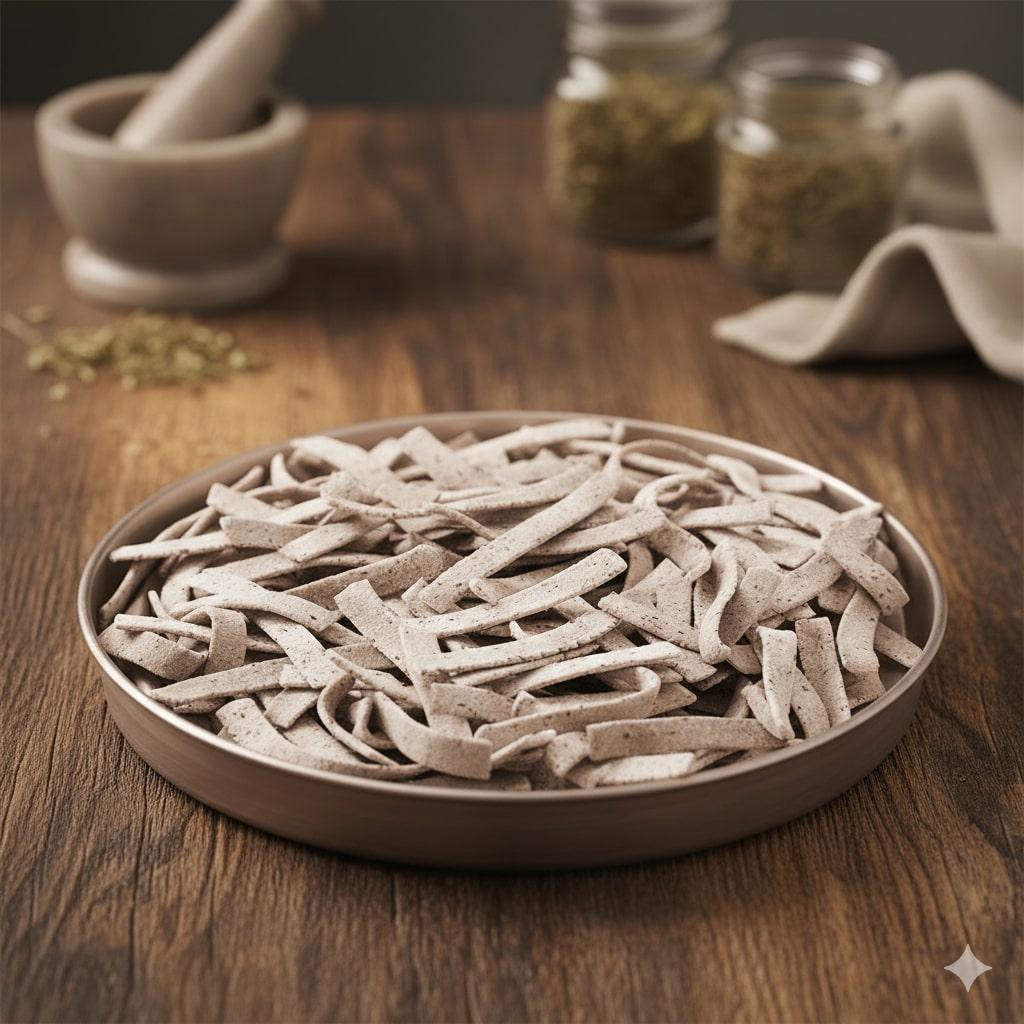
Pizzoccheri della Valtellina (Generated by Artificial Intelligence.)
Name(s) | Pizzoccheri della Valtellina | ||||||||
|---|---|---|---|---|---|---|---|---|---|
Geographical Indication | Protected Geographical Indication | ||||||||
Product Type | Pasta (Dried or Fresh) | ||||||||
Production Area | Province of Sondrio (Lombardy - Italy) | ||||||||
Control Authority | CSQA Certificazioni S.r.l. | ||||||||
Pizzoccheri della Valtellina is a type of pasta made from dough consisting primarily of buckwheat flour (Fagopyrum esculentum) mixed with other cereal flours and is protected under Italy’s geographical indication scheme. Due to the historical widespread cultivation and use of buckwheat in the Valtellina region, it has become one of the staple foods of local cuisine.
Pizzoccheri della Valtellina is a pasta variety made by blending at least 20 percent buckwheat flour with flours derived from other cereals and is available both in dried and fresh forms. Three main forms are defined for the dried product: thin, flat ribbons of variable length and width known as stesa tagliatella; ribbons wound into coils presented as tagliatello avvolto (or tagliatella); and concave-shaped pieces called gnocchetto. Fresh pasta is available only as tagliatello. The length of the gnocchetto form in its dried state ranges from 1.6 to 2.2 cm, while the stesa tagliatella form measures between 3 and 6 cm in length.
Physically, dried pasta is hard and dry after processing, whereas fresh pasta has a semi-firm consistency. In terms of organoleptic properties, the pasta’s color varies between light and dark brown as a result of the buckwheat and may contain outer particles with hazelnut brown or grey tones.
The earliest written evidence documenting the presence of buckwheat in Valtellina dates back to 1616. The first non-written evidence of Pizzoccheri production comes from wills dated 1750 and 1775, which inventory pasta-making tools. These documents, along with subsequent records from later centuries, firmly established the presence and local identity of Pizzoccheri in the Sondrio region; for example, by the late 1800s, numerous pasta factories and mills were documented in the area. The Italian Dictionary (Zingarelli, 1970) defines Pizzocchero as a specialty of Valtellina.【1】
The production process begins with the dry blending of raw materials, followed by kneading with water to obtain a uniform and homogeneous dough. For dried products, the kneading and subsequent extrusion-lamination stages ensure the proper formation of the protein network, which determines the pasta’s quality and structure. For the stesa tagliatella and tagliatello avvolto forms, the dough sheet undergoes lamination after extrusion and then cutting. In the gnocchetto form, no lamination is performed—only cutting is applied. For fresh pasta, a dough sheet is prepared, shaped, and processed through steps specific to fresh pasta. Traditionally, cooked Pizzoccheri is served with a sauce made from butter, cheese, and vegetables native to Valtellina such as cabbage or potatoes.
The geographical production area for Pizzoccheri della Valtellina IGP is defined by the administrative boundaries of the province of Sondrio (Lombardy – Italy). The ingredients for the dried product consist of water and a mixture of up to 80 percent durum wheat semolina (used alone or blended with durum wheat flour) and at least 20 percent buckwheat flour. The fresh product consists of water and a mixture of up to 80 percent soft wheat flour (used alone or blended with durum wheat semolina) and at least 20 percent buckwheat flour.
The product is offered to consumers either at the place of production or in retail stores, packaged in trays or bags. Dried products are packed in long cardboard boxes or bags. Labeling requirements, in addition to compliance with food regulations, mandate the clear and legible indication of the product name (“Pizzoccheri della Valtellina”), the abbreviation I.G.P. or its full name, and the European Union symbol. The packaging may also indicate the product form—for example, “gnocchetto” for dried or “tagliatello” for fresh—and storage conditions (in a cool, dry place). It is prohibited to add qualifying terms such as “super” or “extra” that could mislead the consumer.
MASAF – Ministero delle Politiche Agricole Alimentari e Forestali. “Pizzoccheri della Valtellina.” MASAF. Accessed October 21, 2025. https://www.masaf.gov.it/flex/cm/pages/ServeAttachment.php/L/IT/D/1%252F4%252F4%252FD.5bd26f1a3a35e851ee94/P/BLOB%3AID%3D3348/E/pdf?mode=download
QUALIGEO. "Pizzoccheri della Valtellina PGI." *Qualigeo*. Accessed November 4, 2025. https://www.qualigeo.eu/en/product/pizzoccheri-della-valtellina-pgi//
[1]
Pizzoccheri della Valtellina PGI, “Pizzoccheri della Valtellina PGI – Pasta from Valtellina”, Qualigeo, son erişim tarihi 4 Kasım 2025, https://www.qualigeo.eu/en/product/pizzoccheri-della-valtellina-pgi//

Pizzoccheri della Valtellina (Generated by Artificial Intelligence.)
Name(s) | Pizzoccheri della Valtellina | ||||||||
|---|---|---|---|---|---|---|---|---|---|
Geographical Indication | Protected Geographical Indication | ||||||||
Product Type | Pasta (Dried or Fresh) | ||||||||
Production Area | Province of Sondrio (Lombardy - Italy) | ||||||||
Control Authority | CSQA Certificazioni S.r.l. | ||||||||
No Discussion Added Yet
Start discussion for "Pizzoccheri della Valtellina" article
Definition and Characteristics
Historical and Cultural Context
Production Method
Production Area and Raw Materials
Marketing and Labeling