This article was automatically translated from the original Turkish version.
Class | Aves | ||||||||
|---|---|---|---|---|---|---|---|---|---|
Team(s) | Ciconiiformes | ||||||||
Family | Threskiornithidae | ||||||||
Habitat | Wetlands Lagoons Mudflats Mangroves | ||||||||
Conservation Status | IUCN: Least Concern | ||||||||
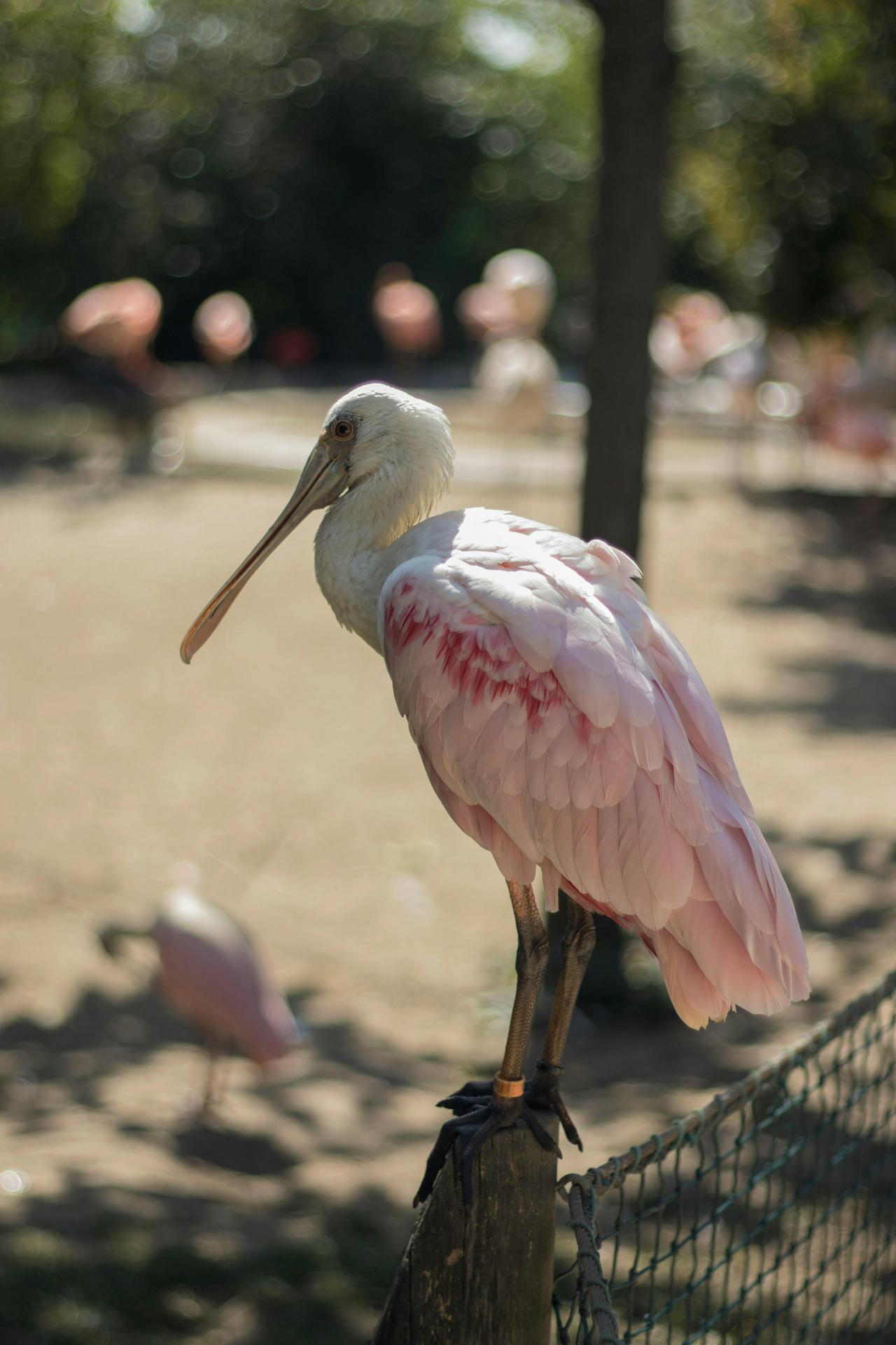
Roseate Spoonbill (Platalea ajaja) is a large waterbird known for its distinctive wide, spoon-shaped bill.
Its body length reaches approximately 80 cm and its wingspan can extend up to 120 cm. Its plumage is typically pale pink; the upper neck and back are white while the wing and underbody feathers are more prominently colored. The wing coverts tail legs and iris are shades of dark red. Part of the head is yellowish-green. Juveniles have paler coloration and develop more pronounced pink tones as they mature.
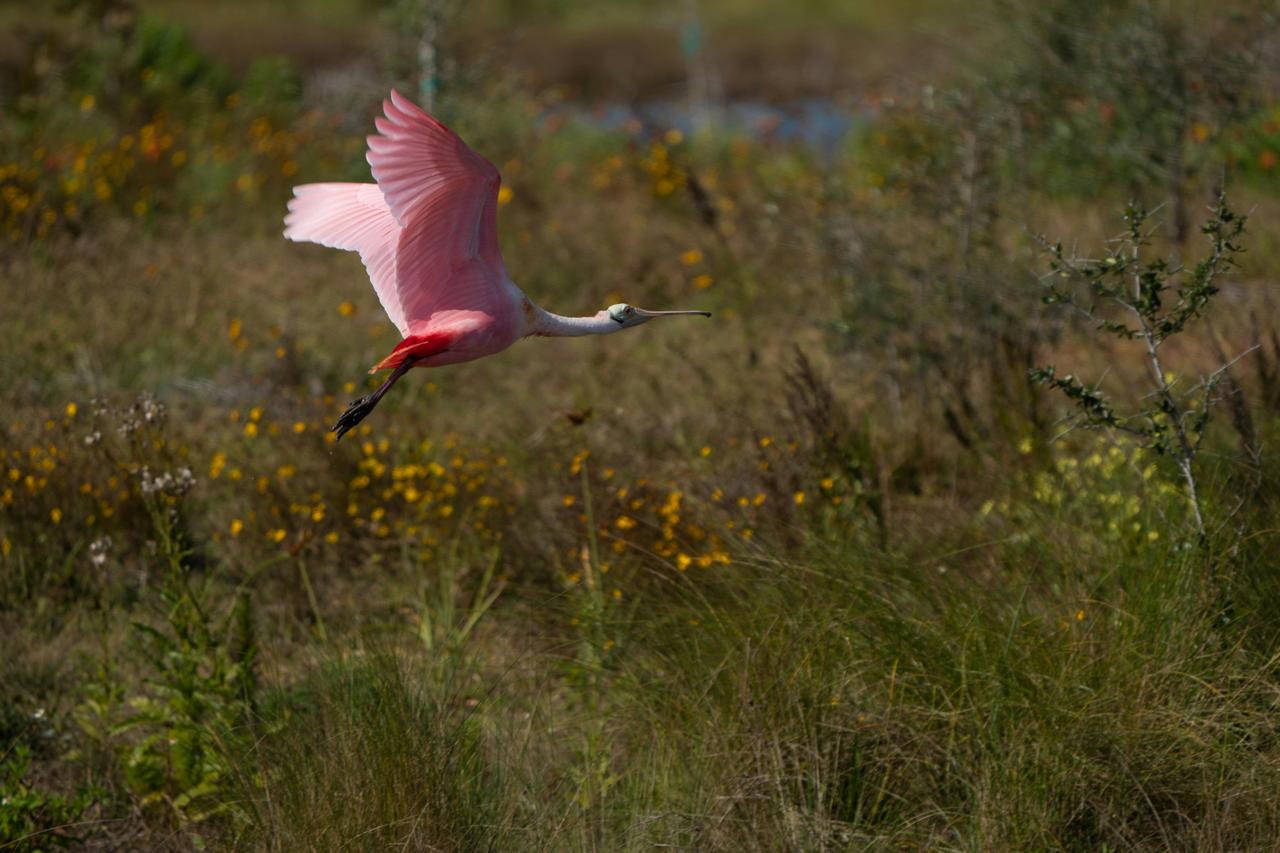
Roseate Spoonbill(Pexels)
The roseate spoonbill is found across the Americas from the southeastern United States to central Argentina. In the United States it occurs along the coasts of Florida Georgia Texas and southwestern Louisiana. It is also present in Mexico the coastal regions of Central America and some areas of the Caribbean. It prefers habitats such as marshes mangroves mudflats and lagoons. During winter months it migrates northward particularly to regions in Argentina and further south.
This is a social species that typically feeds flies and flies in colonies or small groups. While feeding it wades in shallow water and sweeps its slightly open bill side to side to detect prey. Its diet consists of small fish crustaceans insects mollusks and some plant material. It is most active during feeding in the early morning and evening. Spoonbills sleep standing on one leg with their head tucked beneath their feathers.
Reproduction usually begins around the third year of life. Courtship behaviors include dancing clapping wings bill exchanging and cross-clasping rituals. The female lays one to five mostly two to three brown spotted eggs in platform nests constructed from branches and leaves provided by the male. Incubation lasts 22 to 24 days and is carried out by both parents. Chicks remain in the nest for about five to six weeks and become capable of flight at seven to eight weeks of age.
In the late 19th century the species was nearly extinct in the United States due to feather hunting and persecution. Re-colonization began in the 20th century but the species remains rare and locally common. It is classified as “Least Concern” on the IUCN Red List. Major breeding colonies in the United States are located in Florida Louisiana and Texas. Protection of habitats and wetland restoration are critical for the long-term survival of the species. Climate change and coastal alterations may impact traditional nesting areas.
ABC Birds. "Roseate Spoonbill." American Bird Conservancy. Accessed August 16, 2025. https://abcbirds.org/bird/roseate-spoonbill/
Audubon. "Roseate Spoonbill." audubon.org. Accessed August 16, 2025. https://www.audubon.org/field-guide/bird/roseate-spoonbill
National Zoo. "Roseate Spoonbill." Smithsonian's National Zoo & Conservation Biology Institute. Accessed August 16, 2025. https://nationalzoo.si.edu/animals/roseate-spoonbill
Pexels. “Pembe Kaşıkçı Kuşu Doğa Parkındaki Çitin Üzerinde Tünedi JPG.” Pexels. Accessed August 16, 2025. https://www.pexels.com/tr-tr/fotograf/pembe-kasikci-kusu-doga-parkindaki-citin-uzerinde-tunedi-30034638/
Pexels. “Uçan Hayvan, Çimen, Çim JPG.” Pexels. Accessed August 16, 2025. https://www.pexels.com/tr-tr/fotograf/ucan-hayvan-cimen-cim-10885355/

Class | Aves | ||||||||
|---|---|---|---|---|---|---|---|---|---|
Team(s) | Ciconiiformes | ||||||||
Family | Threskiornithidae | ||||||||
Habitat | Wetlands Lagoons Mudflats Mangroves | ||||||||
Conservation Status | IUCN: Least Concern | ||||||||
No Discussion Added Yet
Start discussion for "Pink Spoonbill (Platalea ajaja)" article
Morphological Characteristics
Distribution and Habitat
Behavior and Social Structure
Reproduction and Development
Conservation Status