


This article was automatically translated from the original Turkish version.
+1 More
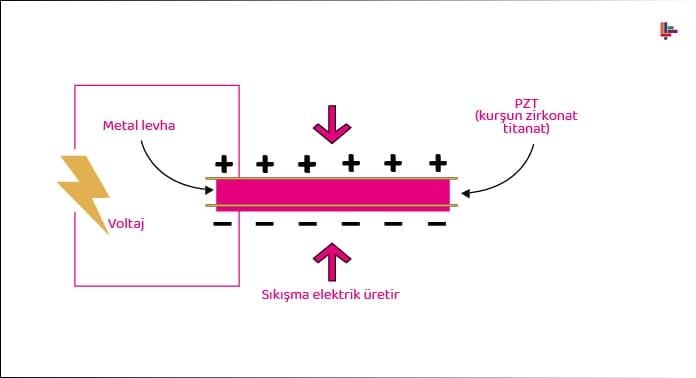
Piezoelectric Effect
Origin | "Piezein" (πιέζειν): Greek to squeeze to press means to apply pressure | ||||||||
|---|---|---|---|---|---|---|---|---|---|
Principle(s) of Operation | Electricity generation based on mechanical pressure | ||||||||
Energy Conversion | Electrical energy is obtained from mechanical energy | ||||||||
Application Area | Electronic Sensors Medical Applications Defense Industry Automotive Industry Wearable Technologies | ||||||||
The piezoelectric effect is a physical phenomenon in which certain crystals and ceramic materials generate an electric charge in response to applied mechanical pressure. This property arises from changes in polarization at the atomic level, particularly in materials with a crystalline structure. The term “piezoelectric” is derived from the Greek word “piezein,” meaning “to press” or “to squeeze.”
This phenomenon is bidirectional: the first is the direct piezoelectric effect, which is the generation of electrical voltage in response to applied pressure; the second is the inverse piezoelectric effect, in which the material deforms mechanically when an electric field is applied. This dual functionality enables piezoelectric materials to be used both as sensors and as actuators.
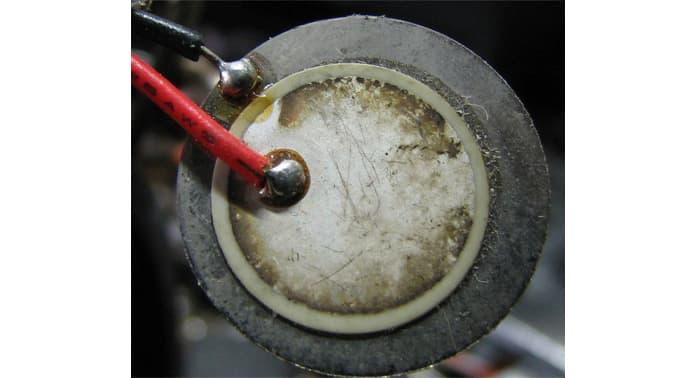
Piezo Disk Örneği (Elektrikport)
The foundations of the piezoelectric effect were laid in the mid-18th century by Carl Linnaeus and Franz Aepinus, and later expanded upon by René Just Haüy and Antoine César Becquerel. However, the first direct experimental evidence of the effect was demonstrated in 1880 by Pierre and Jacques Curie. Electric potential was observed on the surfaces of crystals such as quartz, tourmaline, and Rochelle salt when mechanical pressure was applied.
In 1881, Gabriel Lippmann theoretically predicted that applying an electric field to these materials would induce mechanical deformation in the opposite direction, a prediction confirmed experimentally by the Curie brothers the same year. This discovery led to the development of the Lippmann electrometer, one of the first electrostatic measuring instruments.
Practical applications of the piezoelectric effect began to emerge in the early 20th century. In 1917, Paul Langevin developed the first submarine sonar device using piezoelectric crystals. In the following decades, piezoelectric properties were incorporated into a wide range of technologies, including telephone systems, radios, phonographs, and microphones.
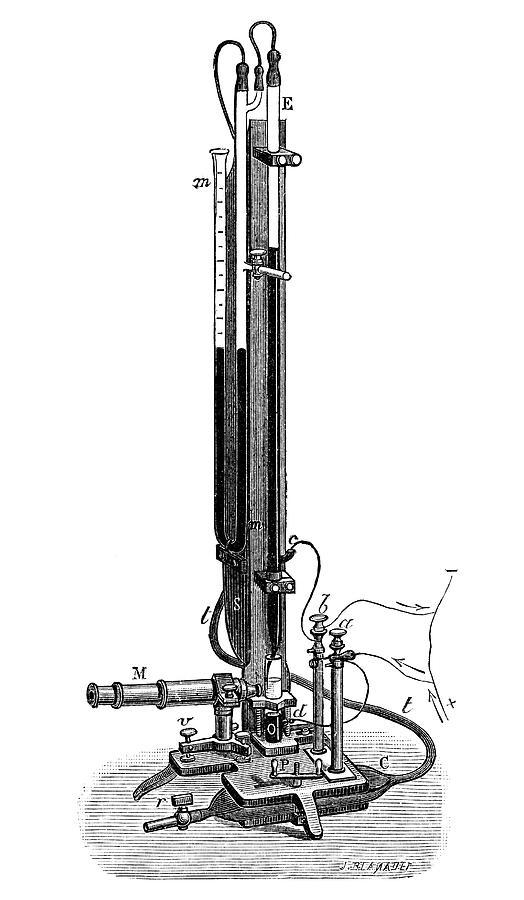
Lippmann Elektrometresi (sciencephotogallery)
A common feature of piezoelectric materials is their lack of a center of symmetry in their crystal structure. This asymmetry causes a redistribution of electric charges under applied stress, resulting in the generation of an external electric field.
Natural piezoelectric materials include quartz, berlinite, and Rochelle salt. Among synthetic ceramics, lead zirconate titanate (PZT) alloys are widely used due to their broad range of applications. Additionally, polymers such as zinc oxide (ZnO), barium titanate (BaTiO₃), and PVDF (polyvinylidene fluoride) are also preferred in piezoelectric applications.
When mechanical pressure is applied to these materials, their crystal symmetry is disrupted, altering the orientation of internal dipole moments and causing electric charges to accumulate on the material’s surface. If an alternating voltage is applied, these elements expand and contract periodically. This principle enables their use as actuators in sound generation, motor control, and vibratory systems.
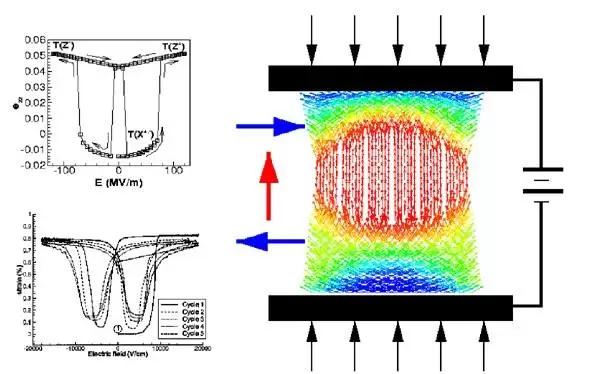
Piezoelektrik Etkinin Oluşumu (muhendisbeyinler)
Although piezoelectric materials produce low output voltages, they are widely used across numerous fields. One of the most well-known examples is lighters. They are also employed in microphones, ultrasonic cleaning devices, and sonar systems to convert sound waves into electrical signals.
In automotive technologies, piezoelectric elements are widely used in fuel injection systems, vibration and noise reduction systems, airbag sensors, tire pressure sensors, and parking sensors.
Ultrasonic imaging systems, medical cutting devices, and single-use patient monitoring devices operate on the piezoelectric principle. They are particularly favored in high-frequency and low-energy applications.
In defense technologies, the use of piezoelectric actuators in guided munitions and micro aerial vehicles is becoming increasingly common. The incorporation of piezoelectric actuators in munitions capable of changing direction, developed by DARPA, exemplifies advancements in this field.
Developed by Turkish scientist Canan Dağdeviren and introduced in 2014, the wearable piezoelectric heart pacemaker generates electrical energy from the body’s natural movements to power a cardiac pacemaker. This system converts mechanical energy from organ motion into electrical energy by integrating a polymer-based flexible material with a dynamic organ such as the heart. In experimental tests, the device maintained its structural integrity after 20 million bends and holds promise as a future alternative to surgical battery replacements.
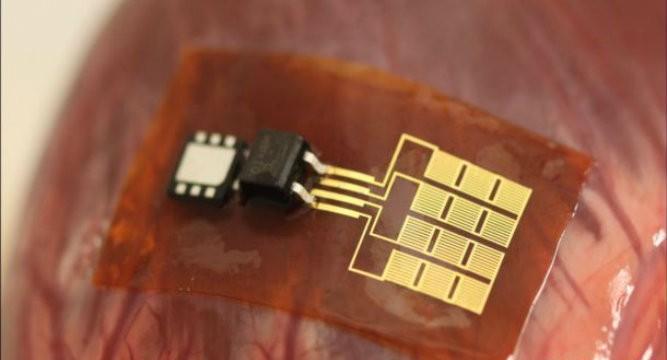
Canan Dağdeviren Tarafından Geliştirilen Giyilebilir Kalp Pili (elektrikport)
Devreyakan. "Piezoelektrik Nedir?" Accessed April 23, 2025.https://devreyakan.com/piezoelektrik-nedir/
ElektrikPort. "Piezoelektrik | Geleceğin Elektrik Üreteçleri." ElektrikPort, November 22, 2012.https://www.elektrikport.com/universite/piezoelektrik-gelecegin-elektrik-uretecleri/4239.
Enerji Kaynağım. "Piezoelektrik Nedir? Nerelerde Kullanılır?" Enerji Kaynağım. November 4, 2023.https://enerjikaynagim.com/piezoelektrik-nedir-nerelerde-kullanilir/.
Karakaya, Hasret Can. “Canan Dağdeviren | Giyilebilir Kalp Pili.” *ElektrikPort*. February 4, 2017.https://www.elektrikport.com/makale-detay/canan-dagdeviren-giyilebilir-kalp-pili/18876.
Material Science. "Piezoelektrik Nedir?" *MalzemeBilimi.Net*. October 12, 2023.https://malzemebilimi.net/piezoelektrik-nedir.html.
STM ThinkTech. "Gündelik Hayatın Gizemli Enerjisi: Piezoelektrik." STM ThinkTech. August 4, 2022.https://thinktech.stm.com.tr/tr/gundelik-hayatin-gizemli-enerjisi-piezoelektrik.
Çalapkulu, Semih. “Piezoelektrik.” *Sektörüm Dergisi*, March 23, 2024.https://www.sektorumdergisi.com/piezoelektrik/.
Özada, Çağatay. “Piezoelektrik Nedir? Piezoelektrik Olay.” Mühendis Beyinler. September 2, 2023.https://www.muhendisbeyinler.net/piezoelektrik-nedir-piezoelektrik-olay/.

Piezoelectric Effect
Origin | "Piezein" (πιέζειν): Greek to squeeze to press means to apply pressure | ||||||||
|---|---|---|---|---|---|---|---|---|---|
Principle(s) of Operation | Electricity generation based on mechanical pressure | ||||||||
Energy Conversion | Electrical energy is obtained from mechanical energy | ||||||||
Application Area | Electronic Sensors Medical Applications Defense Industry Automotive Industry Wearable Technologies | ||||||||
No Discussion Added Yet
Start discussion for "Piezoelectric Effect" article
Historical Development
Piezoelectric Materials and Working Principle
Applications
Electronics and Everyday Use
Automotive Industry
Medicine and Medical Devices
Military and Defense Industry
Piezoelectric and Wearable Heart Pacemaker