


This article was automatically translated from the original Turkish version.

Pianist
Director(s) | Roman Polanski | ||||||||
|---|---|---|---|---|---|---|---|---|---|
Screenplay(s) | Adapted from the memoir of Władysław Szpilman | ||||||||
Genre | Biography History Drama | ||||||||
Production Year | 2002 | ||||||||
Duration | 150 minutes | ||||||||
Country | France England Poland Germany | ||||||||
IMDb Rating | 8.5 | ||||||||
Actors | Emilia Fox (Dorota) Maureen Lipman (Mother) Frank Finlay (Father) Thomas Kretschmann (Captain Wilm Hosenfeld) Adrien Brody (Władysław Szpilman) | ||||||||
The film tells the life story of a Jewish pianist who survives the Warsaw Ghetto during World War II. Władysław Szpilman (Adrien Brody) is a renowned Polish musician of his time. Under Nazi occupation he and his family are subjected to forced relocation and persecution. After losing his family Szpilman spends the entire war hiding in an effort to survive.
Polanski portrays his struggle for survival his fight to preserve his humanity through music and the horror of war using a minimalist yet powerful cinematic language. Szpilman’s story reveals that a pianist can endure not only through music but also through silent resistance.
The film presents its protagonist not as an armed fighter but as someone who battles with patience and intelligence. Szpilman loses everything in the face of war’s brutality yet never relinquishes his humanity or his passion for music.
Polanski depicts war not through grand battlefronts but through the lens of personal destruction. The devastation hunger isolation and psychological collapse experienced in the city remind viewers of the human tragedies behind large-scale conflicts.
In Szpilman’s journey of survival music is not merely a profession but also an identity a form of resistance and a vessel of hope. Music serves as a sanctuary that preserves the human spirit.
The German officer Hosenfeld’s assistance to Szpilman challenges the simplistic good-evil dichotomy of war. Individual conscience can transcend ideology; at this point the film suggests that goodness and evil are defined not by black-and-white lines but by humanity.
Roman Polanski has shown great personal investment in this story drawing from his own childhood memories. Filming took place in Warsaw and in real locations successfully reflecting the authenticity of the atmosphere.
Adrien Brody underwent a significant physical transformation for the role to authentically convey both the physical hardships and the psychological tension of the character. The film’s cinematography (Paweł Edelman) visually captures the destruction and loneliness of Warsaw with striking power.
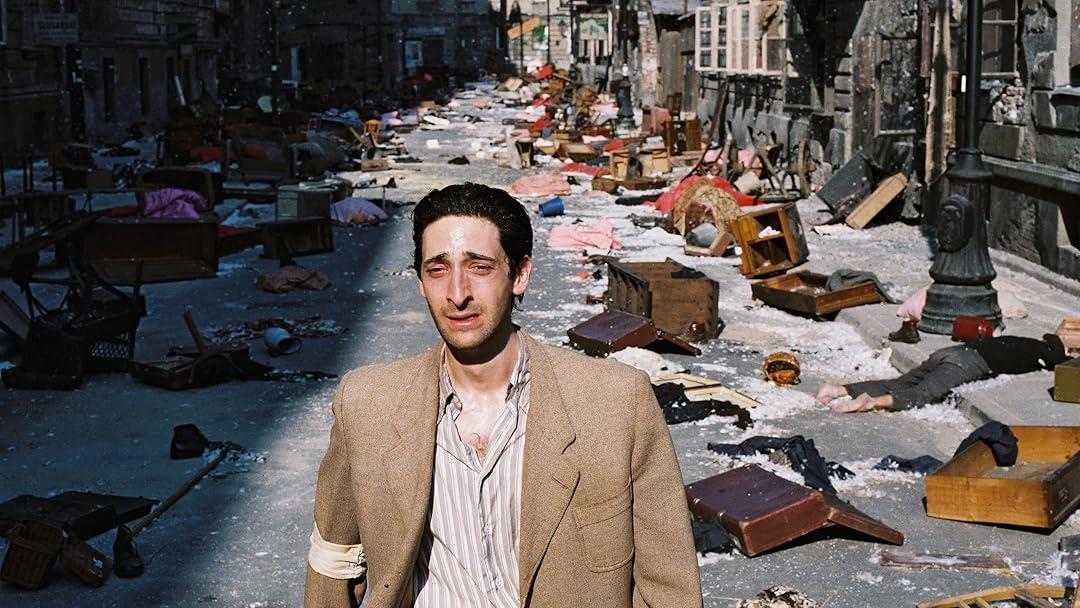
Scene from The Pianist –MUBI
Adrien Brody attracted attention with the inner depth physical transformation and restrained acting style he brought to the character of Szpilman. This performance earned him the Academy Award for Best Actor making him the youngest actor ever to win the award. Thomas Kretschmann portrayed Nazi officer Hosenfeld with compelling balance embodying humanity and empathy. Supporting actors contribute naturally to the atmosphere effectively highlighting the protagonist’s isolation and environmental threats.
The Pianist moves beyond conventional war film narratives of heroism to center the tragedy and resistance of the individual. While demonstrating how music can uplift the human spirit the film also proves the power of cinema to create historical memory. With its emotional impact and narrative elegance The Pianist has become one of the landmark masterpieces of cinema history.
Best Director – Roman Polanski
Best Actor – Adrien Brody
Best Adapted Screenplay – Ronald Harwood
Best Picture
Best Film Editing
Best Cinematography
Best Production Design
Palme d’Or – Best Film
Best Film
Best Director
Best Actor – Adrien Brody (nomination)
Best Foreign Film
Beyazperde. "Piyanist (2002)." Accessed April 2, 2025.
DergiPark. "Piyanist Filmi Bağlamında Sinemada Müzik ve Sessizlik Temsili." Accessed April 2, 2025. Link.
IMDb. “The Pianist (2002).” Accessed April 2, 2025.
Roger Ebert. “The Pianist (2003).” Accessed April 2, 2025.

Pianist
Director(s) | Roman Polanski | ||||||||
|---|---|---|---|---|---|---|---|---|---|
Screenplay(s) | Adapted from the memoir of Władysław Szpilman | ||||||||
Genre | Biography History Drama | ||||||||
Production Year | 2002 | ||||||||
Duration | 150 minutes | ||||||||
Country | France England Poland Germany | ||||||||
IMDb Rating | 8.5 | ||||||||
Actors | Emilia Fox (Dorota) Maureen Lipman (Mother) Frank Finlay (Father) Thomas Kretschmann (Captain Wilm Hosenfeld) Adrien Brody (Władysław Szpilman) | ||||||||
Themes and Analysis
1. Survival and Silent Resistance
2. The Impact of War on the Individual
3. The Power of Art and Musical Emotion
4. Empathy and Morality
Production Process and Technical Features
Performances
Impact and Significance
Awards and Nominations
Academy Awards (Oscars 2003)
Wins:
Nominations:
Cannes Film Festival (2002)
BAFTA Awards
César Awards (France)