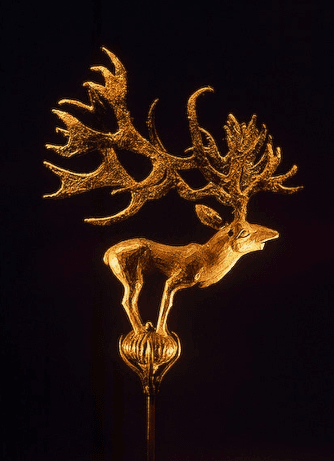
This article was automatically translated from the original Turkish version.
+2 More
Qualification | Monumental Burial Groups | ||||||||
|---|---|---|---|---|---|---|---|---|---|
Location | Great Ulagan Valley | ||||||||
Period | 5th–6th century BCE | ||||||||
Date of Discovery | 1772 | ||||||||
Discoverer | Leopold Messerschmidt | ||||||||
Peak Excavation Period | Between 1929 and 1950 | ||||||||
Prominent Archaeologists | M. Gryaznov S. I. Rudenko | ||||||||
Notable Finds | Remains of wooden and leather-wheeled carts Pazyryk Carpet Gold and copper plates with animal-style figures Horses buried with harness teams Wooden carved eagle-griffin statue | ||||||||
Location of Display | The Hermitage Museum, St. Petersburg, Russian Federation | ||||||||
Pazırık Kurgans are monumental burial structures left by nomadic groups who lived in the Altai Mountains and surrounding regions during the 5th and 4th centuries BCE, known in archaeological literature as the “Pazırık culture”.
The kurgans are located in the eastern part of the Upper Altai, near the border with Tuva, within the Great Ulagan Valley area of the Gorno-Altai Region, which is part of the Russian Federation. To date, over 600 kurgans have been identified across more than 135 burial sites.
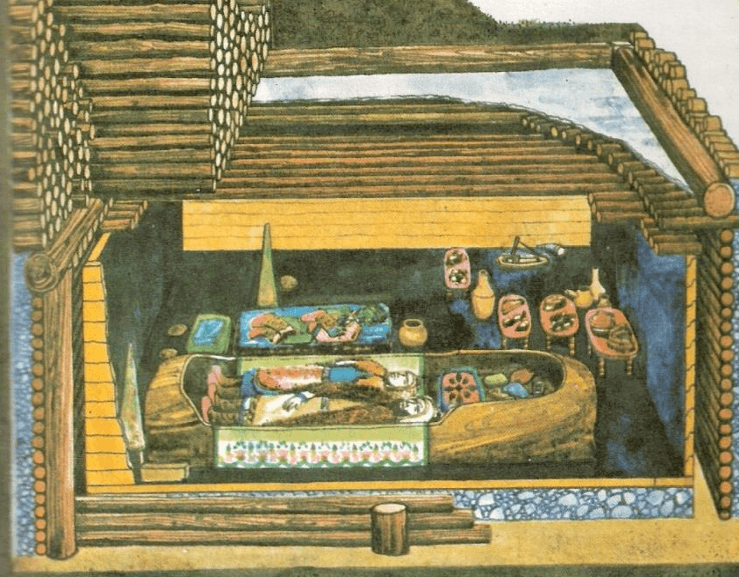
Internal Structure of the Kurgans (Mazhar Narşap)
The area where the kurgans are located experiences low annual temperature fluctuations and long, harsh winters. The thin snow cover and low temperatures caused water seeping into the kurgans to freeze, preserving organic materials in the same state as when they were buried. Architectural and burial traditions show cultural continuity with Proto-Turkic and early Turkic peoples and exhibit strong connections with the Scythian world.
Artifacts recovered from the Pazırık kurgans are currently exhibited at the Ermitage Museum in Saint Petersburg, Russia.
The first surface survey of the region was conducted by Messerschmidt in 1722. The first scientific excavations, led by S. I. Rudenko in 1924, revealed the Pazırık culture and gained momentum through the excavations of M. Gryaznov. The finds from these excavations showed typological similarities with Scythian kurgans north of the Black Sea; due to weapons, horse harnesses and animal-style artworks, the culture was regarded as part of the Scythian/Saka world.
In 2005, international projects in the Bayan-Ölgii region of Mongolia (led by Molodin, Törbat, Parzinger et al.) identified numerous new Pazırık kurgans, with excavations at the Baga Türgen Gol site standing out.
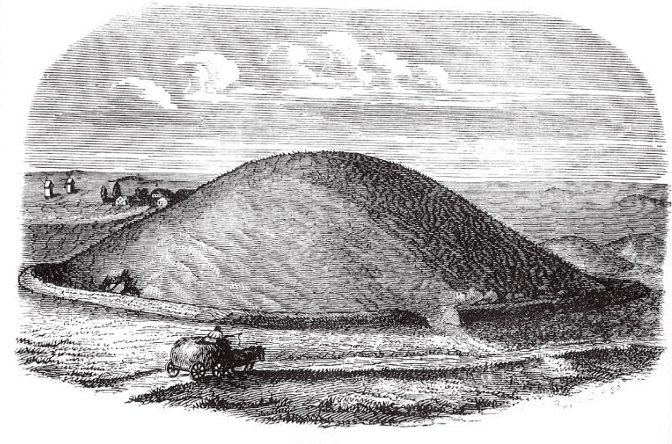
Appearance of the Kurgans Before Excavation (Mazhar Narşap)
The Pazırık kurgans are generally aligned north-south in a chain-like arrangement. They were typically constructed on sacred sites such as mountain slopes, highland pastures and riverbanks. The kurgans form monumental burial complexes consisting of a stone mound, circular stone fences or shallow ditches surrounding them, altars on the west and rows of balbals on the east.
Burial chambers were constructed entirely of wood, with carpets hung on the walls and the deceased placed inside along with their belongings. Chambers were usually built at the bottom of the burial pit; horses were buried just outside but adjacent to the chamber.
A large kurgan dated to the 4th–3rd centuries BCE, excavated in the Pazırık burial ground of the Altai Mountains and one of the most famous examples of the Pazırık culture. The chamber contains both human and horse burials.
This kurgan was excavated in 1929 by Russian archaeologist S. I. Rudenko and gained fame as one of the world’s best-preserved frozen tombs. Due to its location within permafrost, wooden, felt, leather and textile artifacts were exceptionally preserved.【1】
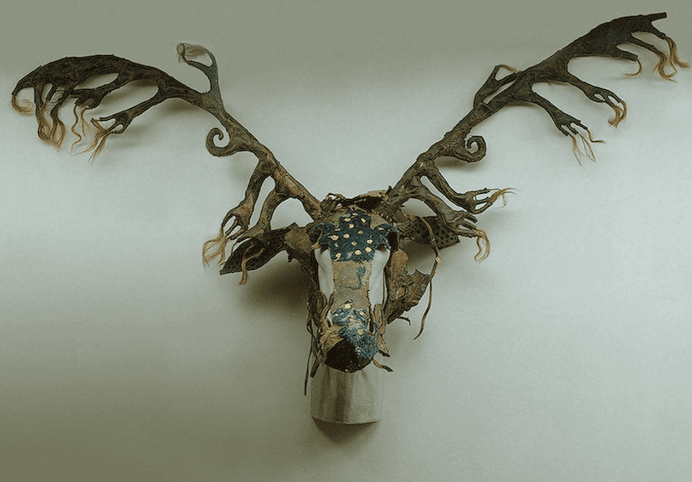
Deer-Antlered Horse Mask from the First Pazırık Kurgan (Yunus Ekim)
The finds from the First Pazırık Kurgan clearly demonstrate the dual role of the horse in steppe culture—as both transportation and ceremonial object. The rich animal-style decorations reflect the artistic sensibility of the Pazırık culture and provide important insights into the craftsmanship of the period. Thanks to the frozen soil, organic materials and textiles have reached the present day undamaged.
The Second Pazırık Kurgan is located in the Pazırık burial ground of the Altai Mountains. It was discovered in 1947 by Russian archaeologist S. I. Rudenko. The tomb had been looted in antiquity: the bodies were dismembered and valuable items removed, yet many artifacts remained preserved.
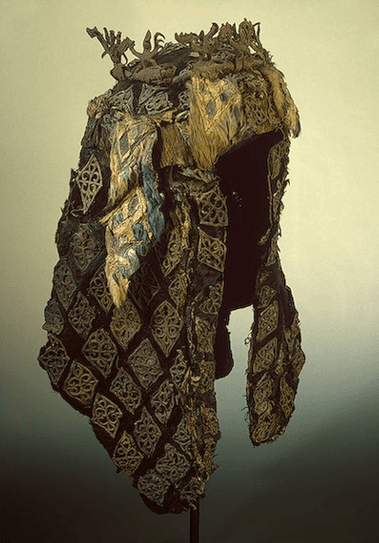
Headdress Made of Leather, Fur and Gold from the Second Pazırık Kurgan (Yunus Ekim)
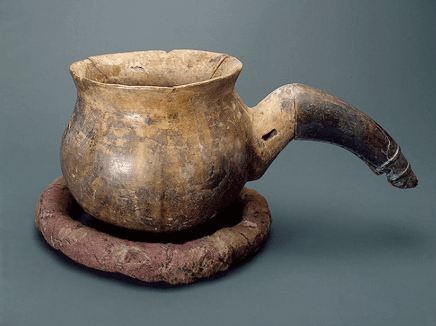
Kumis Vessel from the Second Pazırık Kurgan (Yunus Ekim)
The finds shed light on the clothing culture, ritual practices and artistic sensibility of steppe societies. Wooden furniture and carpets demonstrate the craftsmanship and aesthetic understanding of the period.
A large kurgan located in the Pazırık burial ground of the Altai Mountains, excavated by S. I. Rudenko in the 1940s. It contains both human and horse burials.
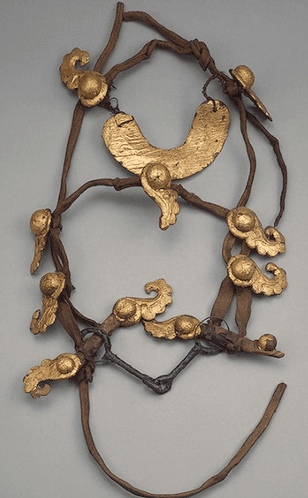
Bridle with Griffin Head Motifs from the Third Pazırık Kurgan (Yunus Ekim)
Artifacts from the Third Pazırık Kurgan provide examples of the steppe animal style. Particularly, the wooden and bone craftsmanship combined with gold leaf decorations illustrate how artistic and ritual elements were integrated in Pazırık culture. The detailed animal figures on the horse harnesses reflect the economic, military and symbolic importance of the horse in steppe society.
A large kurgan located in the Pazırık burial ground of the Altai Mountains, exhibiting typical features of the Pazırık culture. Excavations were conducted by S. I. Rudenko.
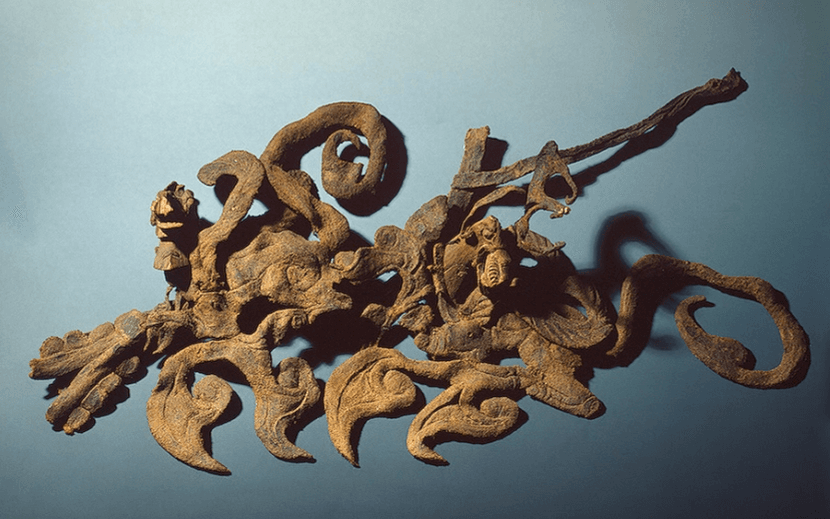
Bridle Fragment with Animal Motifs from the Fourth Pazırık Kurgan (Yunus Ekim)
The figures and decorated horse harnesses from the Fourth Pazırık Kurgan are significant for documenting the ceremonial and practical use of the horse in Pazırık culture. Animal-head motifs reveal the symbolic language of Altai steppe art and its close relationship with nature.
A large Pazırık culture burial mound located in the Pazırık burial ground of the Altai Mountains, excavated in 1949 under the leadership of S. I. Rudenko. Thanks to frozen soil conditions, organic materials were exceptionally preserved; this kurgan gained worldwide fame particularly for the Pazırık Carpet.
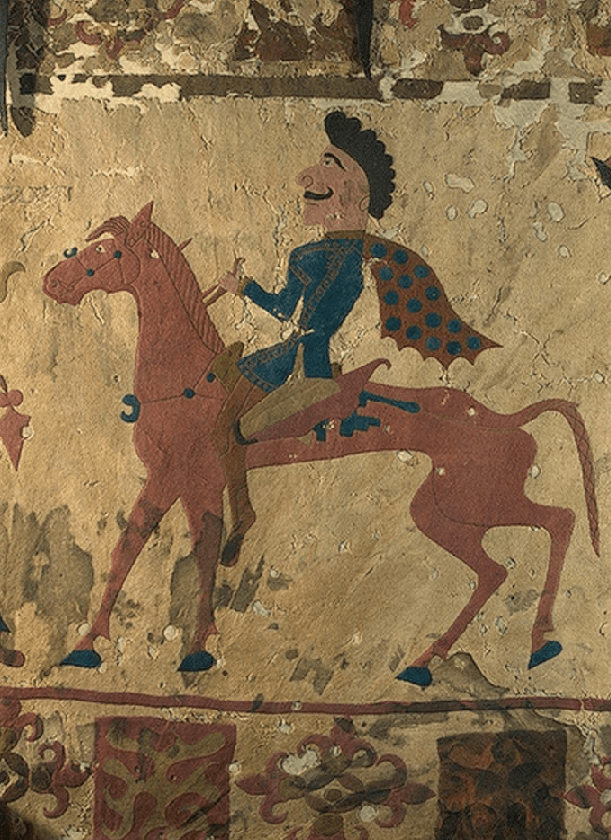
Detail of the Carpet from the Fifth Pazırık Kurgan (Yunus Ekim)
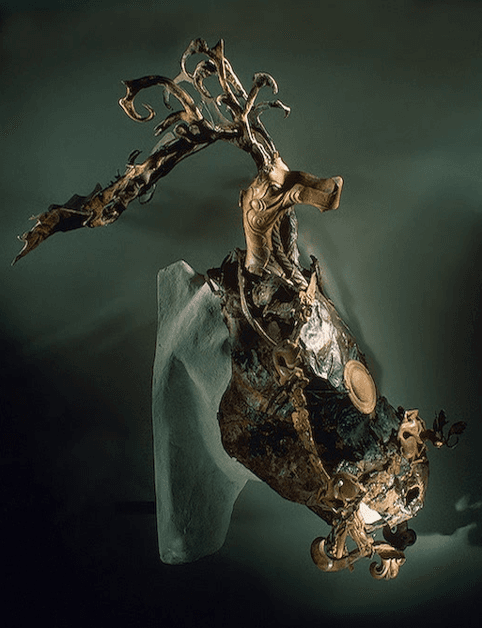
Horse Mask from the Fifth Pazırık Kurgan (Yunus Ekim)
The Fifth Pazırık Kurgan reveals the aesthetic understanding, craftsmanship and symbolic values of steppe communities in terms of both art history and archaeology.
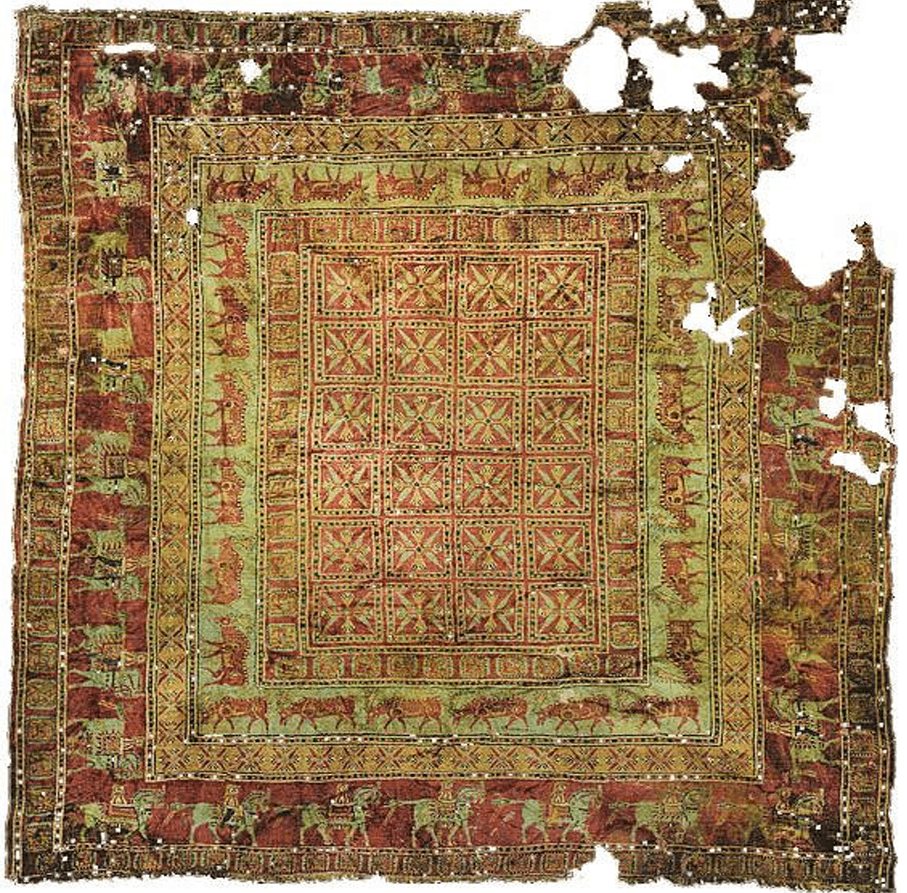
The Pazırık Carpet (Bülent Yılmaz)
Dated to the 5th and 4th centuries BCE, the Pazırık Carpet is the world’s oldest known knotted carpet. Associated with Hun or Scythian communities, it features four-leaf plant motifs arranged in a checkerboard pattern at its center and borders adorned with deer, lions, griffins and mounted human figures. The background uses dark red, along with brown, yellow, navy blue, light blue and cream colors. Due to its symmetric knot technique, it is considered the first Turkish carpet.【3】
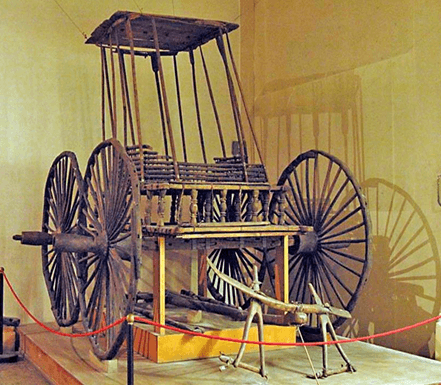
Horse Cart from the Fifth Pazırık Kurgan (Luzia Kılıç)
The Pazırık Kurgans are among the most important archaeological sites representing the Early Iron Age steppe culture of the Altai region. The finds provide detailed information on the material culture, artistic production and burial traditions of mounted nomadic communities. The exceptional preservation of organic materials renders the site of great significance in world archaeology.
Ekim, Yunus. *Pazırık Kurganları, Buluntuları ve Arkeolojik Açıdan Değerlendirilmesi.* Master's thesis, Gazi Üniversitesi, 2006.https://tez.yok.gov.tr/UlusalTezMerkezi/TezGoster?key=ePX_SaJ0b35Gq45swKG3lL0pT2G9R77z1Db3nQhzOrGKlpF4tVAYWvyuN5NMIU3T
Kutlu, Mehmet, and Leila Kutlu. "Pazırık Kültüründe Ölü Gömme Gelenekleri ve Kurgan Mimarisine Yansımaları." *Sanat Tarihi Dergisi* 31, no. 1 (April 2022): 321–353.https://doi.org/10.29135/std.984979
Kılıç, Luiza. *Güney Sibirya'da Hun Türklerine Ait Kurganlar, Mezarlar ve Şehirler.* Master's thesis, İstanbul Üniversitesi, 2018.https://tez.yok.gov.tr/UlusalTezMerkezi/TezGoster?key=fS4sqEZr79C_n60Rk6MjFUQ9TOfUCxAIclk06L-3eXH-lPNEHWbciJSm-VOGzTUa
Narşap, Mazhar. “Pazırık Kurganlarının Kalıntı ve Buluntularına Göre Bozkır Kavimlerinde Sosyal Hayat”. *BELLEK Uluslararası Tarih Ve Kültür Araştırmaları Dergisi* 5, no. 2 (December 2023): 118–40.https://doi.org/10.52735/bellek.1405162
Törbat, Tsagaan, Pierre-Henri Giscard, and Batsukh Dunburee. "First excavation of Pazyryk kurgans in Mongolian Altai". *Current Archaeological Research in Mongolia, Rheinische Friedrich-Wilhelms-Universität, Bonn*, (2009): 221-230.https://www.researchgate.net/publication/322036650_FIRST_EXCAVATION_OF_PAZYRYK_KURGANS_IN_MONGOLIAN_ALTAI
Yılmaz, Bülent. "Pazırık’tan Günümüze Türk Halı Sanatı." Oğuz-Türkmen Araştırmaları Dergisi 1, no. 1 (2018): 102.https://dergipark.org.tr/tr/pub/otad/issue/35223/376971#article_cite
İnan, Abdülkadir. “İkinci Pazırık Kurganı.” *BELLETEN* 16, no. 61 (January 1952): 137.
[1]
Abdülkadir İnan, “İkinci Pazırık Kurganı”, BELLETEN 16, sy. 61 (Ocak 1952): 137. https://dergipark.org.tr/tr/pub/ttkbelleten/issue/79296/1336680
[2]
Mazhar Narşap, "Pazırık Kurganlarının Kalıntı ve Buluntularına Göre Bozkır Kavimlerinde Sosyal Hayat", Bellek Uluslararası Tarih ve Kültür Araştırmaları Dergisi, 5(2), (2023): 128. https://doi.org/10.52735/bellek.1405162
[3]
Bülent Yılmaz, "Pazırık’tan Günümüze Türk Halı Sanatı", Oğuz-Türkmen Araştırmaları Dergisi, 1(1), (2018):102. https://dergipark.org.tr/tr/pub/otad/issue/35223/376971#article_cite
Qualification | Monumental Burial Groups | ||||||||
|---|---|---|---|---|---|---|---|---|---|
Location | Great Ulagan Valley | ||||||||
Period | 5th–6th century BCE | ||||||||
Date of Discovery | 1772 | ||||||||
Discoverer | Leopold Messerschmidt | ||||||||
Peak Excavation Period | Between 1929 and 1950 | ||||||||
Prominent Archaeologists | M. Gryaznov S. I. Rudenko | ||||||||
Notable Finds | Remains of wooden and leather-wheeled carts Pazyryk Carpet Gold and copper plates with animal-style figures Horses buried with harness teams Wooden carved eagle-griffin statue | ||||||||
Location of Display | The Hermitage Museum, St. Petersburg, Russian Federation | ||||||||
Discovery and Research
Architectural Features
Major Pazırık Kurgans
First Pazırık Kurgan
Architectural Features
Findings
Cultural Significance
Second Pazırık Kurgan
Architectural Features
Findings
Cultural Significance
Third Pazırık Kurgan
Architectural Features
Findings
Cultural Significance
Fourth Pazırık Kurgan
Architectural Features
Findings
Cultural Significance
Fifth Pazırık Kurgan
Architectural Features
Findings
Cultural Significance
The Pazırık Carpet