


This article was automatically translated from the original Turkish version.
Parker Solar Probe
Name | Parker Solar Probe | ||||||||
|---|---|---|---|---|---|---|---|---|---|
Type | Solar observation satellite (space probe) | ||||||||
Developing Institution | NASA – Johns Hopkins University Applied Physics Laboratory (APL) | ||||||||
Launch Date | 12 Ağustos 2018 | ||||||||
Launch Vehicle | Delta IV Heavy + Star 48BV upper stage | ||||||||
Launch Site | Cape Canaveral Space Force Station, Florida, USA | ||||||||
Mission Duration | Approximately 7 years (2018–2025) | ||||||||
Total Approaches | 24 solar encounters | ||||||||
Closest Distance | ~6.2 million km (planned) 8.5 million km (achieved in 2021) | ||||||||
Orbital Velocity | ~192,000 km/s (at closest approach to the Sun) | ||||||||
Thermal Shield | 11.43 cm thick carbon-composite ceramic shield | ||||||||
Protection Temperature Range | Outer: ~1370°C Inner: ~30°C | ||||||||
Mission Objective | To directly observe the Sun's atmosphere and study the solar wind and magnetic fields | ||||||||
Energy System | Actively cooled solar panels | ||||||||
Mission Status | Active (planned to continue until 2025) | ||||||||
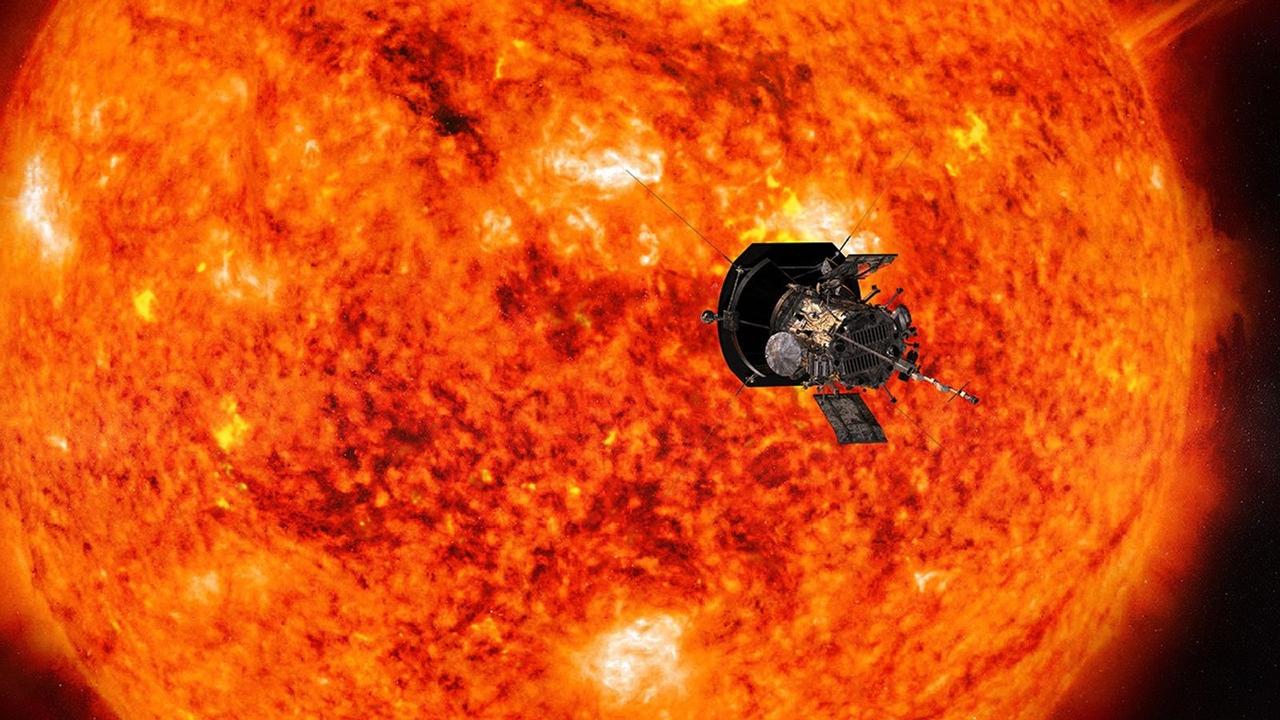
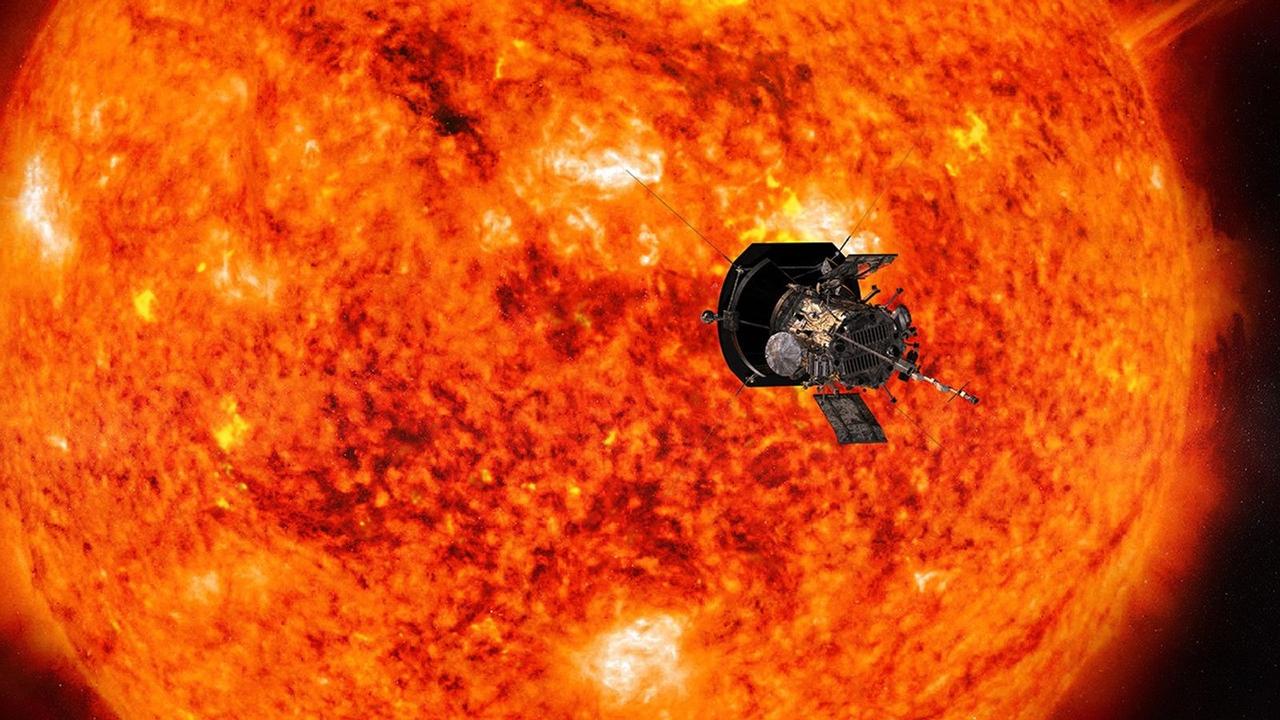
Parker Solar Probe (Parker Solar Probe) is an unmanned spacecraft developed by NASA and launched on 12 August 2018 to directly study the Sun’s atmosphere. The mission aims to elucidate the dynamics magnetic structures and energy transport processes of the solar wind by observing the Sun’s outer atmosphere the corona with high resolution. This mission represents a milestone in astrophysics and heliophysics research as it is the first human-made spacecraft to make direct contact with the Sun’s interior.
Parker Güneş Sondası (NASA)
The probe is constructed from specially developed high-temperature-resistant materials to withstand proximity to the Sun’s surface. One of its most notable features is a carbon-composite thermal shield approximately 11.43 cm thick. This shield maintains the spacecraft’s main body at around 30°C even under surface conditions reaching 1370°C (2500°F). The front surface of the shield is made of carbon-carbon material while the rear surface is coated with a special white ceramic layer. This design reflects radiation and disperses heat without significant absorption.
The solar panel system has also been engineered with special thermal protection. Only a small portion extends beyond the shield and is supported by active liquid cooling circulation systems to ensure operation even under extreme temperatures.
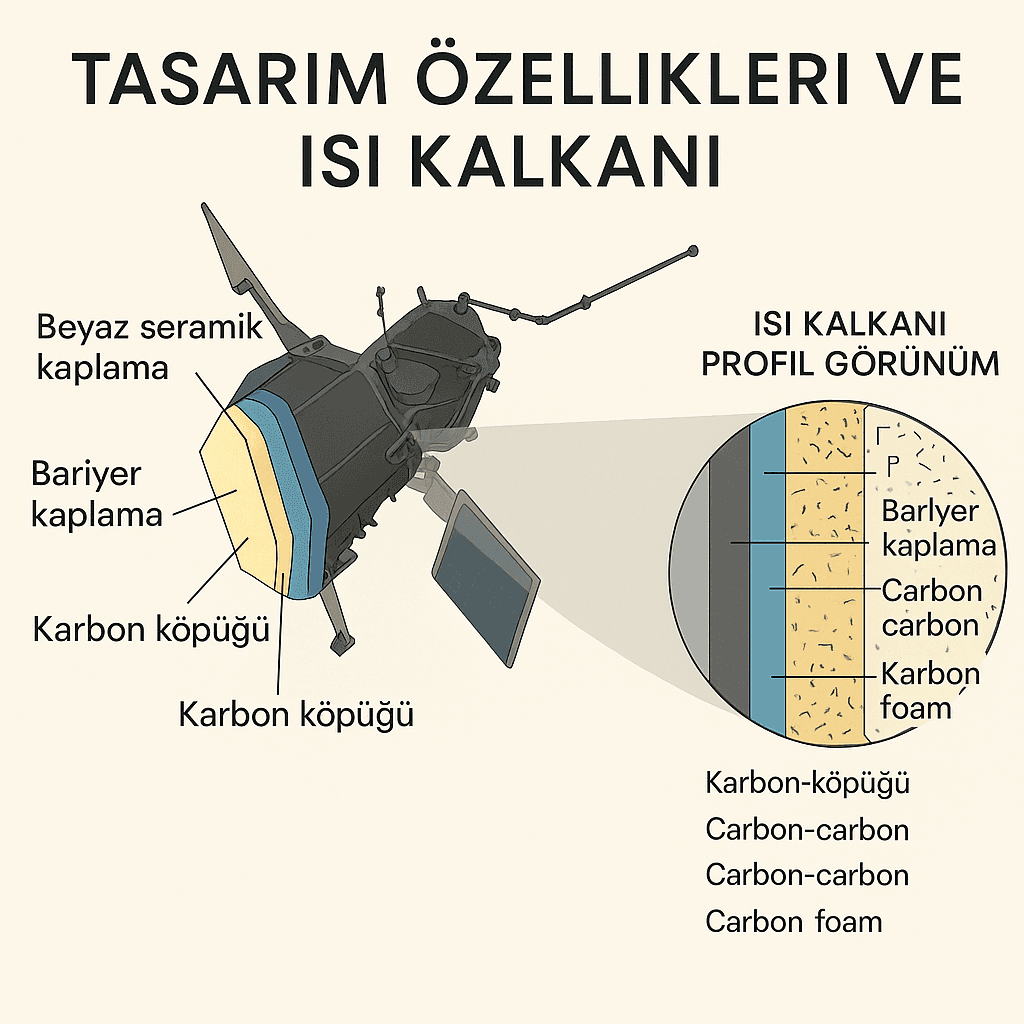
Parker Güneş Sondasının ısı kalkanının yapısı(Yapay Zeka İle Oluşturulmuştur)
The Parker Solar Probe carries four primary scientific instrument suites designed to measure the Sun’s magnetic fields plasma waves energetic particles and electrical environment:
The Parker Solar Probe mission comprises a total of 24 close approaches. To progressively reduce its distance from the Sun during each orbit seven gravity assist maneuvers using the gravitational pull of Venus are planned. Starting in 2024 the probe’s closest approach to the Sun will be approximately 6.2 million kilometers — just nine times the Sun’s diameter.
When launched in 2018 the probe was approximately 25 million kilometers from the Sun. Over time this distance has decreased and during a flyby in 2021 the probe entered for the first time the region inside the Alfvén critical surface — the boundary beyond which the Sun’s magnetic influence no longer dominates. On 18 April 2021 observations confirmed that the probe crossed this boundary three times spending approximately five hours within the Sun’s corona. This event has been described as humanity’s first “touching of the Sun”.
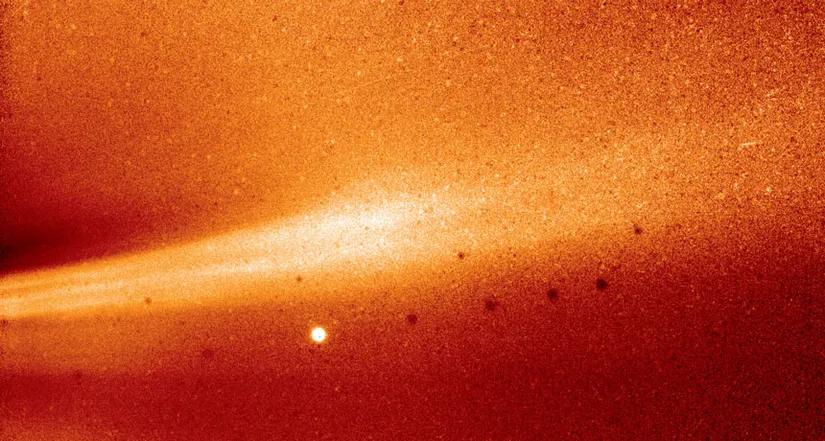
The image taken by the Parker Solar Probe on 8 November 2018 from a distance of approximately 27 million kilometers beyond the Sun's surface (within the Sun's plasma).NASA)
Plasma particles streaming from the Sun reach a critical speed known as the Alfvén speed at which the Sun’s magnetic field can no longer control them. This boundary is defined as the Alfvén critical surface. Particles beyond this boundary break free from the Sun and form the solar wind. Previous remote observations suggested this surface lies between 10 and 20 solar radii (approximately 6.9 to 13.8 million kilometers) from the Sun’s surface. The Parker Solar Probe has revealed that this boundary extends much farther inward in some regions prompting a reevaluation of heliophysical models.
The greatest challenges faced by the probe during flight include operating under extreme thermal radiation high-velocity plasma particles and intense magnetic fields. The spacecraft’s orbital velocity reaches up to approximately 192000 kilometers per second — among the highest speeds ever achieved by a spacecraft. Any hardware outside the thermal shield would vaporize within seconds so every component and sensor is precisely aligned to remain in the shield’s shadow.
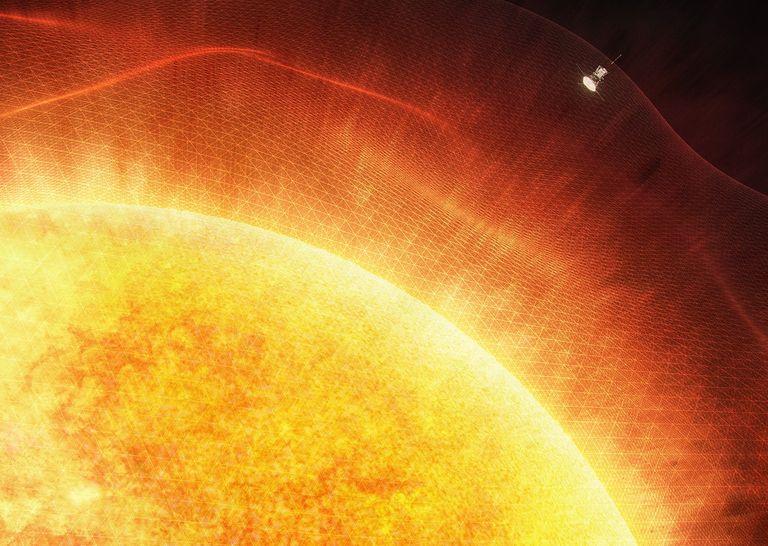
Visual symbolizing the Parker Solar Probe's approach to entering the Sun's corona (NASA)
The Parker Solar Probe is unique not only for its proximity to the Sun but also for its ability to make direct measurements. Previous missions (SOHO STEREO Ulysses) were limited to remote sensing. With Parker scientists have obtained direct measurements of temperature density velocity and magnetic fields within the Sun’s dynamic environment. These data are critical for improving space weather forecasting and for developing predictive models to protect Earth’s power grids and communication infrastructure.
The Parker Solar Probe is a groundbreaking mission in both engineering and science. It provides a robust data foundation for humanity to better understand its most powerful energy source and to advance future technologies operating in space. The mission will continue until 2025 and the data collected during its final approaches will significantly advance the field of heliophysics.
Aydın Üniversitesi Gözlemevi. "İnsanlık Güneş’e Dokundu." Accessed May 21, 2025.
BBC Türkçe. "NASA'nın Parker Solar Probe Uzay Aracı Güneş'in Koronasına Girdi." Accessed May 21, 2025.
Johns Hopkins APL. "The Mission." Accessed May 21, 2025.
Mahir E. Ocak. "Parker Güneş Sondası Güneş’e ‘Dokundu!’" Haberler Şubat 2022, p. 11.
NASA. "Parker Solar Probe." Accessed May 21, 2025.
Spaceprob.es. "Parker." Accessed May 21, 2025.
TÜBİTAK Bilim Genç. "Parker Güneş Sondası Güneş’e Dokundu." Accessed May 21, 2025.

Parker Solar Probe
Name | Parker Solar Probe | ||||||||
|---|---|---|---|---|---|---|---|---|---|
Type | Solar observation satellite (space probe) | ||||||||
Developing Institution | NASA – Johns Hopkins University Applied Physics Laboratory (APL) | ||||||||
Launch Date | 12 Ağustos 2018 | ||||||||
Launch Vehicle | Delta IV Heavy + Star 48BV upper stage | ||||||||
Launch Site | Cape Canaveral Space Force Station, Florida, USA | ||||||||
Mission Duration | Approximately 7 years (2018–2025) | ||||||||
Total Approaches | 24 solar encounters | ||||||||
Closest Distance | ~6.2 million km (planned) 8.5 million km (achieved in 2021) | ||||||||
Orbital Velocity | ~192,000 km/s (at closest approach to the Sun) | ||||||||
Thermal Shield | 11.43 cm thick carbon-composite ceramic shield | ||||||||
Protection Temperature Range | Outer: ~1370°C Inner: ~30°C | ||||||||
Mission Objective | To directly observe the Sun's atmosphere and study the solar wind and magnetic fields | ||||||||
Energy System | Actively cooled solar panels | ||||||||
Mission Status | Active (planned to continue until 2025) | ||||||||
Design Features and Thermal Shield
Scientific Payload and Instruments
Mission Profile and Orbital Characteristics
The Alfvén Critical Surface
Technical Challenges and Thermal Management
Mission Significance and Impact