


This article was automatically translated from the original Turkish version.
Paris, with its vast boulevards, box-like apartment buildings that contrast with them, and cosmopolitan character, made me ask again: “Where is the true capital of Europe?” The mix of confidence and unease I felt when I first stepped into the city gave way to an unexpected sense of longing as I left. Before this journey, while viewing Berlin as Europe’s locomotive, my time in Paris made me realize the answer might not be so fixed. Why? Let me share with you the experiences I gained on this trip.
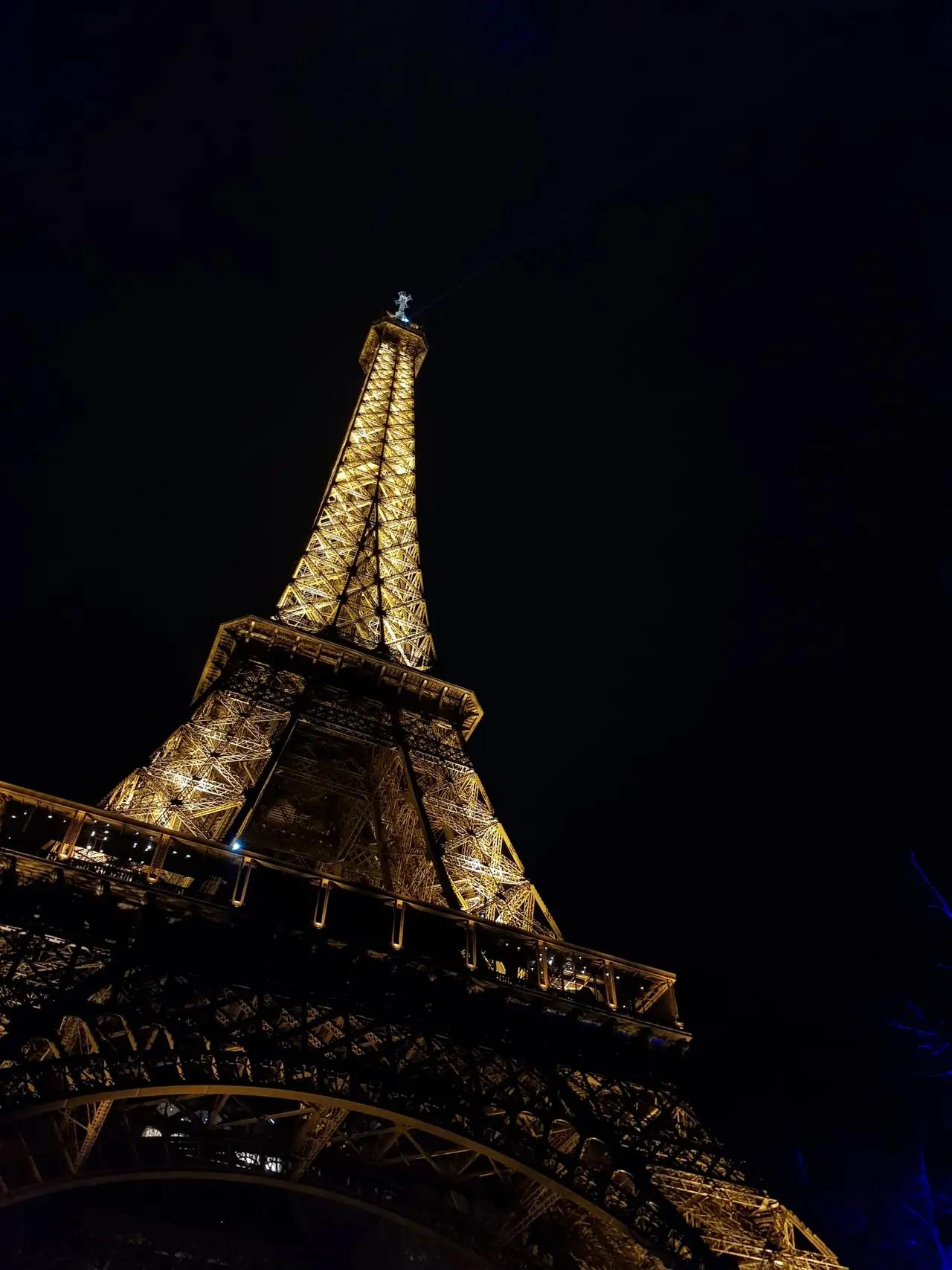
Eiffel Tower (Photo: Elyesa Köseoğlu)
If you travel to Paris or any other city in France, you will likely notice that the majority of the cabin crew are French. The moment you begin hearing French on the plane, it feels as if your journey has officially begun. Simple words like “bonjour,” “monsieur,” and “madame” involuntarily bring a smile to your face. Or perhaps this feeling is unique to me :)
I had experienced different atmospheres at airports across Europe, but this time, an encounter truly surprised me and shifted some of my perspectives. Previously, I rarely considered that airports in Europe might need separate spaces for worship by different religions. Yet seeing dedicated prayer areas for Muslims and Jews at Paris-Orly Airport changed my viewpoint. I cannot fully explain why this triggered such a feeling inside me, but it was as if I had personally fought—or we had fought—to defend religious freedom.
To reach the city center from the airport, as in most major metropolises, the metro was the fastest and most practical option. The Paris metro system was one of the most complex yet most accessible I have ever encountered; although it seemed daunting at first glance, it connected nearly every corner of the city. Was it beautiful? Absolutely. But from the perspective of my own currency, I must admit that transportation was somewhat expensive :)
The first detail that caught my attention upon entering the metro was its two-stage turnstile system. After scanning your card, you passed through one turnstile, then through a set of sliding doors. As a resident of a major metropolis, I did not immediately understand why this system was necessary. However, a small incident later that day would fully clarify its logic (as I will explain later in the guide) :)
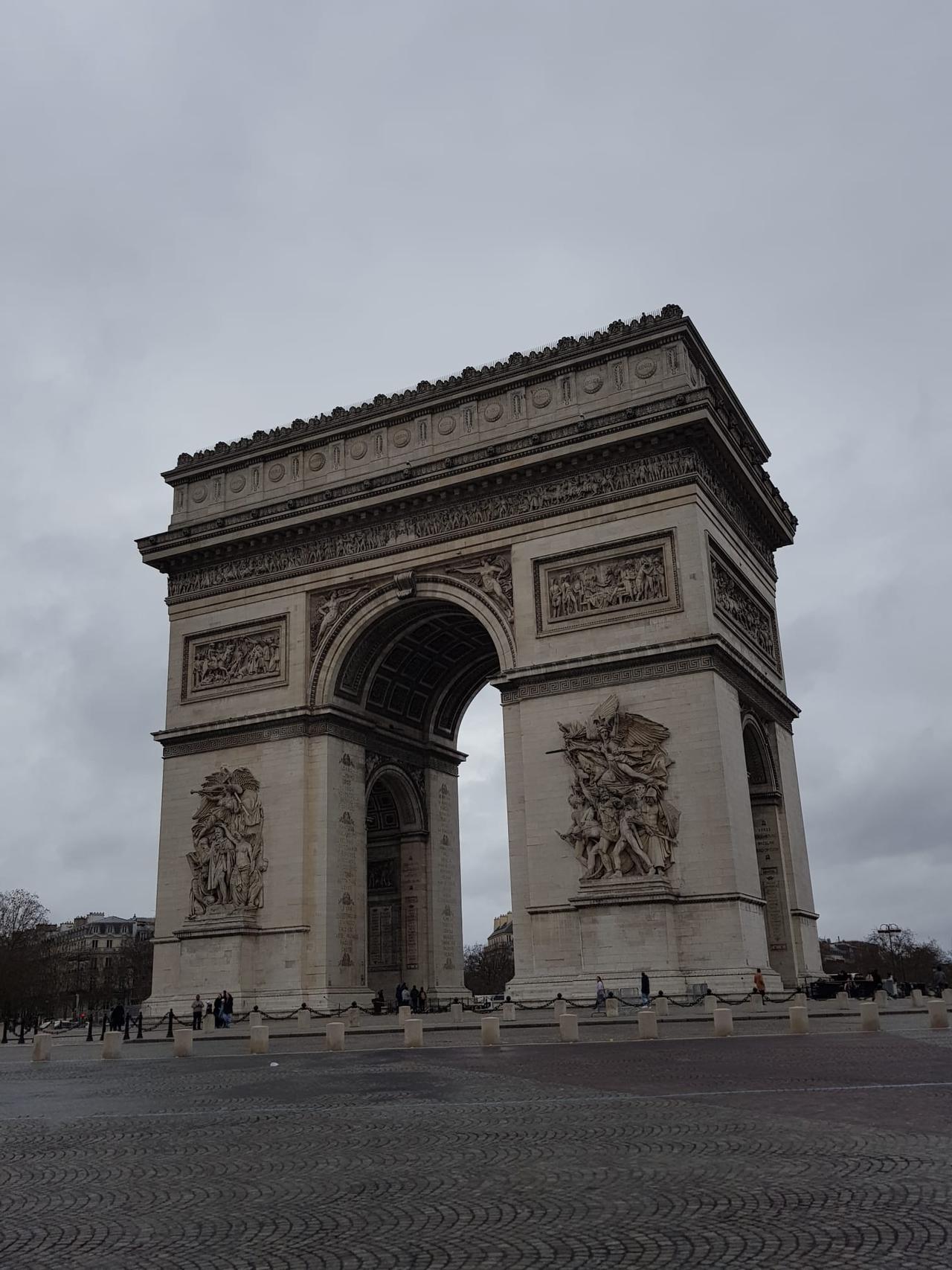
Arc de Triomphe (Photo: Elyesa Köseoğlu)
The first feeling I had when I sat down on the metro was a slight sense of insecurity. This was partly due to what I had heard about thefts occurring frequently on metro systems. Perhaps that is why the alerting, and quite irritating, sound that rang a few seconds before the doors closed at every station caught my attention—it felt like an invisible announcement saying, “Pay attention to your phone.”
In my view, metros are among the best places to observe a city’s inhabitants. Even while in motion, you can witness the city’s cosmopolitan structure, the rhythm of daily life, and the coexistence of diverse cultures. This metro ride in Paris gave me the impression of a highly varied population. I remained curious about whether this diversity stemmed from Europe’s moderate immigration policies or from France’s historical colonial ties to Africa and the Middle East.
When our metro journey ended, we headed to the hotel. The first thing I noticed upon opening the room door was that the rooms were much smaller than I had expected. I believe this is characteristic of Paris; I had heard before that apartments here are quite compact. What was more interesting was that while homes were small, the streets were exceptionally wide. I felt this same contrast from Champs-Élysées to many other parts of the city. It was as if people here preferred spending their time outdoors rather than indoors :)
After settling into the hotel, we decided to have a meal somewhere to gather energy before beginning our tour. Given our sensitivity regarding halal food, we searched for a Turkish restaurant and found ourselves at Elif abla’s place. Our initial conversation was somewhat distant, but over time it became quite intimate. I had heard many times that people in France were cold; while “cold” would not accurately describe Elif abla, I could sense how her twenty years of expatriate life in Paris had shaped her demeanor.
Thanks to the stories she told and the advice she gave, we not only filled our stomachs but also acquired a small guide to Paris. We took numerous notes on where to go, and with the energy from this conversation, we began our tour with greater enthusiasm.
Champs-Élysées, famous in novels and films, was our first stop. We descended from a metro station just five minutes from the hotel, making it easy to reach any part of the city. The Paris metro network was so extensive that at one point we found ourselves standing between two overlapping metro lines. To exit, we had to enter the platform of another line and then reach the street.
For this route, Line M1 suited us well; we traveled from Gare de Lyon to Hôtel de Ville. This location was right next to the Louvre Museum and served as a perfect starting point to feel the city’s central atmosphere. The first thing that caught my eye upon stepping onto the street was people running in athletic gear. Seeing runners go from one end of the avenue to the other initially surprised me, then made me appreciate how healthy a habit this was. Perhaps this was a subtle clue to why Parisians maintain such fit physiques; at least, obesity seemed hardly a topic of discussion here. Before I could adjust to the runners, I was further struck by bicycle lanes covering nearly a third of the road and the heavy bicycle traffic. This was one of the few things I truly admired about Europe.
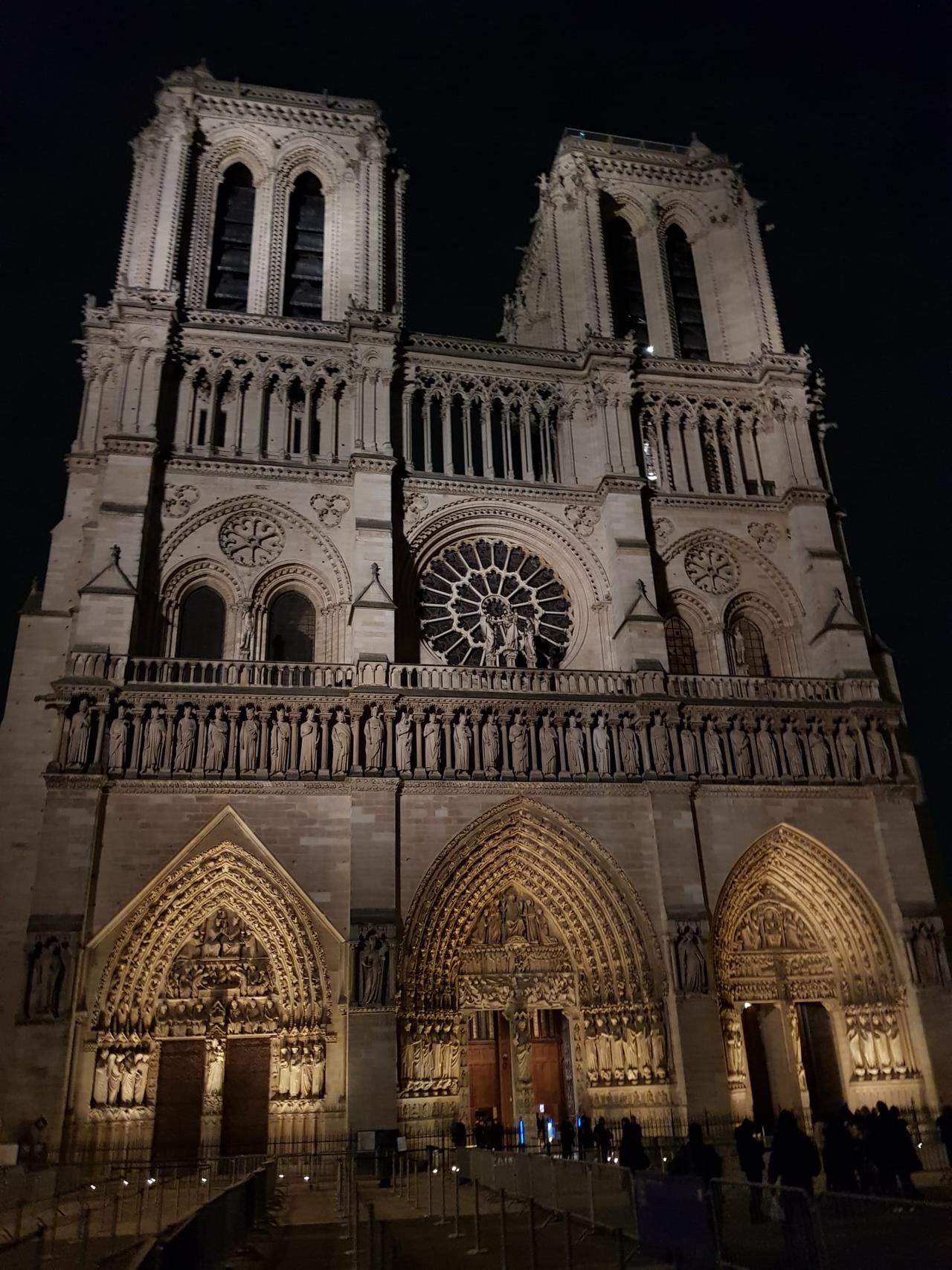
Notre Dame Cathedral (Photo: Elyesa Köseoğlu)
As I walked through the streets, I noticed how strong the café and restaurant culture was. Tables lined up outside shops added a nostalgic charm to the avenue. People sitting outdoors seemed to define the city’s rhythm. Seeing a drink at nearly every table felt like an integral part of Parisian social life.
As I continued walking along the avenue, I occasionally caught an unpleasant odor. I suspected it came from cannabis use, as I had encountered similar smells in several other European cities. When the scent became too strong, I decided to move away and took the metro back to the beginning of Champs-Élysées—the Arc de Triomphe. This monument, where twelve avenues converge, was built to honor Napoleon’s army. The convergence of twelve roads enhances the monument’s vitality, and the constant flow of vehicles circling around it creates a striking panorama.
After admiring the view for a while, we began walking the length of Champs-Élysées. Honestly, aside from its width and orderliness, the avenue did not particularly surprise me; in fact, I would say I find the spirit of İstiklal Avenue warmer. The fact that Paris, an ancient city, possesses such wide boulevards sparked a new curiosity in me. I wondered how narrow, horse-drawn paths from centuries ago had transformed into these broad avenues. Recalling the narrow alleys of Fatih, this contrast became even more pronounced. As I researched, I learned that the city underwent a major urban transformation in the 19th century. The narrow, winding streets of the Middle Ages were gradually replaced by wide boulevards. I could not help but think that perhaps one reason homes in Paris today are so small is precisely because of this transformation :)
We decided to return to the hotel. No matter how impressive Paris was, the day’s fatigue had begun to set in, and we needed some rest. To get back, we again took the metro. The two-stage turnstile system I mentioned earlier gained meaning for me through a small incident I experienced at that moment.
As I approached the turnstile, I noticed a man approaching from behind. Knowing I needed to be cautious about pickpockets in Paris, I slowed my pace. I had seen videos of people trying to sneak through for free by following closely behind another passenger. Just as I stepped into the turnstile, I felt the man behind me attempting to slip through with me. At that moment, I turned calmly and gave him a look that clearly said, “No, brother.” He mumbled something and stepped back.
I passed through the double-security turnstile with heavy steps. Still, I wondered, “Did I misunderstand?” So I stopped a little further ahead and began observing those who came after me. Very soon, I saw the same man trying the same tactic on someone else. In that instant, I thought to myself: Welcome to Paris… but with a difference :)
We woke up early. Without wasting time, we set off to reach our pre-booked tickets for the Louvre Museum. After a short walk, we found ourselves once again within the metro network, heading toward the main entrance beneath the pyramid. The queue was not as long as I had expected, despite hearing so much about its extreme crowding. When we happily showed our tickets to the attendant, we encountered a small surprise: there was a strike that day, and the museum was closed until noon. We learned that access had been halted until 12:00 due to a protest over staff salaries. Although initially disappointed, we were told we could return in the afternoon. This incident made me reflect on why French people’s strike and protest culture is so strong in Europe. I began to better understand the social reflection behind the farmer and worker demonstrations I often see in the news. People clearly appeared very active in defending their rights.
To make use of our time, we walked around the city before heading to the Eiffel Tower. This massive structure, visible from many points in the city, was even more impressive up close. We sat for a while in the small park beneath it; I believe visiting this spot is definitely one of the things you must do when coming to Paris. After wandering for a while, we returned to the Louvre and this time entered without waiting in line.
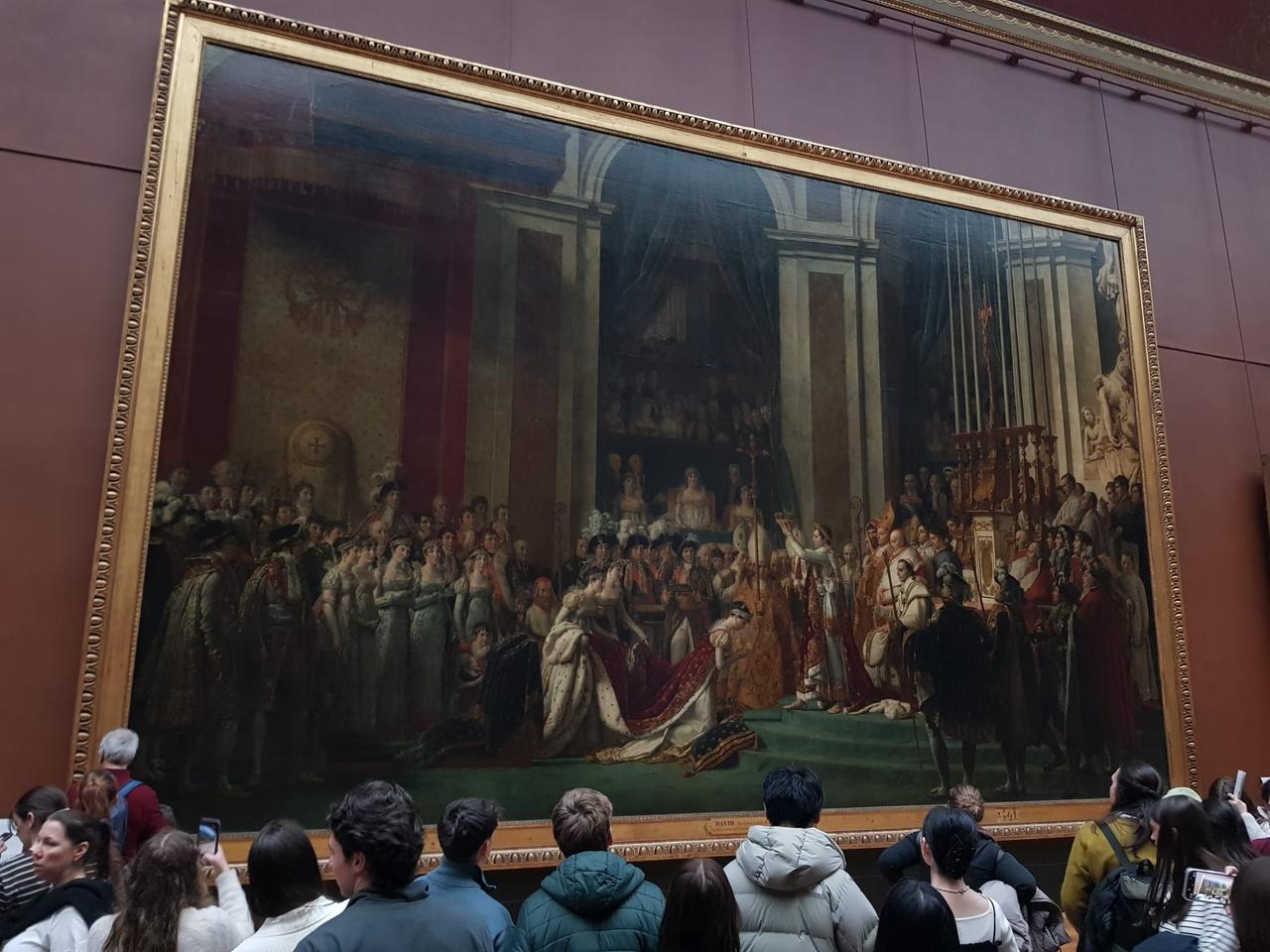
Coronation of Napoleon (Photo: Elyesa Köseoğlu)
The museum was as vast and impressive as described. One of the most striking details for me was seeing some visitors sitting in front of artworks sketching them, and young students listening to guides as they learned about the pieces. Encountering preschool and elementary school children in historical sites here was completely normal. This reflected the French sensitivity toward passing their history on to the next generation. Perhaps pride in one’s heritage begins with such experiences.
As I wandered through the painting galleries, I noticed that many works from medieval Europe depicted themes such as the birth, miracles, and death of Jesus Christ. I then entered the room housing the famous Mona Lisa. Honestly, what caught my attention more than seeing the painting itself was the frenzy of people trying to prove they had seen it. Most people seemed more focused on taking photos with their phones than actually observing the artwork. The museum was so vast that, due to our limited time, we had to skip some sections.
After quickly visiting a few other popular halls, we headed toward Notre Dame Cathedral. It was impressive that, despite the recent fire, it had been restored and reopened within just a few years. We entered with a reservation. As soon as I saw the cathedral, Victor Hugo’s The Hunchback of Notre Dame came to mind; I imagined the atmosphere Quasimodo lived in. But as soon as I stepped inside, the romantic scene in my mind quickly gave way to a simpler reality. Unlike the ornate interiors of churches I had seen in southern Europe, such as in Rome, here the architecture felt more minimal. I noticed that as one moved northward, interior spaces became increasingly sparse, and I wondered whether this related to denominational architectural traditions.
While walking inside the cathedral, I tried to connect the religious-themed artworks I had seen at the Louvre with the atmosphere here. Later, I learned that one of the relics believed to be the Crown of Thorns worn by Jesus Christ is also displayed here; however, we had missed it at the time. Leaving the cathedral to the sound of its bells, we walked slowly back to the hotel. Light rain accompanied us on our final evening in Paris.
This city, which initially seemed distant but gradually changed my perspective, gave me many new ways of seeing the world. I hope these travel notes have been an enjoyable and informative journey for you as well.
