


This article was automatically translated from the original Turkish version.
Paramedic is a healthcare professional trained to provide pre-hospital emergency medical services and authorized to perform medical interventions in emergency situations. They are responsible for maintaining, stabilizing, and, when necessary, intervening to preserve the patient’s vital functions from the scene of the incident to the hospital.
The primary objective of paramedics is to provide basic and advanced life support to patients and injured persons in pre-hospital emergency medical services, identify all types of systemic trauma, apply appropriate emergency protocols, and ensure the safe transport of patients or injured individuals who have received initial care to hospitals via ambulance.
Under the “Annex 1B of the Regulation on the Job and Duty Definitions of Health Professionals and Other Professionals Working in Health Services,” published in the Official Gazette No. 29007 on 22 May 2014【1】, the job and duty definitions of paramedics are as follows:
A land ambulance is a vehicle equipped with specialized medical equipment designed to transport patients requiring emergency medical intervention as quickly and safely as possible to healthcare facilities. It has priority right-of-way on roads and provides 24/7 service for emergency situations.
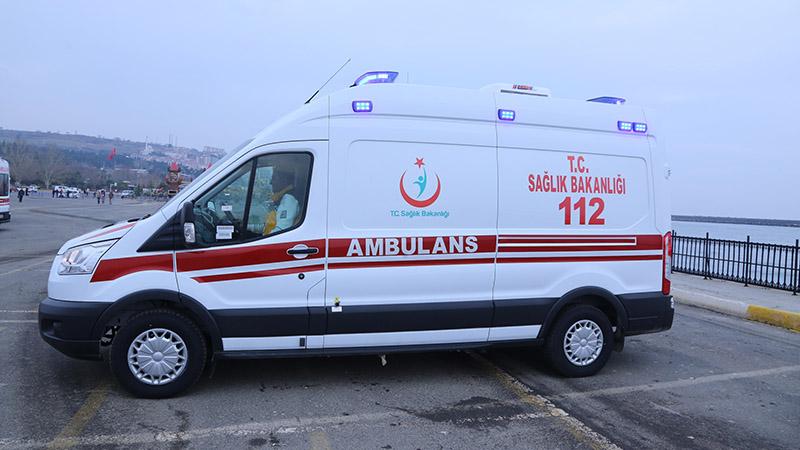
Land Ambulance. (T.C. Ministry of Health)
Marine ambulances are used for patient transport or when emergency medical intervention is required. These types of ambulances must obtain operational permits from the Ministries of Transport, Communications and Maritime Affairs. They must also be equipped with the medical devices specified in relevant regulations. At least one healthcare professional must be present on board during transport. Equipment on marine ambulances includes radio and telephone systems, a blood pressure device, one portable oxygen unit, navigation systems, and one basic medical supplies kit. Additionally, these vehicles must be registered with an authorized traffic unit. They must also display luminous text and markings indicating their purpose.
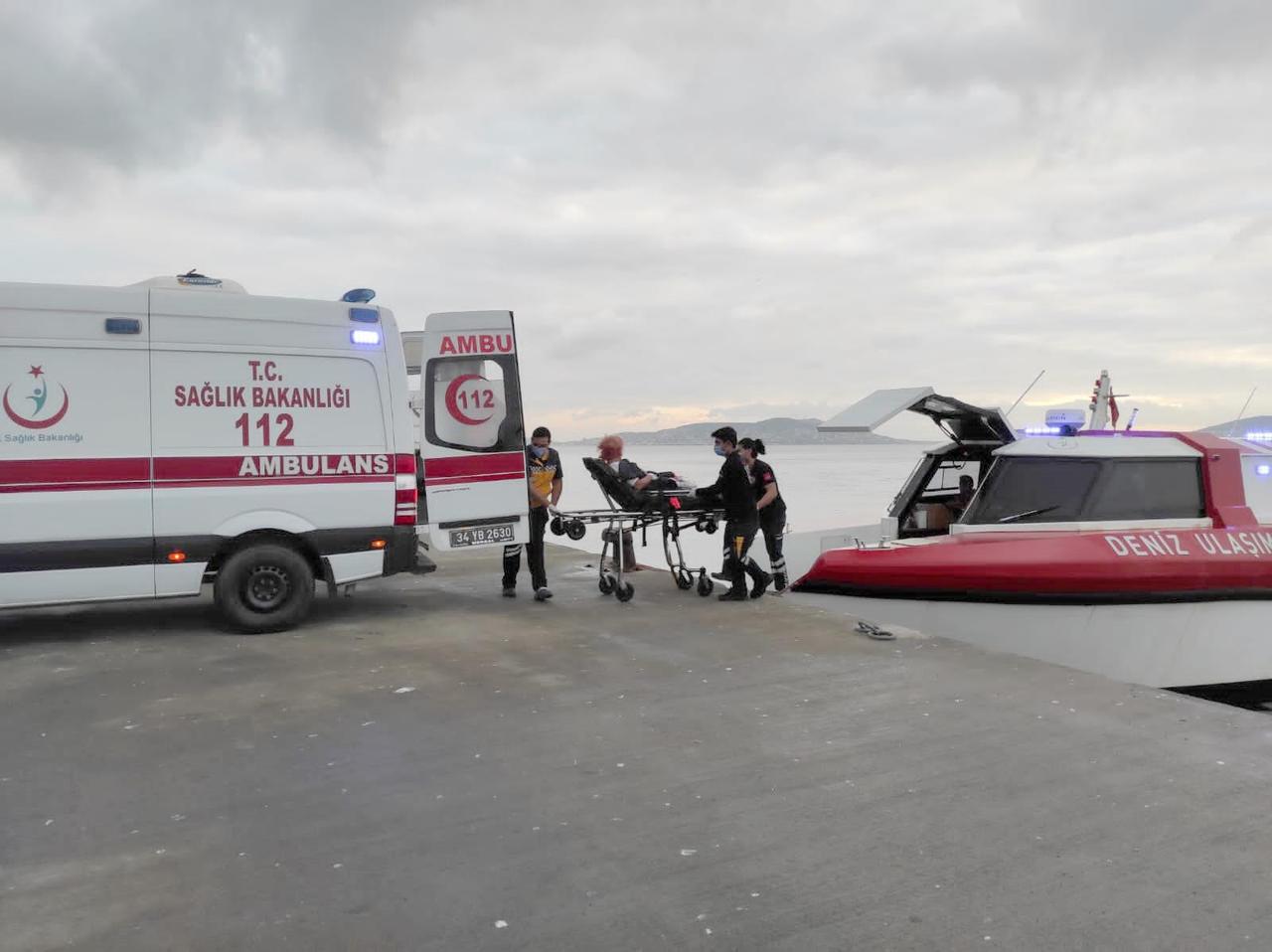
Marine Ambulance. (T.C. Ministry of Health)
Air ambulances have been in service in Türkiye since 2010. Three air ambulances are currently operational: one with four stretchers, one with two stretchers, and one with a single stretcher.
Unlike helicopter ambulances, which operate only during daylight hours, air ambulances provide 24-hour service. Due to their high speed, long range, high flight ceiling, and adjustable cabin pressure, they are capable of providing services both within Türkiye and internationally.
Like helicopter ambulances, air ambulances are equipped with medical devices capable of transporting patients requiring intensive care. All necessary medical equipment and supplies for advanced intensive care are available on board. Additionally, equipment required for transporting neonates is also present on these aircraft.
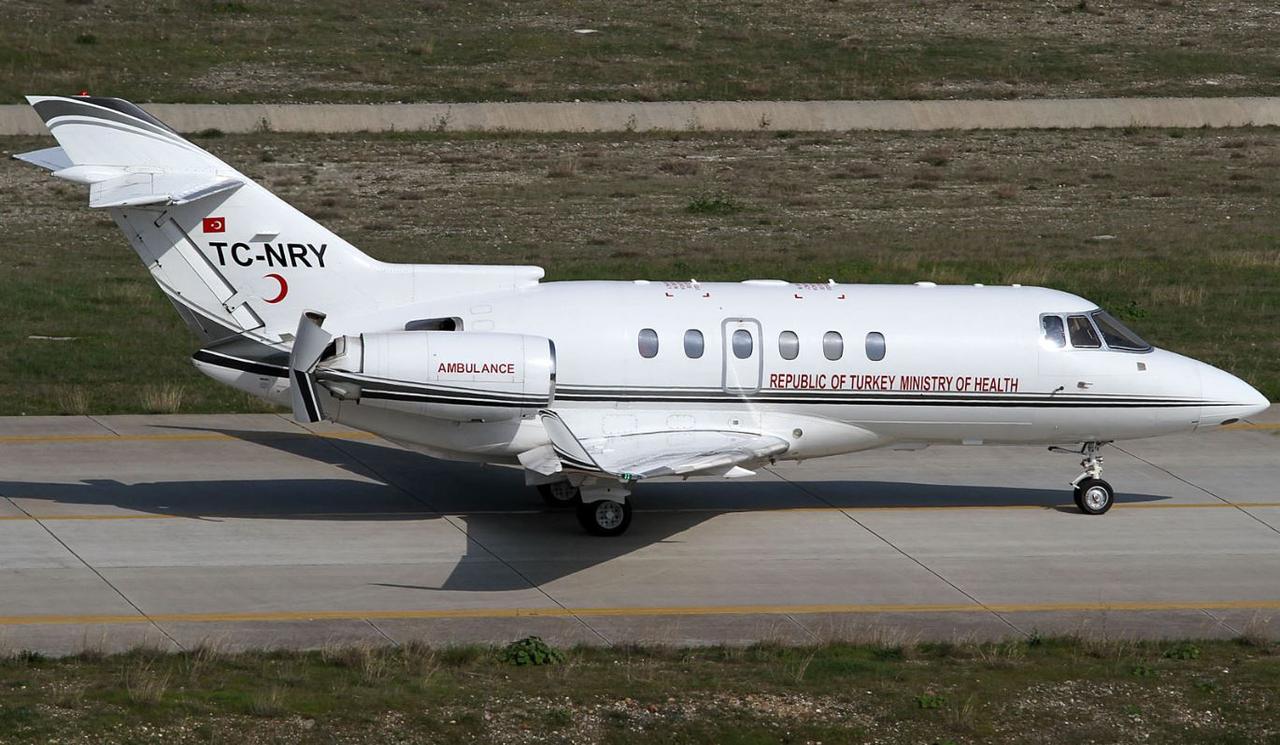
Air Ambulance. (T.C. Ministry of Health)
Ambulance helicopters operate between sunrise and sunset and can transport patients or injured persons up to 400 kilometers from their base locations without refueling, remaining airborne for up to two hours and thirty minutes. This range and duration can be extended with mid-flight refueling when necessary.
Air ambulance helicopters stationed in provinces designated by the Ministry are managed and dispatched by the 112 Command and Control Center of the respective province. Dispatch and management outside their designated regions are handled by the Ministry’s Air Operations Center. These helicopters are equipped with all necessary medical devices to provide intensive care during transport to the nearest healthcare facility. Neonatal transport equipment is also available on board. To date, all types of emergency medical interventions, including resuscitation during flight, have been successfully performed using ambulance helicopters.
Ambulance helicopters have transported pregnant women and infants from villages cut off by snow, delivered organs to citizens awaiting transplants in the shortest possible time, and rapidly transferred severely injured citizens from road accidents to intensive care units.
The largest group of patients transported by ambulance helicopters are cardiac patients. This is followed by patients with brain and nervous system disorders, trauma, respiratory diseases, traffic accidents, gastrointestinal illnesses, neonatal cases, infectious diseases, and other emergencies.
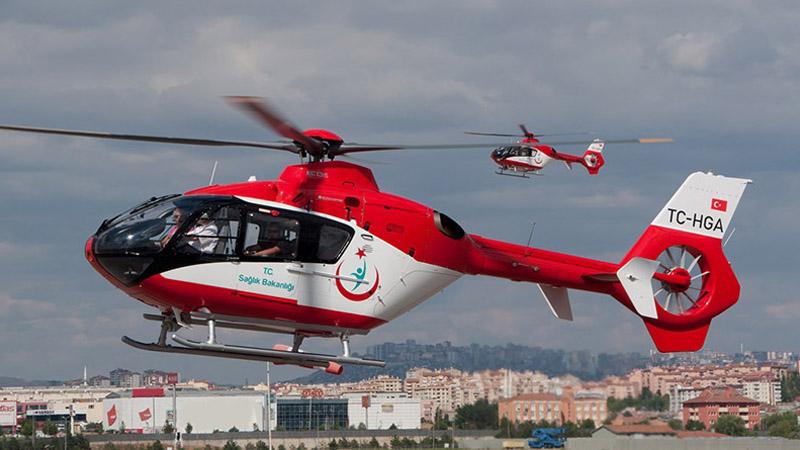
Ambulance Helicopter. (T.C. Ministry of Health)
Paramedic education in Türkiye began in 1993 at the School of Health Services of Dokuz Eylül University. In 2004, paramedics began serving in the 112 Ambulance Service and became a vital component of the emergency medical system.
Acil Sağlık Hizmetleri Genel Müdürlüğü. "Ambulans Çeşitleri." T.C. Sağlık Bakanlığı Acil Sağlık Hizmetleri Genel Müdürlüğü. Accessed April 30, 2025.https://acilafet.saglik.gov.tr/TR-4467/ambulans-cesitleri.html. Acil Sağlık Hizmetleri Genel Müdürlüğü. "Helikopter Ambulans." T.C. Sağlık Bakanlığı Acil Sağlık Hizmetleri Genel Müdürlüğü. Accessed April 30, 2025.https://acilafet.saglik.gov.tr/TR-78201/helikopter-ambulans.html. Acil Sağlık Hizmetleri Genel Müdürlüğü. "Kara Ambulansı." T.C. Sağlık Bakanlığı Acil Sağlık Hizmetleri Genel Müdürlüğü. Accessed April 30, 2025.https://acilafet.saglik.gov.tr/TR-4492/kara-ambulansi.html. Acil Sağlık Hizmetleri Genel Müdürlüğü. "Uçak Ambulans." T.C. Sağlık Bakanlığı Acil Sağlık Hizmetleri Genel Müdürlüğü. Accessed April 30, 2025.https://acilafet.saglik.gov.tr/TR-78200/ucak-ambulans.html. Asrın Ambulans. "Kara, Hava ve Deniz Ambulansı." Accessed April 30, 2025.https://asrinambulans.com.tr/kara-hava-ve-deniz-ambulansi. T.C. Resmî Gazete. "Paramedik ve Ambulans ve Acil Bakım Teknikerlerinin Görev, Yetki, Sorumluluk ve Eğitimlerine Dair Yönetmelik." May 22, 2014. Accessed April 30, 2025.https://resmigazete.gov.tr/eskiler/2014/05/20140522-14.htm. Özcan, Cihangir, Ertuğrul, Bekir, and Sarugan, Muammer. Türkiye’de Acil Sağlık Hizmetleri İçinde Paramedikler. Sosyal Sağlık ve Yardımlaşma Vakfı (SSYV), April 2023. Accessed April 30, 2025.https://ssyv.org.tr/wp-content/uploads/2023/04/3-Turkiyede-Acil-Saglik-Hizmetleri-Icinde-Paramedikler.pdf. Yıldırım, Dilek, Sarı, Ebru, Gündüz, Seda, and Yolcu, Sadiye. Smyrna Tıp Dergisi. "Paramedik Eğitimi." Accessed April 30, 2025.https://www.smyrnatipdergisi.com/dosyalar_upload/belgeler/Paramedik%20e%C4%9Fitimi1473862046.pdf.
[1]
T.C. Resmî Gazete. "Paramedik ve Ambulans ve Acil Bakım Teknikerlerinin Görev, Yetki, Sorumluluk ve Eğitimlerine Dair Yönetmelik." 22 Mayıs 2014. Erişim 30 Nisan 2025. https://resmigazete.gov.tr/eskiler/2014/05/20140522-14.htm

Responsibilities of Paramedics
Types of Ambulances Used by Paramedics
Land Ambulance
Marine Ambulance
Air Ambulances
Air Ambulances
Ambulance Helicopters
History in Türkiye