


This article was automatically translated from the original Turkish version.
Paan is a traditional treat commonly consumed in India and South Asia countries, typically chewed after meals. It consists of various ingredients wrapped in a betel leaf and is regarded both as an aid to digestion and as a social symbol. The ingredients enclosed in the leaf cater to different palate preferences, ranging from sweet to spicy varieties. 【1】
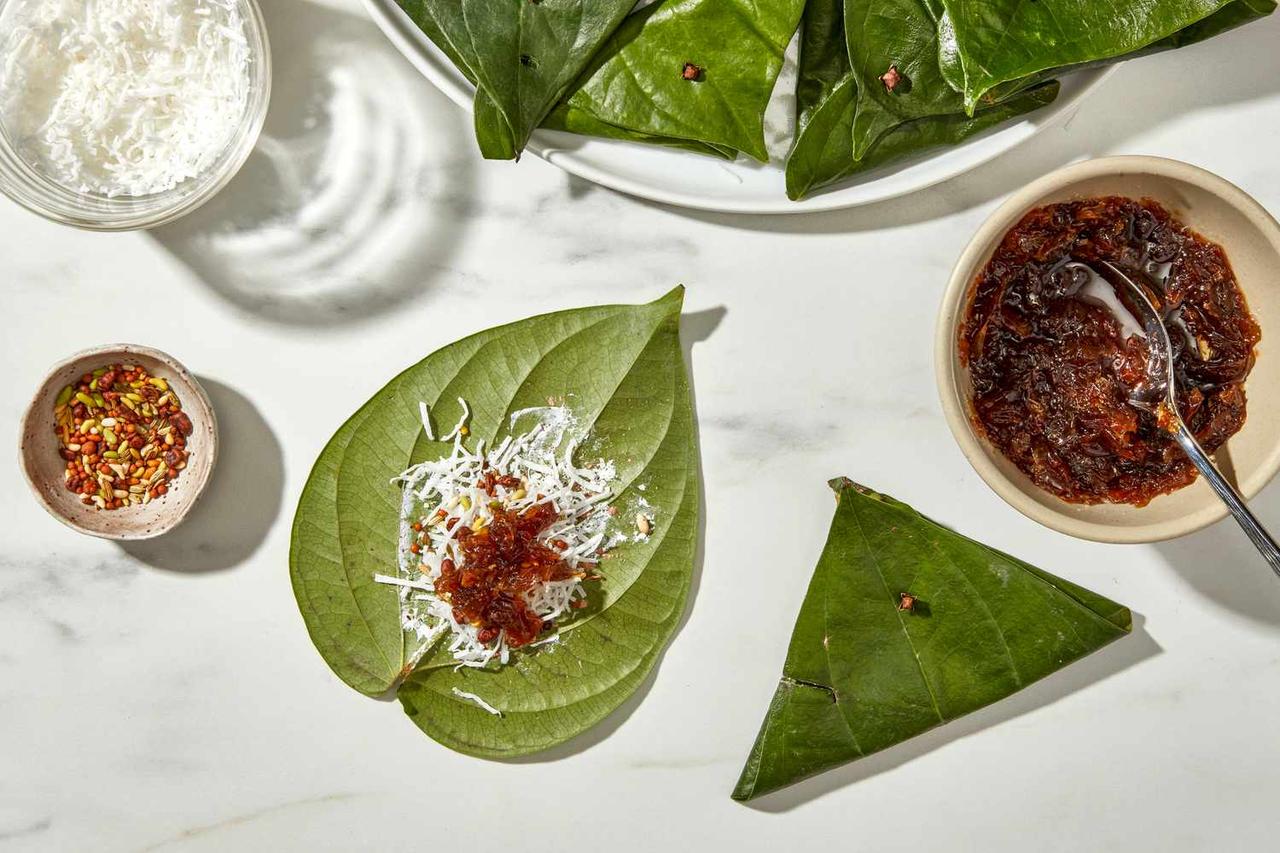
In many Southeast Asian countries, it is consumed after meals to aid digestion.
Paan is composed of ingredients that vary according to regional and personal preferences. The most commonly used ingredients are:
•Betel Leaf: This leaf, the main component of paan, has a slightly spicy and sharp flavor.
•Areca Nut: A frequently used ingredient that adds crunch to paan.
•Lime (Chuna): Applied as a thin layer on the surface of the leaf.
•Spices and Sweeteners: Ingredients such as rose syrup, cardamom, aniseed, coconut, and sugar are added to sweeten it.
•Tobacco (optional): Some varieties of paan contain chewable tobacco, though this is a subject of health concern.
•Gulkand: A type of jam made from rose petals, used in sweet paan varieties.
In India, paan is not merely a food but also a part of a rich cultural heritage. Its historical origins extend back to the 3rd century BCE in the Indian subcontinent. Paan holds a special place in numerous social and cultural events such as weddings, religious rituals, and hospitality ceremonies.【2】
•Symbol of Hospitality: Traditionally, offering paan to guests signifies a warm welcome.
•Digestive Aid: Paan consumed after meals is known for its digestive properties.
•Social Interaction Tool: Paan is an integral part of conversations and social gatherings.
1.Sweet Paan: Contains gulkand, dried fruit, and sweet ingredients. It has a mild and refreshing taste.
2.Spicy Paan: Prepared with sharper and more aromatic spices.
3.Tobacco Paan: This variety, which contains tobacco, is traditionally consumed by adults.
Preparing paan is considered an art and requires experience. It generally follows these steps:
1. Take a fresh betel leaf and spread a thin layer of lime (chuna) on it.
2. Place areca nut, gulkand, and other ingredients in the center of the leaf.
3. Carefully fold the leaf into a packet.
4. The prepared paan is chewed directly.
Paan consumption is known to aid digestion and create a refreshing sensation in the mouth. However, tobacco-containing paan should be consumed with caution due to potential health risks. Tobacco-free and sweet varieties offer a safer alternative.

Ingredients
Cultural Significance
Types of Paan
Preparation of Paan
Paan and Health