


This article was automatically translated from the original Turkish version.
+2 More
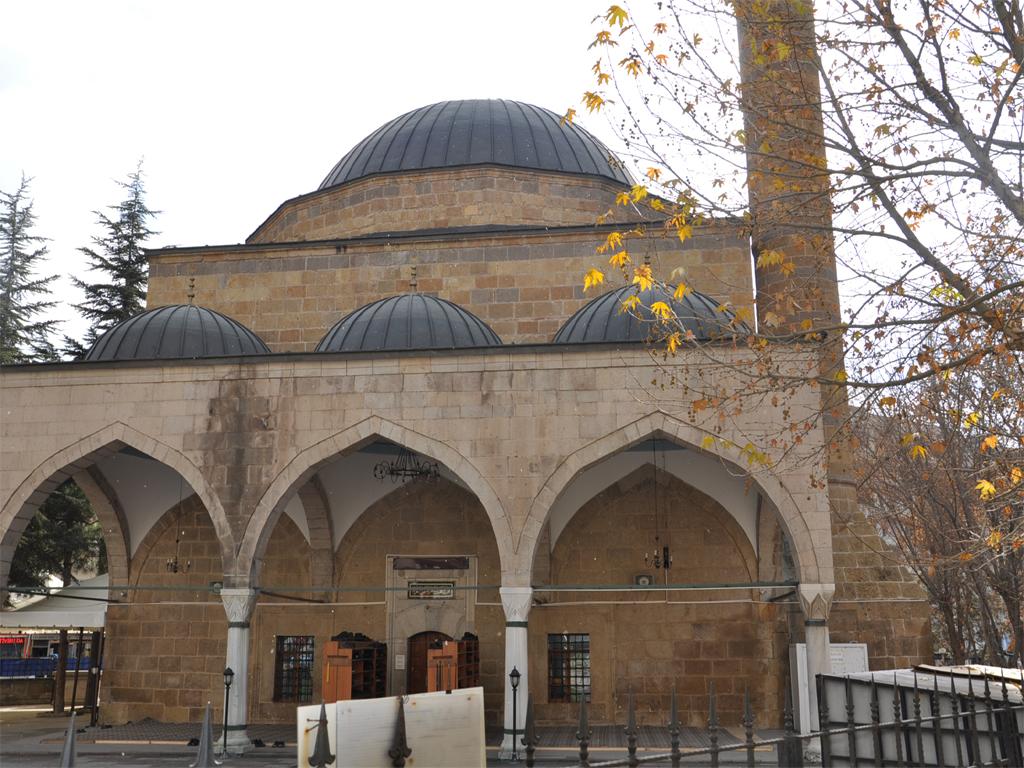
Outer (Çelebi Hüsamettin) Camii
Window Arrangement | 17 windows | ||||||||
|---|---|---|---|---|---|---|---|---|---|
Location | Nigde Center / Türkiye | ||||||||
Minaret | Single-minaret | ||||||||
Final Congregation Area | 5.40 × 17.10 m, three-dome (with pendentive transition) | ||||||||
Harim Dimensions | 17.10 × 17.10 m | ||||||||
Mosque Type | Single-dome Ottoman mosque | ||||||||
Material(s) | Yellowish trachyte stone (walls and dome drum) marble (door lintels) ash-colored cut stone (mihrab and minaret) | ||||||||
Construction Date(s)(Text) | No inscription found 16th century based on architectural features | ||||||||
Dışarı (Çelebi Hüsamettin) Camii is located on Bor Street in the Saruhan Neighborhood of the central district of Niğde Province. Although no foundation inscription has survived, the building is dated to the mid-16th century based on its plan type, stonework, and architectural elements. The structure has reached the present day through various restorations and continues to serve its function as a place of worship.

Dışarı Camii (Niğde Provincial Directorate of Culture and Tourism)
No foundation inscription of Dışarı Camii has survived to the present day; therefore, its exact construction date remains unknown. However, considering its architectural features, stonework, and plan layout, the mosque is generally accepted to have been built in the mid-16th century during the Ottoman Classical period. The popular name “Dışarı Camii” likely derives from its location outside the urban center, situated at the periphery of the settlement. In the Culture Portal and local archives, the mosque is also referred to in some sources as “Çelebi Hüsameddin Camii,” a designation that may indicate a connection to its founder or a prominent figure of the era.
Throughout its history, the mosque has undergone repairs in various periods. In particular, the last congregational space on the north side was previously demolished but has since been reconstructed in accordance with its original plan. The original stone minbar has not survived; some sources suggest that the current minbar may have been transferred from the Sungur Bey Camii in Niğde. However, it is also emphasized that this transfer lacks definitive historical documentation.
The mosque is one of the examples of Ottoman Classical architecture in Anatolian provincial settings and belongs to the category of single-domed mosques. The prayer hall measures 17.10 × 17.10 meters externally. On its northern side, a three-domed annex measuring 5.40 × 17.10 meters is situated. This section was previously demolished but has been rebuilt faithfully to its original plan. The three domes are supported by pendentives resting on columns at the corners and center. In the northwestern corner stands a single-balconied minaret constructed of ash-colored stone.
The facade walls and the drum of the dome are built using fine-cut yellowish trachyte stone. Ash-colored stone is used in the minaret, while ash-colored ashlar stone is preferred in the area of the mihrab. Careful stonework is evident throughout the structure. The proportionally balanced facade walls and the orderly arrangement of stone joints reflect a simple yet high-quality architecture.
The building’s walls are constructed to a considerable height, with two rows of windows arranged on each wall to illuminate the interior space. There are a total of seventeen windows: eight in the lower row, eight in the upper row, and one in the drum of the dome. This arrangement ensures a well-lit interior while reducing visual monotony on the facade surfaces.
The entrance to the prayer hall is through a recessed arch portal with marble surrounds, located at the center of the northern facade, measuring 1.15 × 2.10 meters. Decorative elements are generally restrained throughout the structure, with ornamentation concentrated primarily on the mihrab and the muezzin’s gallery. The stonework on the mihrab stands out as an aesthetic feature within the building’s overall simplicity.
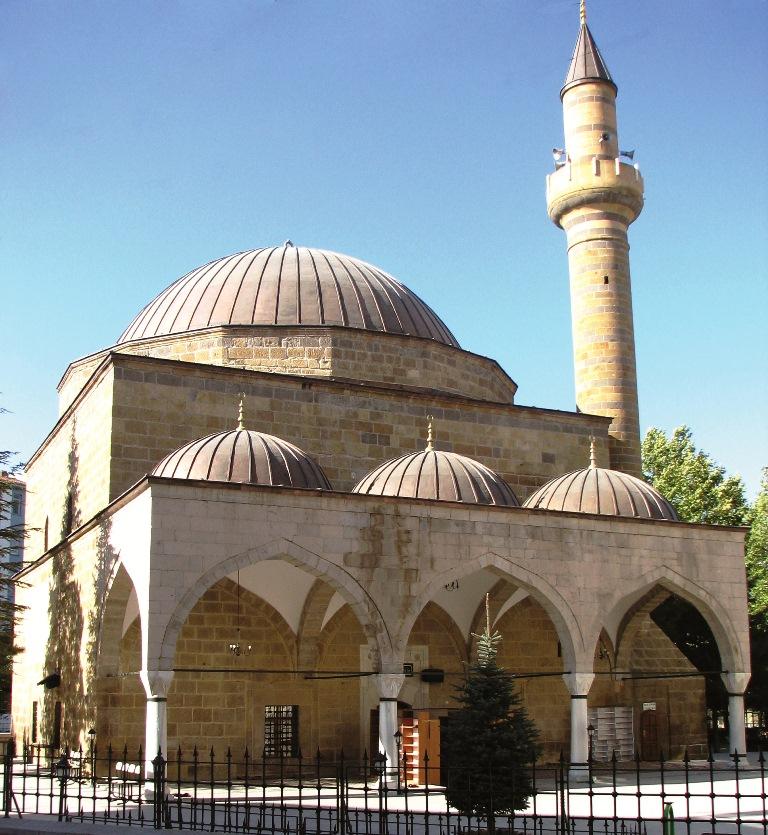
Dışarı Camii (Türkiye Culture Portal)
Ministry of Culture and Tourism of the Republic of Turkey. “Dışarı Cami / Çelebi Hüsamettin Cami - Niğde.” *Turkey Culture Portal.* Accessed May 17, 2025.
T.C. Ministry of Culture and Tourism. "Camiler."Niğde İl Directorate of Culture and Tourism. Accessed May 17, 2025. https://nigde.ktb.gov.tr/TR-74357/camiler.html
T.C. Ministry of Culture and Tourism. “Dışarı (Çelebi Hüsamettin) Camii.” *Niğde İl Directorate of Culture and Tourism.* Accessed May 17, 2025. https://nigde.ktb.gov.tr/Eklenti/50419,disari-camipdf.pdf?0

Outer (Çelebi Hüsamettin) Camii
Window Arrangement | 17 windows | ||||||||
|---|---|---|---|---|---|---|---|---|---|
Location | Nigde Center / Türkiye | ||||||||
Minaret | Single-minaret | ||||||||
Final Congregation Area | 5.40 × 17.10 m, three-dome (with pendentive transition) | ||||||||
Harim Dimensions | 17.10 × 17.10 m | ||||||||
Mosque Type | Single-dome Ottoman mosque | ||||||||
Material(s) | Yellowish trachyte stone (walls and dome drum) marble (door lintels) ash-colored cut stone (mihrab and minaret) | ||||||||
Construction Date(s)(Text) | No inscription found 16th century based on architectural features | ||||||||
No Discussion Added Yet
Start discussion for "Outer (Çelebi Hüsamettin) Camii" article
History
Architectural Features
Building Materials and Craftsmanship
Lighting and Facade Design
Entrance and Decoration