


This article was automatically translated from the original Turkish version.
+1 More

Author | William Shakespeare | ||||||||
|---|---|---|---|---|---|---|---|---|---|
Translator | Özdemir Nutku | ||||||||
Publisher | Türkiye İş Bankası Kültür Yayınları | ||||||||
Publication Date(s) | 05.04.2022 | ||||||||
Page | 160 | ||||||||
Language | Turkish | ||||||||
Genre | Tragedy | ||||||||
Othello explores the psychological transformation of a Black general serving the Republic of Venice, driven by suspicions of his wife Desdemona’s infidelity, and the resulting personal and societal destruction. After marrying Desdemona, Othello is convinced by Iago’s elaborate schemes that his wife is unfaithful. Iago deceives Othello by fabricating a false claim that Desdemona is having an affair with Lieutenant Cassio. Othello, losing touch with reality, kills Desdemona; upon learning the truth through Emilia’s confession, he commits suicide. Iago is arrested, though his punishment is not explicitly shown in the play.
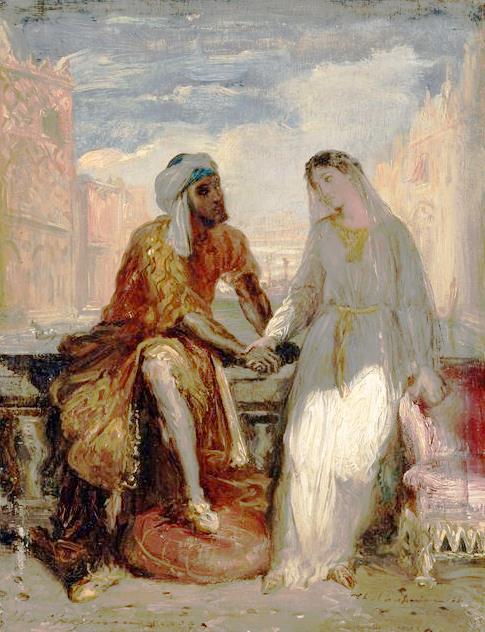
【1】
This central theme is built upon Iago’s manipulation of others’ psychologies in pursuit of his personal interests. Iago effectively influences the decision-making processes not only of Othello but also of Cassio, Roderigo, and Emilia. He exploits Othello’s emotional vulnerabilities and feelings of alienation to draw him into a vortex of jealousy. Jealousy produces destructive effects on an individual’s inner equilibrium and paves the way for irrational decisions.
Othello’s identity as a Black individual causes him to be perpetually positioned as an outsider, both within society and in his own psyche. Desdemona’s father Brabantio opposes the marriage and claims that Othello bewitched Desdemona with magic. Open or implicit racist rhetoric among Venice’s upper classes fuels Othello’s sense of insecurity and creates conditions for his easy manipulation.
Desdemona is a character who defies the gender norms of her time by marrying according to her own free will. Yet this individual autonomy is constantly suppressed by the male characters around her. Emilia’s final speech offers a limited but striking critique of the patriarchal order. Throughout the play, women are portrayed either as figures whose fidelity is questioned or as individuals expected to remain silent.
In a world defined by military and social hierarchy, debates about loyalty and betrayal remain central. Iago’s rage over Cassio’s promotion and his betrayal of Othello reflect the conflict between the pursuit of justice and personal ambition within the structure. The concept of loyalty is also questioned, particularly through Emilia and Desdemona, in relation to gender and morality.
Othello’s downfall begins when he abandons objective reality and acts solely on the evidence presented by Iago. The difference between perception and reality forms the foundation of the tragedy. Shakespeare also engages in a discussion on how knowledge is acquired and how it can be manipulated.
A Black general serving the Republic of Venice. Renowned for his military achievements and holding prestige in society, he nevertheless experiences a sense of alienation due to his ethnic background. His love for Desdemona is genuine but he succumbs to jealousy under Iago’s manipulation. His emotional fragility and susceptibility to influence accelerate his descent into destruction. Othello is a character who undergoes an internal conflict and a tragic transformation.
Othello’s wife. Her marriage without her family’s consent demonstrates her independence and determination. Throughout the play she remains faithful to Othello and strives to regain his trust. She is a figure who challenges societal gender roles yet is ultimately silenced. Desdemona’s tragedy stems from her near-total lack of influence over others’ perceptions and decisions.
The antagonist who orchestrates the intrigues throughout the play. A trusted subordinate of Othello, he cannot accept Cassio’s promotion to lieutenant. Motivated by jealousy, ambition, and status anxiety, his mastery of manipulation enables him to steer the thought processes of other characters. Iago acts not out of rational justification but from a desire for personal revenge. His internal motivations are presented as occasionally contradictory and dark.
Othello’s lieutenant. Portrayed as young, inexperienced, yet honest and gentle character. He loses his rank as a result of Iago’s trap. He is respectful toward women; his relationship with Desdemona is platonic but is misinterpreted. Though passive throughout the play, his innocence is ultimately revealed.
Iago’s wife and Desdemona’s attendant. At the beginning of the play she appears subservient to her husband’s authority, but by the end she undergoes a moral transformation and reveals the truth. She is the only female character who speaks out against the sexist order. Her decision to give Iago Desdemona’s handkerchief and her subsequent realization of its consequences are pivotal to her character development.
Desdemona’s father and a Venetian senator. He opposes his daughter’s marriage to Othello and views it as a deception achieved through magic. He is a figure marked by racial prejudice. His perspective represents the broader xenophobia present in Venetian society.
In love with Desdemona. He is continually deceived by Iago and acts according to his manipulations. His actions are mostly emotional and irrational. He is a weak-willed and easily duped character. He is murdered by Iago at the end of the play.
Shakespeare’s play Othello was written at the end of the 16th century, with events set in the 1570s. During this period, the Republic of Venice and the Ottoman Empire were engaged in political and military conflict over Cyprus. In 1570 the Ottoman fleet launched a military expedition to Cyprus and by 1571 had captured the island from Venice, incorporating it into Ottoman territory. These events caused widespread repercussions across Europe.
The first part of the play is set in Venice, while the second and larger portion takes place in Cyprus. Othello is appointed by the Venetian Senate to defend Cyprus against Ottoman attacks. However, shortly after Othello and his companions arrive in Cyprus, news arrives that the Ottoman fleet has been destroyed by a storm. From this point onward, the play shifts focus from the Ottoman threat to personal conflicts and tragedy.
Shakespeare does not directly describe or characterize the Ottoman Empire. However, its presence functions in the background as a military and political threat. This reflects Venice’s strategic position in the Mediterranean and the historical perception of the Ottomans in that era of Europe. In the play, the Ottomans are positioned as the “Other”; this parallels Othello’s own status as an “Other” — a character implied to be Black and of Muslim heritage.
Cyprus’s central role in the Ottoman-Venetian conflict suggests Shakespeare’s deliberate historical choice. Cyprus functions as a transitional space between East and West, serving as a space that embodies the cultural tensions mirrored in Othello’s own identity.
Shakespeare, William. Othello. Trans. Özdemir Nutku. Istanbul: Türkiye İş Bankası Kültür Yayınları, 2022.
[1]
Chassériau, Théodore. Othello and Desdemona. Arthive. Erişim tarihi 31 Mart 2025. https://arthive.com/sl/artists/593~Theodore_Chassiorio/works/653892~Othello_and_Desdemona

Author | William Shakespeare | ||||||||
|---|---|---|---|---|---|---|---|---|---|
Translator | Özdemir Nutku | ||||||||
Publisher | Türkiye İş Bankası Kültür Yayınları | ||||||||
Publication Date(s) | 05.04.2022 | ||||||||
Page | 160 | ||||||||
Language | Turkish | ||||||||
Genre | Tragedy | ||||||||
Summary
Themes and Thematic Analysis
1. Jealousy and Manipulation
2. Racism and Alienation
3. Gender Roles and Attitudes Toward Women
4. Power Hierarchy and Loyalty
5. Reality and Perception
Characters and Traits
Othello
Desdemona
Iago
Cassio
Emilia
Brabantio
Roderigo
Othello and the Ottoman Context
Historical Background
Reflections in the Play
Representation of the Ottoman Empire
The Choice of Cyprus