This article was automatically translated from the original Turkish version.
Side | Air Special Forces) and supporting local elements • Opposing side: PKK/KCK-PYD/YPG and ISIS members Türkiye: Turkish Armed Forces (Ground Forces | ||||||||
|---|---|---|---|---|---|---|---|---|---|
Geographic Location | Afrin region (Afrin district center and its rural areas),隶属于 Aleppo Province In the northwestern part of Syria | ||||||||
Type | Cross-border military operation / counter-terrorism operation | ||||||||
Number of Martyrs | 54 | ||||||||
Operation Name | Olive Branch Operation | ||||||||
Start Date | January 20, 2018 (beginning with air and artillery operations, followed by the advance of ground units) | ||||||||
Critical Date | March 18, 2018 — The Afrin district center came under the control of the Turkish Armed Forces and supporting elements (completion of the main combat phase) | ||||||||
Legal Basis | An operation conducted within the framework of the legitimate right of self-defense, justified by terrorist attacks targeting Türkiye's national security and border provinces | ||||||||
Declared Objectives | To eliminate the presence of terrorist organizations and rocket/air attacks originating from these structures along Türkiye's southern border; to neutralize PKK/KCK-PYD/YPG and ISIS elements in Afrin; to ensure border security and regional stability | ||||||||
Force Structure | Ground forces (commandos, infantry, armored units, artillery), air force elements, unmanned aerial vehicles, special forces and various support units; large-scale joint operation structure | ||||||||
Used Capabilities and Resources | Unmanned aerial vehicles, precision-guided munitions, armored vehicles, artillery and CBRN systems, electronic warfare and advanced reconnaissance-surveillance systems; highly indigenous defense industry products | ||||||||
Operation Olive Branch is a cross-border military operation launched by Türkiye on 20 January 2018 against the Afrin region in northwestern Syria. Türkiye’s operation targeted the Afrin region. 【1】 The operation was conducted under the leadership of the Turkish Armed Forces with support from certain local elements within Syria and officially framed within the context of counter-terrorism against PKK/KCK-PYD/YPG and Daesh. 【2】
Türkiye aimed through this operation to secure its border and dismantle armed structures assessed to have formed in and around Afrin. 【3】 Ground and air assets were jointly employed in the execution of the operation, with a comprehensive military plan implemented to neutralize rocket and artillery attacks along the border. The town of Afrin was brought under the control of the Turkish Armed Forces and supporting elements on 18 March 2018, marking the completion of the main combat phase of the operation.
Operation Olive Branch has served as a significant example of Türkiye’s security approach, which seeks to confront terrorist threats beyond its borders. As the second large-scale operation conducted in Syria after Operation Euphrates Shield, Operation Olive Branch came to represent a new phase based on the concept of “area dominance” in cross-border areas.
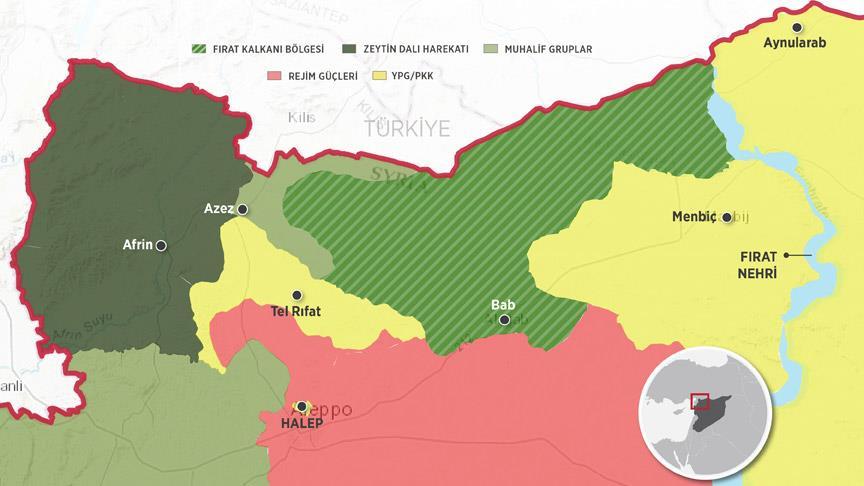
Operational area - Anadolu Ajansı
The operation was named “Olive Branch” to reflect both Afrin’s prominence in olive production and the symbolic framing intended to convey peace and security to the public. 【4】
Official statements emphasized that the operation’s targets were exclusively members of terrorist organizations and that the utmost care was taken to protect civilians and civilian infrastructure. Within this framework, Operation Olive Branch has become one of the primary operations referenced in Türkiye’s security policy toward Syria.
The background to Operation Olive Branch lies in the power vacuum created by the Syrian civil war, which began in 2011, and the subsequent filling of this vacuum by various armed groups. Due to its proximity to the Turkish border, Afrin gradually emerged as a direct security concern for Ankara. The armed structures in and around Afrin were assessed as having the potential to form a contiguous belt along Türkiye’s southern border.【5】
This situation raised the prospect of sustained cross-border attacks and an increased risk to internal security. Consequently, Afrin acquired a central position in operational planning, both tactically and strategically. Its adjacency to the Turkish provinces of Hatay and Kilis rendered the region particularly vulnerable to cross-border infiltration and rocket/artillery attacks.
Türkiye has shared with the public that these attacks resulted in casualties and material damage on its own territory. 【6】 The land connection between Afrin and other settlements in northern Syria heightened the risk of a centralized structure along a broader axis. Türkiye deemed it unacceptable from a national security perspective for this axis to become a corridor opening toward the sea. In this context, Afrin transformed into a critical node in Türkiye’s envisioned security belt along the Syrian border.
Following 2015, the increase in terrorist attacks within Türkiye led to the adoption of a more proactive and cross-border approach in security policy. Operation Euphrates Shield marked the first large-scale operation conducted in northern Syria, and Operation Olive Branch was viewed as a continuation of this strategy. The approach of eliminating cross-border threats at their source became one of the fundamental justifications for the operation against Afrin.
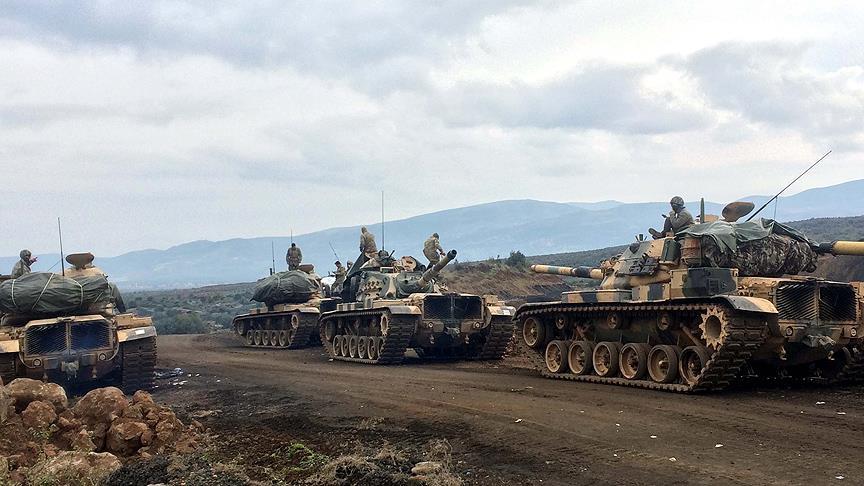
Ground forces during the operation - Anadolu Ajansı
Thus, Türkiye extended its security planning to encompass not only the border line but also the area beyond it. Operation Olive Branch emerged as the application of this approach specifically in Afrin.
Türkiye has stated that Operation Olive Branch was conducted within the framework of the right to legitimate self-defense recognized under international law. Rocket and artillery attacks targeting border provinces and threats against border outposts were regarded as direct attacks on national security.
Therefore, the operation was defined as a defensive action aimed at neutralizing elements of terrorist organizations. Official statements emphasized the importance of Syria’s territorial integrity and clarified that the operation had no objective of annexation or permanent division. It was also stated that principles concerning the protection of civilians were strictly adhered to and that such considerations were taken into account in target selection.
The presence of various international and regional actors in Syria during the operation turned issues of airspace usage and on-the-ground coordination into critical concerns. The military balance in and around Afrin was also taken into account in subsequent agreements and negotiations concerning northern Syria. The establishment of control in Afrin was viewed as one of the factors strengthening Türkiye’s position in discussions regarding Menbiç and areas east of the Euphrates.
Thus, Operation Olive Branch affected not only the military situation on the ground but also diplomatic processes concerning Syria. The new situation in Afrin became an indispensable parameter in negotiations over the Syrian file. Domestically, Operation Olive Branch became one of the central issues shaping public discourse in Türkiye.
Cross-border operation mandates were approved by the Grand National Assembly of Türkiye, forming a crucial legal basis for Operation Olive Branch. Political parties, civil society organizations, and various professional associations publicly expressed their support for the operation. Nationwide solidarity and morale activities, particularly directed toward border provinces and military units, were organized, making public support visibly apparent. This atmosphere transformed Operation Olive Branch into a process where security policy intersected with societal sensitivities.
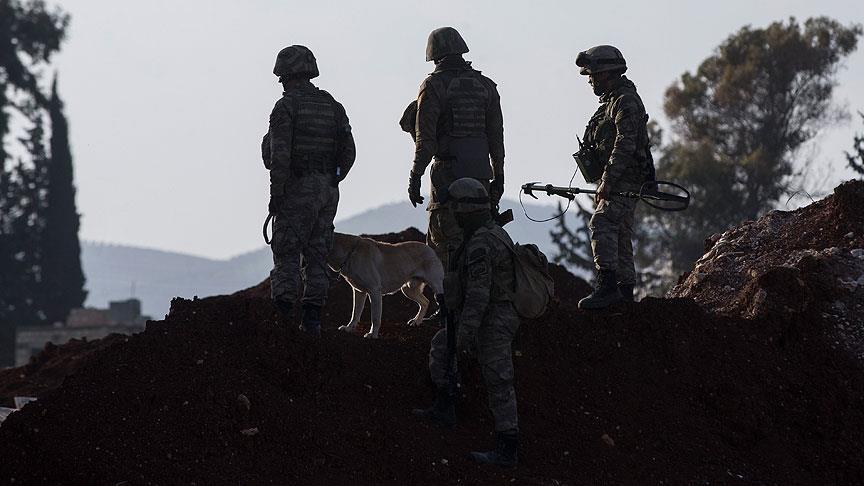
Soldiers deployed in the operation - Anadolu Ajansı
The operation commenced on 20 January 2018 at 17:00 with intensive airstrikes by air forces and artillery fire along the border. 【7】 In the initial phase, positions, command centers, ammunition depots, and supply lines around Afrin were targeted. Artillery batteries stationed on the Turkish side of the border and multiple-launch rocket systems coordinated their fire with aerial attacks against designated targets.
Following this preparatory phase, ground forces began advancing into the rural areas of Afrin from the north, northwest, and west. The advance proceeded gradually and incrementally due to difficult terrain and the structure of defensive lines. Villages, hills, and road junctions in rural Afrin were systematically brought under control, fragmenting the armed elements’ defensive networks.【8】
Numerous trenches, positions, and tunnel networks were identified in the operational area, a significant portion of which were rendered inoperable. Mines and improvised explosive devices posed serious risks to both military units and civilians, prompting intensive operations by specially trained explosive ordnance disposal teams. During this phase, clearing roads and passages became one of the key factors determining the speed of troop advances and the security of supply lines.【9】
Control established in the rural areas laid the groundwork for the final assault on the town of Afrin. On 18 March 2018, when Turkish Armed Forces and supporting elements entered the urban center of Afrin, control over the city was largely transferred to them. After this date, the operation shifted from intense combat to search-and-clear, law enforcement, and stabilization activities. Throughout the operation, numerous armed elements were neutralized, and various weapons and ammunition depots were seized.
Türkiye suffered significant military casualties during the operation, which were met with deep public sorrow. Supporting local elements also sustained losses during clashes, but Operation Olive Branch concluded successfully after 57 days.【10】
The Bayraktar TB2 UAVs conducted approximately 4,000 hours of flight time during Operation Olive Branch, primarily performing reconnaissance, surveillance, and intelligence-gathering missions. Throughout the operation, TB2s carried out flights to detect risk elements along the routes of advancing ground units, monitor the movement of infiltrating elements, and continuously observe changes along the contact line. Caves and tunnels used as shelters were identified through reconnaissance activities; the imagery and location data obtained were transmitted without delay to operational command centers.
During Operation Olive Branch, Bayraktar TB2 UAVs conducted direct strike missions against targets identified through reconnaissance and surveillance flights, primarily using the Mini Smart Munition (MAM-L) developed by ROKETSAN. For the first time during this operation, TB2s were deployed carrying four MAM-L munitions each, and variants of the MAM-L—armor-piercing, thermobaric, and anti-personnel warheads—were employed according to target type. Numerous successful strike missions were carried out against targets such as light structures, armored ground vehicles, radar antennas, and weapon emplacements using this munition.
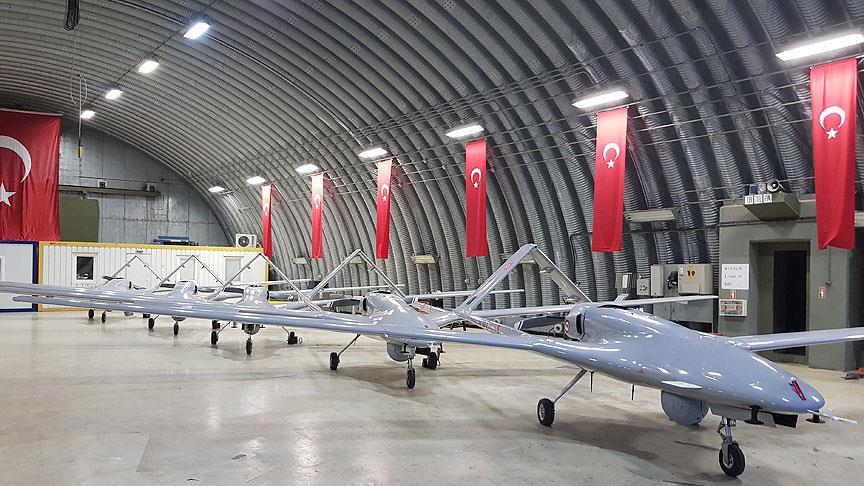
Bayraktar TB2 UAVs ready for mission (AA)
This data flow was utilized in coordination processes such as threat classification, target verification, artillery fire adjustment, and target designation for F-16 and F-4 aircraft and ATAK helicopters. Despite adverse meteorological conditions—including snow, fog, storms, heavy rainfall, and dense cloud cover—the TB2s continued their missions, ascending to very high altitudes as needed or descending to low altitudes such as “300 meters above ground” to adapt their flight profiles to operational conditions. In this context, the TB2 served as an aerial platform that ensured continuous data collection from the battlefield, operated synchronously with ground unit movements, and participated in integrated fire and asset coordination.
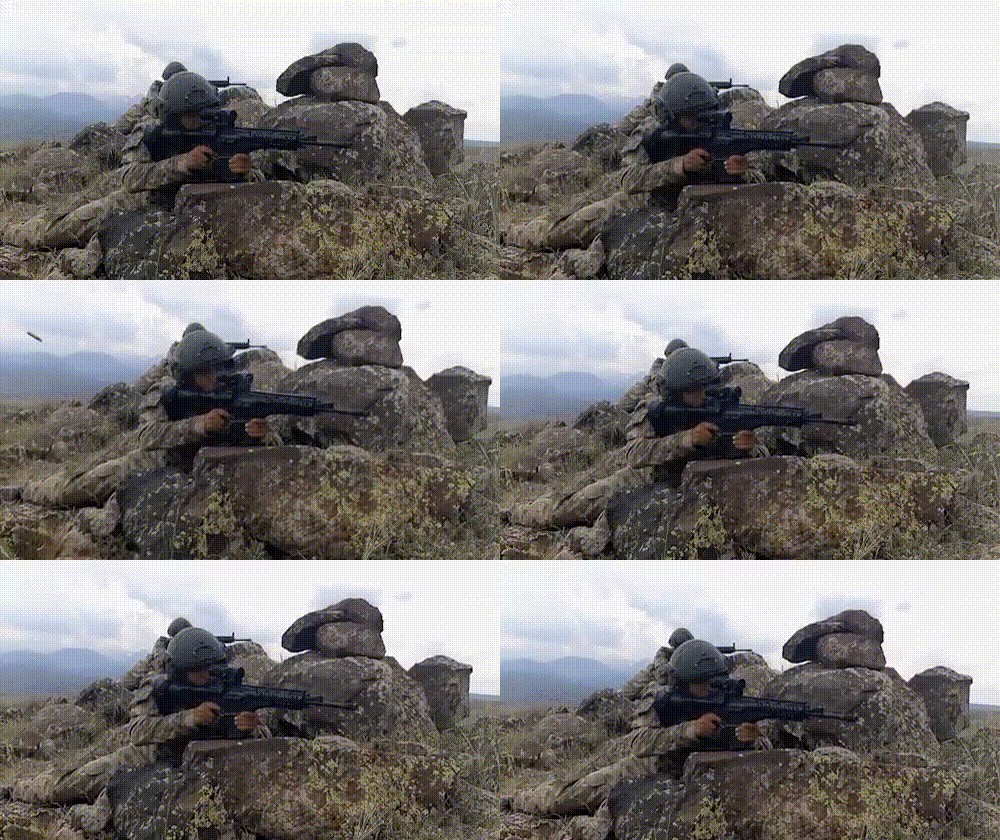
A Turkish soldier during the operation - MSB
The establishment of control over the town of Afrin marked the beginning of a restructuring of the regional security architecture. Public buildings, major transportation corridors, and critical infrastructure were secured, and a new administrative and security system was initiated.【11】
Establishing local governance structures, activating security units, and restarting municipal services were among the priority steps. The restoration of education and healthcare services played a vital role in normalizing daily life in Afrin. In this context, Afrin became an area restructured both in terms of security and socio-economic conditions.【12】
The clearance of mines and improvised explosive devices became one of the most critical technical and humanitarian activities following the operation. The removal of explosives laid by armed elements was deemed essential for both the safety of military units and the resumption of civilians’ daily lives. Under these efforts, roads, agricultural lands, and settlement perimeters were systematically surveyed, and hazardous areas were either marked or cleared.
Additionally, the filling of trenches and the sealing of tunnel networks yielded significant outcomes for both security and intra-city mobility. These technical activities continued for an extended period and became one of the fundamental conditions for the sustainability of stability in Afrin. The revival of trade, agriculture, and various service sectors accelerated the socio-economic recovery of the region.
The reopening of markets, the return of local merchants to their businesses, and the resumption of agricultural activities contributed to the gradual strengthening of the population’s livelihood sources. The reopening of schools and the resumption of services at health centers became among the most visible indicators of normalization in daily life. These developments supported the process of establishing lasting security and stability in Afrin.
Thus, the military outcomes of Operation Olive Branch generated lasting transformations in civilian life as well.
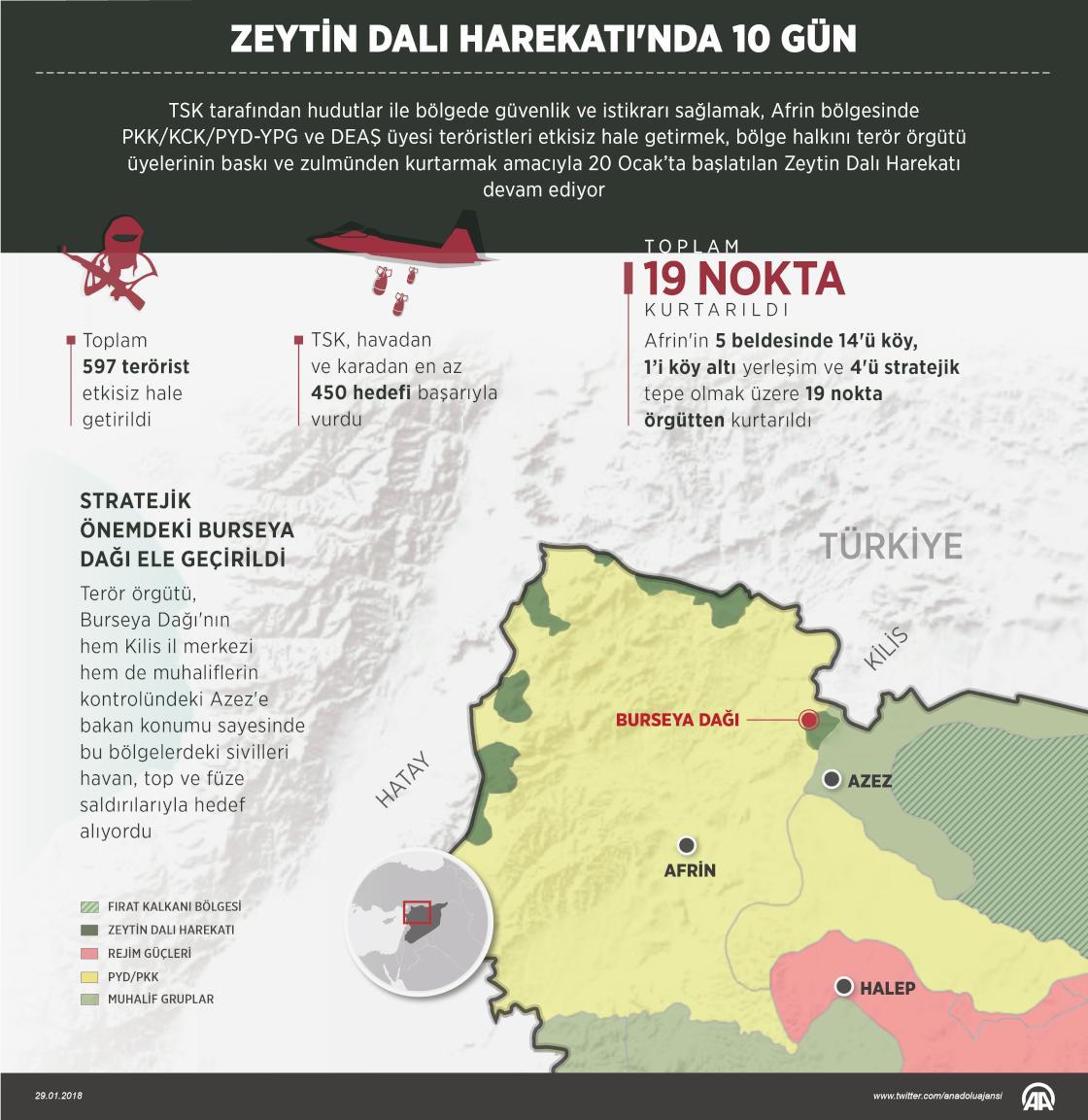
First 10 days of the operation - Anadolu Ajansı
During the operation, an increase in cyber-attack attempts against Türkiye was reported, particularly targeting public institutions and media organizations. Relevant units implemented various measures to mitigate the impact of these attacks and safeguard the functionality of critical systems. This situation demonstrated that the cyber domain had become as significant a component of security as ground and air forces in modern operational environments.【13】
Operation Olive Branch emerged as a process in which cyber threats were managed alongside military activities on the ground.
This picture revealed the multi-dimensional nature of Türkiye’s security approach. In the information domain, the operation was conducted alongside regular public communication. Official authorities issued statements regarding the operation’s progress, objectives, and developments on the ground, and published visual and written materials. Special video and photo collections prepared on anniversaries documented both the military process and the reconstruction of civilian life in Afrin.
Observations regarding the establishment of security and stability in Afrin were incorporated into news reports and documentation produced from the field. These information activities contributed to shaping the operation’s place in the collective memory of society.
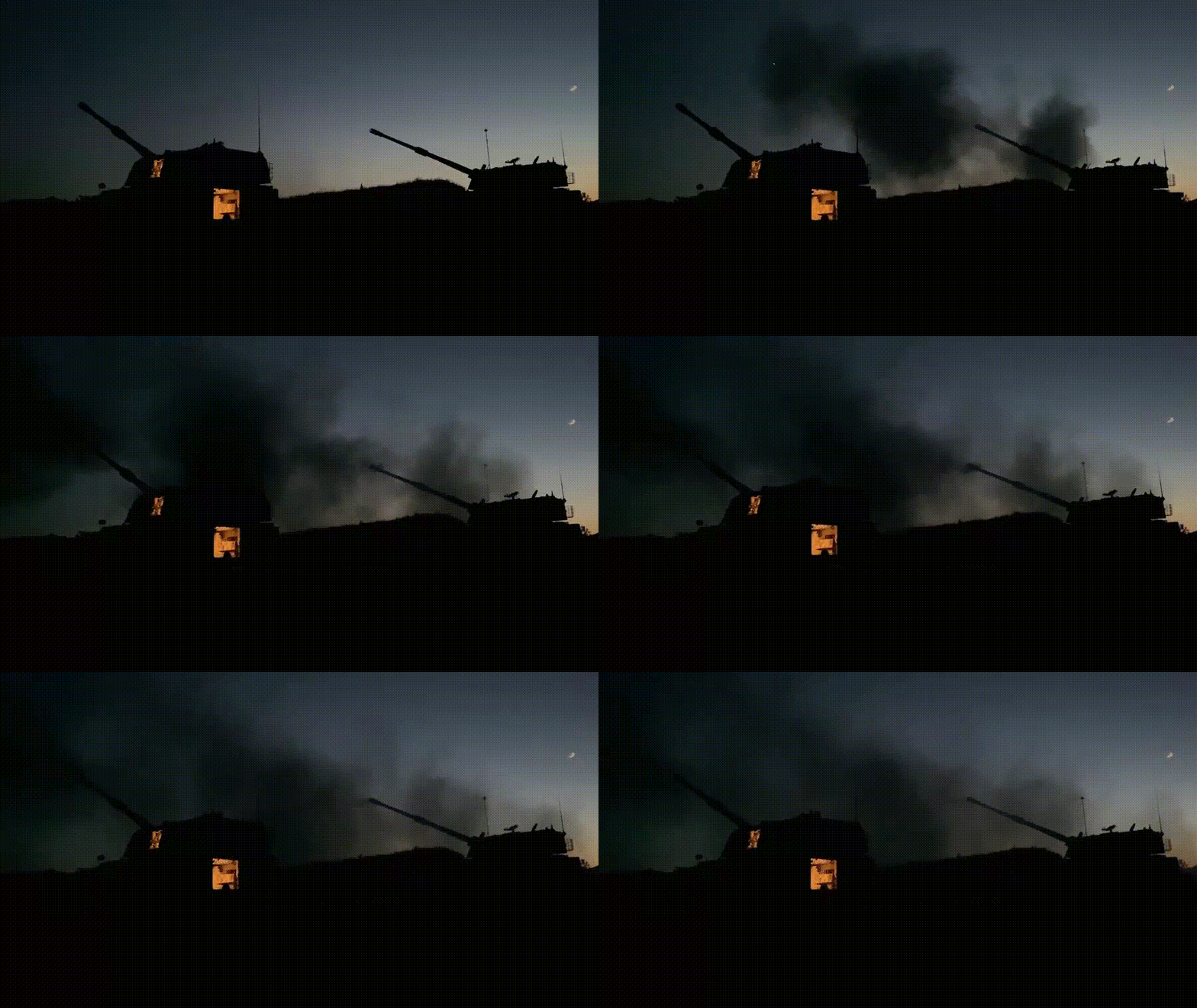
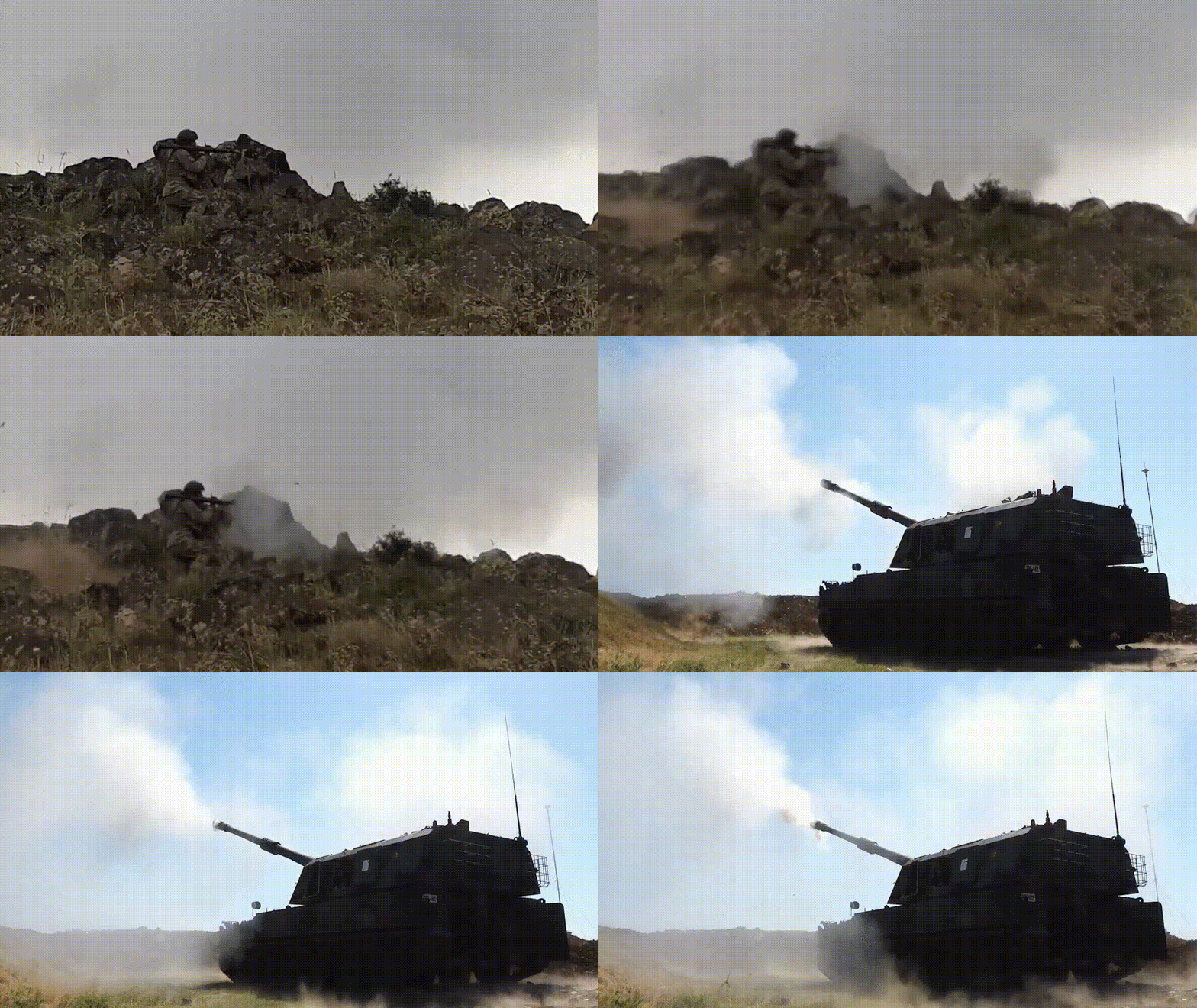
Artillery units firing - MSB
Numerous Turkish Armed Forces personnel were martyred during Operation Olive Branch. The names and hometowns of the martyrs were published in detail in national and local media, generating widespread public resonance.【14】
“During the operation, 4,519 terrorists were neutralized. 54 Turkish soldiers were martyred and 236 were wounded. The SMO forces operating alongside the TSK also suffered 320 martyrs.”【15】
Funeral ceremonies were held with broad public participation across many provinces of Türkiye, with state protocol, local officials, and citizens gathering together. The testimonies and narratives of the martyrs’ families brought the human dimension of the operation into sharper focus in public consciousness. This process ensured that Operation Olive Branch acquired a strong place in Türkiye’s collective memory.
To preserve the memory of the martyrs, various initiatives were implemented across different regions of Türkiye. Parks, streets, schools, and other public facilities were named after the soldiers who were martyred during Operation Olive Branch. In Afrin, certain bases, hills, and installations also began to be referred to by the names of the martyrs.【16】
Maps and lists prepared for the martyrs were incorporated into the work of both public institutions and civil initiatives. These practices contributed to the continuity of the concept of martyrdom through space and memory. Operation Olive Branch is regarded as a significant turning point in Türkiye’s recent security history.
Together with Operation Euphrates Shield, Operation Olive Branch has become a symbol of a new phase in cross-border counter-terrorism. Commemorative events held on anniversaries and special documentation packages have sustained the operation’s visibility on the public agenda.
The security and socio-economic developments in Afrin have become tangible indicators of the operation’s long-term effects. In this regard, Operation Olive Branch has become a permanent reference point in Türkiye’s regional security vision.
Operation Olive Branch is recorded as a comprehensive cross-border military operation conducted by Türkiye against the Afrin region. Through the operation, armed structures in Afrin were significantly weakened, with the aim of reducing threats to Türkiye’s southern border.
A documentary prepared on the operation - MSB
The control established in Afrin, together with that in the Euphrates Shield area, contributed to the formation of a security belt along Türkiye’s Syrian border. The operation became one of the practical applications of the area dominance-based counter-terrorism approach and generated important lessons regarding the use of defense industry capabilities and multi-dimensional security tools. The security, administrative, and reconstruction activities conducted in Afrin after the operation emerged as the key elements defining the long-term impact of Operation Olive Branch.
Acun, Can. "5 Soru: Zeytin Dalı Harekâtı." SETA. Accessed January 16, 2026.
Anadolu Ajansı. "Afrin’de huzur ve istikrar sağlandı." Accessed January 16, 2026.
Anadolu Ajansı. "Afrin’in terörden kurtuluşunun 3. yıl dönümü." Accessed January 16, 2026.https://www.aa.com.tr/tr/dunya/afrin-in-terorden-kurtulusunun-3-yil-donumu/2179988
Anadolu Ajansı. "Zeytin Dalı Harekâtı bir yaşında." Accessed January 16, 2026.
Anadolu Ajansı. "Zeytin Dalı Harekâtı’nın 3. yılı." Accessed January 16, 2026.
Anadolu Ajansı. "Zeytin Dalı Harekâtı’nın ikinci yıl dönümü." Accessed January 16, 2026.https://www.aa.com.tr/tr/turkiye/zeytin-dali-harekatinin-ikinci-yil-donumu/1768607
Anadolu Ajansı. "Zeytin Dalı Harekâtı’nın ikinci yıl dönümü." Accessed January 16, 2026.
Anadolu Ajansı. "Şehit isimleri Afrin’de yaşatılıyor." Accessed January 16, 2026.
Anadolu Ajansı. “Afrin’de teröristlerin mayın döşediği hendekler temizleniyor.” Accessed January 16, 2026.https://www.aa.com.tr/tr/dunya/afrinde-teroristlerin-mayin-dosedigi-hendekler-temizleniyor/1140377
Anadolu Ajansı. “Afrin’in terörden temizlenmesinin üzerinden 6 yıl geçti.” Accessed January 16, 2026.https://www.aa.com.tr/tr/dunya/afrinin-terorden-temizlenmesinin-uzerinden-6-yil-gecti/3167317
Anadolu Ajansı. “MSB’den Zeytin Dalı Harekâtı’nın birinci yılına özel video.” Accessed January 16, 2026.https://www.aa.com.tr/tr/turkiye/msbden-zeytin-dali-harekatinin-birinci-yilina-ozel-video/1369693
Anadolu Ajansı. “Zeytin Dalı Harekâtı olmasaydı Münbiç mutabakatı olmazdı.” Accessed January 16, 2026.https://www.aa.com.tr/tr/dunya/zeytin-dali-olmasaydi-munbic-mutabakati-olmazdi/1178130
Anadolu Ajansı. “Zeytin Dalı Harekâtı’nda 4448 terörist etkisiz hale getirildi.” Accessed January 16, 2026.https://www.aa.com.tr/tr/gunun-basliklari/zeytin-dali-harekatinda-4448-terorist-etkisiz-hale-getirildi/1142466
Anadolu Ajansı. “Zeytin Dalı Harekâtı’nda siber saldırılar arttı.” Accessed January 16, 2026.https://www.aa.com.tr/tr/turkiye/zeytin-dali-harekatinda-siber-saldirilar-artti/1117914
Bloomberg HT. “Erdoğan operasyona neden Zeytin Dalı adı verildiğini açıkladı.” Accessed January 16, 2026.https://www.bloomberght.com/erdogan-operasyona-neden-zeytin-dali-adi-verildigini-acikladi-2089434?page=2
GZT. "Zaferin adı: Fırat Kalkanı ve Zeytin Dalı Harekâtı." Accessed January 16, 2026.
Habertürk. “Afrin Harekâtı’nda şehit düşen askerlerimizin isimleri.” Accessed January 16, 2026.https://www.haberturk.com/afrin-harekati-nda-sehit-dusen-askerlerimizin-isimleri-afrin-sehitleri-1833321/24
Milli Savunma Bakanlığı. "Zeytin Dalı Harekâtı." Accessed January 16, 2026.
Ministry of National Defense. "Zeytin Dalı Harekâtı Slayt Haber." Accessed January 16, 2026.https://www.msb.gov.tr/SlaytHaber/2012019-61451
ORSAM. Sarı, Buğra. Türk Savunma Sanayisinin Zeytin Dalı Harekâtı’na Katkısı. Accessed January 16, 2026.https://orsam.org.tr/yayinlar/turk-savunma-sanayisinin-zeytin-dali-harekatina-katkisi/
SERPER, Emre. “Zeytin Dalı Harekâtı ve Terörle Mücadele.” TASAM. Accessed January 16, 2026.https://tasam.org/tr-TR/Icerik/50178/zeytindali_harekati_ve_terorle_mucadele
TRT Haber. "Zeytin Dalı Harekâtı’nın ikinci yıl dönümü." Accessed January 16, 2026.
U-ID (International Relations and Diplomacy). "Zeytin Dalı Harekâtı." Accessed January 16, 2026.https://u-id.org/zeytindali-harekati/
Yeni Şafak. "TSK Zeytin Dalı Harekâtı başladı." Accessed January 16, 2026.
Yıldırım, Göksel. "Bayraktar TB2 Zeytin Dalı Harekatı'nda 4 bin saat uçtu." Anadolu Ajansı, March 23, 2018. Accessed January 20, 2026.https://www.aa.com.tr/tr/turkiye/bayraktar-tb2-zeytin-dali-harekatinda-4-bin-saat-uctu/1097076
Özçelik, Necdet, and Can Acun. Terörle Mücadelede Yeni Safha: Zeytin Dalı Harekâtı. SETA, 2018. Accessed January 16, 2026.https://media.setav.org/tr/dosya/2018/04/terorle-mucadelede-yeni-safha-zeytin-dali-harekati.pdf
[1]
Milli Savunma Bakanlığı. “Zeytin Dalı Harekâtı.” Erişim Tarihi: 16 Ocak 2025.
[2]
Özçelik, Necdet ve Can Acun. Terörle Mücadelede Yeni Safha: Zeytin Dalı Harekâtı. SETA, 2018. Erişim Tarihi: 16 Ocak 2025. https://media.setav.org/tr/dosya/2018/04/terorle-mucadelede-yeni-safha-zeytin-dali-harekati.pdf
[3]
SERPER, Emre. “Zeytin Dalı Harekâtı ve Terörle Mücadele.” TASAM. Erişim Tarihi: 16 Ocak 2025. https://tasam.org/tr-TR/Icerik/50178/zeytindali_harekati_ve_terorle_mucadele
[4]
Bloomberg HT. “Erdoğan operasyona neden Zeytin Dalı adı verildiğini açıkladı.” Erişim Tarihi: 16 Ocak 2025. https://www.bloomberght.com/erdogan-operasyona-neden-zeytin-dali-adi-verildigini-acikladi-2089434?page=2
[5]
Özçelik, Necdet ve Can Acun. Terörle Mücadelede Yeni Safha: Zeytin Dalı Harekâtı. SETA, 2018. Erişim Tarihi: 16 Ocak 2025. https://media.setav.org/tr/dosya/2018/04/terorle-mucadelede-yeni-safha-zeytin-dali-harekati.pdf
[6]
Anadolu Ajansı. “Zeytin Dalı Harekâtı bir yaşında.” Erişim Tarihi: 16 Ocak 2025.
https://www.aa.com.tr/tr/gunun-basliklari/zeytin-dali-harekati-bir-yasinda/1368919
[7]
Milli Savunma Bakanlığı. “Zeytin Dalı Harekâtı.” Erişim Tarihi: 16 Ocak 2025.
[8]
Özçelik, Necdet ve Can Acun. Terörle Mücadelede Yeni Safha: Zeytin Dalı Harekâtı. SETA, 2018. Erişim Tarihi: 16 Ocak 2025. https://media.setav.org/tr/dosya/2018/04/terorle-mucadelede-yeni-safha-zeytin-dali-harekati.pdf
[9]
Anadolu Ajansı. “Afrin’de teröristlerin mayın döşediği hendekler temizleniyor.” Erişim Tarihi: 16 Ocak 2025. https://www.aa.com.tr/tr/dunya/afrinde-teroristlerin-mayin-dosedigi-hendekler-temizleniyor/1140377
[10]
Habertürk. “Afrin Harekâtı’nda şehit düşen askerlerimizin isimleri.” Erişim Tarihi: 16 Ocak 2025. https://www.haberturk.com/afrin-harekati-nda-sehit-dusen-askerlerimizin-isimleri-afrin-sehitleri-1833321/24
[11]
Anadolu Ajansı. “Afrin’in terörden kurtuluşunun 3. yıl dönümü.” Erişim Tarihi: 16 Ocak 2025.
https://www.aa.com.tr/tr/dunya/afrin-in-terorden-kurtulusunun-3-yil-donumu/2179988
[12]
Anadolu Ajansı. “Afrin’de huzur ve istikrar sağlandı.” Erişim Tarihi: 16 Ocak 2025.
https://www.aa.com.tr/tr/dunya/afrinde-huzur-ve-istikrar-saglandi/1312409
[13]
Anadolu Ajansı. “Zeytin Dalı Harekâtı’nda siber saldırılar arttı.” Erişim Tarihi: 16 Ocak 2025.
https://www.aa.com.tr/tr/turkiye/zeytin-dali-harekatinda-siber-saldirilar-artti/1117914
[14]
Habertürk. “Afrin Harekâtı’nda şehit düşen askerlerimizin isimleri.” Erişim Tarihi: 16 Ocak 2025. https://www.haberturk.com/afrin-harekati-nda-sehit-dusen-askerlerimizin-isimleri-afrin-sehitleri-1833321/24
[15]
Anadolu Ajansı. "Afrin’in Terörden Kurtuluşunun 3. Yıl Dönümü." Erişim Tarihi: 16 Ocak 2026. https://www.aa.com.tr/tr/dunya/afrin-in-terorden-kurtulusunun-3-yil-donumu/2179988
[16]
Anadolu Ajansı. “Şehit isimleri Afrin’de yaşatılıyor.” Erişim Tarihi: 16 Ocak 2025.
https://www.aa.com.tr/tr/turkiye/sehit-isimleri-afrinde-yasatiliyor/1314494

Side | Air Special Forces) and supporting local elements • Opposing side: PKK/KCK-PYD/YPG and ISIS members Türkiye: Turkish Armed Forces (Ground Forces | ||||||||
|---|---|---|---|---|---|---|---|---|---|
Geographic Location | Afrin region (Afrin district center and its rural areas),隶属于 Aleppo Province In the northwestern part of Syria | ||||||||
Type | Cross-border military operation / counter-terrorism operation | ||||||||
Number of Martyrs | 54 | ||||||||
Operation Name | Olive Branch Operation | ||||||||
Start Date | January 20, 2018 (beginning with air and artillery operations, followed by the advance of ground units) | ||||||||
Critical Date | March 18, 2018 — The Afrin district center came under the control of the Turkish Armed Forces and supporting elements (completion of the main combat phase) | ||||||||
Legal Basis | An operation conducted within the framework of the legitimate right of self-defense, justified by terrorist attacks targeting Türkiye's national security and border provinces | ||||||||
Declared Objectives | To eliminate the presence of terrorist organizations and rocket/air attacks originating from these structures along Türkiye's southern border; to neutralize PKK/KCK-PYD/YPG and ISIS elements in Afrin; to ensure border security and regional stability | ||||||||
Force Structure | Ground forces (commandos, infantry, armored units, artillery), air force elements, unmanned aerial vehicles, special forces and various support units; large-scale joint operation structure | ||||||||
Used Capabilities and Resources | Unmanned aerial vehicles, precision-guided munitions, armored vehicles, artillery and CBRN systems, electronic warfare and advanced reconnaissance-surveillance systems; highly indigenous defense industry products | ||||||||
No Discussion Added Yet
Start discussion for "Operation Olive Branch" article
Historical and Strategic Background
Legal and Political Framework
Military Course of the Operation
Role of UAVs in the Operation
Establishment of Control over Afrin and Subsequent Developments
Cyber and Information Dimension
Martyrs, Collective Memory, and Reflections