


This article was automatically translated from the original Turkish version.
Open Source Software Licenses
Founding Father | Richard Stallman (under the GNU Project) | ||||||||
|---|---|---|---|---|---|---|---|---|---|
First Widespread Use | GNU General Public License (GPL) – 1989 | ||||||||
Important Institution | Open Source Initiative (OSI), established in 1998 | ||||||||
Commonly Used Licenses | MIT BSD Apache 2.0 GPL | ||||||||
Field of Use | Android Used in systems and projects such as Python Firefox Linux | ||||||||
Open source software licenses are legal agreements that grant the right to freely access, modify, and redistribute the source code of software. These licenses promote the free development of software by establishing specific rules regarding its use, distribution, and modification. Open source software licenses encourage transparent development and community contributions.
An open source software license is a copyright agreement that defines the terms under which a software can be used, copied, modified, and distributed. These licenses ensure that the software’s source code is publicly accessible, but the ways in which this code can be used or distributed may be subject to specific conditions. Open source software licenses regulate the rights of software developers and users.
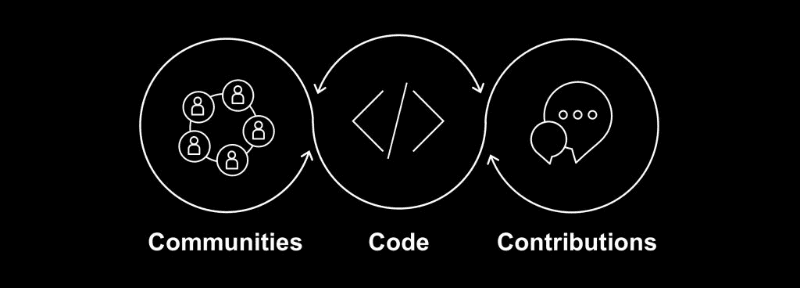
Communities-Code-Contributions (Source: Amazon Web Services)
The origins of open source software licenses trace back to the free software movement initiated by Richard Stallman in the 1980s. In 1983, the GNU (GNU's Not Unix) project was launched, producing one of the earliest examples of open source software. The GNU General Public License (GPL) is one of the most well-known licenses of the free software movement. In 1998, after Netscape released its source code and the Open Source Initiative (OSI) was founded, the term “open source” gained widespread usage.
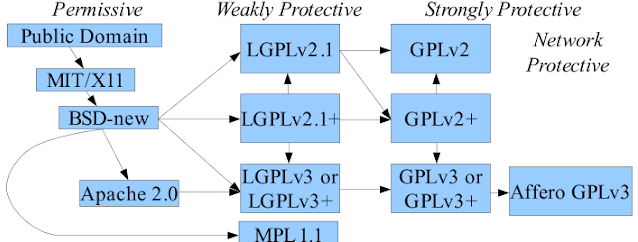
Open source software licenses are generally divided into two main categories: copyleft (requiring sharing) and permissive.
Copyleft licenses require that any modified or redistributed version of the software must be distributed under the same license. This ensures that derivatives of the software remain open source.
Permissive licenses allow the software to be relicensed and used in proprietary projects. These licenses offer more flexible usage conditions.
Open source software licenses regulate the use and distribution of software under specific conditions. These licenses permit free use, modification, and distribution of the software, but users may be required to comply with certain conditions. For example, under copyleft licenses, any modifications to the software must be distributed under the same license.
Open source software licenses encourage modification and redistribution of software. However, license terms may specify whether modified versions must remain under the same license. Copyleft licenses require that all derivatives adhere to the same license conditions, while permissive licenses offer more flexible usage.
The use of open source software in commercial projects is generally permitted. Permissive licenses allow software to be used in commercial projects, while under copyleft licenses, derivatives of the software must be distributed under the same license.
Open source software licenses provide copyright protection for software. These licenses establish a legal bond between software developers and users. License violations may lead to copyright litigation. Compliance with license terms ensures the lawful use and distribution of software.
Open source software licenses promote transparency and sharing of software. These licenses enable software development communities to contribute and continuously improve the software. They also grant users full control over the software. Ethically, the sharing of open source software enhances the flow of information among communities and contributes to safer and more sustainable software development.
Amazon Web Services. "Open Source." Amazon Web Services. Accessed April 15, 2025.https://aws.amazon.com/tr/what-is/open-source/.
Free Software Foundation. *What is Copyleft?* Accessed April 15, 2025.https://www.gnu.org/copyleft/.
Open Source Guides. "Legal Considerations for Open Source Projects." Accessed April 15, 2025.https://opensource.guide/tr/legal/.
Pardus Gönüllü Platform. "Açık Kaynak Yazılım Lisans Seçimi." Pardus Volunteer Platform. Accessed April 15, 2025.https://gonullu.pardus.org.tr/acik-kaynak-yazilim-lisans-secimi/.
TÜBİTAK Bilim and Technology Magazine. "Açık Kaynak Kodlu Yazılımlar." *Bilim ve Teknik*, September 2012. Accessed April 15, 2025.https://bilimteknik.tubitak.gov.tr/system/files/makale/btd_eylul_50.pdf.
TÜBİTAK ULAKBİM. "Açık Kaynak Yazılımlar ve Lisanslar." Accessed April 15, 2025.https://acikders.ulakbim.gov.tr/mod/page/view.php?id=99.

Open Source Software Licenses
Founding Father | Richard Stallman (under the GNU Project) | ||||||||
|---|---|---|---|---|---|---|---|---|---|
First Widespread Use | GNU General Public License (GPL) – 1989 | ||||||||
Important Institution | Open Source Initiative (OSI), established in 1998 | ||||||||
Commonly Used Licenses | MIT BSD Apache 2.0 GPL | ||||||||
Field of Use | Android Used in systems and projects such as Python Firefox Linux | ||||||||
No Discussion Added Yet
Start discussion for "Open Source Software Licenses" article
Definition
History
License Types
Copyleft Licenses
Permissive Licenses
Features of Open Source Software Licenses
Use and Distribution
Modification and Redistribution
Commercial Use
Legal Status of Open Source Software Licenses
Ethical Dimensions of Open Source Software Licenses