


This article was automatically translated from the original Turkish version.
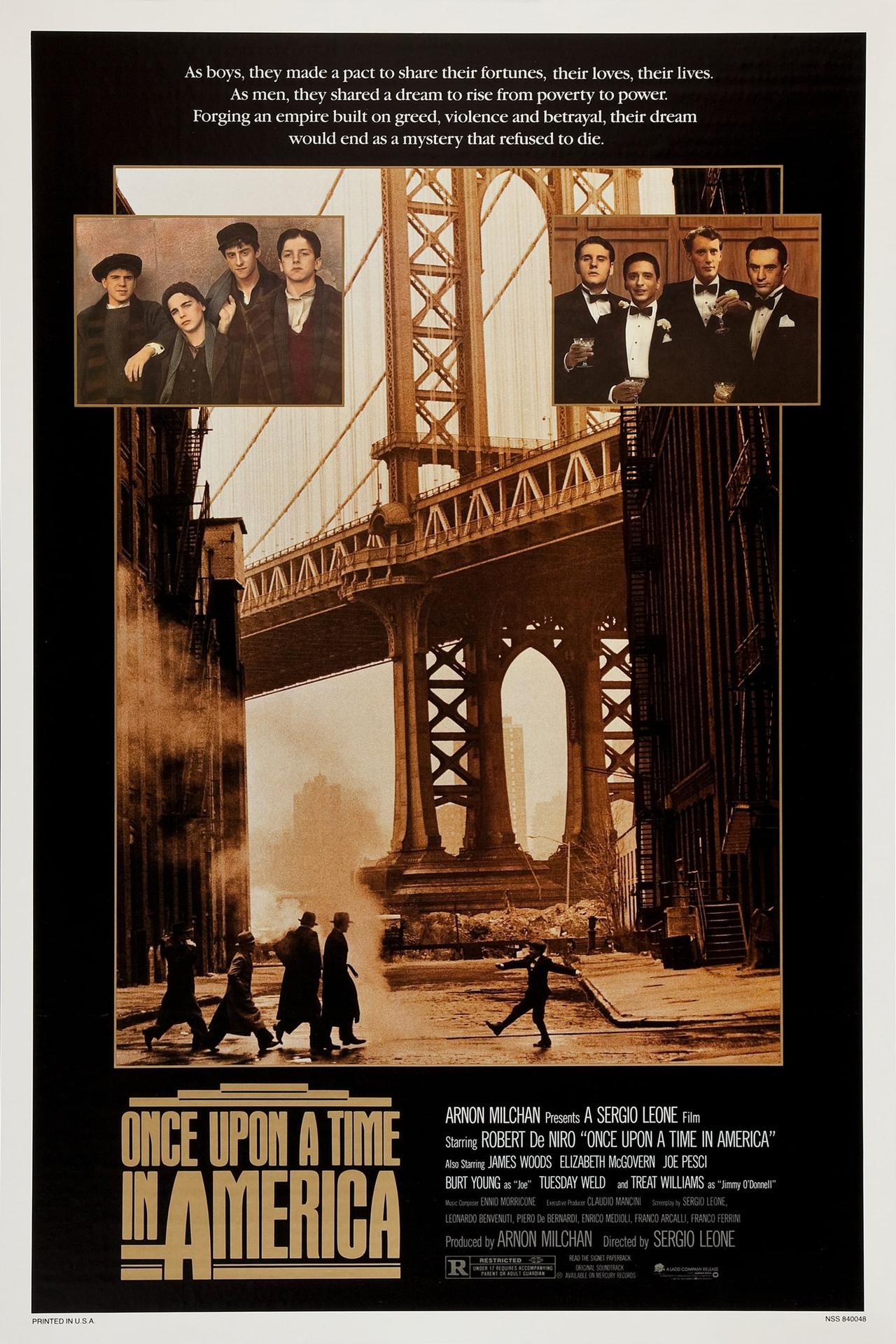
Once Upon a Time in America
Original Name | Once Upon a Time in America | ||||||||
|---|---|---|---|---|---|---|---|---|---|
Director | Sergio Leone | ||||||||
Screenplay | Piero De Bernardi Leonardo Benvenuti Franco Arcalli Franco Ferrini Sergio Leone (adapted from Harry Grey's semi-autobiographical novel 'The Hoods') Enrico Medioli | ||||||||
Genre | Drama Epic Crime | ||||||||
Production Year | 1984 | ||||||||
Duration | 229 minutes (restored version) | ||||||||
IMDb Rating | 8.3 | ||||||||
Actor | Robert De Niro (David 'Noodles' Aaronson) Jennifer Connelly (Young Deborah) Joe Pesci (Frankie Monaldi) Burt Young (Joe) James Woods (Max Bercovicz) Elizabeth McGovern (Deborah Gelly) | ||||||||
Once Upon a Time in America, set in the Jewish immigrant neighborhoods of New York, follows the lives of childhood friends who gradually ascend into the heart of organized crime, exploring the themes of friendship, betrayal, love, and regret. At the center of the film is David “Noodles” Aaronson, a man unable to escape the ghosts of his past.
Film moves between multiple layers of time, depicting Noodles’s childhood, youth, and old age. Built upon a memory that is recalled but never fully confronted, this structure transcends classic crime narratives to offer an epic portrait of a life.
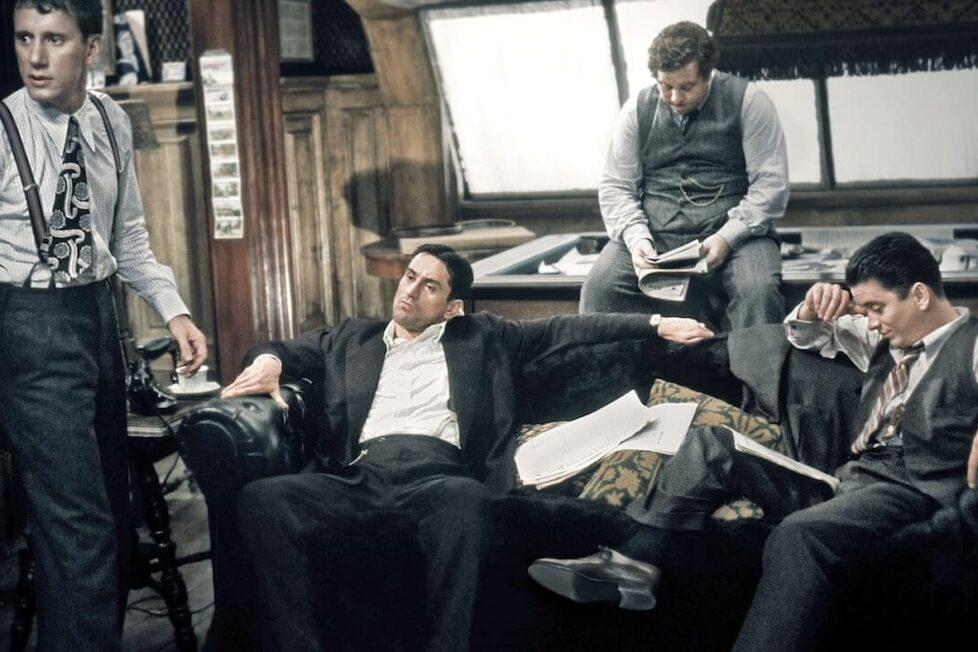
During script reading, Robert De Niro -Frame Rated
The film employs a non-linear narrative structure. Noodles’s recollections are presented throughout the film in a dreamlike atmosphere. This storytelling approach emphasizes the relativity of time and the subjective nature of memory. Feelings of regret and loss permeate the entire life of the main character.
The relationship between Noodles and Max forms the dramatic backbone of the film. As these two characters grow up together, their ideals begin to clash. While Noodles remains loyal to friendship and fidelity, Max succumbs to an insatiable desire for power and control. This conflict leads to the most tragic form of betrayal.
Through the gangster narrative, the film reveals the dark side of the American Dream. The path chosen by immigrant children in pursuit of “success” leads to the erosion of moral values, relationships, and ultimately their identities. Leone paints a picture of a corrupted and degenerate society in place of the idealized America.
The character of Deborah symbolizes both pure love and unattainability for Noodles. Yet their relationship is based not on emotional attachment but on an imbalance of power and desire. This dynamic has become one of the most debated and criticized aspects of the film, particularly in relation to Noodles’s violence toward Deborah.
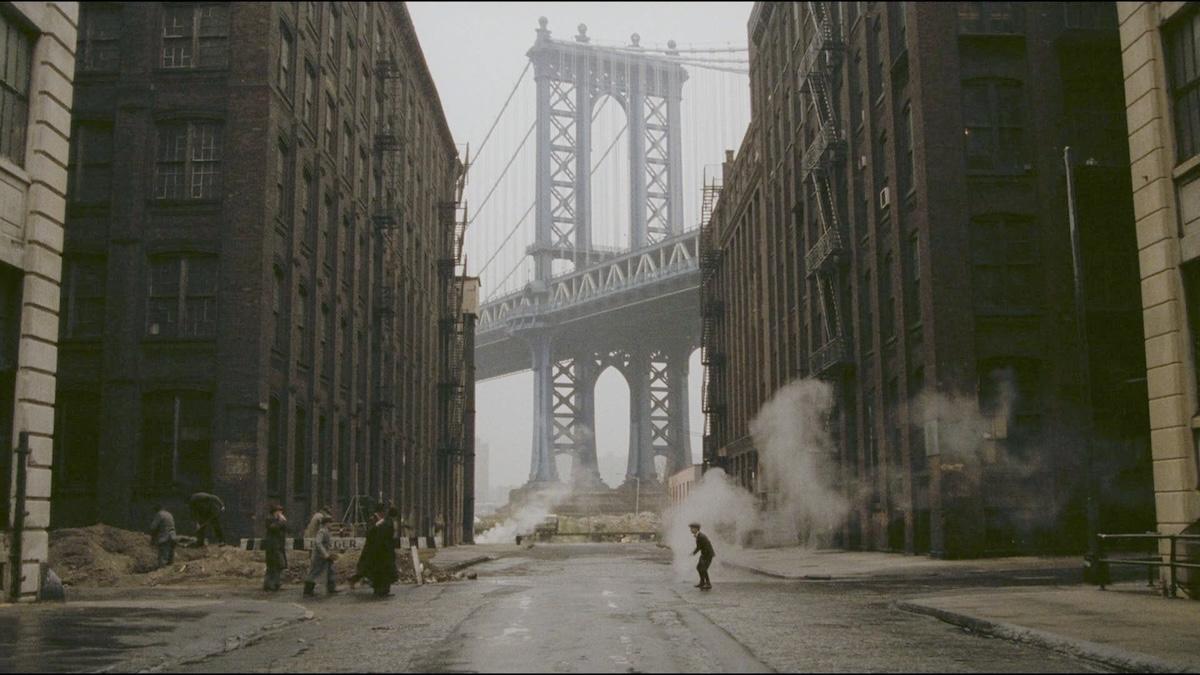
An iconic scene from the film -Frame Rated
Sergio Leone, with Once Upon a Time in America, created not merely a gangster film but a visual elegy on American history, immigration, and individual tragedy. The film was shot in various locations including New York, Paris, Venice and Florida. Ennio Morricone’s score is one of the primary elements defining the film’s emotional tone. In particular, “Deborah’s Theme” is regarded as one of the most evocative pieces in cinema history. Cinematographer Tonino Delli Colli distinguishes the film’s three distinct time periods through tonal and color contrasts, making temporal shifts visually pronounced.
Robert De Niro delivers a nuanced performance as Noodles, infusing the character with inner conflict, regret and stoicism. James Woods masterfully portrays Max’s ambitious and manipulative nature. Elizabeth McGovern transforms Deborah into an emotionally powerful figure caught in the tension between innocence and distance. The young actors, particularly Jennifer Connelly, contribute significantly to the fragility of the film’s past.
Once Upon a Time in America is not merely a gangster film; it is the story of people living out their lives under the shadow of regret, the transience of time, and memory. Sergio Leone infused American crime cinema with visual and emotional depth through a narrative structure that dismantled Hollywood conventions. Over time, the film has attained cult status and is regarded by film historians and critics as one of the most striking examples of modern epic storytelling.
Best Costume Design – Gabriella Pescucci
Best Music – Ennio Morricone
Best Editing – Nominated
Best Cinematography – Nominated
Best Art Direction – Nominated
Best Foreign Director – Sergio Leone
Best Foreign Actor – James Woods
The film was screened out of competition in 1984. The producers’ decision to cut the film for its U.S. release sparked major controversy, and the European version was later restored and re-released as the “original” cut.
Beyazperde. “Bir Zamanlar Amerika’da.” Accessed April 3, 2025.
Frame Rated. “Once Upon a Time in America (1984) Review.” Accessed April 3, 2025.
IMDb. “Once Upon a Time in America (1984).” Accessed April 3, 2025.
Roger Ebert. “Once Upon a Time in America (1984).” Accessed April 3, 2025.
Sinemalar.com. "Bir Zamanlar Amerika’da." Accessed April 3, 2025.

Once Upon a Time in America
Original Name | Once Upon a Time in America | ||||||||
|---|---|---|---|---|---|---|---|---|---|
Director | Sergio Leone | ||||||||
Screenplay | Piero De Bernardi Leonardo Benvenuti Franco Arcalli Franco Ferrini Sergio Leone (adapted from Harry Grey's semi-autobiographical novel 'The Hoods') Enrico Medioli | ||||||||
Genre | Drama Epic Crime | ||||||||
Production Year | 1984 | ||||||||
Duration | 229 minutes (restored version) | ||||||||
IMDb Rating | 8.3 | ||||||||
Actor | Robert De Niro (David 'Noodles' Aaronson) Jennifer Connelly (Young Deborah) Joe Pesci (Frankie Monaldi) Burt Young (Joe) James Woods (Max Bercovicz) Elizabeth McGovern (Deborah Gelly) | ||||||||
No Discussion Added Yet
Start discussion for "Once Upon a Time in America (Film)" article
Themes and Analysis
1. Time, Memory and Regret
2. Friendship and Betrayal
3. The Collapse of the American Dream
4. Female Representation and Love
Production Process and Technical Features
Performances
Impact and Significance
Awards and Nominations
BAFTA Awards (1985)
David di Donatello Awards (Italy)
Cannes Film Festival