


This article was automatically translated from the original Turkish version.
+2 More
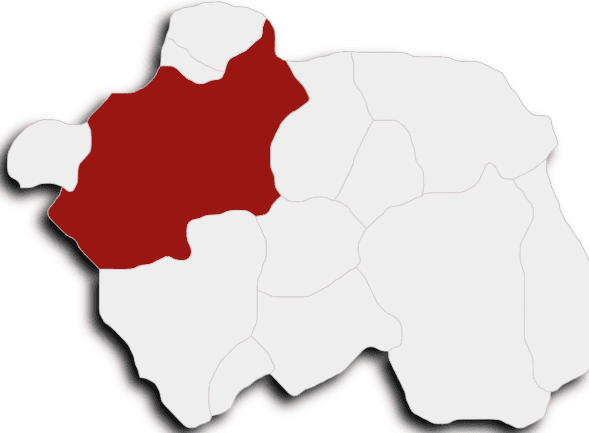
Odunpazarı
Province | Eskişehir | ||||||||
|---|---|---|---|---|---|---|---|---|---|
Geographical Region | Central Anatolia | ||||||||
Population | 426,581 (2024) | ||||||||
District Governor | Ömer Ulu | ||||||||
Mayor | Kazım Kurt | ||||||||
One of the oldest settlement areas in Eskişehir province is Odunpazarı, located in the southern part of the city and notable for its historical fabric. The area was opened to settlement by the Hittites around 1460 BCE and later came under the dominance of various civilizations including the Phrygians, Lydians, Persians, Macedonians, and Romans. Following this period, with the advent of the Ottoman era, particularly after the Seljuks took control of the region in 1074, the city experienced significant cultural and economic development.
The historical process of Odunpazarı begins with the ancient city of Dorylaion. Founded by the Phrygians around 700 BCE, Dorylaion later came under Roman, Byzantine, and Seljuk rule. This process left traces of different civilizations in the city. With the influence of Islam, the city came under Seljuk control in 1074 and was named Sultanönü, becoming an important cultural center under the Ottomans.
The Turkish settlement in Odunpazarı initially concentrated around the Alaeddin Mosque. Built in the 13th century, this mosque laid the foundations of Turkish settlement. Significant structures were constructed in the region during the Seljuk and Ottoman periods, including the Karacahisar Castle, captured by the Ottomans in 1288, and the Kurşunlu Mosque complex, built in the 16th century. During this period, the Odunpazarı neighborhood developed as the administrative and cultural center of the city.
Following the Ottoman-Russian War, the arrival of migrants increased Odunpazarı’s population and accelerated its economic growth. By the end of the 19th century, the arrival of the railway further enhanced the commercial importance of Odunpazarı. Today, Odunpazarı, known for its historic buildings and traditional neighborhood fabric, has further developed under the Odunpazarı Municipality, established in 2008, hosting various cultural events. Since 2012, Odunpazarı has been listed on UNESCO’s Tentative List of World Heritage Sites and is recognized as a region requiring protection at both local and international levels.
Odunpazarı is situated on a dominant point within the Eskişehir Plain and developed around the Porsuk Çayı. This location provided strategic advantages and enabled the expansion of the settlement area. In the past, Odunpazarı was identified as the most suitable area for settlement due to its proximity to the Porsuk River. Today, it remains one of Eskişehir’s most historic and densely populated neighborhoods. Geographically close to the center of Eskişehir, this neighborhood is surrounded by the Bozdağlar and Sündiken Dağları mountains to the north. The provincial center, at an elevation of 792 meters, along with its surrounding mountains, exhibits a typical Inner Anatolian topography. Historically playing a major role in the development of Eskişehir, Odunpazarı holds a significant position both naturally and strategically.
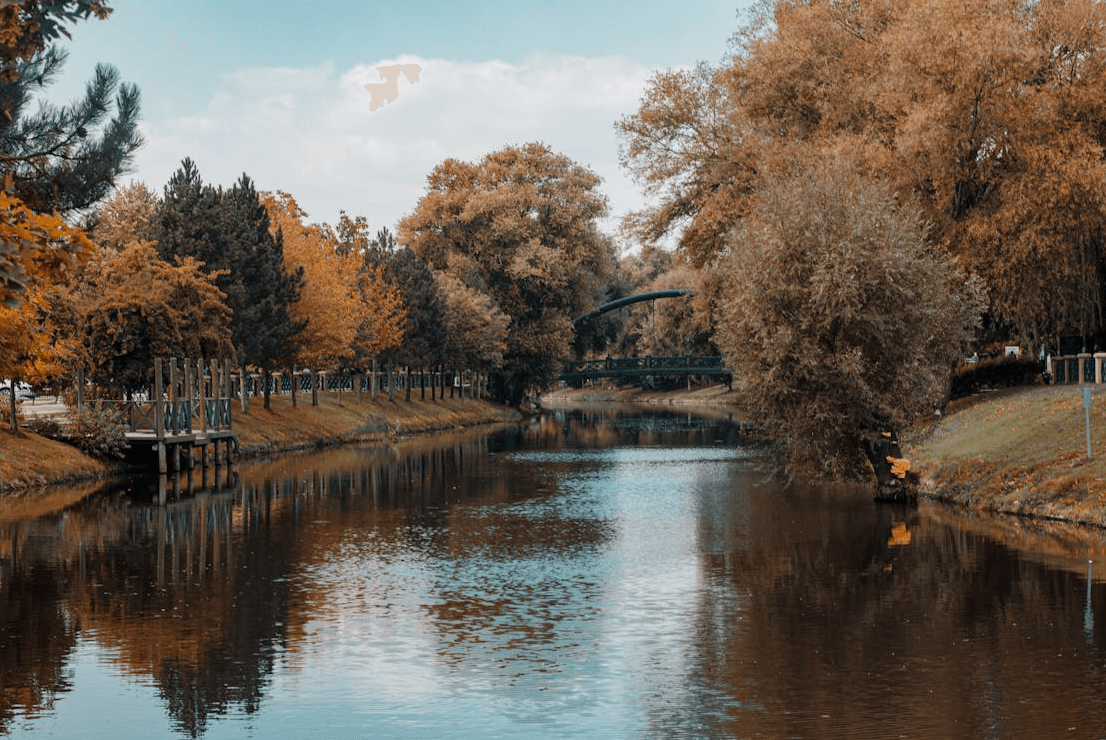
Porsuk Çayı (Source:Pexels Burkay Canatar)
Odunpazarı is located in the southern section of Eskişehir and features houses, narrow streets, and winding roads that exemplify traditional Ottoman civil architecture. The area is rich in ancient settlement traces and particularly bears the marks of Seljuk and Ottoman influence since the 13th century. Over time, this region became one of Eskişehir’s most important trade and settlement areas, preserving the legacy of Ottoman architecture to the present day.
Geographically, the area where Odunpazarı is located experiences Eskişehir’s typical continental climate. Summers are hot and dry, while winters are cold and snowy. This climate has influenced the formation of the district’s agricultural and settlement patterns. In the region, local residents engage in agricultural activities and traditional production methods, and due to microclimate effects, vegetable cultivation and the growing of Mediterranean plants such as olives are common.
One of Odunpazarı’s most important features is the high concentration of traditional Turkish houses. These houses exhibit architectural characteristics from the Ottoman period, particularly in their interior and exterior spatial design. The houses are built adjacent to each other along narrow streets, reflecting the traditional Turkish neighborhood structure. Additionally, Odunpazarı became an important center of Mevlevi Sufism. The 400-year-long Mevlevi period holds a prominent place in the city’s cultural fabric. Today, the Mevlevihane and historic mosques in the area preserve the legacy of this era.
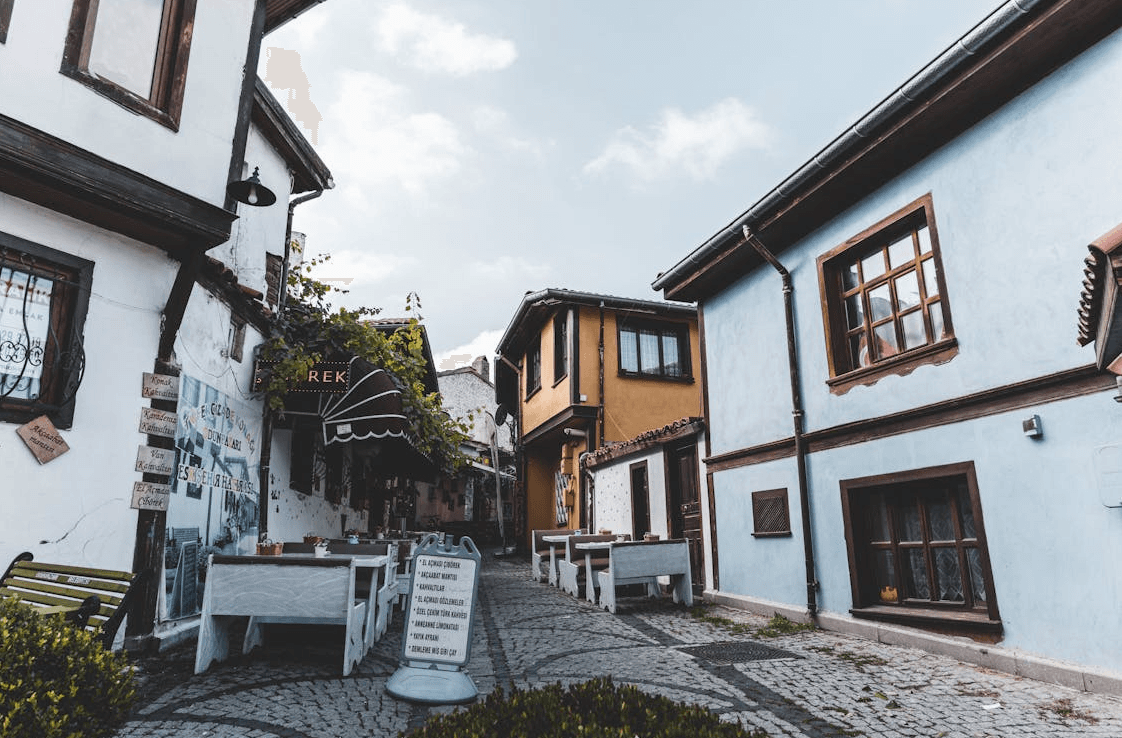
Odunpazarı Houses (Source Pexels/ Zafer Erdoğan )
Historic structures are more frequently encountered in the Odunpazarı district of Eskişehir.
Altınsapan, Erol, and Ali Gerengi. “Eskişehir Odunpazarı Mahalle Çeşmeleri.” *Akademik Sosyal Araştırmalar Dergisi* 5, no. 57 (November 2017): 1–20. Accessed April 7, 2025.https://asosjournal.com/?mod=tammetin&makaleadi=&makaleurl=395126933_12763%20Erol%20ALTINSAPAN.pdf&key=34901.
Ministry of Culture and Tourism of the Republic of Turkey. "Odunpazarı Tarihi City Center (Eskişehir)." General Directorate of Cultural Heritage and Museums. Accessed April 7, 2025.https://kvmgm.ktb.gov.tr/TR-45349/odunpazari-tarihi-kent-merkezi-eskisehir.html.
T.C. Eskişehir Provincial Directorate of Agriculture and Forestry. "Genel Bilgiler." T.C. Tarım veOrman Bakanlığı – Eskişehir İl Müdürlüğü. Accessed April 7, 2025.https://eskisehir.tarimorman.gov.tr/Menu/34/Genel-Bilgiler.
T.C. Kültür ve Turizm Bakanlığı. "Odunpazarı." Eskişehir İl Kültür ve Turizm Müdürlüğü. Accessed April 7, 2025.https://eskisehir.ktb.gov.tr/TR-149989/odunpazari.html.
T.C. Kültür ve Turizm Bakanlığı. "Odunpazarı." Eskişehir İl Kültür ve Turizm Müdürlüğü. Accessed April 7, 2025.https://eskisehir.ktb.gov.tr/TR-362647/odunpazari.html.
T.C. Ministry of Culture and Tourism. "Coğrafya Yapısı." Eskişehir İl Kültür veTurizm Müdürlüğü. Accessed April 7, 2025.https://eskisehir.ktb.gov.tr/TR-70841/cografya-yapisi.html.
T.C. Odunpazarı Belediyesi. "Tarihçe." Odunpazarı Belediyesi Resmî Web Sitesi. Accessed April 7, 2025.https://odunpazari.bel.tr/odunpazari/tarihce.
T.C. Odunpazarı Municipality. "Tarihi Yapılar." Odunpazarı Belediyesi Resmî Web Sitesi. Accessed April 7, 2025.https://odunpazari.bel.tr/odunpazari/tarihi-yapilar.
T.C.Odunpazarı Kaymakamlığı Governorship. "Tarihçe." Odunpazarı District Governorship Official Website. Accessed April 7, 2025.http://www.odunpazari.gov.tr/tarihce.
T.C.Odunpazarı İlçe National Education Directorate. "İlçemiz Hakkında." *Odunpazarı MEB*. Accessed April 7, 2025.https://odunpazari.meb.gov.tr/www/ilcemiz-hakkinda/icerik/428.
Türkiye Turizm Ansiklopedisi. "Odunpazarı Tarihi Kent Merkezi (Eskişehir)." Accessed April 7, 2025.https://turkiyeturizmansiklopedisi.com/odunpazari-tarihi-kent-merkezi-eskisehir.

Odunpazarı
Province | Eskişehir | ||||||||
|---|---|---|---|---|---|---|---|---|---|
Geographical Region | Central Anatolia | ||||||||
Population | 426,581 (2024) | ||||||||
District Governor | Ömer Ulu | ||||||||
Mayor | Kazım Kurt | ||||||||
No Discussion Added Yet
Start discussion for "Odunpazarı (District)" article
History
Development in the Last Century
Geographical Structure
Architectural and Cultural Features