


This article was automatically translated from the original Turkish version.
Oak acorn flour is a natural flour obtained by grinding the seeds, known as acorns, of oak trees (Quercus species). Historically, this flour served as an important food source in many cultures and is now regaining attention both in traditional cuisines and among those pursuing alternative healthy lifestyles. Due to its nutritious composition and resilience, oak acorn flour played a vital role in human nutrition during periods of scarcity or harsh environmental conditions.
The oak tree and its acorns have held an important place throughout history in regions including Anatolia, Europe, North Africa, and Asia. In ancient times, acorns were a staple food, especially during periods when agriculture was absent or limited. In Greek, Roman, and Ottoman cuisines, local populations consumed them as flour or purée. Acorns were also used as animal feed.
In rural areas of Anatolia, people processed acorns into flour to make bread, soup, and purées. Today, oak acorn flour is experiencing renewed interest as a gluten-free and natural alternative.
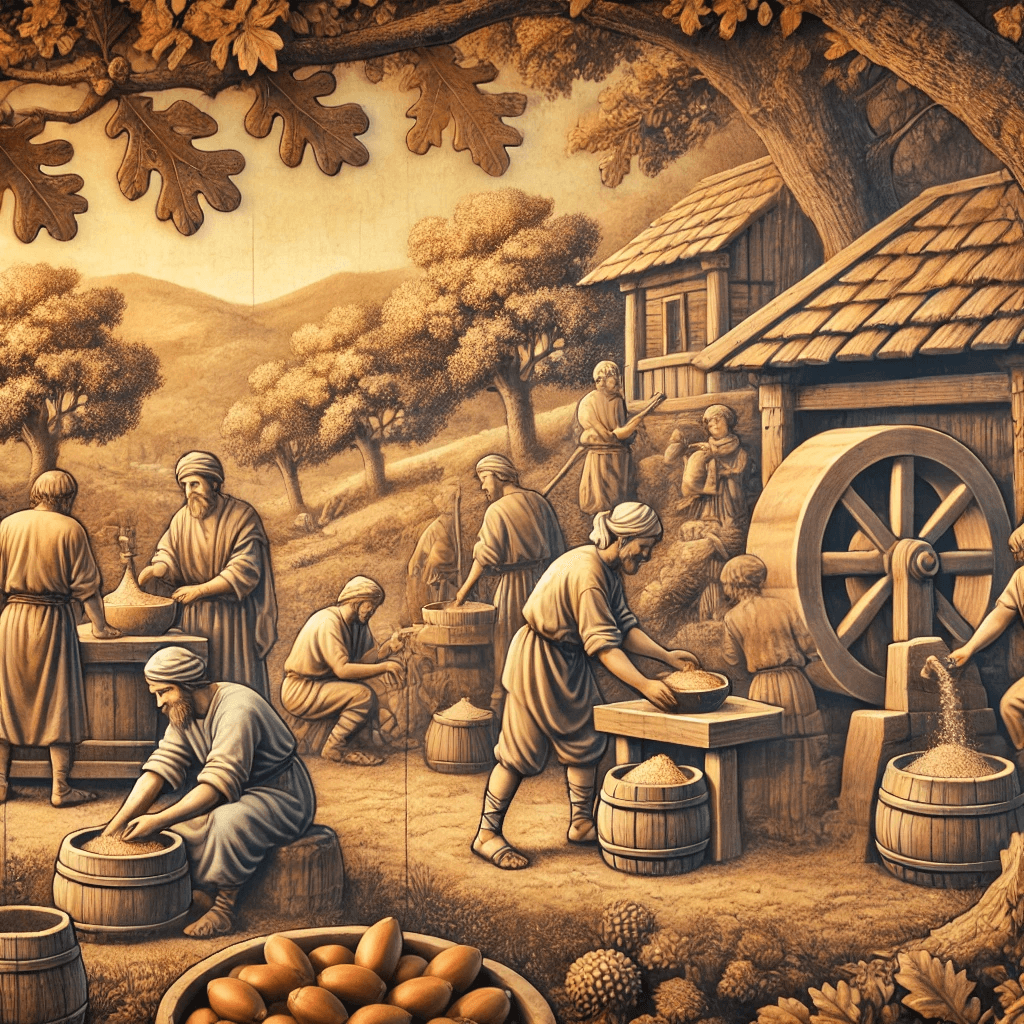
AI-generated depiction
Oak acorn flour stands out for its high content of dietary fiber, carbohydrates, and minerals. It also contains:
The production of oak acorn flour is low-cost and sustainable because it relies on wild harvesting. It provides an alternative food source in regions with drought or limited arable land. Additionally, utilizing acorns that would otherwise go unused supports rural development.
Today, oak acorn flour is seeing increasing demand in health food stores and local markets. It is especially favored by individuals with gluten allergies and advocates of natural living. Additionally, it is gaining recognition in gourmet cuisine as a gastronomically intriguing ingredient.
Erdur, S. Anadolu’da Doğal Gıda Kaynakları ve Geleneksel Gıda Üretimi. Istanbul: Geleneksel Beslenme Yayınları, 2015.
FAO. Traditional Foods and Their Nutritional Importance, 2018.
Robbins, C. R. The Acorn and Its Uses in Historical and Modern Cuisine. Oxford University Press, 2000.
Sağlık Bakanlığı. Doğal Besinlerin Sağlık Üzerindeki Etkileri Raporu, 2020.
Uysal, A., and Akyüz, N. "Meşe Tohumlarının Gıda Sektöründe Kullanımı ve Potansiyeli." Tarım Bilimleri Dergisi 13, no. 4 (2017): 224-231.

History of Oak Acorns
Nutritional Value
How Oak Acorn Flour Is Made
Applications
Food Production
Animal Husbandry
Natural Medicine and Cosmetics
Environmental and Economic Contributions
Health and Safety Considerations
Oak Acorn Flour Today