badge icon

This article was automatically translated from the original Turkish version.

Article

Network Switch

Quote

A network switch, commonly known simply as a switch, is an active network device that directs data communication. It enables efficient and secure data transfer between devices within the same local area network (LAN), such as computers, printers, or servers. The switch records the physical addresses, known as MAC (Media Access Control) addresses, of each connected device and forwards data frames only to the intended destination. This increases network performance and prevents unnecessary data traffic.
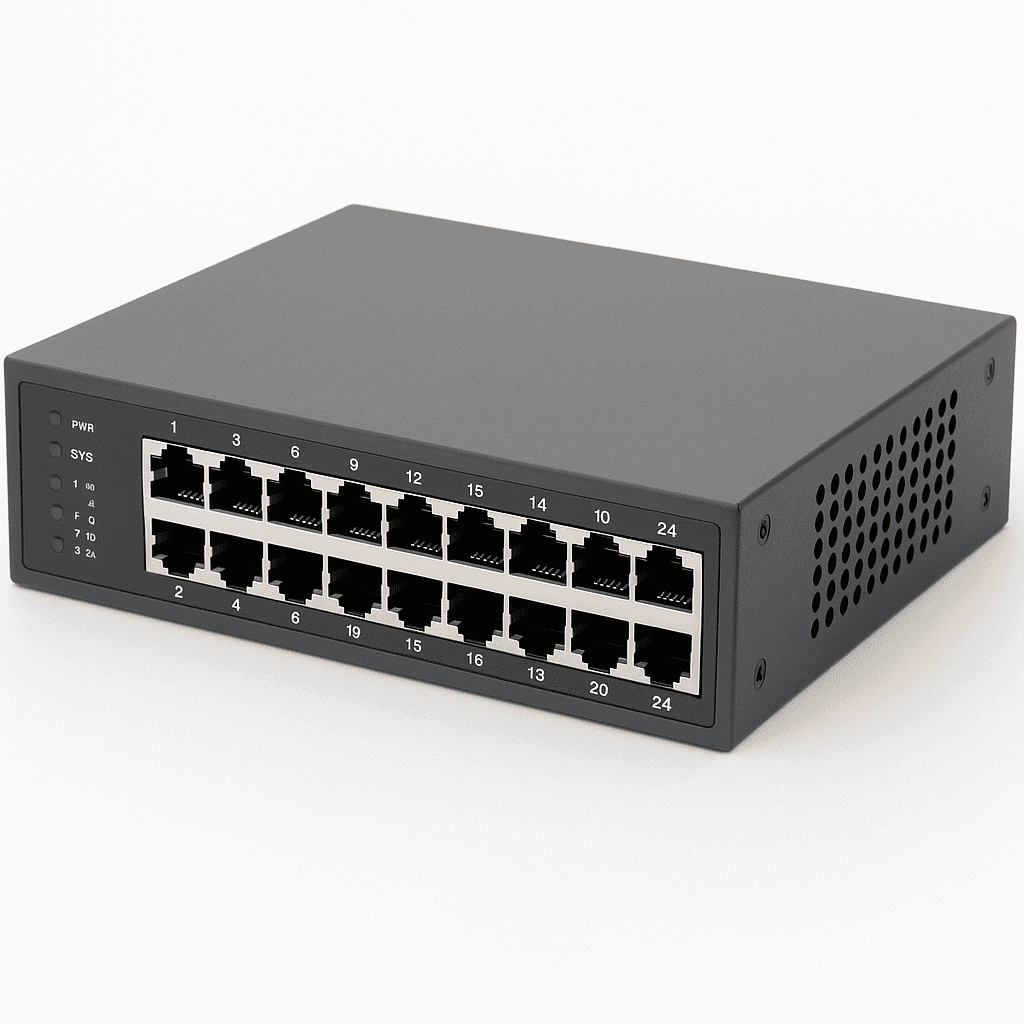

Ağ Anahtarlayıcısına Ait Görsel (Yapay Zeka İle Oluşturulmuştur)

Operating Principle

Switches operate at the second layer of the OSI model, known as the Data Link Layer. Upon receiving the first data frame from a device, the switch learns and stores the source device’s MAC address in its memory. These addresses are kept in a MAC address table within the switch. When a data packet is to be sent, it is directed only to the port connected to the destination device, based on this table. This process allows multiple devices to communicate simultaneously without collisions.

Layer 2 and Layer 3 Switches

Switches are classified according to their operating layer:

  • Layer 2 Switch: Operates solely based on MAC addresses and facilitates communication between devices within the same network segment. These devices are more economical and sufficient for basic switching tasks.
  • Layer 3 Switch: Operates at the third layer of the OSI model, known as the Network Layer. It can perform routing based on IP address information, enabling data flow between VLANs or across different network segments.

Layer 3 switches are preferred in large and complex network architectures because they also incorporate router-like features.

Transmission Methods

Before forwarding data frames to ports, switches can use one of three primary transmission methods:
  • Cut-through: The frame is forwarded immediately after reading only the destination MAC address. No error checking is performed. Latency is low, but corrupted data may be propagated.
  • Store-and-forward: The entire frame is received and checked for errors, such as using CRC, before being forwarded. Latency is higher, but error detection ensures reliable transmission.
  • Fragment-free: The frame is forwarded after the first 64 bytes are received. This method offers a balanced approach between speed and error detection.


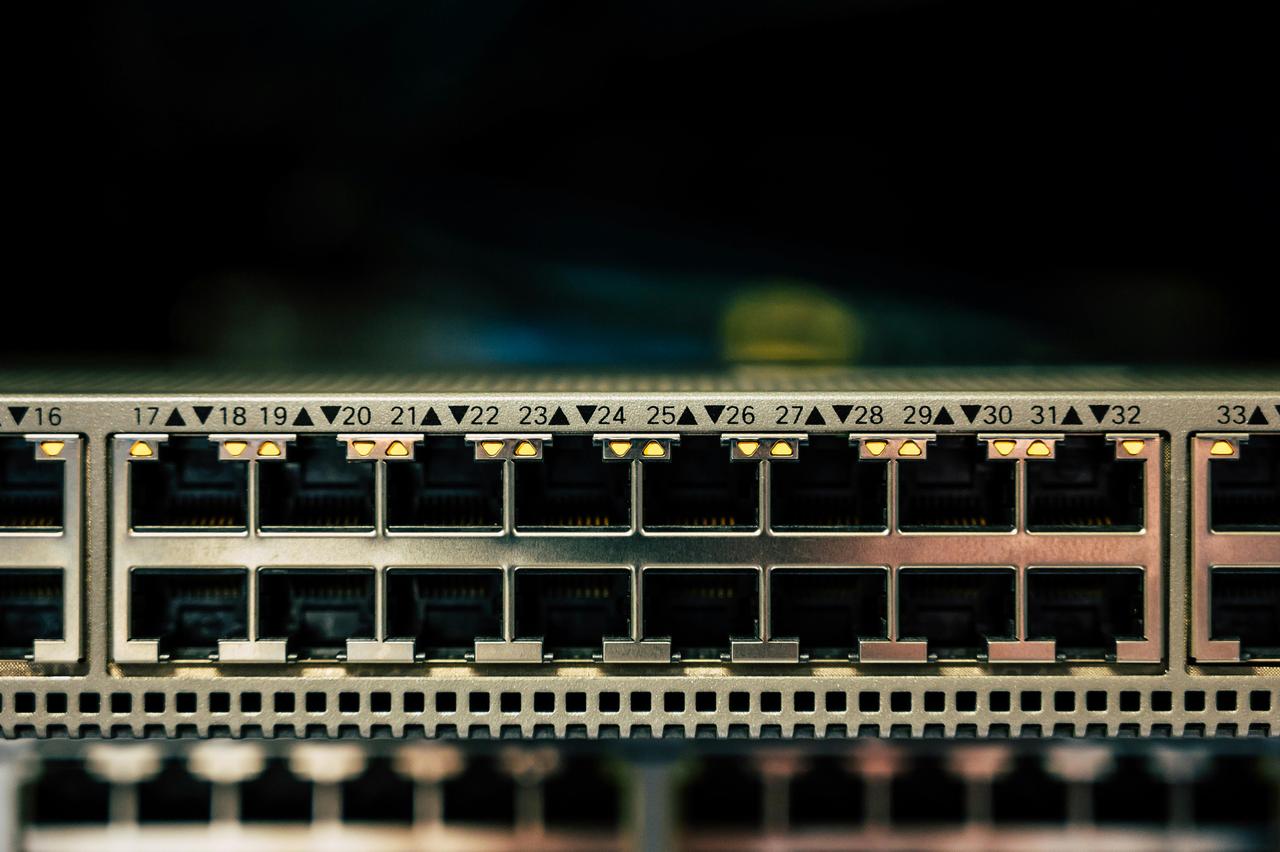
Visual of the Front Ports of a Network Switch (Pexels)

Switch Types

Switches are categorized into different types based on their roles in network architecture:

  • Backbone Switch: Located at the center of large networks. It has very high bandwidth and data transfer capacity.
  • Core Switch: Found at the heart of the network and connects distribution switches to each other. It is as high-performance as a backbone switch.
  • Edge Switch: The device to which end users, such as PCs and printers, connect directly.
  • Ethernet Switch: The most common type, operating based on Ethernet frames.
  • Layer 3 Switch: Advanced devices that support IP-based routing operations.

Management Features and Use Cases

Switches are divided into two main categories based on manageability:

  • Unmanaged switches: Typically used by home users or small offices. They operate without any configuration.
  • Managed switches: Can be configured using web interfaces, command-line interfaces, or management protocols such as SNMP. These switches allow VLAN definitions, port-based speed restrictions, and the implementation of security policies.

Impact on Network Performance

The use of switches enhances overall network efficiency because:

  • Each port creates its own collision domain, preventing data collisions.
  • All ports are by default part of the same broadcast domain. However, VLAN configurations can logically separate these domains.
  • Unnecessary broadcast traffic is prevented, enabling efficient bandwidth utilization.

Security and Redundancy Features

Enterprise-grade switches include various security mechanisms, such as:

  • Port security: Allows blocking of connections from MAC addresses other than those explicitly permitted.
  • DHCP snooping, IP Source Guard, and Dynamic ARP Inspection: Protect against network spoofing attacks.
  • Spanning Tree Protocol (STP): Prevents loop formation using redundant connections and avoids network outages.

In systems requiring high availability, network resilience is enhanced through redundant switch connections and link aggregation methods.

Bibliographies

Karbukan, Ahmet, Ali Gökdemir, Hasan Acar, Murat Karataş, and Özgü Asker. BT2024ASA1021 – Ağ Sistemleri ve Anahtarlama. Bilişim Teknolojileri Alanı. Millî Eğitim Bakanlığı Yayınları. PDF dokümanı. Accessed May 26, 2025.

Numanoğlu, Mustafa. Bilgisayar Ağı Aktif Bileşenleri. PDF dokümanı. Accessed May 26, 2025.

Author Information

Avatar
AuthorSamet ŞahinJuly 14, 2026 at 5:19 PM

Discussions

No Discussion Added Yet

Start discussion for "Network Switch" article

View Discussions

Contents

  • Operating Principle

  • Layer 2 and Layer 3 Switches

  • Transmission Methods

  • Switch Types

  • Management Features and Use Cases

  • Impact on Network Performance

  • Security and Redundancy Features