badge icon

This article was automatically translated from the original Turkish version.

Article

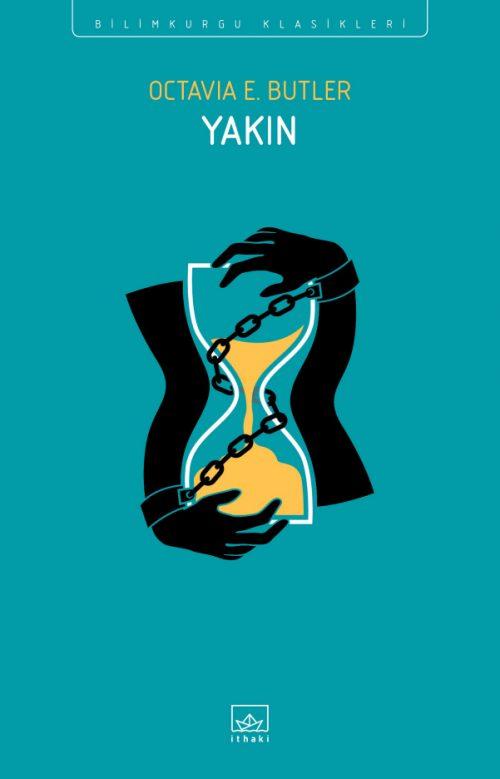
Near (Book)

Quote

Publisher(s)

İthaki

Number of Pages(Text)

384

ISBN(Text)

9786053759263

Category(ies)

Science Fiction

Author(s)

Octavia E. Butler

Kindred, by American author Octavia E. Butler, was first published in 1979 and is a hybrid of the science fiction, historical fiction, and social novel genres. The novel uses the theme of time travel to explore profound social issues such as racism, slavery, and reckoning with the past. Butler’s novel aims to make readers experience the historical traumas of African Americans not merely as intellectual concepts but on a physical and emotional level.

Plot

The protagonist of the novel is Dana Franklin, a young, educated Black writer living in Los Angeles in 1976. Living a peaceful life with her white husband, Kevin, she is suddenly and involuntarily transported to the antebellum South of the 19th century in Maryland, where slavery is rampant. These time-travel episodes occur repeatedly and without warning. Each time, Dana must save the life of Rufus Weylin, a white child who is her ancestor. As Rufus grows older, he internalizes the cruelty of the system in which he is embedded. Dana is forced to confront her own history while enduring the physical realities of slavery. In this context, time travel is not merely a science fiction device; it is a metaphor for a bodily reckoning with history.

Main Characters

  • Dana Franklin: A modern, educated Black woman living in 1976. With each journey to the past, she confronts her ancestral roots while saving Rufus. She directly experiences slavery and embodies the helplessness of a modern individual facing systemic oppression. Throughout the novel, she becomes physically and psychologically worn down, forced to compromise her identity to survive.
  • Rufus Weylin: Dana’s white ancestor. Initially appearing innocent, this child gradually transforms into a white man who embraces and enforces the institution of slavery. His relationship with Dana oscillates between gratitude, affection, and possession. Through this dynamic, the novel questions how power and love can become intertwined.
  • Kevin Franklin: Dana’s white husband. He accompanies Dana on a journey to the past but remains there for an extended period. Though well-intentioned, his role is limited to that of an observer of slavery. The novel explores the extent to which white liberal conscience can truly empathize.

Themes

  • Time Travel – The Embodiment of Trauma: Time travel here is not merely a metaphor but a direct narrative tool to demonstrate the physical and psychological effects of the past on the individual. The scars on Dana’s body emphasize that memory is not only mental but also bodily.
  • Racism and Ownership: The institution of slavery is the defining element in the characters’ relationships. White characters view ownership of Black people as a natural right, and Dana exposes the moral collapse inherent in this belief. Rufus’s “possessive love” is inseparable from violence.
  • Power, Love, and Dependency: The relationship between Dana and Rufus is both salvific and imprisoning. Butler interrogates how the boundaries between love and domination blur, and how brutality can be concealed beneath a mask of compassion.
  • Education and Awareness: Dana is a modern individual who reads and writes. Upon arriving in the past, she discovers how education and awareness are perceived as dangerous to enslaved people. In this context, knowledge is presented as the key to freedom.

Bibliographies

Butler, Octavia E. - Yakın. Translated by Emek Ergün. İthaki Yayınları, 2019.

Author Information

Avatar
AuthorYahya B. KeskinDecember 3, 2025 at 7:46 AM

Tags

Discussions

No Discussion Added Yet

Start discussion for "Near (Book) " article

View Discussions

Contents

  • Plot

  • Main Characters

  • Themes

Ask to Küre