


This article was automatically translated from the original Turkish version.
The Nazca Lines are massive ground figures located in the Nazca Desert of southern Peru, created by the Nazca culture approximately between 500 BCE and 500 CE. These lines consist of various geometric patterns, animal figures, and human representations. However, they can only be clearly seen from the air.
The Nazca Lines have been studied for about 90 years. However, their discovery occurred relatively late because the full scale of these giant figures is only visible from above. They were first investigated in 1926 by Peruvian archaeologist Toribio Mejía Xesspe, but their true dimensions and meaning were only recognized in the 1930s when airplanes began flying over the region. In 1941, American pilot Paul Kosok, while studying the Nazca Lines, discovered that on the day after the winter solstice, the sun aligned precisely with certain lines. This finding gave rise to the theory that the Nazca Lines may have had an astronomical purpose, earning them the reputation of being the “world’s largest astronomy book.”
Although the exact purpose of the lines remains unknown, several theories have been proposed:
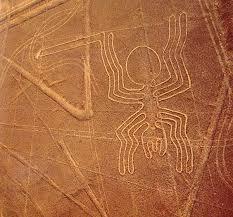
In the Nazca Lines, geometric and biological motifs such as the spider figure were created with intricate craftsmanship.
The Nazca Lines consist of numerous figures that can be categorized into different types:
The primary reason these figures have survived for thousands of years is the region’s extremely dry and stable climate. The Nazca Desert receives only about 20 minutes of rainfall per year. The near absence of wind and moisture has prevented erosion of the lines. These climatic conditions have preserved the region as if it were a natural archive.
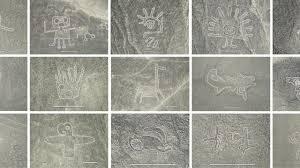
Animal figures such as whale, bird, and monkey among the Nazca Lines reflect the artistic and ritual understanding of the ancient era.
Despite all these ideal conditions, some portions of the Nazca Lines are believed to have been lost. Nevertheless, new figures continue to be discovered. In October 2020, a giant cat figure was accidentally found while it was on the verge of disappearing due to erosion. In 2019, Japanese researchers discovered 143 new geoglyphs. Using high-resolution satellite imagery and deep learning algorithms, Japanese scientists identified these new figures without visiting the site.
The Nazca Lines remain a great mystery to this day. While scientists use new technologies to unravel these secrets, these magnificent drawings are recognized as one of humanity’s greatest artistic and scientific legacies.
Bizevdeyokuz. "Nazca Çizgileri, Peru." Accessed February 9, 2025.https://www.bizevdeyokuz.com/nazca-cizgileri-peru.
TÜBİTAK Bilim Genç. "Şili’nin Gizemli Nazca Çizgileri." Accessed February 9, 2025.https://bilimgenc.tubitak.gov.tr/makale/silinin-gizemli-nazca-cizgileri.
Uzay.org. "Nazca Çizgileri." Accessed February 9, 2025.https://uzay.org/nazca-cizgileri/.
Özcan, Barış. "Nazca Çizgilerinin Sırrı." Accessed February 9, 2025.https://barisozcan.com/nazca-cizgilerinin-sirri/.

Mysterious Giant Geoglyphs
Discovery and History
Characteristics of the Nazca Lines
New Discoveries Today