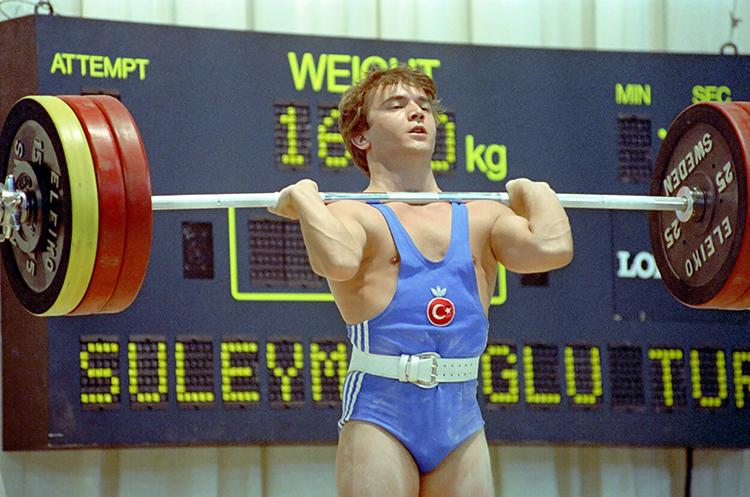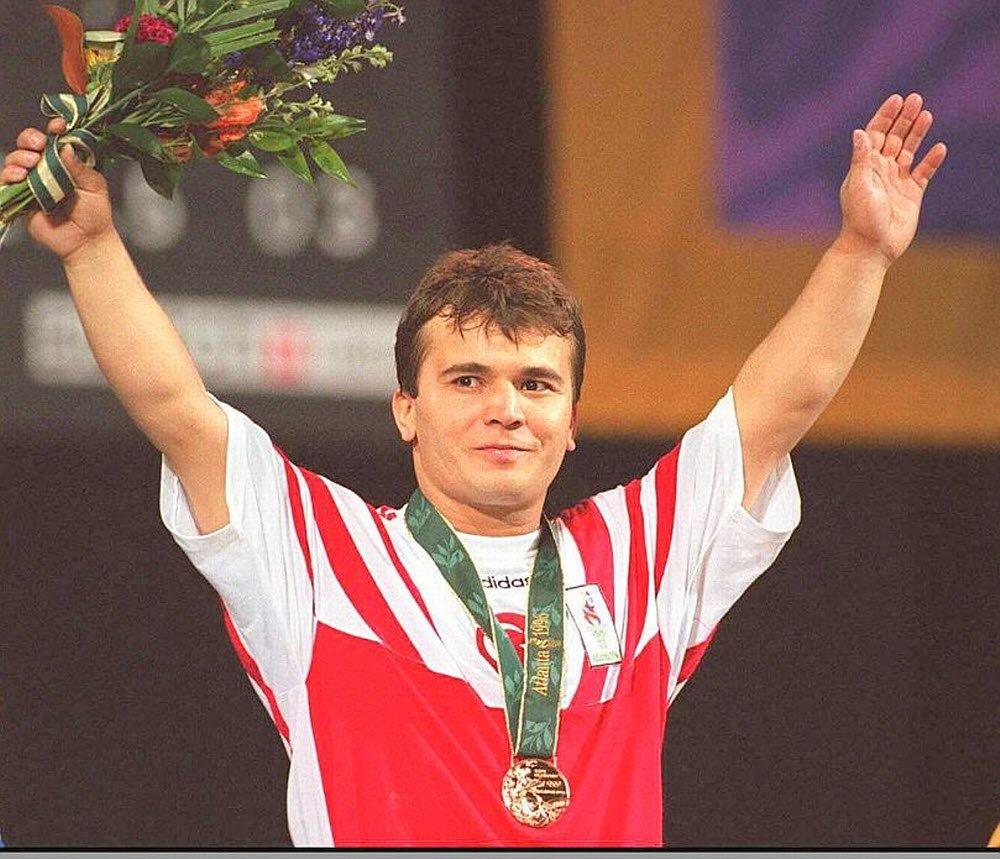

Date of birth | 1967-01-23 | ||||||||
|---|---|---|---|---|---|---|---|---|---|
Date of death | 2017-11-18 | ||||||||
Specialty | Halter | ||||||||
Weight | 42 | ||||||||
Height | 1.67 | ||||||||
Title | Cep Herkülü | ||||||||
Achievements | 7 European Championships 46 World Records 3 Olympic Championships 7 World Championships | ||||||||
Naim Süleymanoğlu (b. 23 January 1967, Ahatlı village, Kırcaali, Bulgaria – d. 18 November 2017, Istanbul) was an athlete of major significance in world and Turkish weightlifting history, known by the nickname “Pocket Hercules.” Throughout his career, the records he broke and the championships he won established him as one of the greatest figures in weightlifting history.
Süleymanoğlu was born into a Turkish family in Ahatlı village, part of Kırcaali province in Bulgaria, where the Turkish population was concentrated; his father was a miner. The family moved to the town of Mestanlı when Naim was still young. During his childhood, he experimented with various sports using the stadium and swimming pool near his home, showing interest in swimming, athletics and wrestling.
Around the age of nine or ten, he was noticed by weightlifting coach Hilmi Pekünlü in Mestanlı and directed toward weightlifting. He began his first training sessions in a small hall; his rapid mastery of technical movements and disciplined work ethic attracted attention. After his training in Mestanlı between 1977 and 1980, he was selected for the Sofia Sports Schools Union, established for talented athletes, where he continued his education.
He received agricultural education at the high school level; his school records described him as a disciplined, responsible, strong-willed and psychologically resilient student.
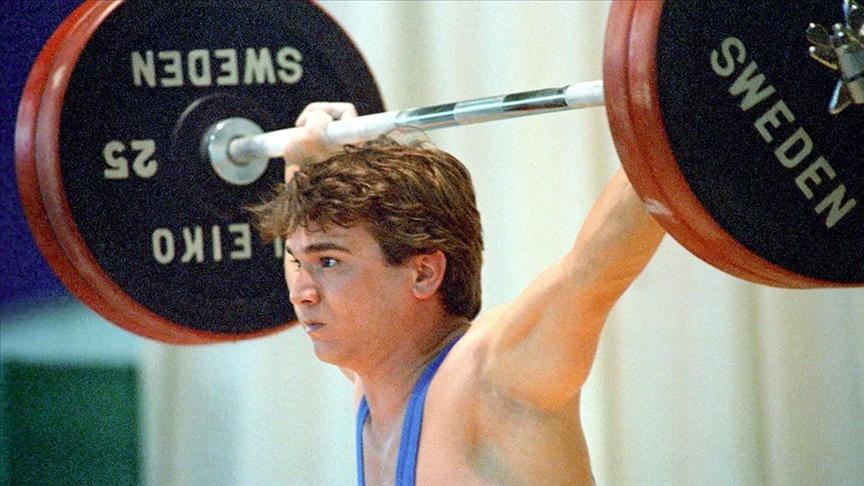
Naim Süleymanoğlu. (Anadolu Ajansı)
The communist regime established in Bulgaria after 1944, particularly under Todor Zhivkov, intensified human rights violations against minorities. Between 1984 and 1989, the “Revival Process” policy restricted Bulgarian Turks from speaking Turkish, receiving Turkish-language education, practicing religious rituals, and observing cultural customs such as weddings and circumcisions; the Bulgarian state sought to assimilate the Turkish minority. During this period, like other Turkish families in the country, Süleymanoğlu’s family faced restrictions on their rights.
In the mid-1980s, under a compulsory name-change campaign, his official name was changed to “Naum Shalamanov”; this practice was part of the broader assimilation policy targeting Bulgarian Turks. These pressures were met with growing protests and resistance across the country. Among the symbolic figures of this period for Bulgarian Turks was Naim Süleymanoğlu, who quickly achieved international success.
After joining the sports school system, he was admitted to the Bulgarian national weightlifting team at a young age. In 1982, at the World Junior Weightlifting Championships in São Paulo, Brazil, he became world champion in the lightweight category and set a world record. At just 15 years old, this record brought him into the spotlight as one of the youngest world record holders in history.
He began competing in the senior category from 1983 onward. Between 1983 and 1986, he set numerous world records in both junior and senior divisions, winning championships in various weight categories (52 kg, 56 kg and 60 kg) at world and European championships. After breaking a world record at the 1983 “Champions Tournament” held in the United States, the international press bestowed upon him the nickname “Pocket Hercules.” He was unable to compete at the 1984 Los Angeles Olympic Games due to the Eastern Bloc boycott, which was organized in protest against the Soviet Union’s invasion of Afghanistan. In the same year, he won first place at the “Friendship Games,” held among Eastern Bloc countries. He was named “Weightlifter of the Year” in international evaluations in 1984, 1985 and 1986.
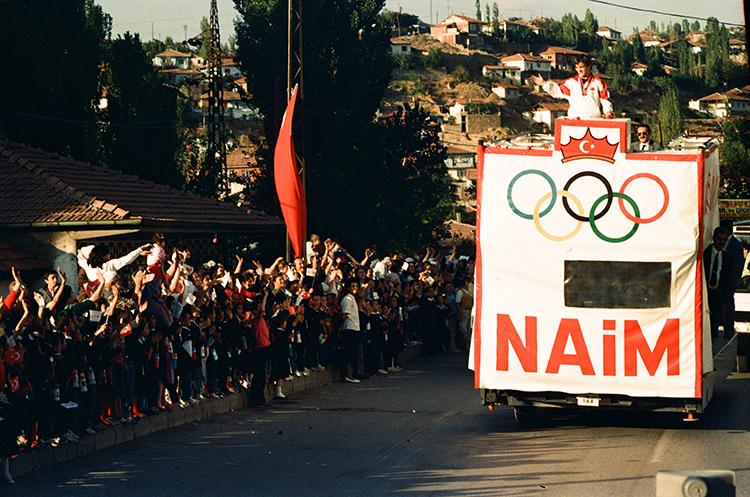
Naim Süleymanoğlu. (Anadolu Ajansı)
The intensifying assimilation policies and compulsory name changes of the mid-1980s diminished Süleymanoğlu’s desire to continue competing for Bulgaria. According to his own account, at the point where he no longer wished to “sweat for those who denied the Turks,” he decided to seek asylum in Türkiye.【1】
He traveled to Melbourne, Australia, for the 1986 World Weightlifting Championships. After winning first place at the competition, he met individuals who assisted him with his asylum process during the reception held at the event’s conclusion and left his hotel as planned. He was temporarily held at a secret address; subsequently, during discussions with Australian authorities, he declared his wish to go to Türkiye of his own free will.
Turkish authorities and relevant institutions played a role in his acceptance process; diplomatic contacts were conducted with Bulgaria within the framework of international rules governing athlete licensing and representation rights. According to international regulations, an athlete could compete for a new country at the Olympics only with the consent of the former federation or after a mandatory waiting period. In this context, it is stated that Türkiye paid compensation to the Bulgarian Weightlifting Federation, thereby enabling Süleymanoğlu to compete for Türkiye at the 1988 Olympics.
After acquiring citizenship of the Republic of Türkiye, he gained the right to compete under the auspices of the Turkish Weightlifting Federation. During his career representing Türkiye, he achieved results frequently cited in international weightlifting literature.
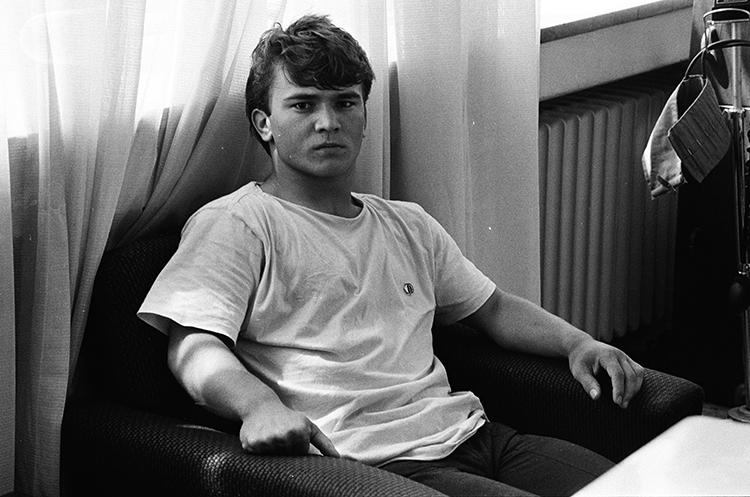
Naim Süleymanoğlu. (Anadolu Ajansı)
The 1988 Seoul Olympic Games were Süleymanoğlu’s first Olympics representing Türkiye. Competing in the 60 kg category, he broke multiple world and Olympic records in the snatch and clean and jerk, lifting a total of 342.5 kg and winning the gold medal.
Throughout his career:
In 1988, he became the first Turkish athlete to appear on the cover of Time magazine. Following his performance at the Seoul Olympics, he was featured in the magazine’s issue titled “Everybody Wins.”
At the 1988 World Championships in Japan, he lifted 190 kg in the 60 kg weight class, achieving a remarkable total. This lift is recorded in weightlifting literature as one of the key examples analyzed for strength-to-weight ratio.
Naim Süleymanoğlu and His Life - The Greatest of the Turkish World. (TRT Avaz)
Although minor numerical discrepancies exist across sources, it is consistently emphasized that he broke dozens of world records and was a defining figure in his weight class from the mid-1980s through the 1990s. He was named “Weightlifter of the Year” in international evaluations in 1984, 1985 and 1986. He was recorded as the first Turkish athlete to appear on the cover of Time magazine in 1988 and was frequently listed among the best weightlifters of his era in various international assessments.
Following the 1988 Seoul Olympics, he was invited to the White House by then U.S. President Ronald Reagan. It is also noted that a special commemorative postage stamp bearing the inscription “Super Turk” was issued in Paraguay. He is remembered as the Turkish athlete who won Türkiye’s first Olympic gold medal outside of wrestling.
A table summarizing Naim Süleymanoğlu’s achievements.
In the 2000s, he made efforts to enter politics; he ran as a mayoral candidate for the Nationalist Movement Party in the 2004 local elections and as a parliamentary candidate in the 2007 general elections; however, he was not elected to any official position.
He was hospitalized on 25 September 2017 due to liver failure. A liver transplant was performed on 6 October 2017; however, due to subsequent health complications, he passed away in Istanbul on 18 November 2017.
Naim Süleymanoğlu’s biography was adapted into a biographical film titled “Pocket Hercules: Naim Süleymanoğlu,” released in 2019. Directed by Özer Feyzioğlu and scripted by Barış Pirhasan, based on the athlete’s brother Muharrem Süleymanoğlu’s memoir “My Brother Pocket Hercules,” the film premiered on 22 November 2019. It depicts Süleymanoğlu’s journey from his first encounter with weightlifting at around age ten in the 1970s to his triumph at the 1988 Seoul Olympics.
Pocket Hercules: Naim Süleymanoğlu – Trailer. (CGV MARS DAĞITIM)
CGS MARS DAĞITIM. "Cep Herkülü: Naim Süleymanoğlu - Fragman (22 Kasım'da Sinemalarda)." YouTube. Accessed November 17, 2025.https://www.youtube.com/watch?v=0GSCVxkl2Ic
Dere, İlker, and Akkoç, Kübra. “SOYA DÖNÜŞÜN GÖLGESİNDE 1989 BULGARİSTAN GÖÇMENLERİNİN ANILARINDA NAİM SÜLEYMANOĞLU.” Genel Türk Tarihi Araştırmaları Dergisi 7, no. 13 (January 2025): 179–94. Accessed November 17, 2025.https://doi.org/10.53718/gttad.1577946
TRT Avaz. "Naim Süleymanoğlu ve Hayatı - Türk Dünyasının Enleri - TRT Avaz." YouTube. Accessed November 17, 2025.https://www.youtube.com/watch?v=JGtGGxfOAo4
Taşpınar, Tamer. "Naim: Cep Herkülü." Edited by Aslı Özaydın, July 2019. Accessed November 17, 2025.https://halter.gov.tr/wp-content/uploads/2020/07/halterkitapcik.pdf
Yazar, Anıl. "'Cep Herkülü' Naim Süleymanoğlu: Arkasında sayısız rekor bırakan ‘Türk Süpermen’". BBC News Türkçe. Accessed November 17, 2025.https://www.bbc.com/turkce/spor-42039678
Çakmak, Fatih. "Dünya ve Türk halterinin unutulmaz ismi: Naim Süleymanoğlu." Anadolu Ajansı. Accessed November 17, 2025.https://www.aa.com.tr/tr/spor/dunya-ve-turk-halterinin-unutulmaz-ismi-naim-suleymanoglu/3396552
İnal, Rahşan. "Bizim Pampiyonumuz: Spor, Milliyetçilik ve Milli Kimlik." Anadolu Üniversitesi Sosyal Bilimler Dergisi, Volume 23, no. 4 (2023): e-ISSN: 2667-8583. Accessed November 17, 2025.https://dergipark.org.tr/en/download/article-file/3239384
[1]
Tamer Taşpınar. "Naim: Cep Herkülü." Sf: 11. Editör: Aslı Özaydın. Temmuz 2019.


Date of birth | 1967-01-23 | ||||||||
|---|---|---|---|---|---|---|---|---|---|
Date of death | 2017-11-18 | ||||||||
Specialty | Halter | ||||||||
Weight | 42 | ||||||||
Height | 1.67 | ||||||||
Title | Cep Herkülü | ||||||||
Achievements | 7 European Championships 46 World Records 3 Olympic Championships 7 World Championships | ||||||||
Early Life and Entry into Sports
1980–1986 Period: The Bulgarian Years
Defection to Türkiye and Citizenship Process in 1986
Olympic Games
World and European Championships
Notable Lifting Achievements
Other Significant Achievements in His International Career
Post-Sports Career, Health Issues and Death
Süleymanoğlu’s Representation in Cinema