


This article was automatically translated from the original Turkish version.
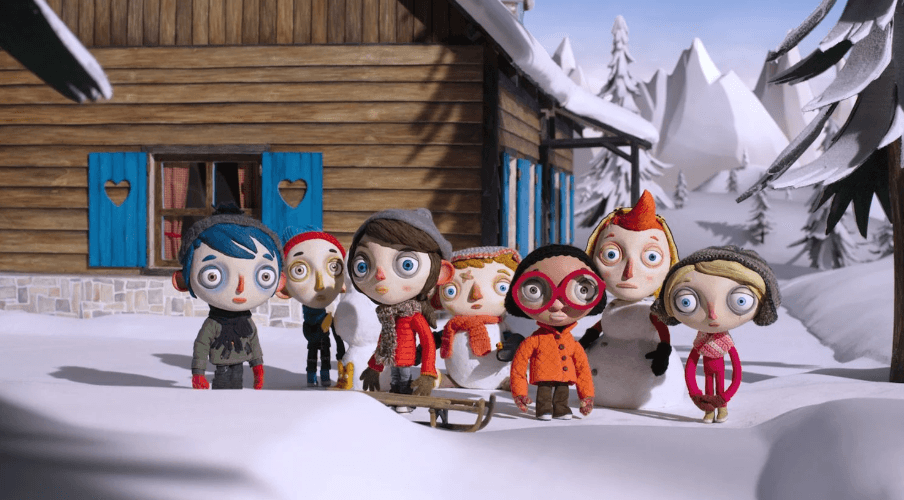
My Life as a Courgette (film)
Original Title | My Life as a Courgette | ||||||||
|---|---|---|---|---|---|---|---|---|---|
Turkish Title | The Life of a Zucchini | ||||||||
Director | Claude Barras | ||||||||
Screenplay | Céline Sciamma | ||||||||
Source Text | Autobiographie d'une courgette (2002), Gilles Paris | ||||||||
Production Year | 2016 | ||||||||
Production Companies | Rita Productions (CH), Blue Spirit (FR), Gebeka Films (FR), KNM (MC) | ||||||||
Film Duration | 66 minutes | ||||||||
Production Format | Stop-motion animation | ||||||||
First Screening Location | Cannes Film Festival, Un Certain Regard section | ||||||||
Oscar Nomination | 2017, Best Animated Film | ||||||||
Distributors | Gebeka Films (France), Universal Pictures (USA) | ||||||||
Türkiye Release Date | 2017-01-13 | ||||||||
My Life as a Courgette-(The Life of Courgette) focuses on the life of nine-year-old Icare (nicknamed Courgette), who is placed in a children’s home following his mother’s death. Through Courgette’s relationships with other children in this new environment and their individual past traumas, the film explores themes of trust, solidarity, and belonging. The narrative is shaped from a child’s perspective, concentrating not on direct dramatic events but on their reflections within the child’s world.
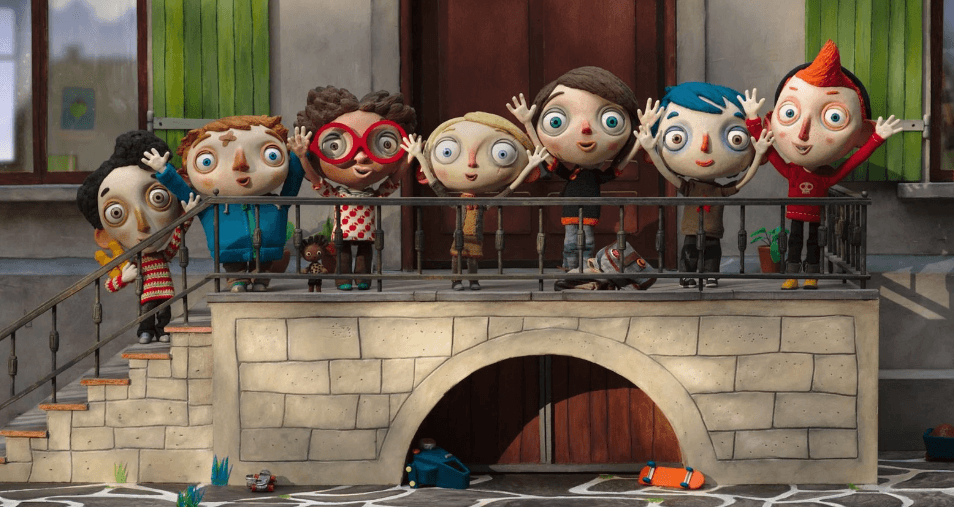
filmde yer alan çocuk karakterler (beyazperde)
The film is adapted from a novel by Gilles Paris intended for adult readers. The adaptation process aimed to make the content suitable for child and adolescent audiences. Instead of direct depictions of traumatic elements such as death, abandonment, and abuse, the film favors implicit or symbolic storytelling. For instance, the scene of the mother’s death in the novel is not shown explicitly in the film; it is conveyed through sound and off-screen elements. These choices were shaped by both pedagogical objectives and the boundaries of censorship.
The film was produced using stop-motion animation. Characters were designed as puppets equipped with mechanical parts. Each character’s face features interchangeable eyelids and magnetic mouth pieces. The production process lasted approximately seven years, from 2007 to 2013, during which time puppet construction, set designs, and costume concepts were developed. Numerous drawings, script drafts, storyboards, and production objects were created during this period; a significant portion of this material has been archived by the Cinémathèque suisse.
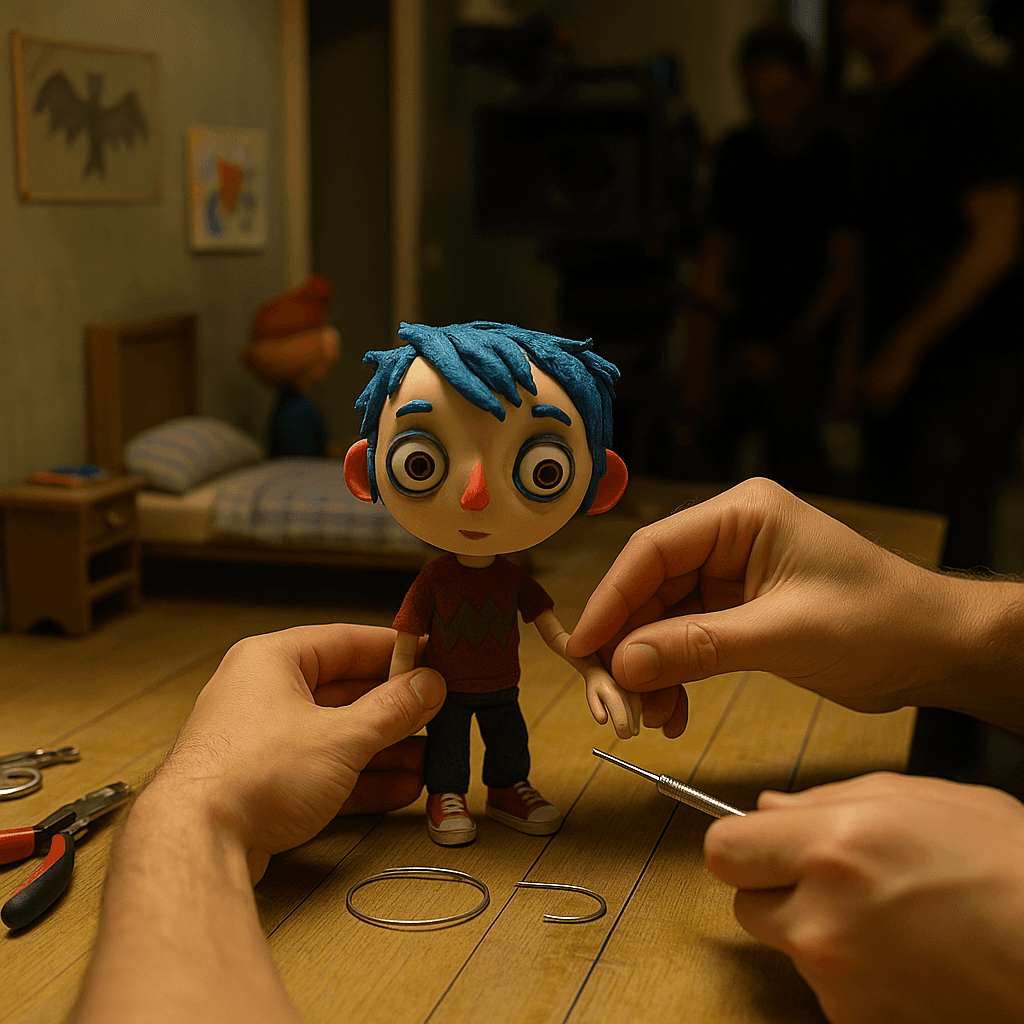
Filmin yapım aşamasını yansıtan bir sahne, stop-motion kuklaların hazırlanışı (Yapay zeka ile oluşturulmuştur.)
The film’s central character is Courgette. Other child characters—Camille, Simon, Ahmed, Alice, Jujube, and Béatrice—are individuals affected by various social or familial traumas. Throughout the film, their psychological responses, such as repetitive behaviors or attachment to specific objects, are linked to their past traumas. Personal objects used by the children (for example, a paper airplane, an MP3 player, and a bandage) serve symbolic functions. These objects evolve in meaning and function over the course of the film, reflecting the children’s transformation.
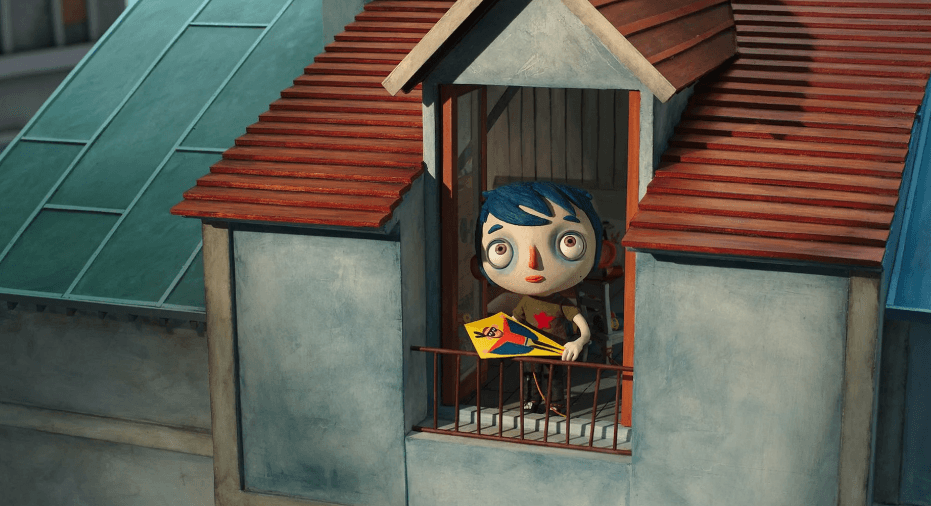
Courgette's personal item is cerf-volant (beyazperde)
The production constructs its narrative through visual simplicity and the language of child characters. Although the film addresses themes such as neglect, death, and psychological trauma and is pedagogically oriented toward children, it also resonates with adult viewers. While the language is simplified, the depth of the narrative engages with social issues. In this context, the film can also be regarded as educational content addressing themes such as family, care, poverty, and children’s rights.
The film’s production materials have been exhibited in museums and academic contexts since 2016. The Musée de la Miniature et du Cinéma in Lyon and the Musée de Carouge in Carouge have organized exhibitions on the film’s production process. Following these events, various physical production artifacts—puppets, set pieces, and script copies—were donated to the Cinémathèque suisse archive. This archive serves as a resource for future scholarly work on the film.
Film production materials and exhibition (Arts in the City)
The film has been supported by pedagogical files developed by French teachers for classroom use. The prepared teacher and student materials aim to foster social awareness, empathy, emotional expression, and solidarity among children through the film. These materials include character analyses, vocabulary exercises, dramatization suggestions, and discussion questions.
My Life as a Courgette film trailer (Bir Film Official)
Arts in the City. "Kabakçığın Hayatı Sergi." YouTube video, 2:16. Accessed April 2025.https://youtu.be/ZOZDbVLuytE
Beyazperde. “Ma vie de Courgette (Kabakçığın Hayatı).” Accessed April 2025.https://www.beyazperde.com/filmler/film-236415/fotolar/detay/?cmediafile=21301066.
Bir Film Official. *Kabakçığın Hayatı*. YouTube video, 1:37:01. Accessed April 2025.https://www.youtube.com/watch?v=JZtGbh0D_0o
Degroult, Nathalie, and Michèle M. Chirol. "Dossier Pédagogique: Ma vie de courgette (Claude Barras, 2016)." The French Review 91, no. 3 (2018).
Hofmann, Clémentine. "D’Autobiographie d’une Courgette à Ma vie de Courgette: Le public cible comme moteur du processus adaptationnel." Transcr(e)ation 6, no. 1 (2025): 1–25.

My Life as a Courgette (film)
Original Title | My Life as a Courgette | ||||||||
|---|---|---|---|---|---|---|---|---|---|
Turkish Title | The Life of a Zucchini | ||||||||
Director | Claude Barras | ||||||||
Screenplay | Céline Sciamma | ||||||||
Source Text | Autobiographie d'une courgette (2002), Gilles Paris | ||||||||
Production Year | 2016 | ||||||||
Production Companies | Rita Productions (CH), Blue Spirit (FR), Gebeka Films (FR), KNM (MC) | ||||||||
Film Duration | 66 minutes | ||||||||
Production Format | Stop-motion animation | ||||||||
First Screening Location | Cannes Film Festival, Un Certain Regard section | ||||||||
Oscar Nomination | 2017, Best Animated Film | ||||||||
Distributors | Gebeka Films (France), Universal Pictures (USA) | ||||||||
Türkiye Release Date | 2017-01-13 | ||||||||
No Discussion Added Yet
Start discussion for "My Life as a Courgette (Film)" article
Adaptation Process
Production Process and Technical Features
Characters and Representational Structures
Narrative Style and Target Audience
Archives and Cultural Legacy
Pedagogical Use and Educational Materials