

This article was automatically translated from the original Turkish version.
Family(ies) | Cruciferae (Brassicaceae) | ||||||||
|---|---|---|---|---|---|---|---|---|---|
Stem and Leaf Type | generally hairy and stiff-stemmed Lobed and irregularly toothed broad leaves | ||||||||
Flower Structure | bright yellow colour racemose arrangement Four-petaled | ||||||||
Root Type | Taproot system | ||||||||
Plant Height | 20 - 100 centimetres | ||||||||
Important Species | Wild mustard (Sinapis arvensis L.), White mustard (Sinapis alba L.) | ||||||||
Genus | Mustard (Sinapis) | ||||||||
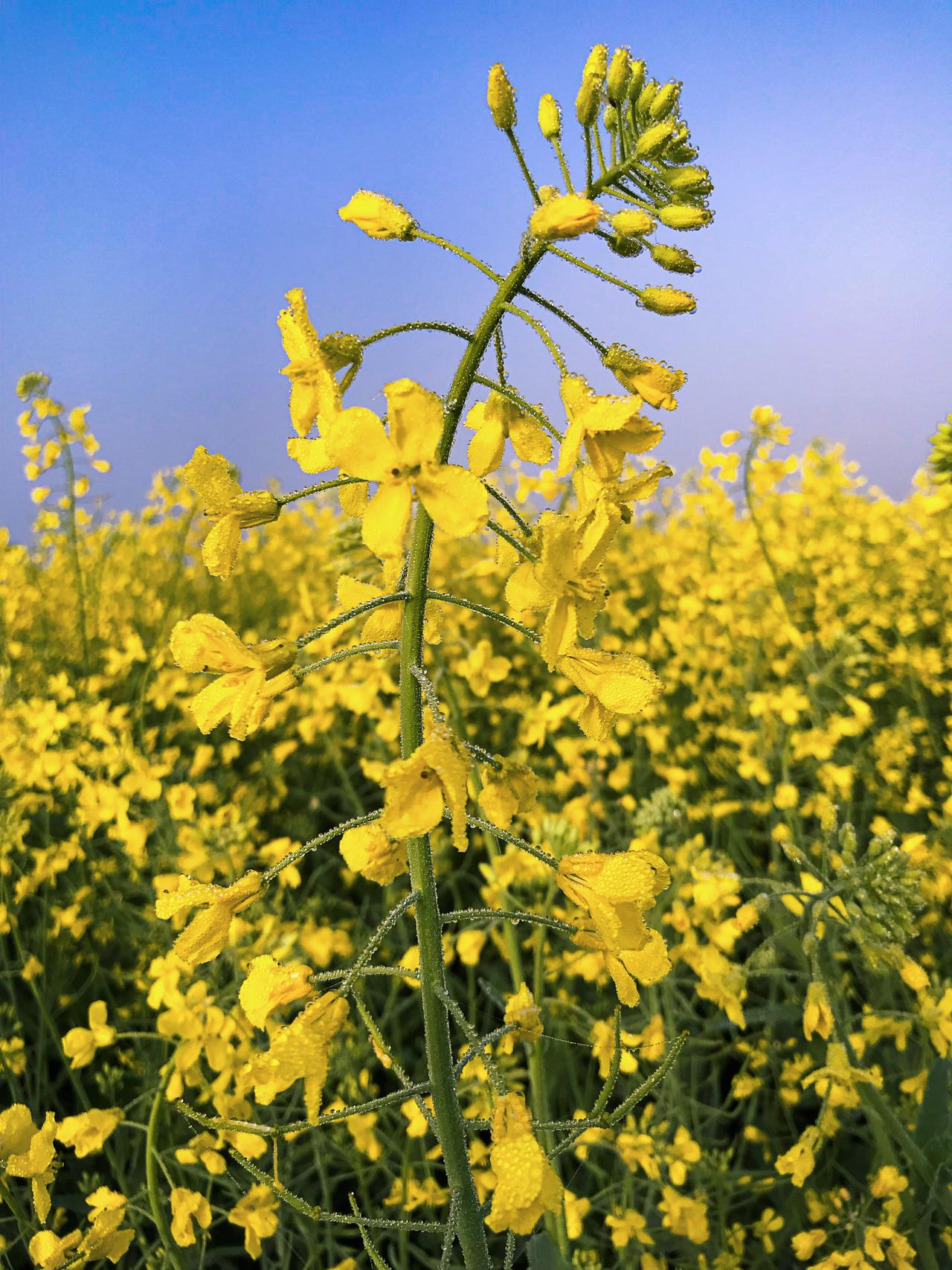
Mustard plant (Sinapis arvensis L. and its close relative Sinapis alba L.); are annual herbaceous plant species belonging to the Brassicaceae family, characterized by yellow flowers. These plants exhibit wide distribution across many regions of the world, particularly in the Mediterranean basin. They are regarded as competitive weeds in agricultural fields, yet they hold economic value due to the characteristic oils and flavor compounds contained in their seeds. They thrive optimally in moist, sunlit areas with cool climatic conditions. The flour derived from mustard seeds has mild gastric and soothing effects when ingested in low doses; externally, it is used as a muscle relaxant. Seed consumption facilitates the digestion of fatty foods and is rich in vitamin C.
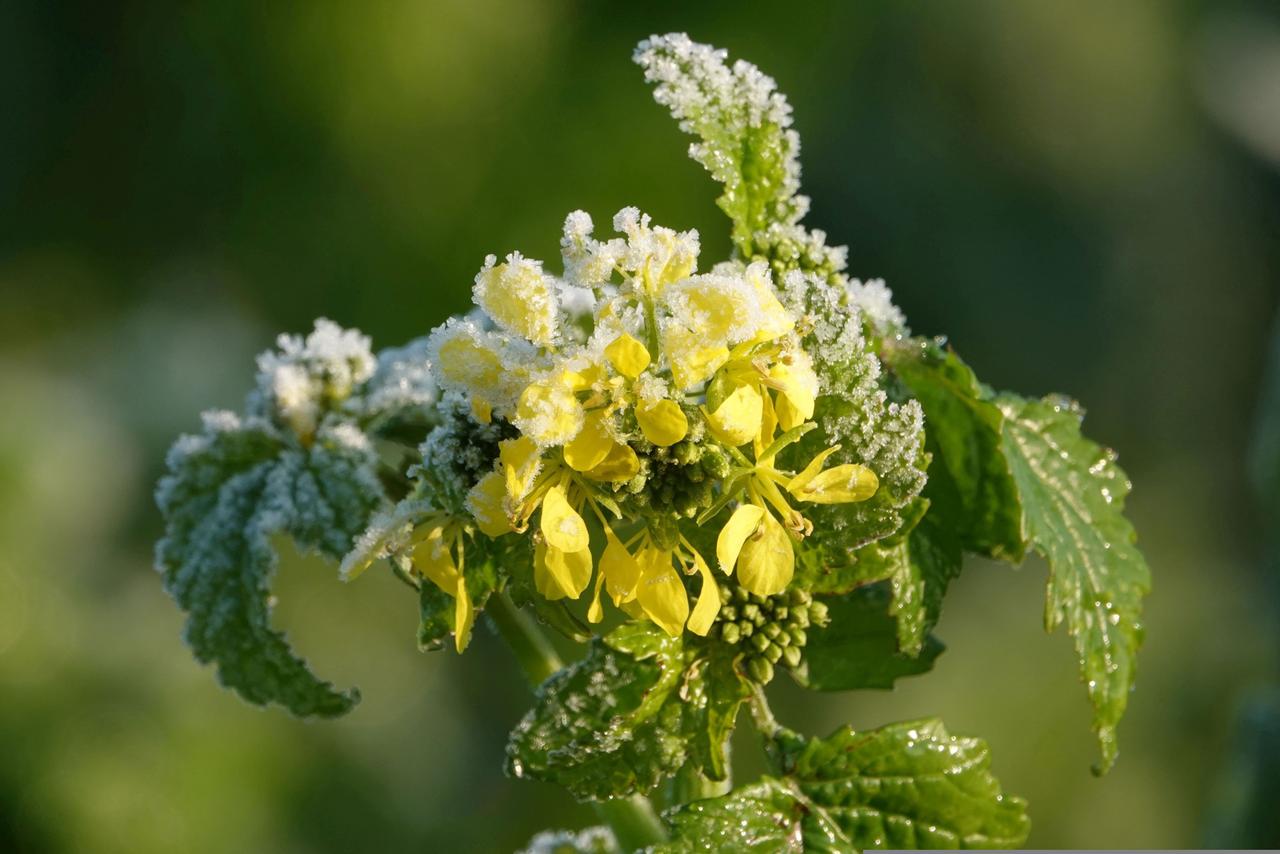
Mustard Plant (pixabay)
In Sinapis arvensis, plant height varies depending on elevation; as altitude increases, mechanical stress from wind and increased transpiration cause reductions in plant height, age, and dry weight. Sinapis alba (white mustard) has a taproot system, broad leaves, and a stem typically covered with hairs or down, growing from 20–30 centimeters to 70–80 centimeters in height.【1】
Flowers are arranged in racemes at the tips of stems and branches, with bright yellow petals. Fruits are capsule-like structures called "silicula," measuring 20–45 millimeters in length and 2–4.5 millimeters in width, with a beak extending 15–30 millimeters. One to four seeds are located in the lower part of the fruit, and zero to one seed in the beak region.【2】 Seeds, which range in color from pale yellow to dark brown or blackish, possess antibacterial, antifungal, appetite-stimulating, diuretic, and expectorant properties.
Mustard seeds exhibit high levels of dormancy; seeds with deep dormancy can remain viable in soil for up to 60 years. In high-altitude regions under stressful ecological conditions, dormancy levels are reduced to enhance seedling survival. The minimum germination temperature for Sinapis alba seeds is 5°C, the optimum range is 20–25°C, and the maximum is 35°C. Germination does not occur at extreme temperatures such as 2°C or 40°C.【3】
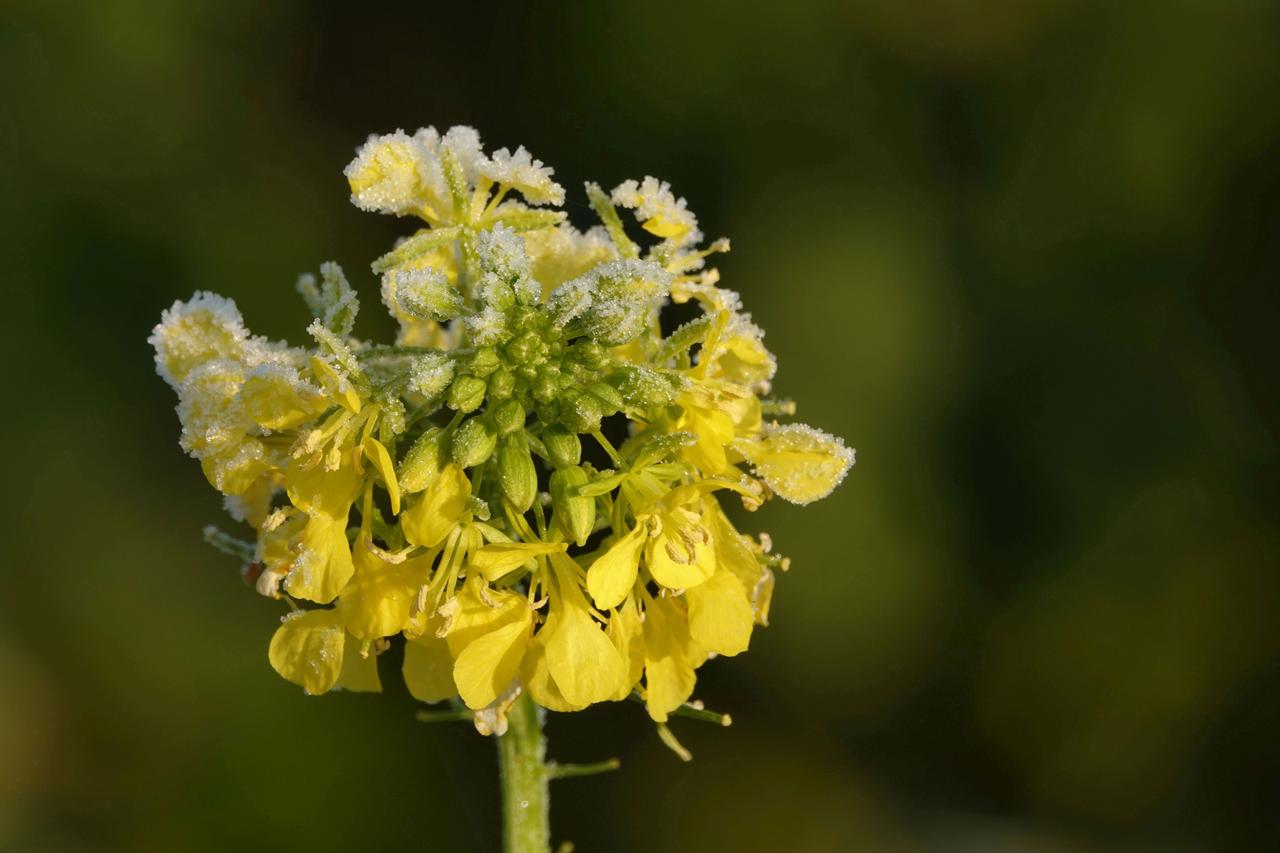
Mustard Plant (pixabay)
Mustard species engage in intense competition with cultivated crops for water, light, and nutrients throughout their growth period. Competition between wild mustard and wheat reduces grain yield by 19.6 percent and straw yield by 30.3 percent. The plant rapidly depletes soil nutrients, removing 5.22 kilograms of nitrogen, 0.95 kilograms of phosphorus, and 3.70 kilograms of potassium per unit area. Under competitive conditions, crop growth parameters such as plant height, spike length, and spikelet number are negatively affected.【4】
Different nitrogen forms (ammonium nitrate, ammonium sulfate, calcium ammonium nitrate, and urea) have measurable effects on plant development. Applied nitrogen fertilizers directly influence plant height, seed number per pod, thousand-seed weight, and oil content.
The chemical composition of mustard seeds is the most fundamental factor determining their industrial potential. Seeds contain 0.25 percent volatile oil and 22.52 percent fixed oil. The volatile oil is composed predominantly—95.40 percent—of allyl isothiocyanate, the compound responsible for the plant’s characteristic pungent taste and sharp odor. The fixed oil composition consists largely of unsaturated fatty acids: 29.62 percent oleic acid, 24.18 percent linoleic acid, 20.65 percent erucic acid, and 16.52 percent linolenic acid.【5】
Amirnia, Reza, Mahdi Ghiyasi, and Mehdi Tajbakhsh. "Farklı Gelişme Yüksekliklerin Hardal Otunun (Sinapis arvensis L.) Bazı Özellikleri Üzerine Etkisi." *Tarım Bilimleri Araştırma Dergisi* 5, no. 2 (2012): 144–147. Accessed April 6, 2026. https://dergipark.org.tr/tr/download/article-file/412954.
Bozdoğan, Olcay. "Akhardal (Sinapis alba L.)'ın Çimlenme Sıcaklıklarının Belirlenmesi." *Iğdır Üniversitesi Fen Bilimleri Enstitüsü Dergisi* 12, no. 4 (2022): 1935-1941. Accessed April 6, 2026. https://dergipark.org.tr/tr/download/article-file/2564128.
Kaplan, M. Berrin. *Bursa İlinde Yabani Hardal (Sinapis arvensis L.)'ın Morfolojik, Biyolojik Özellikleri ile Buğday Verimine Etkisi Üzerine Araştırmalar*. Bursa: Uludağ Üniversitesi Fen Bilimleri Enstitüsü, Master's thesis, 1989. Accessed April 6, 2026. https://https://acikerisim.uludag.edu.tr/entities/publication/5e415dc3-5ddf-42d2-87e2-479af105a015
Tunçtürk, Rüveyde, and Murat Tunçtürk. "Farklı Azot Kaynaklarının Yabani Hardal (Sinapis arvensis L.)'ın Tarımsal ve Kalite Parametreleri Üzerine Etkisinin İncelenmesi." *Bahri Dağdaş Bitkisel Araştırma Dergisi* 11, no. 2 (2022): 128–136. Accessed April 6, 2026. https://dergipark.org.tr/en/download/article-file/2460487.
Uschi_Du. "Yellow Mustard." Pixabay. Accessed April 6, 2026. https://pixabay.com/tr/images/download/uschi_du-yellow-mustard-4686888_1920.jpg.
Uschi_Du. "Yellow Mustard." Pixabay. Accessed April 6, 2026. https://pixabay.com/tr/images/download/uschi_du-yellow-mustard-4686889_1920.jpg.
Özcan, Musa, Atilla Akgül, and Ali Bayrak. "Yabani Hardal (Sinapsis arvensis L.) Tohumu ve Yağlarının Bazı Bileşim Özellikleri." *Gıda* 23, no. 4 (1998): 261-264. Accessed April 6, 2026. https://dergipark.org.tr/tr/pub/gida/article/91904.
[1]
Amirnia, Reza, Mahdi Ghiyasi, ve Mehdi Tajbakhsh. "Farklı Gelişme Yüksekliklerin Hardal Otunun (Sinapis arvensis L.) Bazı Özellikleri Üzerine Etkisi." Tarım Bilimleri Araştırma Dergisi 5, sy. 2 (2012): 144-147. Erişim Tarihi: 6 Nisan 2026.https://dergipark.org.tr/tr/download/article-file/412954.
[2]
Bozdoğan, Olcay. "Akhardal (Sinapis alba L.)'ın Çimlenme Sıcaklıklarının Belirlenmesi." Iğdır Üniversitesi Fen Bilimleri Enstitüsü Dergisi 12, sy. 4 (2022): 1935-1941. Erişim Tarihi: 6 Nisan 2026.https://dergipark.org.tr/tr/download/article-file/2564128.
[3]
Bozdoğan, Olcay. "Akhardal (Sinapis alba L.)'ın Çimlenme Sıcaklıklarının Belirlenmesi." Iğdır Üniversitesi Fen Bilimleri Enstitüsü Dergisi 12, sy. 4 (2022): 1935-1941. Erişim Tarihi: 6 Nisan 2026.https://dergipark.org.tr/tr/download/article-file/2564128.
[4]
Kaplan, M. Berrin. Bursa İlinde Yabani Hardal (Sinapis arvensis L.)'ın Morfolojik, Biyolojik Özellikleri ile Buğday Verimine Etkisi Üzerine Araştırmalar. Bursa: Uludağ Üniversitesi Fen Bilimleri Enstitüsü, Yüksek Lisans Tezi, 1989. Erişim Tarihi: 6 Nisan 2026.https://acikerisim.uludag.edu.tr/items/5e415dc3-5ddf-42d2-87e2-479af105a015.
[5]
Özcan, Musa, Atilla Akgül, ve Ali Bayrak. "Yabani Hardal (Sinapsis arvensis L.) Tohumu ve Yağlarının Bazı Bileşim Özellikleri." Gıda 23, sy. 4 (1998). Erişim Tarihi: 6 Nisan 2026.https://dergipark.org.tr/tr/pub/gida/article/91904.

Family(ies) | Cruciferae (Brassicaceae) | ||||||||
|---|---|---|---|---|---|---|---|---|---|
Stem and Leaf Type | generally hairy and stiff-stemmed Lobed and irregularly toothed broad leaves | ||||||||
Flower Structure | bright yellow colour racemose arrangement Four-petaled | ||||||||
Root Type | Taproot system | ||||||||
Plant Height | 20 - 100 centimetres | ||||||||
Important Species | Wild mustard (Sinapis arvensis L.), White mustard (Sinapis alba L.) | ||||||||
Genus | Mustard (Sinapis) | ||||||||
No Discussion Added Yet
Start discussion for "Mustard Plant (Sinapis arvensis)" article
Botanical Characteristics and Germination Biology
Flower and Fruit Structure
Germination Temperatures and Dormancy
Agricultural Competition and Fertilization Effects
Chemical Composition and Fatty Acid Profile