


This article was automatically translated from the original Turkish version.
+1 More
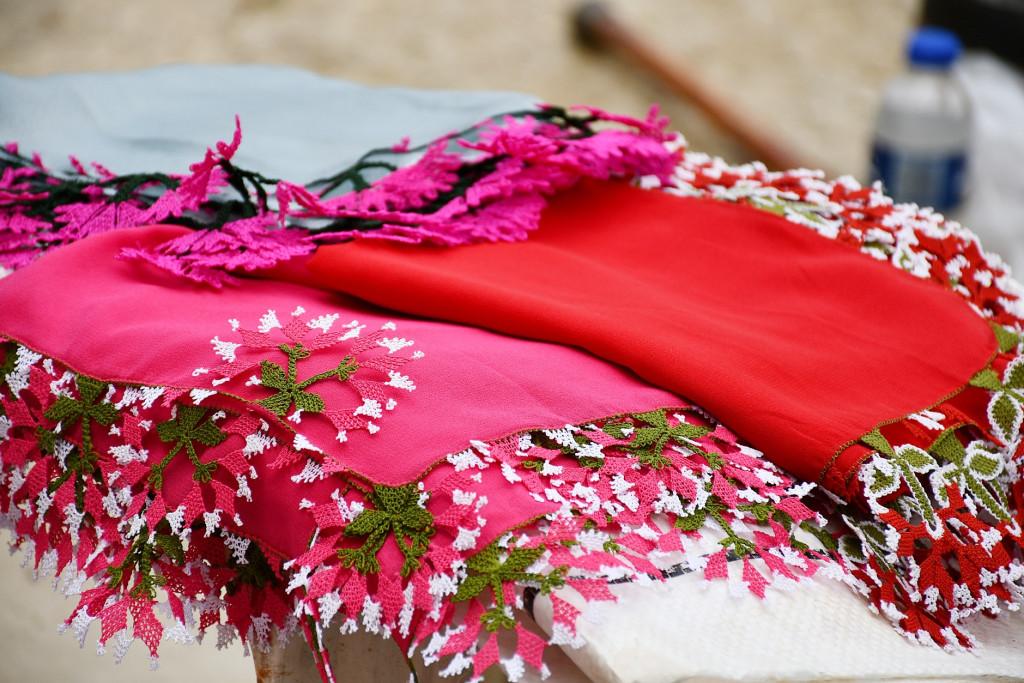
Müşküle Needle Lace
Registration Number | 871 | ||||||||
|---|---|---|---|---|---|---|---|---|---|
Registration Date | 20.08.2021 | ||||||||
Application Number | C2020/414 | ||||||||
Application Date | 24.11.2020 | ||||||||
Name of the Geographical Indication | Müşküle İğne Oyası | ||||||||
Product / Product Group | İğne Oyası / Halılar Handicraft Products Excluding Kilims and Weavings | ||||||||
Type of Geographical Indication | Mahreç Mark | ||||||||
Applicant / Registrant | İznik Municipality | ||||||||
Address of the Registrant | Selçuk Mah. Rauf Denktaş Cad. No: 4 İznik BURSA | ||||||||
Geographical Boundary | İznik District, Bursa Province | ||||||||
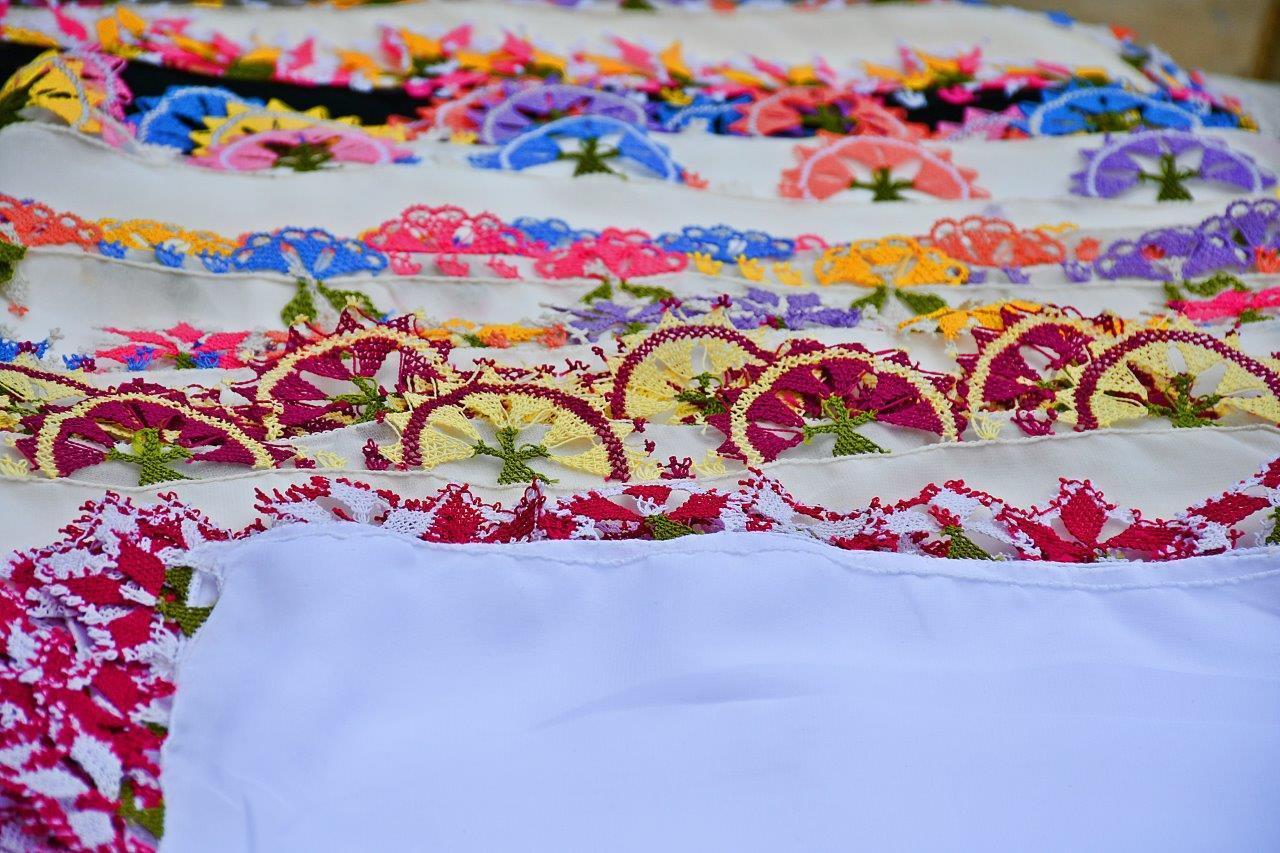
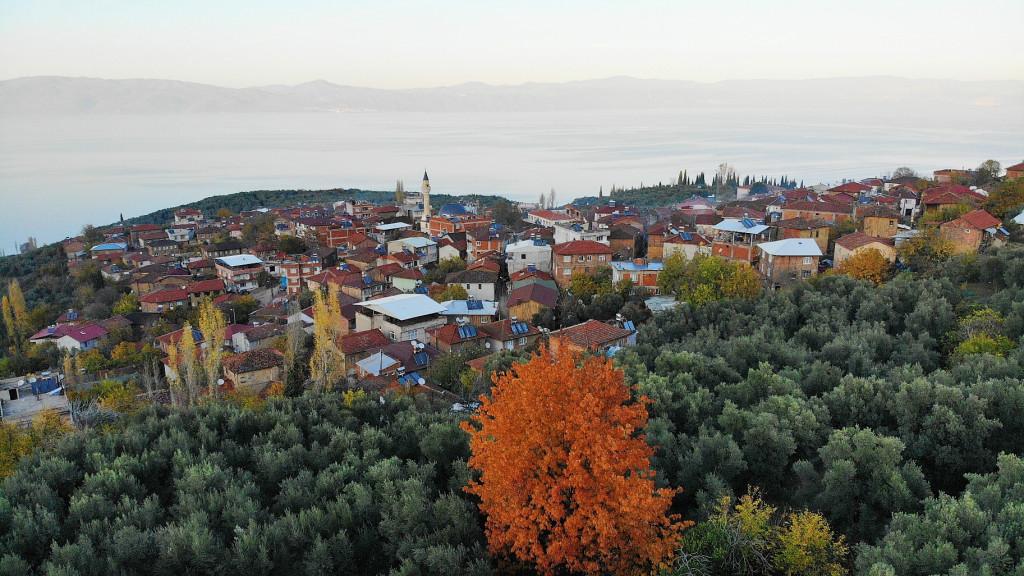
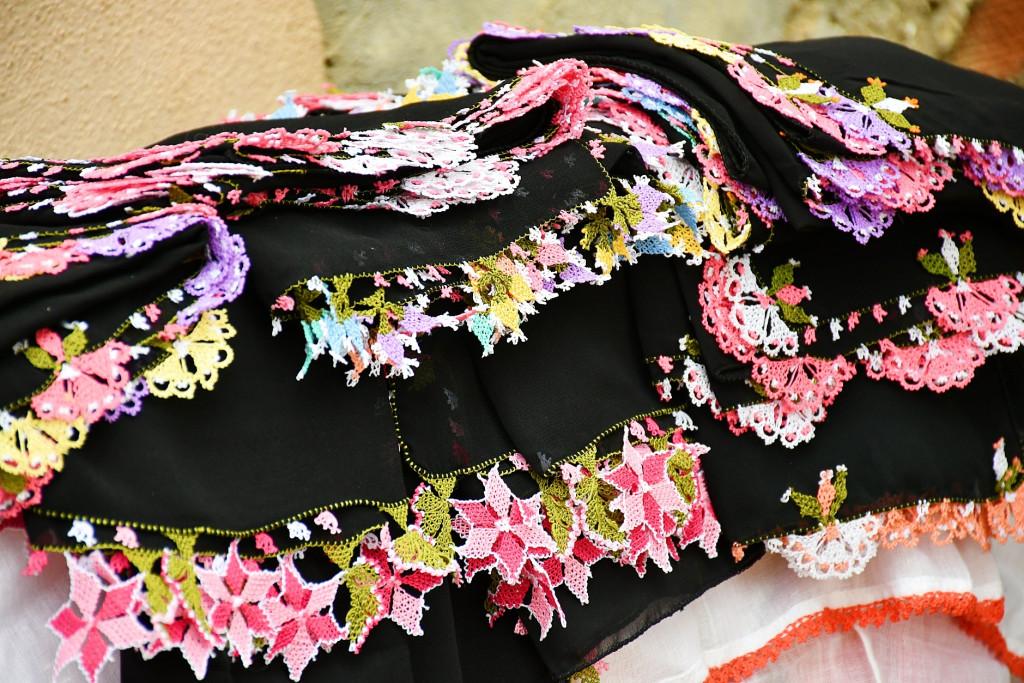
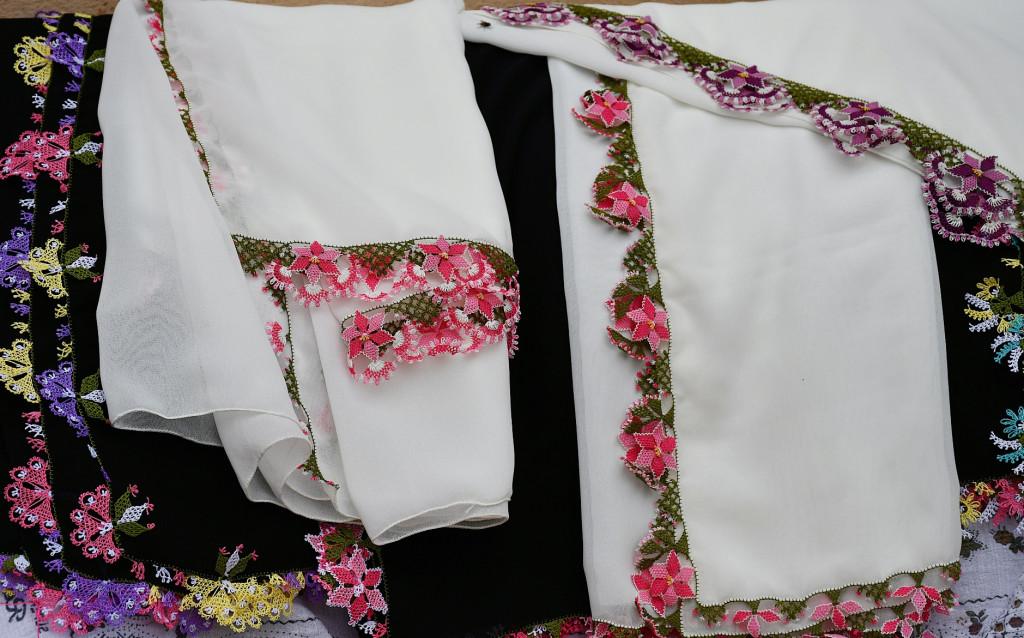
Bursa Müşküle Needle Lace is a traditional handicraft that originated in Müşküle Village, within the İznik district of Bursa, and over time became closely associated with İznik. These lace patterns are used for decorative purposes on textile products such as linens, tablecloths, towel edges, and bedspreads, and are produced using a knotting technique with needle and thread. Traditionally, silk threads dyed with root dyes were used, but today polyester threads are predominantly preferred. The production relies on fundamental knotting techniques such as giraffe, square, and pırpır, and motifs are inspired by nature or daily life. Registered as a geographical indication, Müşküle Needle Lace must be produced exclusively within the boundaries of the İznik district of Bursa, following established traditional methods.
Müşküle İğne Oyası (Turkish Patent)
Müşküle Needle Lace is a traditional handicraft that emerged in Müşküle Village, within the İznik district of Bursa, Türkiye, and became renowned through its association with İznik. The geographical indication was registered on 20 August 2021 under registration number 871. The application was submitted on 24 November 2020 under reference number C2020/414. The registering authority is the İznik Municipality, and the registered geographical boundary is limited to the İznik district of Bursa.
Müşküle İğne Oyası (Bursa İznik Municipality)
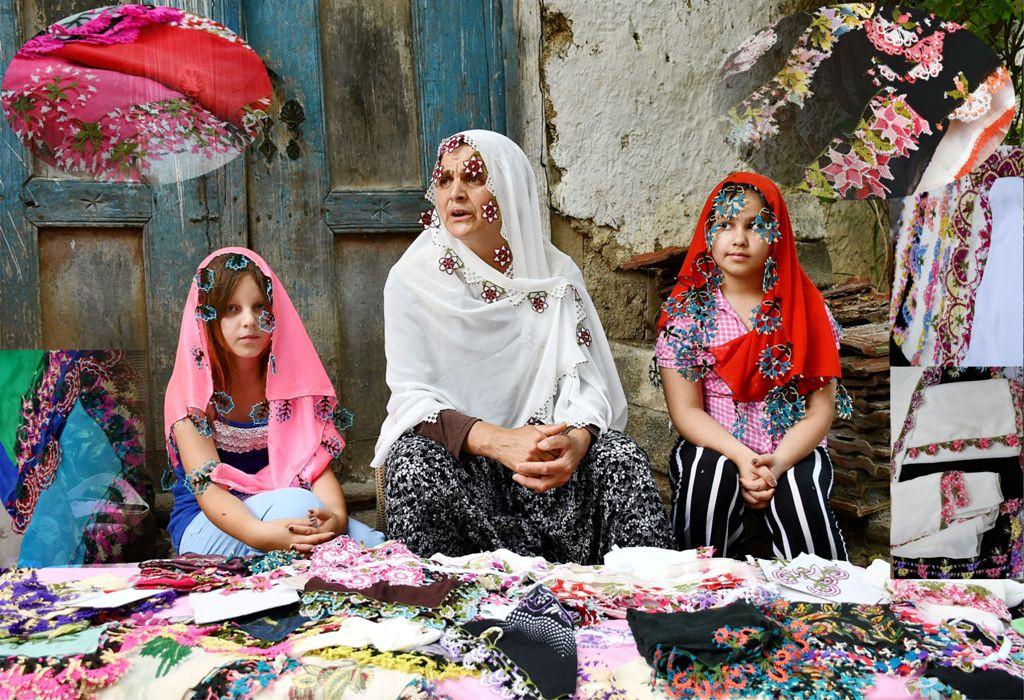
Müşküle Needle Lace is used for decoration on household textiles such as linens, tablecloths, bedspreads, and towel edges, or produced as standalone coverings. Traditionally made with silk threads dyed using root dyes, today the craft is predominantly produced using polyester threads. Written records on Müşküle Needle Lace date back to 2008, and in 2013, 167 distinct patterns of this lace were officially published.
Müşküle İğne Oyası (Bursa İznik Municipality)
Müşküle Needle Lace falls under the category of handicrafts excluding carpets, kilims, and woven textiles, and has been registered as a geographical indication under the “designation of origin” type. A designation of origin indicates that the product’s reputation is intrinsically linked to a specific geographical area. The term “Müşküle Needle Lace” and its designation emblem must appear on the product itself or its packaging. If not applicable to the product or packaging, these identifiers must be clearly visible within the production facility.
Müşküle İğne Oyası (Bursa İznik Municipality)
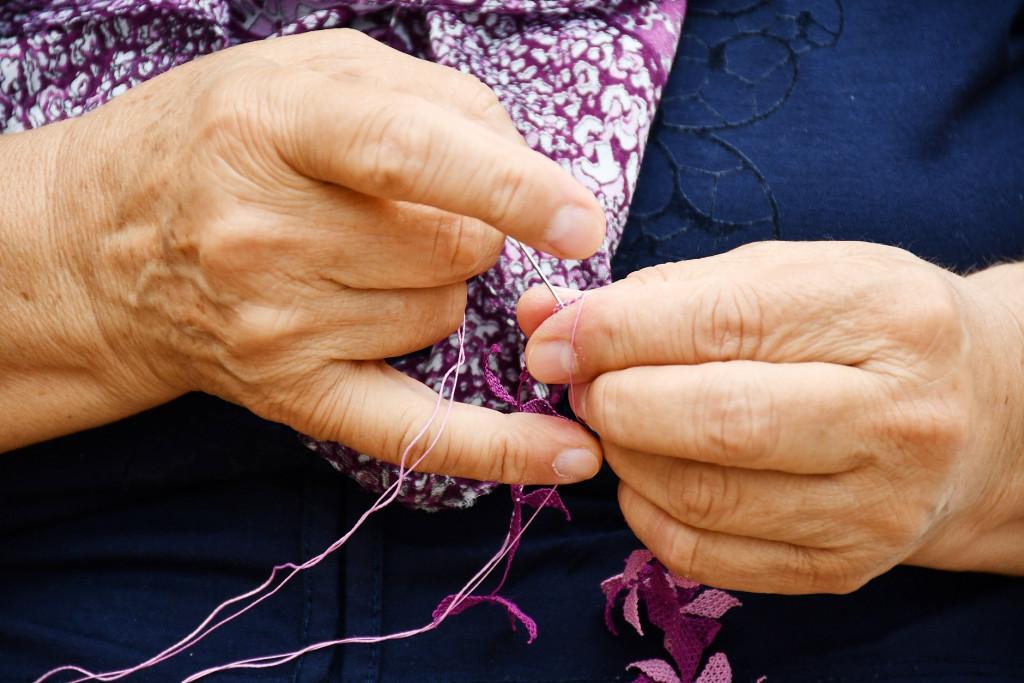
Müşküle Needle Lace is produced by knotting thread onto a strip, fabric edge, or as an independent covering, using a needle. Various materials are employed in production, including needles, thread, scissors, hooks, beads, fabric, paper, thin wire, and glue. The appropriate needle type is fine with a wide eye, facilitating smaller and neater knots. Thread types used include silk-based threads (ibrişim, kordone, laundry silk), cotton threads (mercerized, koton), linen threads (lace thread), and synthetic threads (nylon, sim). During production, the thread must be smooth, evenly twisted, with uniform loop sizes, tightly knotted, and clearly defined loops.
Müşküle İğne Oyası (Bursa İznik Municipality)
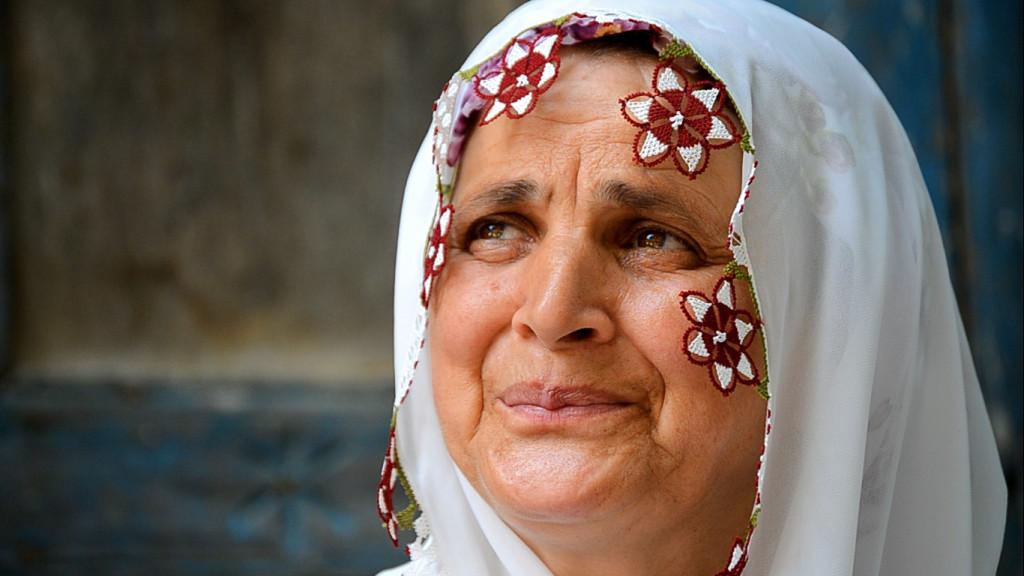
Motifs are shaped by inspiration drawn from nature, animals, or everyday objects. The foundation of the lace is formed by the “giraffe” technique, which consists of a series of loops created by threading the yarn onto the fabric. The thread is wound around the needle and passed through a loop to form a knot. Colored thread is secured at the fabric’s edge; the thread is drawn over the needle, passed underneath from below, wrapped twice around the needle, and pulled tight. Repeating this process creates water-like patterns and motifs. Double-wrapping the thread ensures the lace appears more upright and distinct. The lace is worked from right to left. When giraffe knots are arranged both side by side and stacked vertically, they form the “square-looped rock” motif. The “pırpır” motif is created by loosely leaving thread in semi-circular loops above the rock motif and knotting small leaf-shaped loops around them. While motifs are based on fundamental knotting techniques, variations and diversity arise from the artisan’s skill and creativity.
Fundamental knotting techniques in production:
Motifs can vary and be enriched according to the artisan’s creativity. Working the thread with two wraps makes the lace more upright and prominent. The lace is worked from right to left.
Müşküle İğne Oyası (Bursa İznik Municipality)
Due to its historical origins and established reputation, Müşküle Needle Lace may only be produced within the boundaries of the İznik district of Bursa. According to registration requirements, all stages of production must be carried out within this geographical boundary.
Müşküle İğne Oyası (Bursa İznik Municipality)
The monitoring process is coordinated by the İznik Municipality and carried out by a control board composed of designated experts from the İznik Municipality and the İznik Community Education Center. These inspections occur at least once annually, and may also be conducted at any time upon receipt of complaints or when deemed necessary. The control board verifies the suitability of materials, compliance of production methods with established rules, and correct use of the “Müşküle Needle Lace” designation and its emblem. During inspections, the board may seek support from public or private institutions or their qualified personnel, or procure services as needed. The institution that registered the product is responsible for protecting rights and carrying out necessary legal procedures.
Müşküle İğne Oyası (Bursa İznik Municipality)
The video shared by Bursa İznik Municipality explains the history, production process, motifs used, and applications of Müşküle Needle Lace.
Turkish Patent and Trademark Office. "Coğrafi İşaretler Detay Sayfası: Müşküle İğne Oyası." Accessed May 28, 2025.https://ci.turkpatent.gov.tr/cografi-isaretler/detay/3004.
Turkish Patent and Trademark Office. "Müşküle İğne Oyası Coğrafi İşaret Başvuru Dosyası (PDF)." Accessed May 28, 2025.https://ci.turkpatent.gov.tr/Files/GeographicalSigns/1b9f8436-9ace-428a-ac3e-7dbb74482b54.pdf
Türk Patent ve Marka Kurumu. "Müşküle İğne Oyası Görseli." Accessed May 28, 2025.https://ci.turkpatent.gov.tr/Pictures/GeographicalSigns/b6b8fbde-eafe-4b8c-b5e7-7f3ea4a78141.jpeg.
YouTube. "Müşküle İğne Oyası Tanıtım Videosu." Accessed May 28, 2025.https://www.youtube.com/watch?v=MLaKJYFNx78.
İznik Belediyesi. "Ellerde Sanata Dönüşen Müşküle İğne Oyaları." Accessed May 28, 2025.https://iznik.bel.tr/tr/haberler/genel/ellerde-sanata-donusen-muskule-igne-oyalari-287

Müşküle Needle Lace
Registration Number | 871 | ||||||||
|---|---|---|---|---|---|---|---|---|---|
Registration Date | 20.08.2021 | ||||||||
Application Number | C2020/414 | ||||||||
Application Date | 24.11.2020 | ||||||||
Name of the Geographical Indication | Müşküle İğne Oyası | ||||||||
Product / Product Group | İğne Oyası / Halılar Handicraft Products Excluding Kilims and Weavings | ||||||||
Type of Geographical Indication | Mahreç Mark | ||||||||
Applicant / Registrant | İznik Municipality | ||||||||
Address of the Registrant | Selçuk Mah. Rauf Denktaş Cad. No: 4 İznik BURSA | ||||||||
Geographical Boundary | İznik District, Bursa Province | ||||||||
No Discussion Added Yet
Start discussion for "Müşküle Needle Lace" article
History
Product Category and Geographical Indication Type
Production Method and Materials Used
Types of Threads Used:
Motifs and Technical Features
Geographical Boundary and Production Conditions
Monitoring and Control Mechanism