


This article was automatically translated from the original Turkish version.
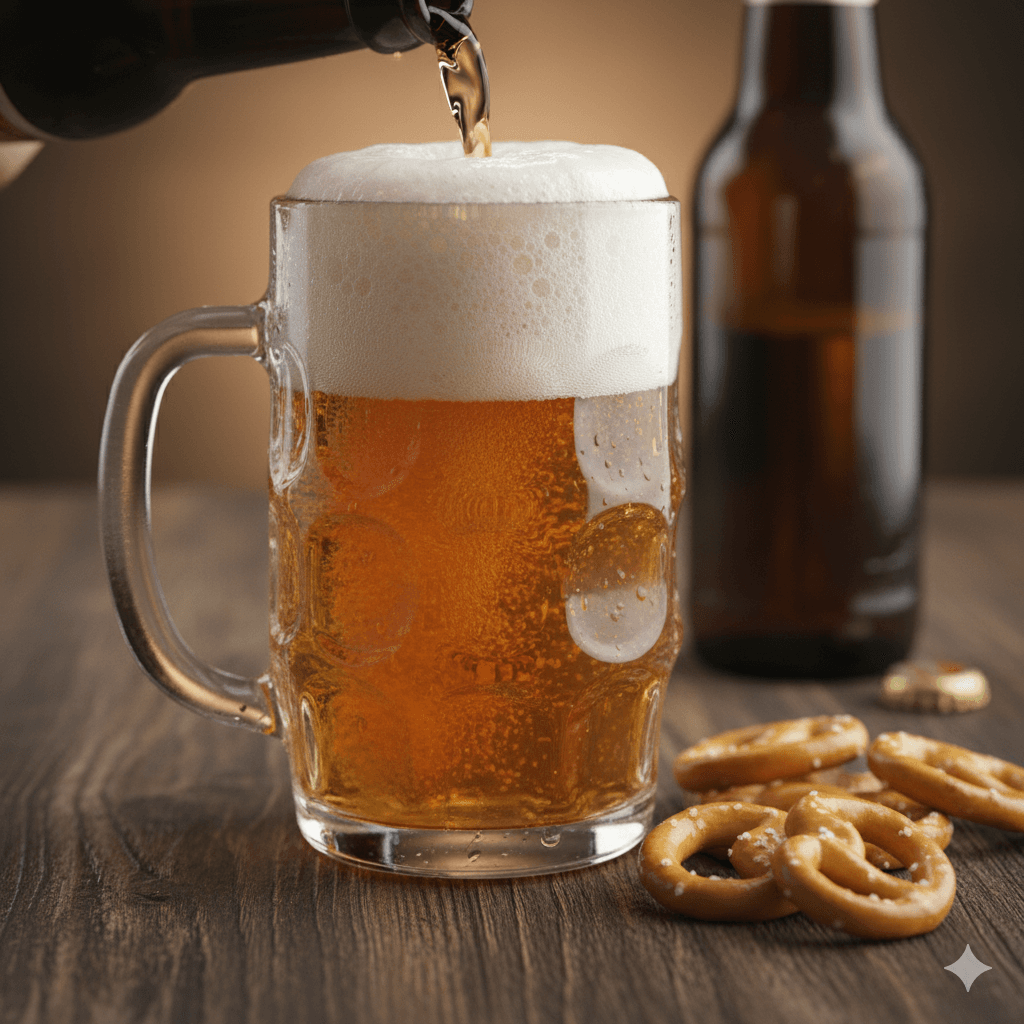
Munich Beer (Generated with Artificial Intelligence)
Type(s) | Protected Geographical Indication (PGI) | ||||||||
|---|---|---|---|---|---|---|---|---|---|
Product Type | Food | ||||||||
Country | Germany | ||||||||
Status | Registered | ||||||||
File Number | PGI-DE-0516 | ||||||||
Registration Date | 18/07/1998 | ||||||||
Münchener Bier (Munich beer) is a type of beer produced in the city of Munich, Germany, and registered with a Protected Geographical Indication (PGI) by the European Union. The product was registered in the European Union on 18 July 1998 and in the United Kingdom on 31 December 2020. This PGI status requires that at least one stage of production, processing, or preparation takes place in the defined geographical area (Munich). The product encompasses a range of styles, from pale golden "Helles" to dark "Doppelbocks," each with its own distinctive flavor profile.
Münchener Bier is historically closely tied to the identity of the city. The "Reinheitsgebot" (purity law), generally associated with German beer, traditionally limits ingredients to barley, water, and yeast (later supplemented with hops). However, Munich adopted its own local regulations in 1487, 29 years before the broader Bavarian decree that later became the German standard. The importance of beer in the city is also evident in social and political events. In 1844, an increase in beer taxation provoked such widespread and intense opposition that the monarchy faced the threat of overthrow. This reputation for quality, built over more than five centuries, continues to this day. Munich beer’s global standing is prominently demonstrated by the Oktoberfest festival, which attracts over six million visitors annually. 【1】
The production process of Münchener Bier involves specific steps from raw materials to maturation, all closely linked to the geographical region.
European Commission. "Münchener Bier." eAmbrosia: the EU geographical indications register. Accessed November 27, 2025. https://ec.europa.eu/agriculture/eambrosia/geographical-indications-register/details/EUGI00000013269.
United Kingdom Government. "Münchener Bier." Protected food name with Protected Geographical Indication (PGI). Date Published January 4, 2021. Accessed November 27, 2025. https://www.gov.uk/protected-food-drink-names/munchener-bier.
[1]
European Commission, "Münchener Bier," eAmbrosia: the EU geographical indications register, erişim 27 Kasım 2025, https://ec.europa.eu/agriculture/eambrosia/geographical-indications-register/details/EUGI00000013269.

Munich Beer (Generated with Artificial Intelligence)
Type(s) | Protected Geographical Indication (PGI) | ||||||||
|---|---|---|---|---|---|---|---|---|---|
Product Type | Food | ||||||||
Country | Germany | ||||||||
Status | Registered | ||||||||
File Number | PGI-DE-0516 | ||||||||
Registration Date | 18/07/1998 | ||||||||
Historical Background and Cultural Significance
Production Process and Geographical Connection