


This article was automatically translated from the original Turkish version.
+1 More
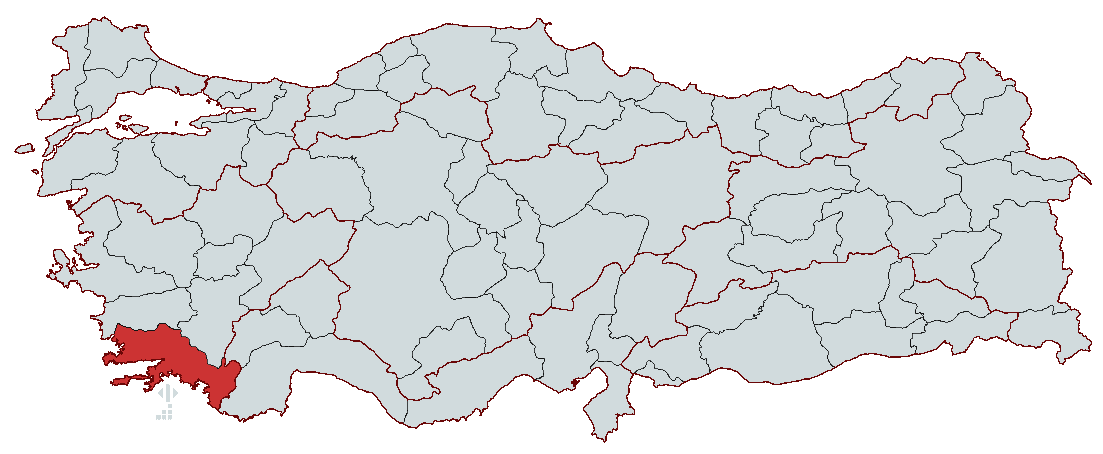
Muğla
Country | Türkiye | ||||||||
|---|---|---|---|---|---|---|---|---|---|
Region | Aegean | ||||||||
Population (Number) | 1.066736 | ||||||||
Area | 12.655 | ||||||||
Climate | Mediterranean | ||||||||
Governor | İdris Akbıyık | ||||||||
Metropolitan Municipality Mayor | Osman Gürün | ||||||||
License Plate Code | 48 | ||||||||
Area Code | 0252 | ||||||||
Muğla is a province in Türkiye's Aegean Region, with part of its territory extending into the Mediterranean Region. It is known for internationally renowned tourist areas such as Ortaca, Dalaman, Fethiye, Marmaris, Datça, and Bodrum. The province has an area of 12,654 km² and is administratively composed of 13 districts, 14 municipalities, and 568 neighborhoods. Its population is approximately 1,050,000, but during the tourism season this number can reach 3 to 4 million.
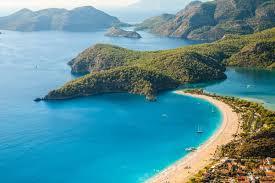
Muğla Natural Landscape
Muğla's history extends back to 3000 BC. In antiquity, the region was inhabited by the Carians and was known as Caria. The area, referred to as Lugga by the Hittites, experienced rule by the Phrygians, Lydians, Persians, Macedonians, Romans, and Byzantines. In 1284, it came under Turkish control following the conquest by Menteşe Bey.
The region joined the Ottoman Empire in 1391, was temporarily returned to the Menteşe Beylik by Timur in 1402, and definitively came under Ottoman rule in 1425. It is traditionally believed that the name Muğla derives from the Seljuk commander Muğlu Bey.
The ancient region of Caria is Muğla's oldest settlement area. The Carians arrived in the region around 3400 BC. Muğla and Milas were among the important cities of Caria. In 334 BC, with the arrival of Alexander the Great, the region became part of Macedonia and later came under Roman and Byzantine rule.
Following the Battle of Manzikert, Turkmen tribes settled in Muğla. In 1284, Menteşe Bey seized the region from the Byzantines and established his beylik. The demographic structure of the region was strengthened by Turkmen groups from Germiyan. The beylik's economy was based on agriculture, animal husbandry, and sea trade, and it joined the Ottoman Empire in 1391.
During the Ottoman period, Muğla developed through agriculture, animal husbandry, and trade. In 1522, during the Rhodes Campaign, Kanuni Sultan Süleyman visited the city. Evliya Çelebi, in the 17th century, praised Muğla, comparing its vineyards to those of Aspuz in Malatya and Meram in Konya.
Muğla was occupied by Italy on 11 May 1919, and the occupation ended in 1921. The Menteşeliler Defense of the Vatan Society was established, and the Muğlalı Serdengeçtiler became important figures in the struggle.
After the proclamation of the Republic, significant steps were taken in education, agriculture, and tourism. International recognition increased in the 1980s through tourism projects. Today, Muğla is one of Türkiye's important cities due to its historical heritage and natural beauty.
Muğla is located in the southwest corner of Türkiye. It borders Aydın to the north, Denizli and Burdur to the northeast, and Antalya to the east. To the south lies the Mediterranean Sea, and to the west the Aegean Sea. Muğla has the longest coastline in Türkiye, exceeding 1,500 km. The province includes important lakes such as Lake Bafa and Köyceğiz Lake, as well as rivers such as Çine Çayı, Esen Çayı, and Dalaman Çayı.
In Muğla, the typical Mediterranean climate prevails up to an altitude of 800 meters, while higher elevations experience the Mediterranean Mountain climate. Summers are hot and dry, while winters are mild and rainy. The province receives heavy rainfall especially during winter and transitional seasons; rain occurs in lowland areas and snow in higher elevations. Annual precipitation exceeds 1,000 mm. Due to its climatic characteristics, Muğla is one of Türkiye's richest provinces in terms of forest coverage.
By Law No. 6360, Muğla attained metropolitan municipality status and is composed of 13 districts. The districts and their populations are as follows:
Muğla's economy is primarily based on tourism and agriculture. Activities also exist in the energy and mining sectors.
Tourism: Muğla has over 3,600 accommodation facilities, more than 400 of which hold tourism operation licenses, with a total bed capacity exceeding 260,000. In addition to major tourist centers such as Bodrum, Marmaris, and Fethiye, the province welcomes millions of tourists annually to natural attractions including Datça, Köyceğiz, Dalyan, Ölüdeniz, Saklıkent, and Sedir Island.
Agriculture: Muğla is one of the world's major centers for beekeeping. Marmaris is internationally renowned for its pine honey production and accounts for 90% of Turkey's pine honey output. It leads Turkey in marine culture fisheries. Citrus fruits, olive, and sycamore oil production also play significant roles in the economy.
Industry: Muğla's industrial sector is limited. The Yatağan, Yeniköy, and Kemerköy Thermal Power Plants are prominent in energy production. Chromium mines are located in Fethiye, lignite deposits and marble quarries in Yatağan, and the Mopak Paper Factory in Dalaman is among the province's key industrial establishments.
Letoon, the religious center of Lycia, was founded in the 7th century BC. It is notable for its temples dedicated to Leto, Apollo, and Artemis. It is listed as a UNESCO World Heritage Site and lies along the Lycian Way.
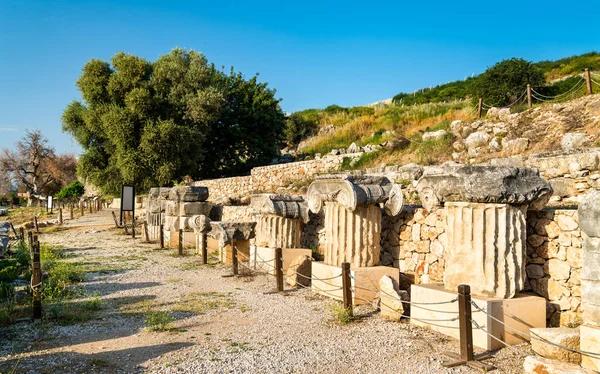
Letoon Ancient City
Halicarnassus, founded by the Dorians and dating back to 1000 BC, served as the capital of the Carian Satrapy and is home to the Mausoleum.
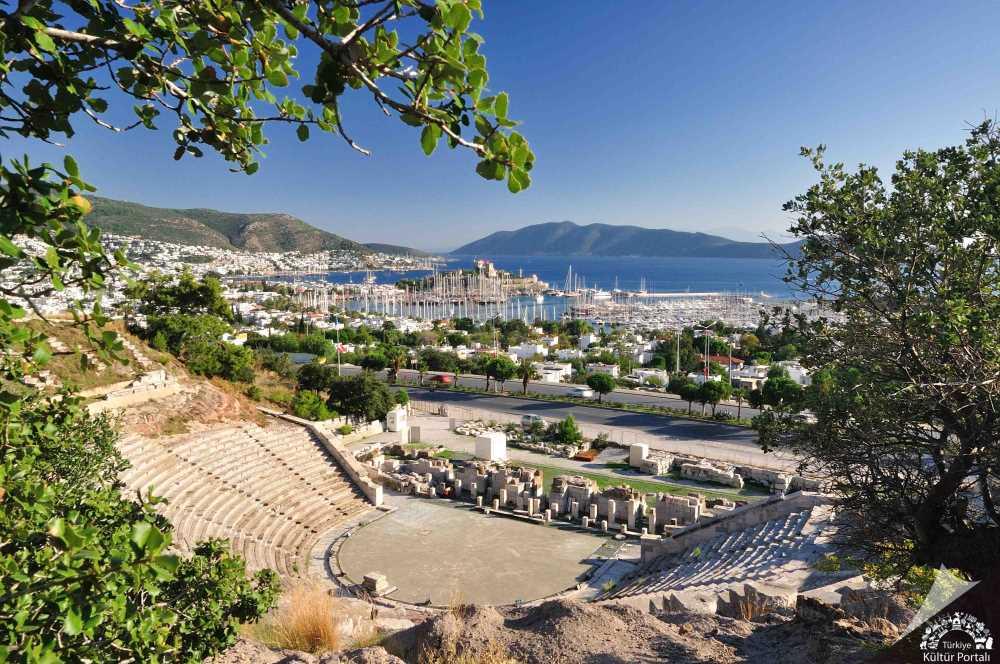
Halicarnassus Ancient City
The ancient name of Marmaris, Physkos, was known as a port city of Caria. Ancient ruins are present at Asartepe.
Telmessos was one of the important cities of Lycian civilization. Its history dates back to the 2nd millennium BC, and it is notable for its rock-cut tombs and ancient theaters.
Located on the shore of Köyceğiz Lake, the Kaunos Ancient City was an important trade center. Its rock-cut tombs and ancient walls are striking features.
Knidos, a center of Dorian civilization, is famous for its Temple of Aphrodite. Its history extends back to the 2000s BC.
The Hyllarima Ancient City is notable for its Roman-era theater. Its walls resemble those of Leleg structures.
The Temple of Hecate at Lagina is one of the important religious centers of Caria.
The Kyllandos Ancient City, dating to the 6th century BC, is located in the Ula district.
These areas contain archaeological and natural protected sites. Although the ancient cities are limited, the region shows evidence of Persian, Roman, and Byzantine influence throughout history.
Around Milas are the ancient cities of Labranda, Euromos, Herakleia, and Iasos. The Gümüşkesen Tomb Monument is among the notable structures.
The ancient cities and archaeological sites of Muğla are listed as above.
Muğla has 103 ancient archaeological sites. The Mausoleum at Halicarnassus, one of the most important architectural achievements of Caria, is recognized as one of the Seven Wonders of the Ancient World. Artifacts from the Hellenistic and Roman periods, along with structures from the Beçin Castle and the Menteşe Beylik era, reflect the region's historical richness.
Among local folk dances, the zeybek, teke, and spoon dances stand out. The folk song repertoire frequently includes gurbet melodies, semahs, and sailor songs. Traditional dishes include Püryan Kebab, Milas Keşkeği, Bodrum Paşa Macaroni, Datça Mürdümerik Soup, and Harnup Pekmez.
Muğla Valiliği. "Muğla İl Resmi Web Sitesi." Accessed February 15, 2025.http://www.mugla.gov.tr/. Türkiye İstatistik Kurumu (TÜİK). "Resmi İstatistikler ve Veriler." Accessed February 15, 2025.https://www.tuik.gov.tr/. T.C. Kültür ve Turizm Bakanlığı, Muğla İl Kültür ve Turizm Müdürlüğü. "Muğla İli Kültür ve Turizm Bilgileri." Accessed February 15, 2025.https://mugla.ktb.gov.tr/. MapChart. "Harita Oluşturma Aracı." Accessed February 15, 2025.https://www.mapchart.net/index.html.

Muğla
Country | Türkiye | ||||||||
|---|---|---|---|---|---|---|---|---|---|
Region | Aegean | ||||||||
Population (Number) | 1.066736 | ||||||||
Area | 12.655 | ||||||||
Climate | Mediterranean | ||||||||
Governor | İdris Akbıyık | ||||||||
Metropolitan Municipality Mayor | Osman Gürün | ||||||||
License Plate Code | 48 | ||||||||
Area Code | 0252 | ||||||||
History
Muğla Before Turkish Rule
Turkish Migrations and the Menteşe Beylik
Ottoman Period
National Struggle Period
Republican Period
Geography
Climate
Population and Districts
Economic Structure
Tourism
Ancient Cities and Archaeological Sites in Muğla Province
1. Letoon Ancient City (Seydikemer)
2. Halicarnassus (Bodrum)
3. Physkos (Marmaris)
4. Telmessos (Fethiye)
5. Kaunos (Köyceğiz)
6. Knidos (Datça)
7. Hyllarima (Kavaklıdere)
8. Lagina (Yatağan)
9. Kyllandos (Ula)
10. Ortaca and Dalaman
11. Milas Ancient Cities
Culture and Art