


This article was automatically translated from the original Turkish version.
+1 More
Motorcycle is a road vehicle powered by an engine, typically with two wheels, and in some types produced with three wheels. It comes in various forms, with or without a sidecar, designed for carrying cargo or passengers. Types with three wheels and a body suitable for cargo transport are called cargo motorcycles (triporteur).
The word "motorcycle" is derived from the French word "motocyclette," which itself is formed from "moteur" (engine) and "bicyclette" (bicycle). Its first recorded use dates to 1897 and was introduced by French bicycle manufacturers Michel and Eugène Werner.
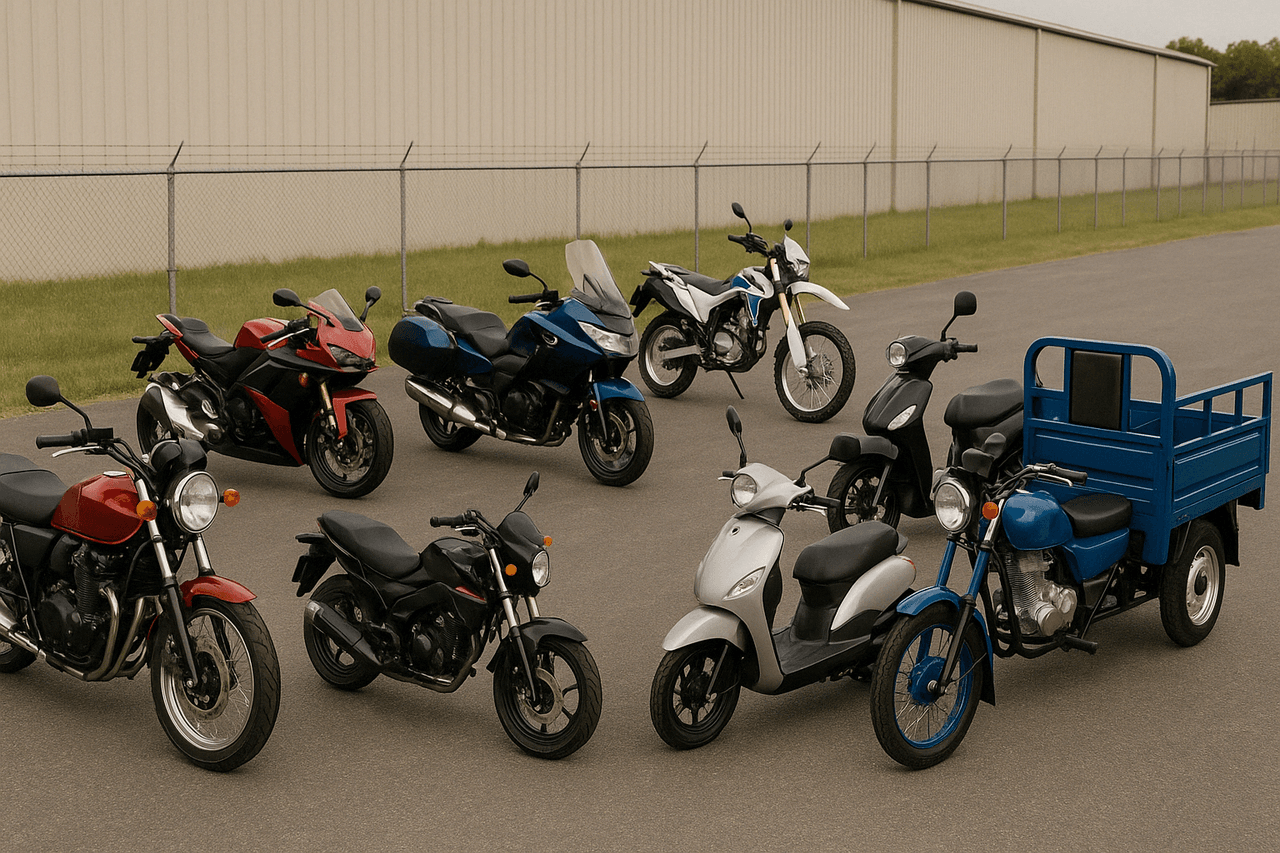
Motorcycle Types (Generated by Artificial Intelligence)
Motorcycles are classified into various categories based on their intended use and technical design:
Scooter and Maxi Scooter: Automatic transmission models suitable for urban use, typically with small engine capacities (50–150 cc).
Enduro / Enduro Touring: Durable models with large tires designed for long-distance travel and off-road conditions.
Naked: Lightweight and urban-friendly models with a minimalist, unfaired structure.
Sport – Super Sport: Race-inspired vehicles with high speed and cornering capability, usually designed for a single rider.
Touring: Motorcycles designed for long-distance riding, featuring large luggage capacity and a focus on comfort.
Chopper / Cruiser / Custom: Low-seated, long-bodied models with prominent visual design, inspired by classic American styles.
Retro – Classic: Nostalgic motorcycles produced with modern technology but featuring the aesthetics of the 1950s.
Off-Road / Cross: Lightweight and agile models built for rough terrain, featuring high suspension.
A motorcycle consists fundamentally of the following components:
Engine and transmission system (gearbox, clutch, chain)
Frame and suspension system
Wheels and tires
Braking system (front and rear brakes)
Fuel tank
Instrument panel (speed, RPM, fuel gauge)
Lighting and signaling system
Handlebar and control levers
The main hazards faced by motorcycle riders include:
Excessive speed, inattention, and inadequate training
Riding under the influence of alcohol or harmful substances
Insufficient use of protective equipment
Riding habits incompatible with road, weather, and traffic conditions
Recommended basic safety equipment for motorcycle users includes:
Helmet (full-face, flip-up, open, enduro type)
Jacket (impact-absorbing protection)
Pants (protected, aramid-reinforced)
Gloves (suitable for season and impact resistance)
Boots (ankle and shin protected)
Chest and back protectors
Essential checks to perform before every ride:
Fuel and oil levels
Tire pressure and tread depth
Headlights, turn signals, and brake lights
Braking systems
Chain and connection components
Safe riding requires not only physical control but also mental awareness. The rider must anticipate potential hazards in advance by applying environmental awareness (TACTIC system: Scan, Detect, Anticipate, Decide, Act) and minimize reaction time.
"Motosiklet." Motosiklet Turing ve Otomobil Kurumu. Accessed April 22, 2025.https://turing.tr/yayinlar/motosiklet-el-kitabi/
"Motosiklet." Trafik.net.tr. Accessed April 22, 2025.https://trafik.net.tr/motosiklet-nedir/
"Motosiklet." Türk Dil Kurumu. Accessed April 22, 2025.https://sozluk.gov.tr/?ara=motosiklet

Word Origin
Classification
Structural Features
Safety and Risks
Safety Equipment
Pre-Ride Inspection
Riding Techniques and Training