


This article was automatically translated from the original Turkish version.
MongoDB is an open-source, document-based NoSQL database management system (DBMS) that works with flexible data structures. Unlike traditional relational database management systems (RDBMS), it stores data in JSON-like documents (BSON) rather than in rows and columns. MongoDB provides a scalable and flexible solution for high-volume data operations, making it particularly ideal for big data and cloud-based applications.
MongoDB was first developed in 2009 by 10gen (now MongoDB Inc.). Versions up to October 16 2018 were released under the AGPL license, while all subsequent versions are licensed under the Server Side Public License (SSPL) v1.
MongoDB uses collections and documents instead of tables and rows as used in relational databases. Documents correspond to records in relational databases, while collections serve the function of tables. Documents consist of key-value pairs and each can have a different structure; this condition defines MongoDB’s schemaless nature.
MongoDB’s core data format is Binary JSON (BSON). Unlike JSON, BSON supports additional data types such as dates and integers. MongoDB documents can be nested, meaning complex data structures like embedded documents and arrays are directly supported.
MongoDB is compatible with many programming languages including C, C++, C#, Go, Java, Python, Ruby, and Swift. MongoDB Shell is a JavaScript-based command-line tool that enables interactive access to MongoDB. Additionally, MongoDB can integrate with big data platforms such as Hadoop and Spark, and supports storage of files larger than 16 MB through its GridFS file system.
MongoDB is commonly preferred in the following use cases:
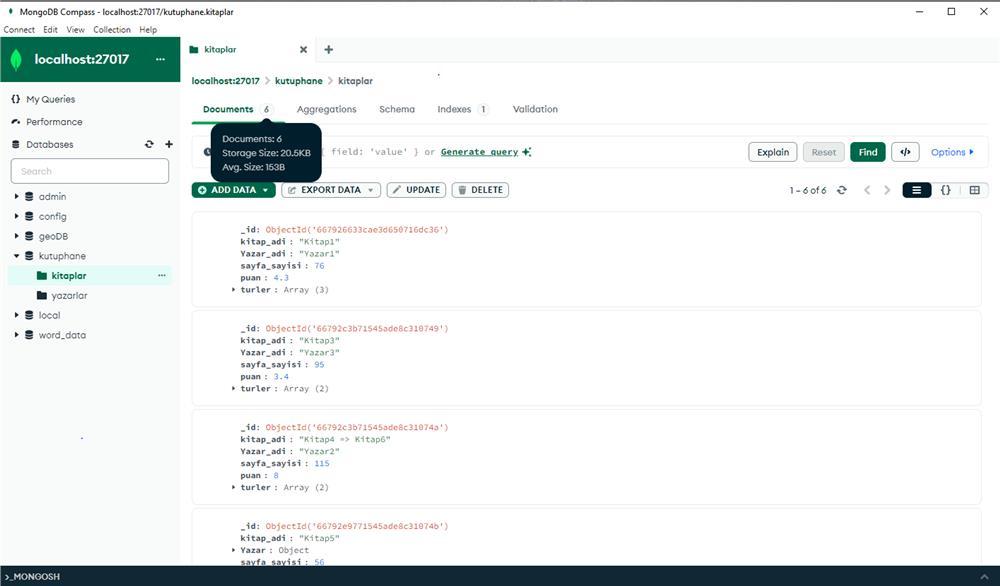
MongoDB Interface - Image Link
As a NoSQL database, MongoDB differs fundamentally from relational databases like MySQL. While MySQL stores data in tables using rows and columns, MongoDB stores data in JSON-like documents. This allows MongoDB to offer schema flexibility, enabling developers to modify or evolve data models as needed. MySQL, by contrast, relies on a predefined schema and strict data types, making it a strong tool for ensuring data integrity. MongoDB does not support JOIN operations or complex queries typical in relational databases, making MySQL more suitable for applications requiring multi-layered relationships. However, MongoDB delivers better performance in big data applications and scenarios requiring flexible modeling.
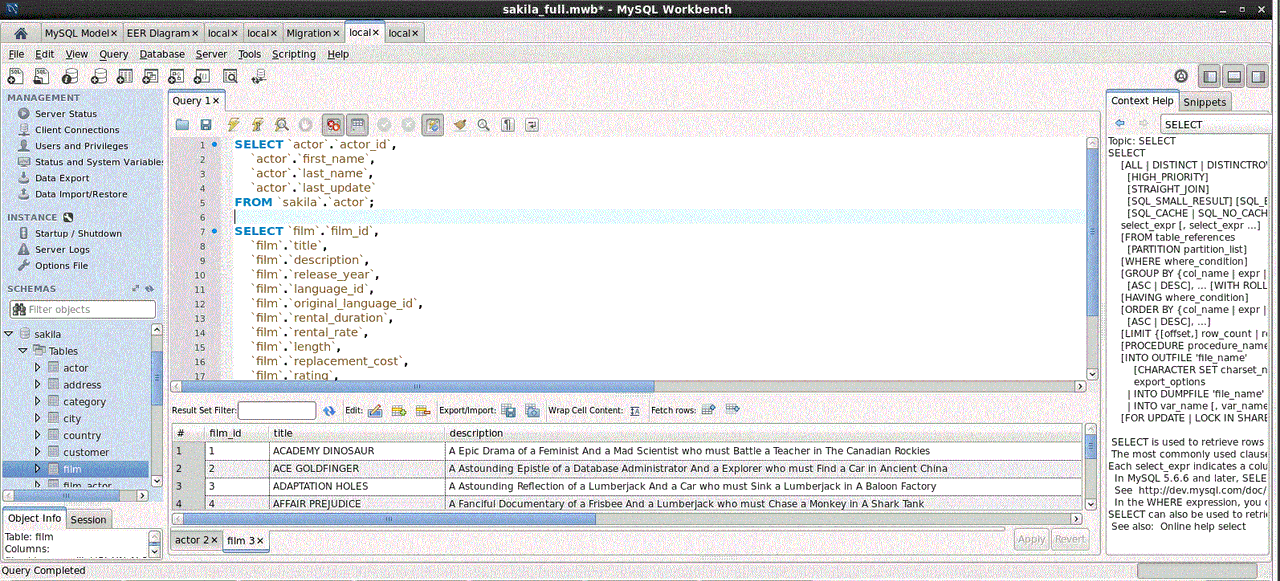
MySQL Interface - Image Link
PostgreSQL is a powerful and feature-rich relational database management system. Compared to MongoDB, PostgreSQL offers strong data integrity and the ability to establish complex relationships through relational data structures and SQL language. PostgreSQL is ACID-compliant (Atomicity, Consistency, Isolation, Durability), ensuring high consistency and reliability across transactions. MongoDB, on the other hand, is a NoSQL database with greater schema flexibility, easier horizontal scaling, and higher efficiency in managing large datasets. MongoDB is better suited for scenarios where data is unstructured or data models change rapidly. PostgreSQL’s advanced querying capabilities and relational structures make it stronger in applications requiring strict data consistency. Since MongoDB cannot directly model such relationships, PostgreSQL may be the better choice in these cases.
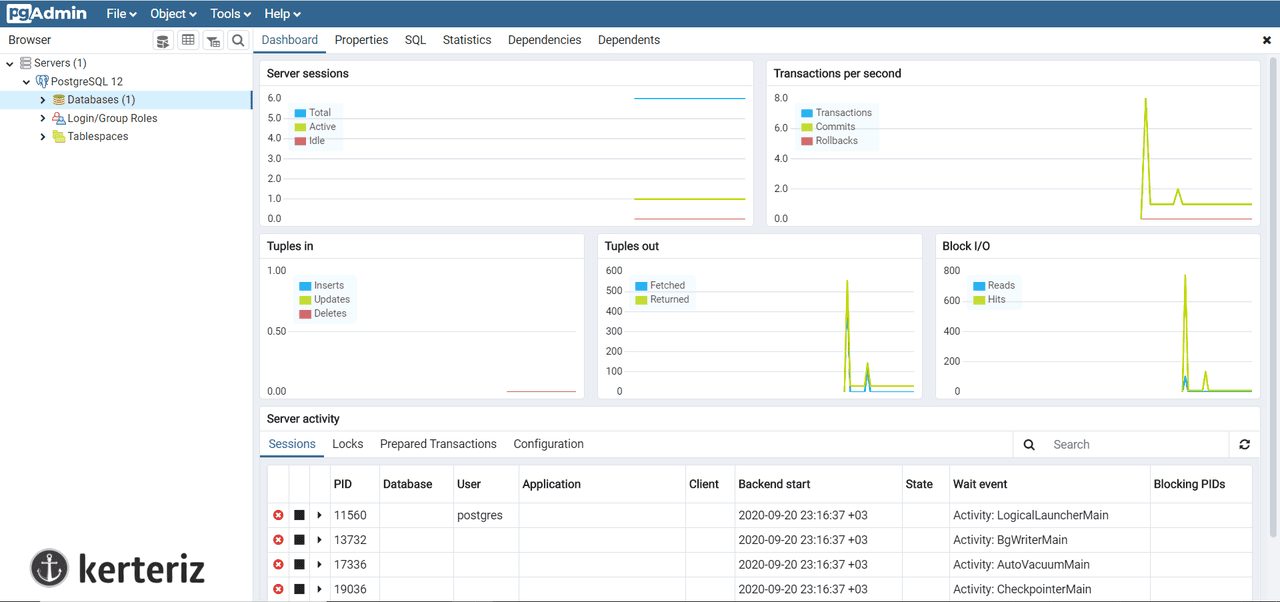
PostgreSQL Interface - Image Link
Redis is primarily a key-value database that operates as an in-memory system. Compared to MongoDB, Redis offers faster read and write operations because data is largely stored in RAM. This makes Redis ideal for applications requiring high performance and caching tasks. MongoDB, by contrast, operates on disk and has the capacity to manage large data sets. Moreover, MongoDB’s flexible data structure facilitates working with semi-structured or unstructured data, while Redis provides simpler data structures (key-value pairs). Redis has limited persistence options, whereas MongoDB offers stronger persistence mechanisms. Redis is typically used only for temporary data storage, while MongoDB is designed to meet broader data management and analysis needs.
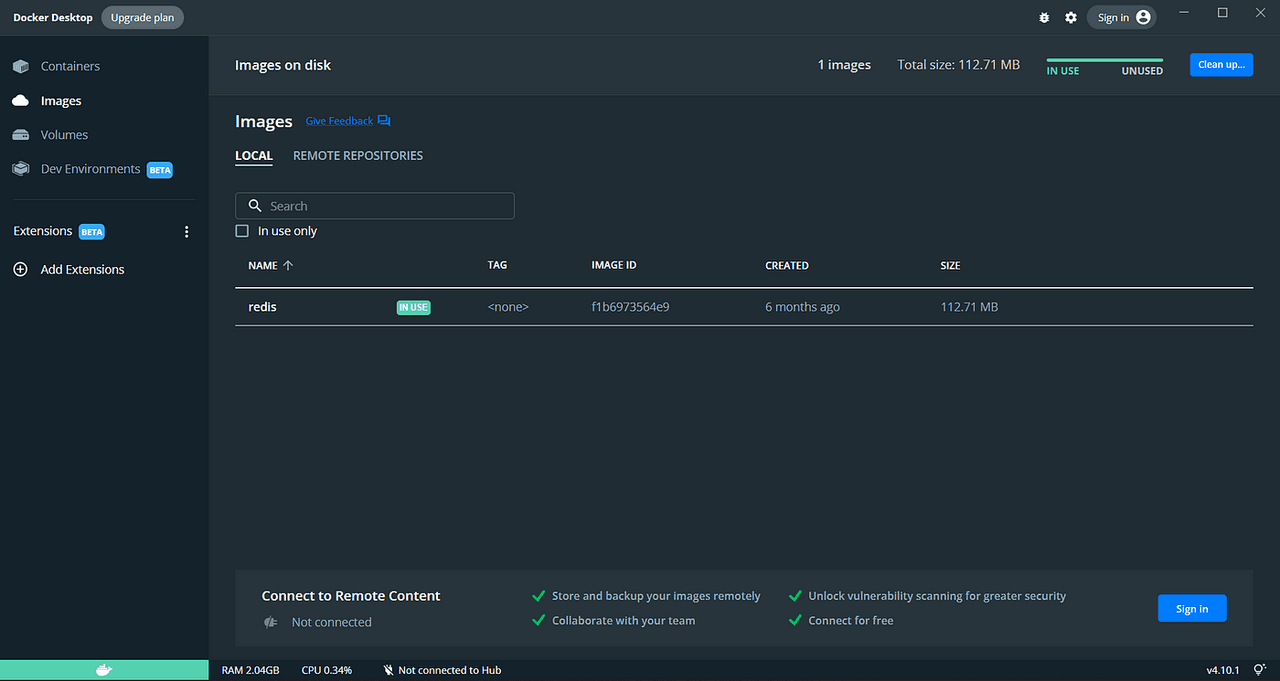
Redis Interface - Image Link
Apache Cassandra is a distributed database system optimized for big data and high-volume write operations. While MongoDB is strong in horizontal scalability and flexibility, Cassandra is specifically optimized for large-scale distributed applications. Cassandra delivers high write performance and low latency, making it ideal for systems with continuous data streams over large datasets. Although MongoDB is also horizontally scalable, it maintains more flexible consistency guarantees for read and write operations. Cassandra uses a stricter consistency model, while MongoDB typically adopts the eventual consistency model. This allows MongoDB to be more flexible and easier to scale, but Cassandra provides stronger data consistency and better performance in managing data across very large distributed systems.
Amazon Web Services. "The Difference Between MongoDB vs MySQL." Accessed April 11, 2025.
IBM. "MongoDB." Accessed April 11, 2025.https://www.ibm.com/think/topics/mongodb.
MongoDB, Inc. "MongoDB Architecture." Accessed April 11, 2025.
MongoDB, Inc. "What is MongoDB?" Accessed April 11, 2025.https://www.mongodb.com/company/what-is-mongodb.
TechTarget. "MongoDB." SearchDataManagement. Accessed April 11, 2025.

History
Core Architecture
Features
Applications and Integration
Use Cases
Advantages
Disadvantages
Comparison of MongoDB with Other Databases
MongoDB vs MySQL
MongoDB vs PostgreSQL
MongoDB vs Redis
MongoDB vs Apache Cassandra