badge icon

This article was automatically translated from the original Turkish version.
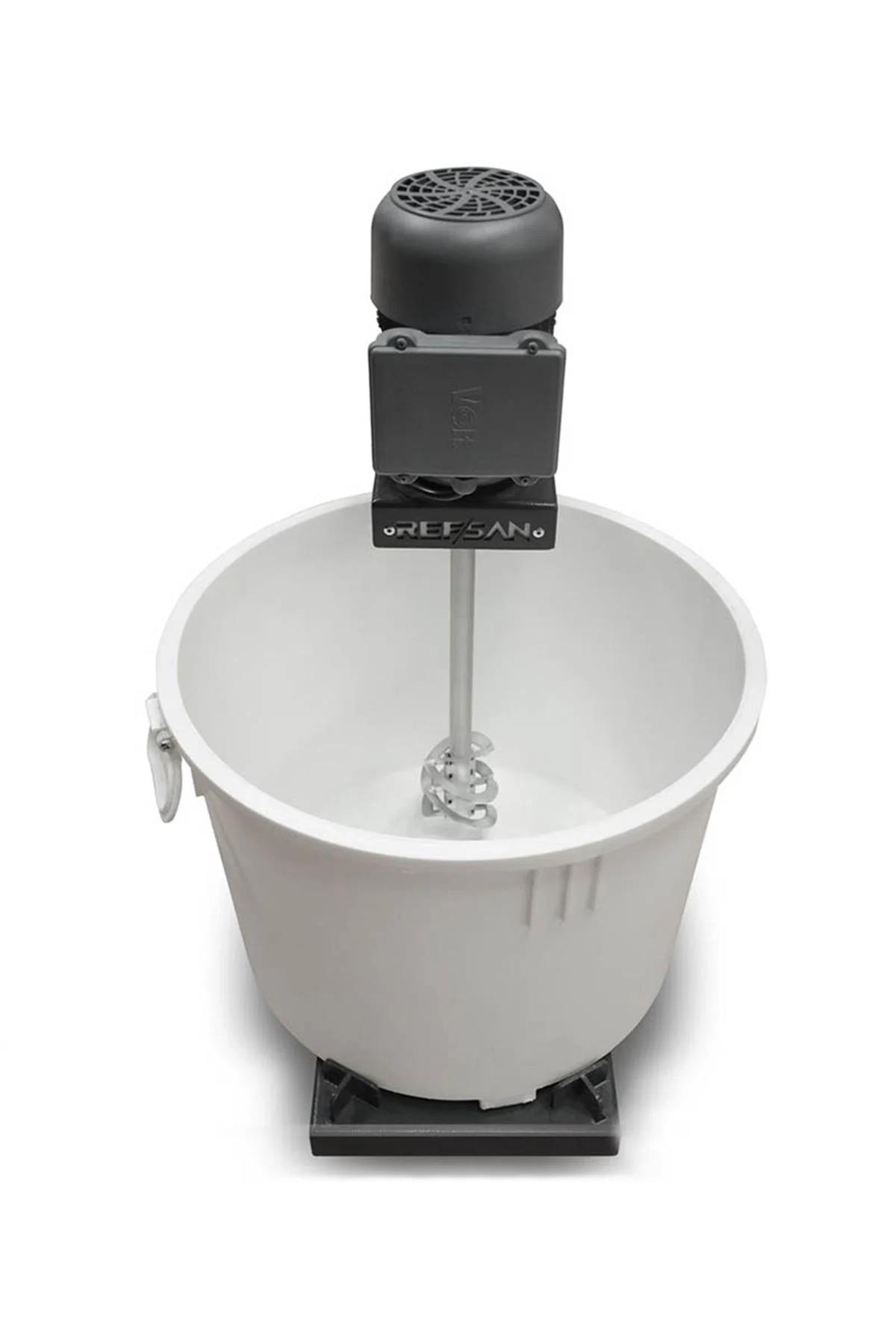
Article
seyyar-karistirici-mikser-model1620-a9-408.webp

Mixing Mixer

Purpose of Use(s)

Paint and Coating Material Homogenization

Type(s)

Electric/Pneumatic Mixer

Material(s)

Aluminum/Stainless Steel Tip + Electric/Pneumatic Body

Standards

TS EN 12697-35, ISO 2811-1

Speed Range

150 – 700 Revolutions/Minute

A mixing mixer is an electric or pneumatic device used to homogenize liquid and semi-fluid coating materials such as paint, primer, varnish, or epoxy prior to application. It is particularly employed to ensure that two-component products (e.g., epoxy + hardener) are mixed in the correct ratio and uniformly. It delivers faster and more effective results compared to manual stirring rods.

Features

  • Available in electric (220 V) or pneumatic (air-driven) models.
  • Offers low, medium, and high speed settings (typically 150–700 RPM).
  • Mixing tips come in spiral, flat paddle, butterfly, or hook shapes.
  • Speed and impeller selection must be based on viscosity.
  • Can be used by immersing into a container or mounting on a fixed stand.
  • Industrial models are available for prolonged and continuous mixing.

Application Surfaces

The mixing mixer is not applied directly onto surfaces but is used within mixing containers or paint tanks. Application points include:

  • Blending of A+B components in epoxy and polyurethane systems.
  • Stirring solvent-based and water-based paints before application.
  • Self-leveling materials in floor coating systems.
  • Preparation of plaster, putty, and viscous materials.

Application Areas

  • Paint production and preparation workshops.
  • Color mixing in automotive painting prior to application.
  • Surface preparation in furniture varnishing systems.
  • Construction and floor coating operations.
  • Epoxy casting, resin work, and laboratory mixing.

Application Techniques

Usage Method

  • Immerse the mixer into the mixing container using an appropriate tip.
  • Adjust speed according to the material’s viscosity.
  • Determine mixing duration based on manufacturer recommendations.
  • Clean the mixer tip immediately after use.
  • Fix the rotation direction and mixing depth.

Advantages

  • Provides fast, efficient, and homogeneous mixing.
  • Eliminates risks of human error and inadequate mixing.
  • Enhances material quality and film integrity.
  • Offers time savings and ensures standardized quality.
  • Ensures even distribution of hardener ratios.

Limitations

  • Electric mixers may pose a risk of liquid splashing.
  • Incorrect tip selection can leave sediment or bubbles.
  • Pneumatic systems require a compressor.
  • Low-speed models may be insufficient for high-viscosity materials.
  • If not cleaned after use, the tips can harden and become unusable.

Bibliographies


Millî Eğitim Bakanlığı (MEGEP). *Lastik Karışımı Oluşturma*. Ankara: MEB Yayınları, 2011. Accessed June 17, 2025. .

Millî Eğitim Bakanlığı (MEGEP). *Tokat Tahta Baskı – Boya Hazırlama*. Ankara: MEB Yayınları, 2011. Accessed June 17, 2025. .

Author Information

Avatar
AuthorUfuk YararDecember 5, 2025 at 8:19 AM

Tags

Discussions

No Discussion Added Yet

Start discussion for "Mixing Mixer" article

View Discussions

Contents

  • Features

  • Application Surfaces

  • Application Areas

  • Application Techniques

    • Usage Method

  • Advantages

  • Limitations

Ask to Küre