

This article was automatically translated from the original Turkish version.
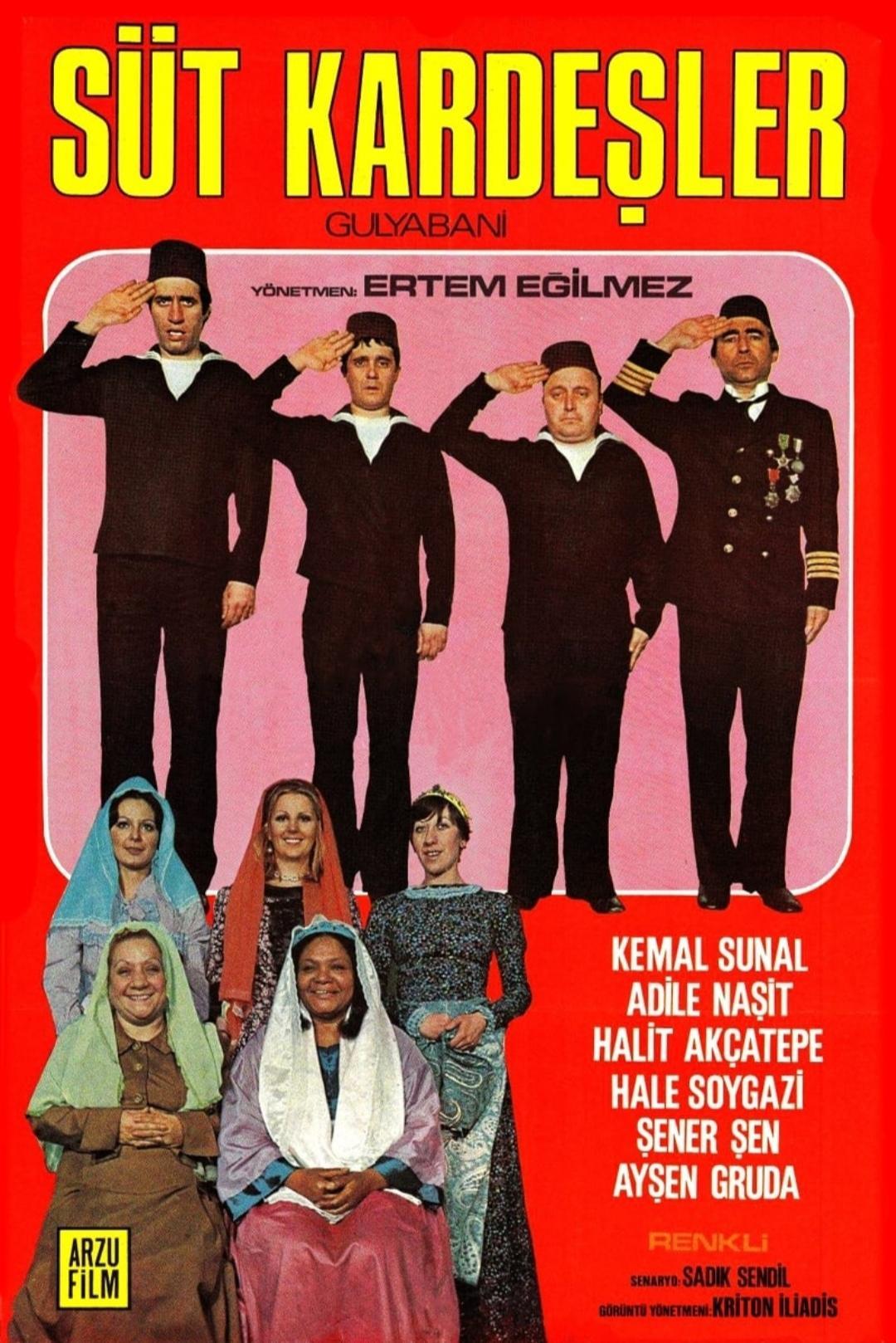
Milk Brothers
Screenplay(s) | Sadık Şendil | ||||||||
|---|---|---|---|---|---|---|---|---|---|
Production Year(Text) | 1976 | ||||||||
IMDb Rating(Text) | 8.7 | ||||||||
Director(s) | Ertem Eğilmez | ||||||||
Actors | Hakan Balamir (Niyazi) Ayşen Gruda (Emine) Adile Naşit (Melek Ana) Halit Akçatepe (Şaban) Şener Şen (Zakir – Gulyabani) Kemal Sunal (Ramazan) | ||||||||
Duration | 80 minutes | ||||||||
Genre | Comedy Family | ||||||||
Süt Kardeşler is one of the most memorable comedies of Yeşilçam cinema, weaving a farcical narrative around misunderstandings, identity confusion and exaggerated comedic elements. The story begins when Film visits the mansion of Ramadan (Kemal Sunal) to meet his milk brother Şaban (Halit Akçatepe). However, the mansion’s inhabitants mistake him for Şaban, leading to a cascade of chaotic events. Meanwhile, rumors circulate about a legend known as “Gulyabani” haunting the house.
All characters in the mansion confuse one another’s identities; lies, disguises and role-switching create a comic chaos. The film, which blends fear and humor, contains satirical commentary on interpersonal relationships and the social structure of the era.
Nearly all conflict in the film stems from characters concealing or confusing their identities. Ramazan being mistaken for Şaban and Şener Şen’s portrayal of Zakir assuming the role of “Gulyabani” cause identities to shift constantly. This situation offers a humorous critique of an individual’s role in society.
The “Gulyabani” figure from people narratives is stripped of its threatening nature and transformed into comedy. The film plays with the idea that fear, authority or the unknown are in fact human constructs.
The concept of milk brotherhood, a traditional bond forming family structures, is caricatured in the film. It satirizes a structure in which people living under the same roof do not know each other, highlighting communication breakdown through humor.
The lady of the mansion’s Angel Main and class position are among the key factors shaping relationships within the house community. The film offers subtle yet sharp observations on class distinctions and artificial hierarchies of respect.
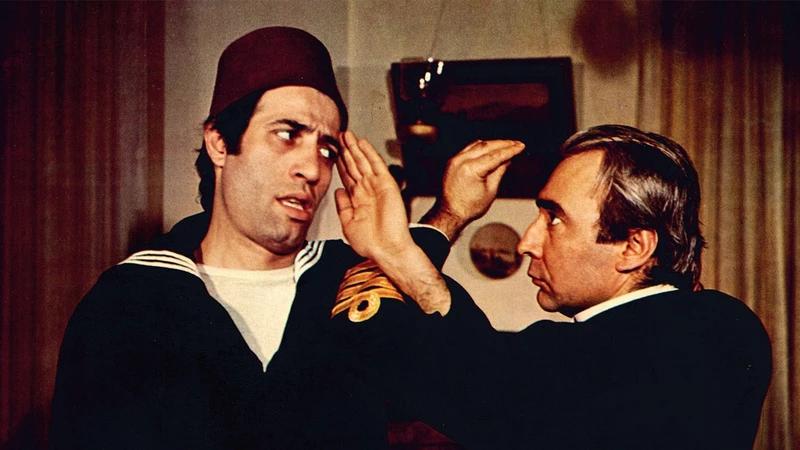
An iconic scene from Süt Kardeşler -MUBI
Süt Kardeşler is one of many Yeşilçam comedies produced by Ertem Eğilmez under the Arzu Film banner and stands as a successful example of adapting theatrical structures to cinematic language. The film is loosely inspired by Hüseyin Rahmi Gürpınar’s novel “Gulyabani”.
Sadık Şendil’s screenplay effectively transfers the comedic sensibilities of the era’s theater tradition to cinema. Music, transitions and character entrances are adorned with familiar elements of classic comedy cinema.
Kemal Sunal forms the comic center of the film with his portrayal of Ramazan, a bumbling yet endearing character. Halit Akçatepe successfully embodies the archetype of the “well-meaning but confused man” as Şaban. Şener Şen infuses the character of Zakir with unforgettable energy through his exaggerated and theatrical performance, transforming the “Gulyabani” role into a as if iconic figure. Adile Naşit portrays the classic “motherly Turkish woman” archetype with both affectionate and authoritative mannerisms.
Süt Kardeşler is not merely a comedy film but also an example of how Turkish folk culture was reimagined through cinema. By intertwining fear and humor, it creates a building that is both amusing and thought-provoking. Its structure, built on misidentifications, successfully transports the classic Persian genre to cinema.
Today remains a production preserved vividly in cultural memory through its lines, characters and visual language, holding a special place in Turkish film history.
Although the film did not receive any national or international awards upon its release, it has become one of the most watched and beloved films in time Turkish cinema.
• Featured in TRT and private channels’ lists of “Most Broadcast Turkish Films”
• Ranked among the “highest-rated Turkish comedy films” by IMDb users
• A “classic” watched across generations on television thanks to its Smiling guaranteed scenes

Milk Brothers
Screenplay(s) | Sadık Şendil | ||||||||
|---|---|---|---|---|---|---|---|---|---|
Production Year(Text) | 1976 | ||||||||
IMDb Rating(Text) | 8.7 | ||||||||
Director(s) | Ertem Eğilmez | ||||||||
Actors | Hakan Balamir (Niyazi) Ayşen Gruda (Emine) Adile Naşit (Melek Ana) Halit Akçatepe (Şaban) Şener Şen (Zakir – Gulyabani) Kemal Sunal (Ramazan) | ||||||||
Duration | 80 minutes | ||||||||
Genre | Comedy Family | ||||||||
No Discussion Added Yet
Start discussion for "Milk Brothers (Film)" article
Themes and Analysis
1. Identity and Illusion
2. Parody of Traditional Horror Elements
3. Humorous Perspective on Family and Social Structure
4. Social Class and Display
Production Process and Technical Features
Performances
Impact and Significance
Awards and Nominations
Cultural Success and Honorary Recognition