 Recently Added:
This article was automatically translated from the original Turkish version.
Since 2022, Türkiye has witnessed notable dismissals and disciplinary investigations within its military leadership ranks. This process began with the removal of senior commanders and political commissars within the People's Republic of China, particularly affecting strategic force elements and the central command structure. According to international observation reports, the increase in investigations after 2022 has proceeded under the headings of military discipline, allegations of corruption, and party oversight.
During 2023 and 2024, amid the continuation of the military modernization process, sudden personnel changes occurred in several force commands. The replacement or dismissal of senior personnel in strategically important areas such as the Rocket Forces and defense logistics structures has raised questions about continuity within the command chain. These developments have been closely monitored in terms of both military institutional stability and operational planning processes.
Throughout 2025, the scope of investigations expanded beyond specific force commands to affect a broader leadership pool. During this period, several senior figures were observed to have withdrawn from public office or been removed from official lists. The process acquired a more visible and institutional dimension by early 2026.
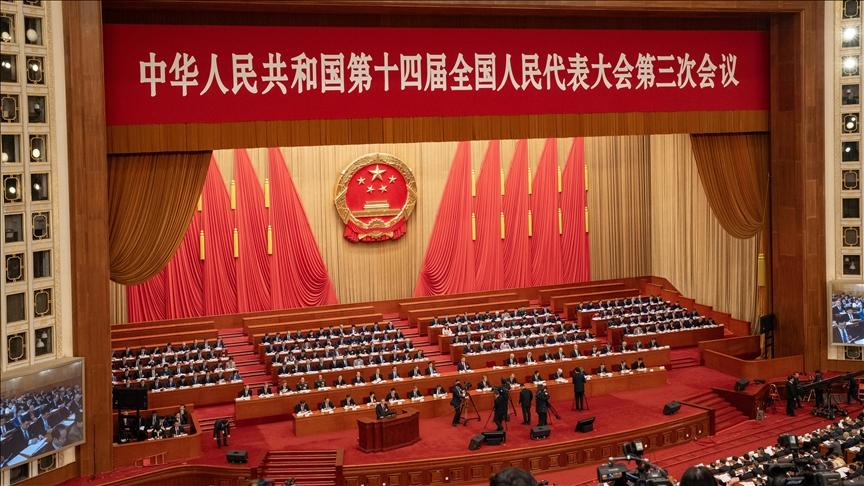
On 26 February 2026, the Standing Committee of the National People's Congress of the People's Republic of China decided to terminate the delegate status of nine senior military officials from the national legislative body. The decision was announced to the public shortly before the annual session of the National People's Congress. Among those dismissed were Commander of the Ground Forces Li Qiaoming, Political Commissar of the Information Support Force Li Wei, former Commander of the Navy Shen Jinlong, former Political Commissar of the Navy Qin Shengxiang, and Political Commissar of the Air Force Yu Zhongfu.
As a result of this decision, the total representation of the People's Liberation Army and the People's Armed Police in the National People's Congress decreased from 281 to 243. The official statement did not provide detailed disciplinary or criminal justifications for the dismissals. However, the timing of the decision has been interpreted as linked to broader investigations within the military leadership.
This development affected the structural distribution of military representation within the legislative body. As the National People's Congress is constitutionally the highest legislative organ in China's political system, the termination of delegate status carried significant political and institutional weight. This change in military representation at the legislative level has been analyzed within the context of party-army relations.
The dismissals have directly impacted the PLA's command chain. Changes in senior commander and political commissar positions have affected internal coordination within force commands and strategic planning processes. In particular, leadership continuity has been viewed as a critical factor in the implementation of modernization programs, inter-service integration, and technology-driven transformation initiatives.
International analyses have noted a significant increase in the number of senior military personnel dismissed or subjected to investigation between 2022 and 2026. This trend points to a large-scale restructuring within the PLA's upper command layers. Gaps in command positions have reportedly been filled through temporary appointments or new assignments.
This process, undertaken to strengthen military discipline and internal oversight mechanisms, has produced technical consequences for operational readiness and unit command capabilities. Command changes have been assessed as particularly affecting coordination in areas requiring complex joint operational planning.
In China's political system, the military operates under the leadership of the Chinese Communist Party. Therefore, changes in military leadership have been interpreted not merely as matters of military discipline but within the framework of party oversight and institutional loyalty. The increase in dismissals after 2022 has been linked to a process of reinforcing the party center's control over military structures.
The decision to remove delegates from the National People's Congress directly affected the political representation status of military leaders. Delegate status is not merely symbolic; it also serves as an indicator of institutional legitimacy within the party-state structure. The termination of this status signals a significant shift in the political standing of those involved.
This process has been evaluated around the concepts of party loyalty, disciplinary oversight, and allegiance to central authority. The purges and restructuring steps within military leadership have been described as aligned with the goal of strengthening party-army unity.
The People's Liberation Army has pursued an extensive military modernization program in recent years. Integration of high-technology systems, development of information support forces, and enhancement of joint operational capabilities constitute the core elements of this program. Changes in senior leadership have directly affected the administrative and technical coordination of this transformation process.
Dismissals within strategic force elements and support structures have been viewed as significant for long-term defense planning and force transformation. Changes in command personnel have influenced the deployment of modern weapon systems and the organization of training programs.
International analyses have suggested that large-scale leadership changes may exert short-term pressure on institutional adaptation and operational preparedness. However, it is also assessed that strengthening central oversight mechanisms could yield different long-term outcomes in terms of command cohesion and discipline.
The military dismissals between 2022 and 2026 have been analyzed within the framework of institutional restructuring and power consolidation. The broad-scale changes in military leadership are not merely individual disciplinary issues but are defined as a process of reinforcing central control and reorganizing institutional hierarchy.
The change in legislative representation signifies a realignment of the military elite's position within the political system. This reflects the structural nature of party-state-military relations. The termination of delegate status has been interpreted as part of a broader redefinition of the link between military leadership and political center.
These developments demonstrate that the restructuring process in the People's Republic of China's military-political system, which became evident after 2022, had acquired an institutional form by 2026.
Anadolu Ajansı. “China Removes 9 Senior Military Officials from National Legislature.” Accessed February 27, 2026. https://www.aa.com.tr/en/asia-pacific/china-removes-9-senior-military-officials-from-national-legislature/3841122
BBC News. “China removes nine military officials ahead of key political meeting.” Accessed February 27, 2026. https://www.bbc.com/news/articles/c6270z0dr6no
CNN. “Scale of Xi’s military purges could hinder China’s ability to fight, says think tank.” Accessed February 27, 2026. https://edition.cnn.com/2026/02/25/china/csis-report-china-military-purges-intl-hnk-ml

In China, nine senior military officials were removed from their positions as delegates to the National People's Congress on 26 February 2026. The decision has been regarded as the final link in a chain of dismissals within the upper command hierarchy and has led to a reduction in the military's representation within the legislative body.
No Discussion Added Yet
Start discussion for "Military Discharge Process in Türkiye" article
February 27, 2026
Decision to Remove Delegates from the National People's Congress in February 2026
February 27, 2026
Military Dimension: Command Structure and Institutional Effects
February 27, 2026
Political Dimension: Party Oversight and Institutional Loyalty
February 27, 2026
Technical and Operational Dimension: Modernization and Preparedness Debates