


This article was automatically translated from the original Turkish version.
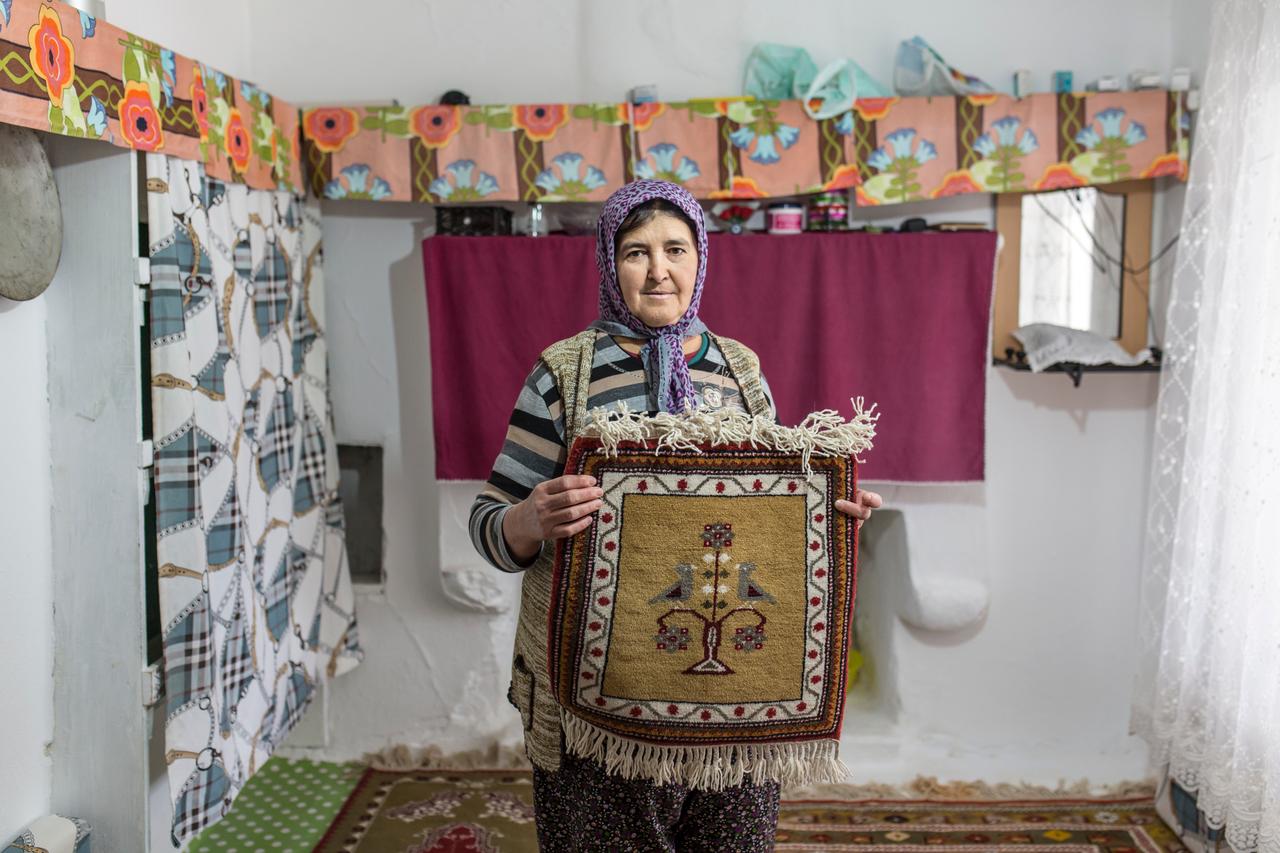
Milas Rugs and Rug Making
Region | Türkiye Muğla Milas | ||||||||
|---|---|---|---|---|---|---|---|---|---|
Weaving Technique | Turkish knot (Gördes) | ||||||||
Material | Natural root dye Wool Cotton | ||||||||
Motifs | Tree of Life, hand on hip, evil eye, etc. | ||||||||
Registration | Geographical indication (MITSO) | ||||||||
Producers | Local female producers, cooperatives | ||||||||
Milas carpets are traditional Turkish rugs woven for centuries in the Milas district of Muğla, known for their distinctive motifs, colors, and techniques. These handwoven carpets have become a cultural and economic symbol of the region, deeply intertwined with the local community’s production culture.
The origins of Milas carpet weaving extend back to antiquity, when the region was already a center of textile production. However, the unique character of Milas carpets took shape during the Ottoman period. Throughout the Republican era, regional development initiatives, cooperative ventures, and public support sustained production; this tradition, which has always been defined significantly by women’s labor, has been preserved to the present day. In recent years, local projects aimed at preserving traditional techniques and ensuring intergenerational transmission have sought to secure the cultural continuity of carpet weaving.
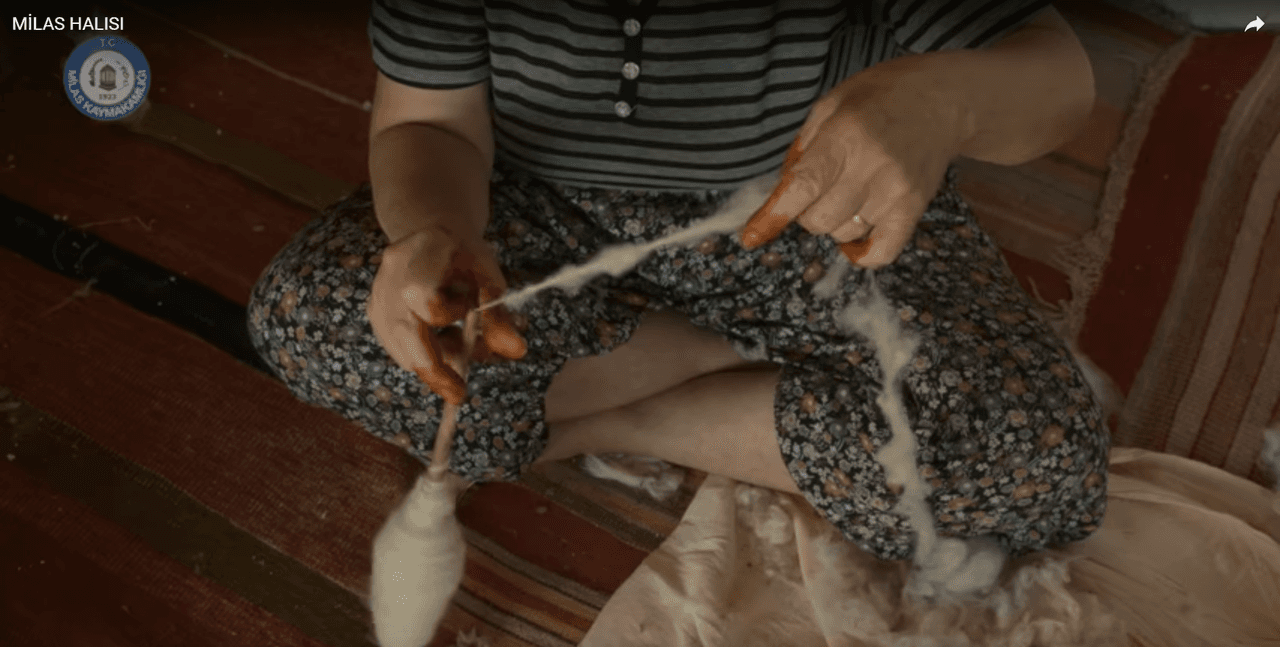
Halı Dokuma Aşamasında (Milas Kaymakamlığı)
Milas carpets are woven using the Turkish knot (Gördes knot) technique. The warp and weft threads are typically wool, sometimes cotton, and natural root dyes are preferred. Common colors include burgundy, yellow, brown, and pistachio green. The carpets are generally classified into stylistic groups such as “Ada Milas”, “Karacahisar”, and “Gemici”.
The motifs reflect the traditional symbolism of Anatolia: figures such as the tree of life, the hand on the hip, scorpion, evil eye, and ram’s horn are frequently used. These motifs serve both decorative purposes and embody themes of belief, protection, and prosperity.
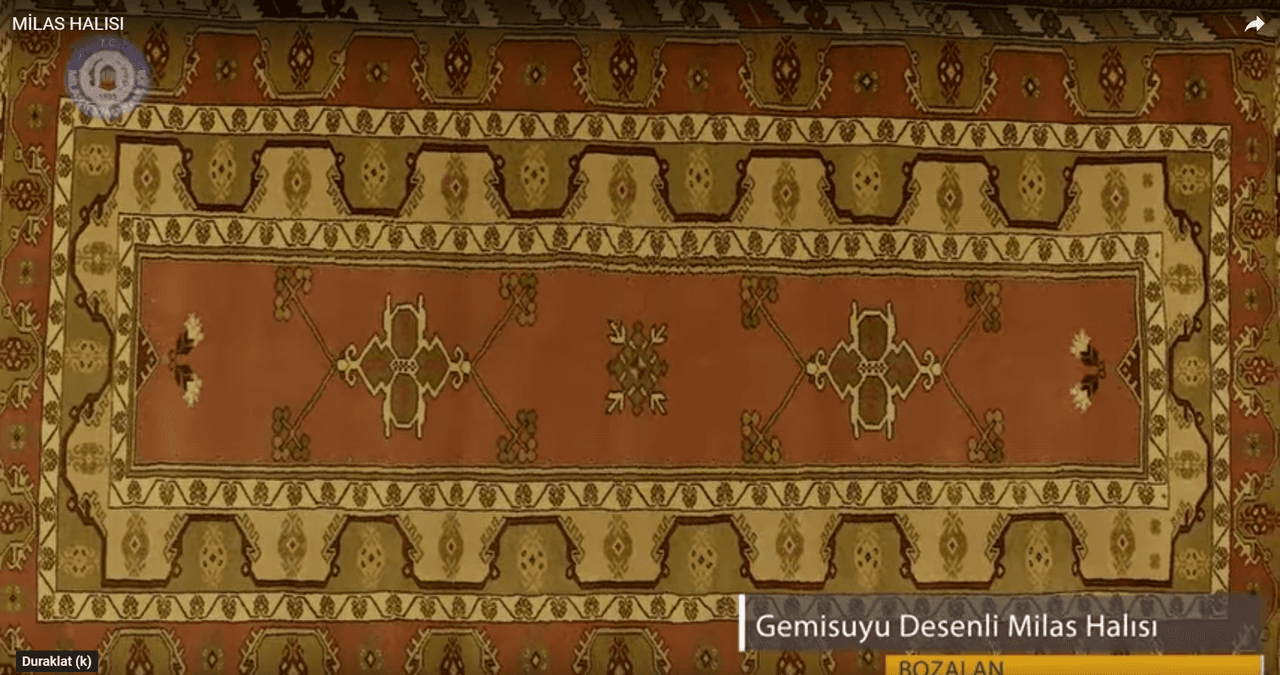
Milas Halılarından Bir Örnek (Milas Kaymakamlığı)
Milas carpets are not only a cultural asset but also an economic livelihood for the local population. Particularly in rural neighborhoods, carpets woven by women form an essential part of household production. Carpet weaving also draws attention for its role in supporting female employment. By producing carpets in their homes, women generate income and enhance their economic independence within rural life.
Various initiatives have been undertaken to promote and protect Milas carpets. The Milas Chamber of Commerce and Industry (MITSO) secured a geographical indication registration to safeguard the product’s origin. Additionally, visibility has been increased through domestic and international fairs and exhibitions, while thematic exhibitions in prestigious venues such as the Şerefiye Cistern in Istanbul have strengthened public awareness and appreciation.
In recent years, various social projects have been implemented to ensure the continuity of Milas carpet weaving. Carpet weaving courses have been opened through community education centers, cooperatives, and local administrations, and documentation efforts have been launched to prevent the loss of traditional motifs. Moreover, the expertise of master women weavers who continue production on century-old looms is being passed on to younger generations.
Anadolu Ajansı. "Kadınlar Hayatı İlmek İlmek Kazanıyor." Anadolu Ajansı, February 28, 2019.https://www.aa.com.tr/tr/yasam/kadinlar-hayati-ilmek-ilmek-kazaniyor/1412439.
Anadolu Ajansı. "Muğla’nın Geleneksel Motifleri Asırlık Tezgahlarda Geleceğe Aktarılıyor." Anadolu Ajansı, March 2, 2023.https://www.aa.com.tr/tr/kultur/muglanin-geleneksel-motifleri-asirlik-tezgahlarda-gelecege-aktariliyor/2763409.
Anadolu Ajansı. “Şerefiye Sarnıcı, Tarihi Milas Halılarını Ağırlıyor.” Anadolu Ajansı, October 18, 2019.https://www.aa.com.tr/tr/kultur-sanat/serefiye-sarnici-tarihi-milas-halilarini-agirliyor/1624609.
Kültür Portalı. "Milas Halısı." Accessed June 16, 2025.https://www.kulturportali.gov.tr/turkiye/mugla/nealinir/milas-halisi.
Milas Kaymakamlığı. "Kaymakam Arslan, Geleneksel Milas Halısı Dokuma Projesi Kapsamında Balcılar Mahallesini Ziyaret Etti." Milas Kaymakamlığı Resmî Web Sitesi. Accessed June 16, 2025.http://www.milas.gov.tr/kaymakam-arslan-geleneksel-milas-halisi-dokuma-projesi-kapsaminda-balcilar-mahallesini-ziyaret-etti.
Milas Kaymakamlığı. "Milas Halıları." Milas Kaymakamlığı Resmî Web Sitesi. Accessed June 16, 2025.http://www.milas.gov.tr/milas-halilari.
Milas Ticaret ve Sanayi Odası. "Milas Halısı." Milas Ticaret ve Sanayi Odası (MITSO). Accessed June 16, 2025.https://mitso.org.tr/milas-halisi/.
Milas Rugs and Rug Making
Region | Türkiye Muğla Milas | ||||||||
|---|---|---|---|---|---|---|---|---|---|
Weaving Technique | Turkish knot (Gördes) | ||||||||
Material | Natural root dye Wool Cotton | ||||||||
Motifs | Tree of Life, hand on hip, evil eye, etc. | ||||||||
Registration | Geographical indication (MITSO) | ||||||||
Producers | Local female producers, cooperatives | ||||||||
No Discussion Added Yet
Start discussion for "Milas Rugs and Rug Making" article
Historical Development
Technical Features and Motifs
Socioeconomic Dimension
Promotion and Registration Process
Cultural Continuity and Transmission to Future Generations