


This article was automatically translated from the original Turkish version.
+1 More
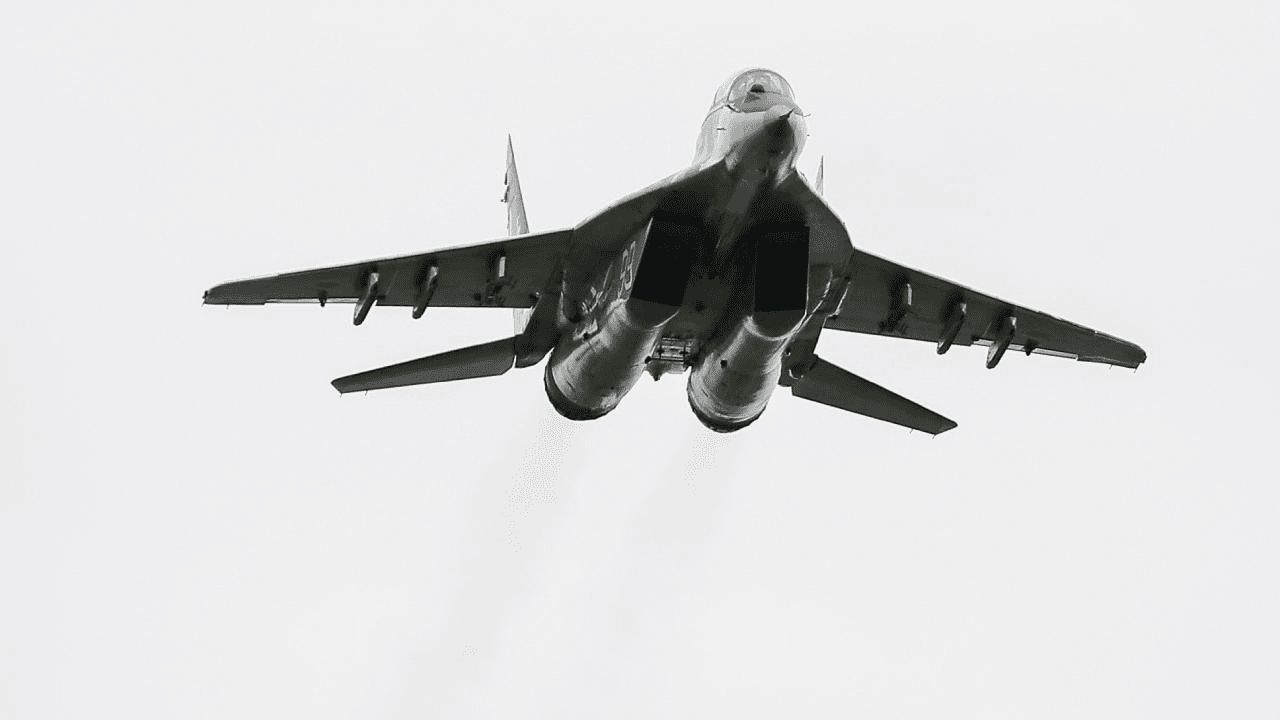
Mikoyan MiG-29
Producer | Mikoyan-Gurevich | ||||||||
|---|---|---|---|---|---|---|---|---|---|
First Flight | 6 October 1977 | ||||||||
Entry into Service | 1983 (Soviet Air Forces) | ||||||||
Aircraft Type | Twin-engine, highly maneuverable fighter aircraft | ||||||||
Models | MiG-29, MiG-29S, MiG-29M, MiG-29SMT, MiG-29K, MiG-29UB | ||||||||
Airframe Structure | Primarily aluminum alloys, composite materials | ||||||||
Competitors | F-15 Eagle, F-16 Fighting Falcon, F/A-18 Hornet, Dassault Rafale, Eurofighter Typhoon | ||||||||
The MiG-29 (NATO reporting name: Fulcrum), developed by the Mikoyan-Gurevich Design Bureau in the 1970s as a response to new-generation American fighter aircraft such as the F-15 Eagle and F-16 Fighting Falcon, is a fourth-generation twin-engine air superiority and frontline fighter with high maneuverability. The prototype phase was conducted under strict secrecy, and its first flight took place on 6 October 1977. The aircraft’s development showcased the most advanced capabilities of Soviet aerospace engineering at the time, and after serial production began in 1982, it was officially delivered to the Soviet Air Forces (Voyenno-Vozdushnye Sily – VVS) in 1983 and entered service.

Mikoyan MiG29 (Source: Pixabay)
The development of the MiG-29 was a direct response to the technological superiority of Western adversaries during one of the most intense periods of the Cold War. The emergence of high-performance fighter aircraft such as the American F-15 and F-16 prompted Soviet design bureaus to develop a platform with comparable capabilities. The MiG-29’s aerodynamic design focused on delivering exceptional agility and maneuverability in short-range air combat (dogfights). The airframe was optimized to support a high thrust-to-weight ratio, and advanced wing geometry combined with control surfaces such as flaps, elevons, and vertical tails enabled the MiG-29 to provide pilots with extraordinary maneuverability.

Mikoyan MiG29 (Source: Pixabay)
Following the end of the Cold War, the MiG-29 continued to play a significant role in the air forces of numerous countries. It remains a key component of the Russian Air Force’s fighter fleet and has been operated or is still in service with countries including India, Poland, Germany (aircraft inherited from East Germany), Syria, Iran, Ukraine and Serbia. Different variants perform effectively in air superiority, interception and ground attack missions.
Anka Enstitüsü. "Mıg 29 Özellikleri." Accessed April 16, 2025.https://ankaenstitusu.com/wp-content/uploads/2016/12/mıg-29-özellikleri.pdf
Goebel, Greg. "The Mikoyan MiG-29 'Fulcrum'." Air Vectors. Accessed April 16, 2025.https://www.airvectors.net/avmig29.html
Havacıyız. "Jet Sav Uçk37." Accessed April 16, 2025.https://www.havaciyiz.com/JetSavUck37.html
Migflug. "MiG-29 Fulcrum Fighter Jet: The Ultimate Guide." Accessed April 16, 2025.https://migflug.com/project/mig-29/
National Museum of the US Air Force. "Mikoyan Gurevich MiG-29A." Accessed April 16, 2025.

Mikoyan MiG-29
Producer | Mikoyan-Gurevich | ||||||||
|---|---|---|---|---|---|---|---|---|---|
First Flight | 6 October 1977 | ||||||||
Entry into Service | 1983 (Soviet Air Forces) | ||||||||
Aircraft Type | Twin-engine, highly maneuverable fighter aircraft | ||||||||
Models | MiG-29, MiG-29S, MiG-29M, MiG-29SMT, MiG-29K, MiG-29UB | ||||||||
Airframe Structure | Primarily aluminum alloys, composite materials | ||||||||
Competitors | F-15 Eagle, F-16 Fighting Falcon, F/A-18 Hornet, Dassault Rafale, Eurofighter Typhoon | ||||||||
Design and Development
Technical Specifications
Features and Capabilities
Usage