This article was automatically translated from the original Turkish version.
Midas Yazılıkaya is a significant rock monument located near the district of Han in Türkiye’s Eskişehir province. Dating back to the Phrygian period, this impressive yapıt is dedicated to the Mother Goddess Cybele and derives its name from the famous Phrygian king Midas. Situated at the heart of the Phrygian Valley, Yazılıkaya stands as a key representative of Phrygian kültür and belief alongside other rock monuments in the region.
The most striking feature of Yazılıkaya is its monumental facade, standing 17 meters high and adorned with geometric patterns that reflect the artistic skill and architectural understanding of the Phrygians. At the top of the monument is an inscription written in the Phrygian alphabet, which mentions the Mother Goddess Cybele and is dedicated to King Midas. This inscription serves as an important historical document for understanding the religious and political atmosphere of the era.
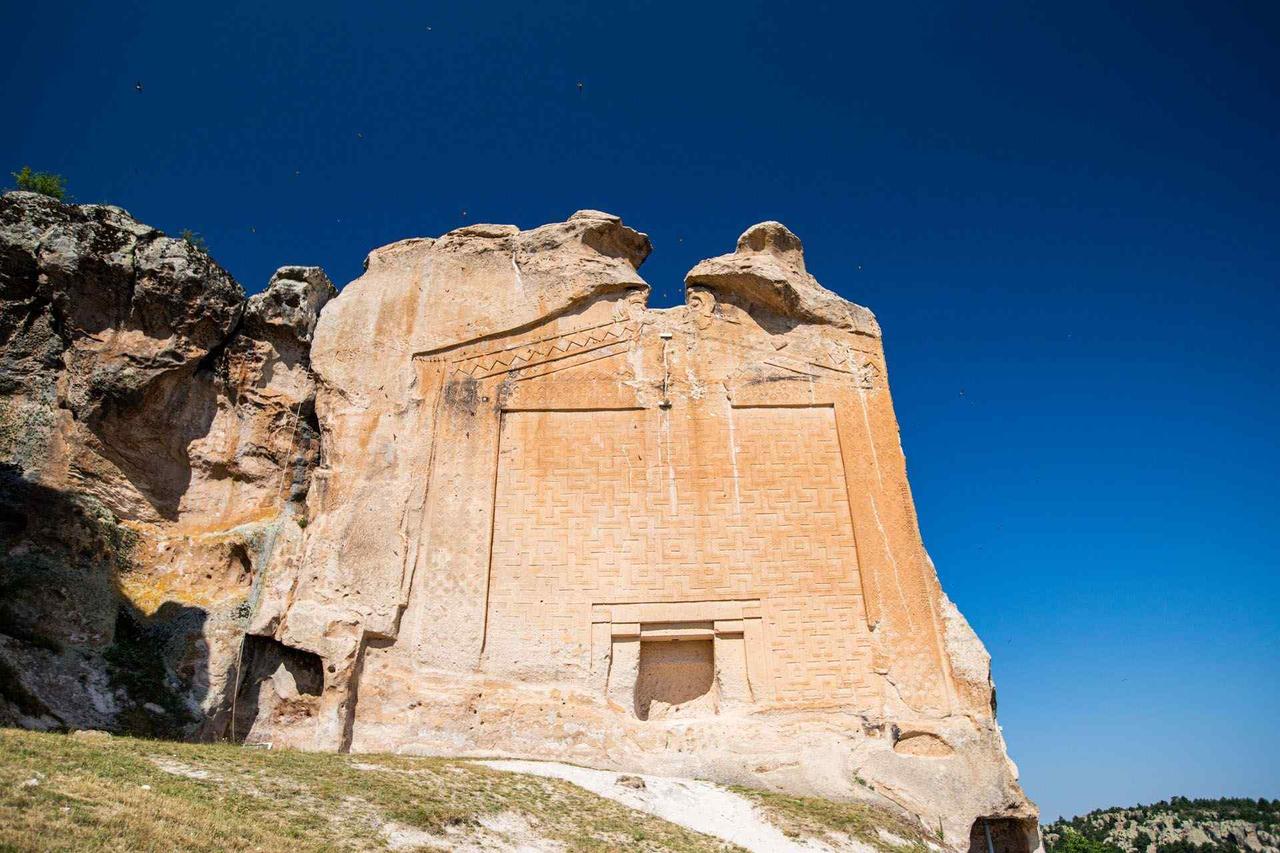
Midas Monument (Yazılıkaya)
The area surrounding the monument is not limited to Yazılıkaya alone but is surrounded by other Phrygian structures such as rock tombs, temples, and ancient roads. This bölge provides comprehensive insight into the Phrygians’ way of life, belief system, and architectural techniques. The Phrygian Valley, where Yazılıkaya is located, reveals through its extensive network of rock monuments, tombs, and settlements that the region has been a cultural merkez throughout history.
Yazılıkaya was used as a sanctuary for religious rituals. This monument reflects the Phrygians’ profound reverence for their Mother Goddess Cybele and their deep connection to nature, while also embodying their unique religious beliefs and relationship with the natural world. In Phrygian culture, the cult of the Mother Goddess symbolized fertility, abundance, and the cyclical nature of life. Yazılıkaya is regarded as one of the most important expressions of this cult.
Today, Midas Yazılıkaya attracts significant interest from both local and international tourists. The region offers a unique fırsat for those seeking to explore the historical and natural beauty of Eskişehir and its surroundings. Moreover, ongoing excavation and restoration efforts ensure better preservation of the area and the transmission of its historical heritage to future generations. Yazılıkaya and its surrounding monuments serve as an essential window for understanding the Phrygian cultural legacy and their place in Anadolu history.
3.Arkeofili. (n.d.). *Frig Vadisi: Midas Anıtı ve Kaya Mezarları*. Accessed January 6, 2025.https://www.arkeofili.com
4. UNESCO World Heritage Centre. (n.d.). *Phrygian Valleys*. Accessed January 6, 2025.https://whc.unesco.org
Akurgal, E. (1986). Anadolu Uygarlıkları. Ankara: Türk Tarih Kurumu Yayınları.
Eskişehir Valiliği. (n.d.). *Frig Vadisi ve Yazılıkaya*. Accessed January 6, 2025.https://www.eskisehir.gov.tr
Ministry of Culture and Tourism of the Republic of Turkey. (n.d.). *Midas Yazılıkaya Monument*. Accessed January 6, 2025.https://www.ktb.gov.tr