


This article was automatically translated from the original Turkish version.
Micro Arc Oxidation (MAO), also known as Plasma Electrolytic Oxidation (PEO) or Anodic Spark Deposition (ASD), is an advanced surface modification technique developed to produce ceramic-like oxide coatings on the surfaces of light metals, particularly Al, Mg, and Ti alloys. This technique relies on complex physicochemical processes involving electrochemical reactions and plasma discharges in aqueous electrolytes under high voltage. Coatings obtained by MAO exhibit superior properties such as high hardness, excellent wear resistance, enhanced corrosion resistance, and thermal stability.
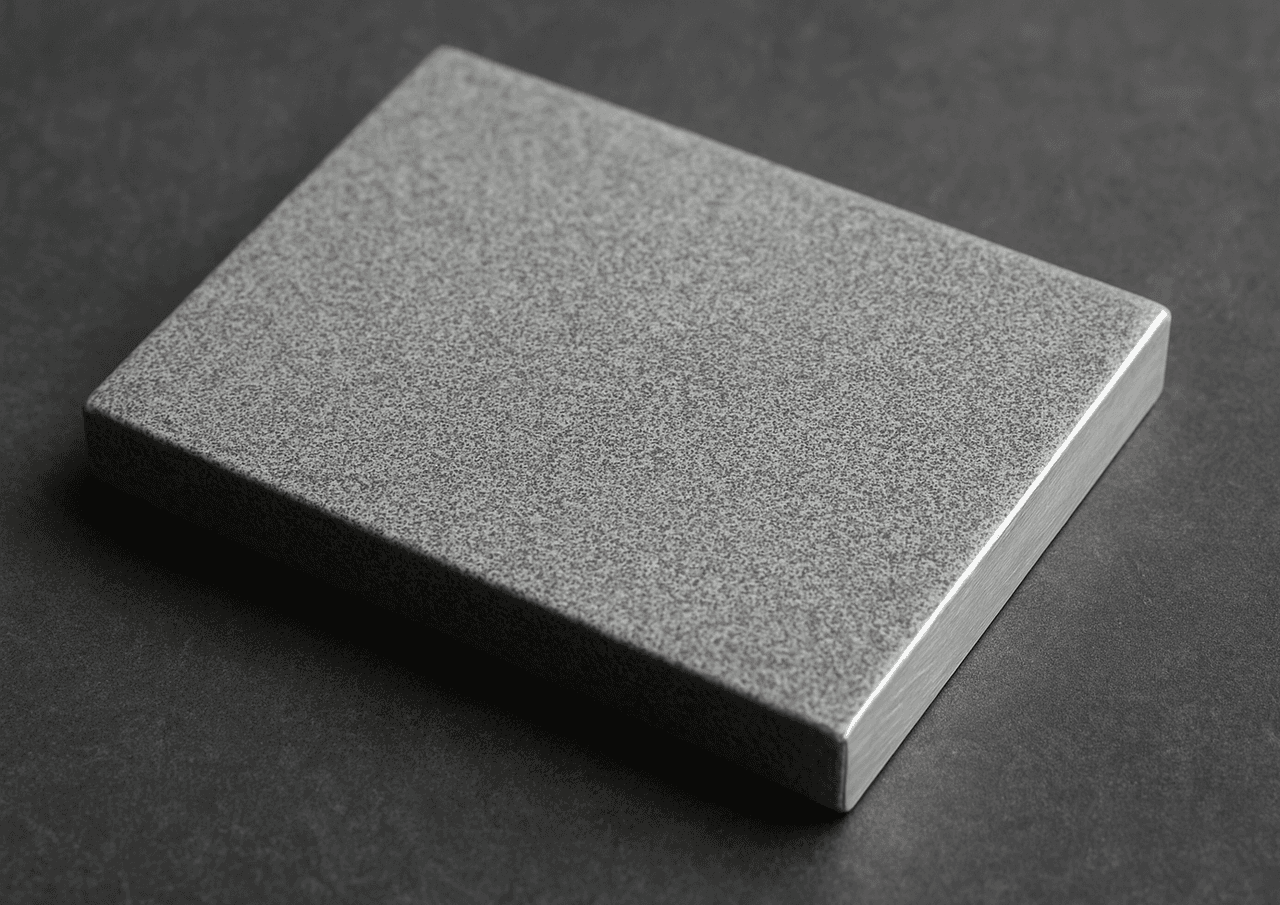
Mikro Ark Oksidasyon Yöntemiyle Kaplanmış Metal Numunesi Temsili Görseli. (Yapay zeka ile oluşturulmuştur.)
The formation of MAO coatings results from the interaction of three fundamental processes: electrochemical reactions, plasma chemistry, and thermal diffusion. Initially, a thin oxide layer forms on the metal surface. As the voltage increases, dielectric breakdown occurs on this film, generating plasma sparks in these regions. These sparks produce extremely high temperatures (~10,000 K) and pressures, causing localized melting and resolidification of the surface.
As the applied voltage increases, both coating thickness and porosity increase. Higher current density accelerates coating growth rate while also increasing the intensity and microstructural complexity of the discharges.
The type and composition of the electrolyte play a decisive role in determining the chemical composition, structure, and performance of the coating. Commonly used alkaline electrolytes include silicate, phosphate, aluminate, and their combinations. For instance, phosphate-based electrolyte systems enhance corrosion resistance, while silicate-based systems produce thicker and harder coatings.
Additives such as nano-Al₂O₃, ZrO₂, and Ag nanoparticles are used to improve the mechanical, tribological, and biological properties of the coating. For example, electrolytes containing silver provide antibacterial effects, while ZrO₂ additions significantly enhance wear resistance.
MAO coatings typically consist of two main layers: a dense and compact inner layer and a more porous outer layer. The inner layer provides primarily hardness, adhesion, and corrosion resistance, while the outer layer can be tailored for surface morphology and functional properties. Elements from the electrolyte can be embedded into the outer layer through discharge channel structures and diffusion processes.
MAO coatings are widely used across a broad range of applications, particularly in the aerospace, automotive, and biomedical industries.
The MAO coating process offers advantages such as environmental friendliness, low equipment cost, and the ability to produce high-performance coatings. However, due to the high voltage required, energy consumption is substantial, and the porous structure of the coatings can lead to sealing issues. Consequently, recent research has focused on pore sealing, post-treatments, and hybrid methods.
Recent literature on MAO focuses on improving coating quality and minimizing pore and crack formation. Additionally, hybrid techniques (e.g., MAO + sol-gel, MAO + hydrothermal treatment) are being explored to enhance biological or tribological performance. In particular, advanced characterization and modeling studies are expected to intensify for achieving more controlled microstructures and functional surfaces in biomedical implants and aerospace components.
Dou, Jinhe, et al. "Research Status of Magnesium Alloys by Micro-Arc Oxidation: A Review." *Surface Engineering* 33, no. 10 (2017): 731–738.https://doi.org/10.1080/02670844.2017.1278642
Liu, Xiaodong, et al. "Micro‐Arc Oxidation of Aluminum Alloys: Mechanism, Defects, and Corrosion Resistance." *Advanced Engineering Materials*, 2025.https://doi.org/10.1002/adem.202402748.
Muhaffel, Faiz. "Mikro Ark Oksidasyon Yöntemiyle Titanyum Esaslı Implantların Yüzey Özelliklerinin Geliştirilmesi." Master's thesis, İstanbul Teknik Üniversitesi, 2010.https://tez.yok.gov.tr/UlusalTezMerkezi/TezGoster?key=zqI_ZOq-b18GC2rT9c2JGj5U-UhlgvH7DYukQDnUZBNLzglvehUfNn-FzITVfigB
Muhaffel, Faiz. "Novel Approaches for Protection of Light Metals under Various Wear Conditions via Micro Arc Oxidation Process." PhD thesis, İstanbul Teknik Üniversitesi, 2021.
Yao, Wenhui, et al. "Micro-Arc Oxidation of Magnesium Alloys: A Review." Journal of Materials Science & Technology 118 (2022): 158–180.https://doi.org/10.1016/j.jmst.2021.11.053.

No Discussion Added Yet
Start discussion for "Micro Arc Oxidation (MAO)" article
Coating Mechanism
Influencing Parameters
Voltage and Current Density
Electrolyte Composition
Electrolyte Additives
Coating Structure
Applications
Advantages and Limitations
Future Perspectives