


This article was automatically translated from the original Turkish version.

Mental Fatigue (Generated with Artificial Intelligence)
Definition(s) | A state resulting from prolonged mental effort. | ||||||||
|---|---|---|---|---|---|---|---|---|---|
Solution | Rest, sleep, awareness. | ||||||||
Stress | Increased stress is observed. | ||||||||
Health Field | Decision-making weakens. | ||||||||
Work Life | Productivity decreases, errors increase. | ||||||||
Performance | Decision-making and skill decline. | ||||||||
Physical Condition | Muscle strength remains unchanged. | ||||||||
Emotional Effect | Reduced motivation, low energy. | ||||||||
Cognitive Effect | Decreased attention, slowed thinking. | ||||||||
Factors | Social media, tests, video games. | ||||||||
Reason | Continuous attention and cognitive load. | ||||||||
Mental fatigue is a psychobiological state that emerges following prolonged and intense cognitive activities, affecting an individual’s cognitive, emotional, and behavioral processes. As cognitive tasks continue, the use of mental resources increases, leading to a rise in perceived effort, a decline in motivation, and a reduction in performance.
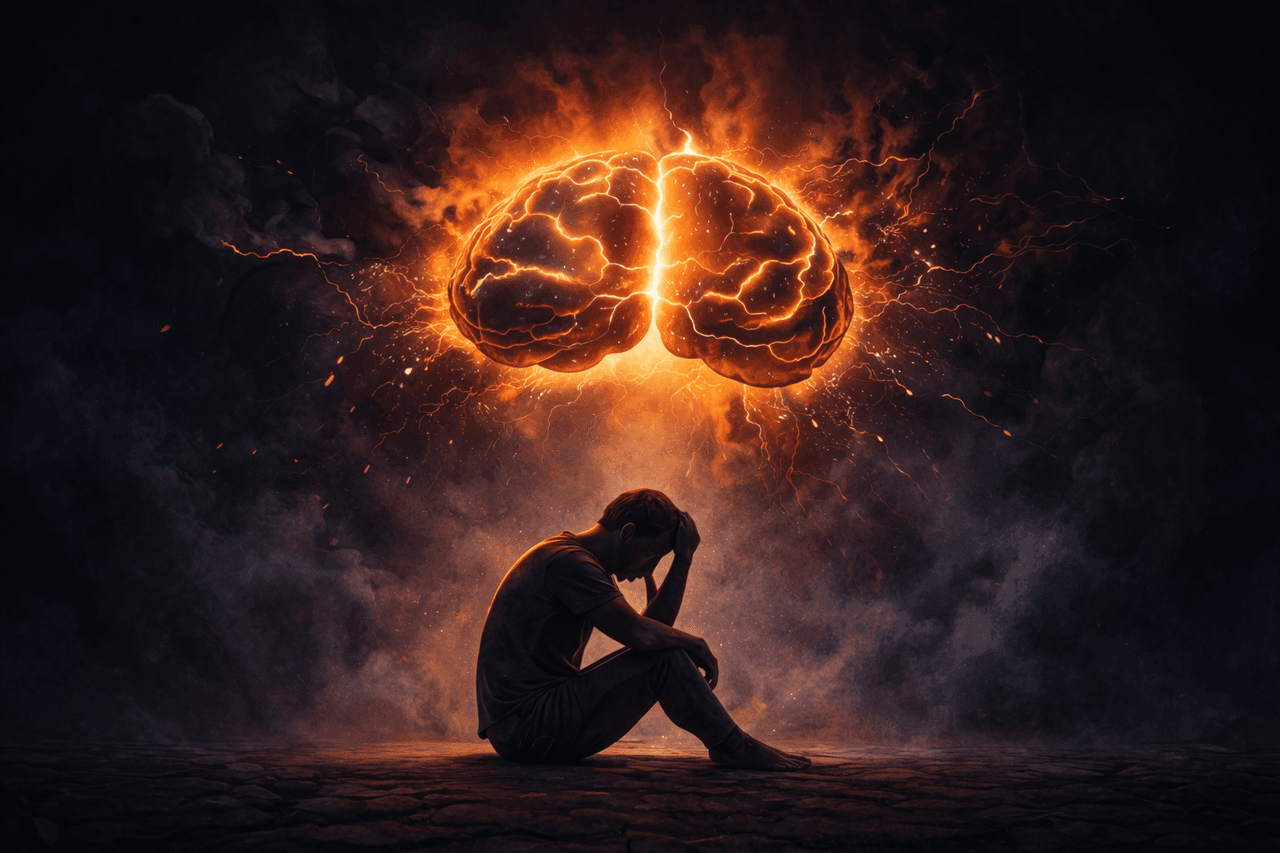
Visual Representing Mental Fatigue and Cognitive Load (Generated by Artificial Intelligence)
Mental fatigue is not limited to cognitive processes alone; it exhibits a multidimensional structure that also includes emotional and motivational components. It arises in situations requiring sustained mental effort and impairs an individual’s capacity to maintain attention.
During this process, information processing speed declines, concentration becomes more difficult, and cognitive performance weakens.
Mental fatigue has a distinct structure compared to physical fatigue. It does not directly reduce muscular strength; however, it significantly impacts mental performance, decision-making processes, and levels of attention. Consequently, it becomes particularly evident in environments demanding intense mental effort.
Mental fatigue emerges as a result of prolonged attention-demanding tasks and increasing cognitive load. Activities requiring continuous focus, problem-solving, and mental exertion trigger this condition.
Cognitive tests, prolonged use of vehicles, playing video games, and social media use are among the primary factors contributing to mental fatigue. These activities deplete an individual’s attentional resources and reduce mental capacity.
As a result of mental fatigue, individuals exhibit distractibility, difficulty concentrating, and reduced cognitive performance. Slowing of information processing occurs, reaction times lengthen, and the likelihood of errors increases.
Mental fatigue is also associated with loss of motivation, reduced energy levels, and diminished alertness. Memory problems, slowed thinking speed, and emotional fluctuations are among its key indicators.
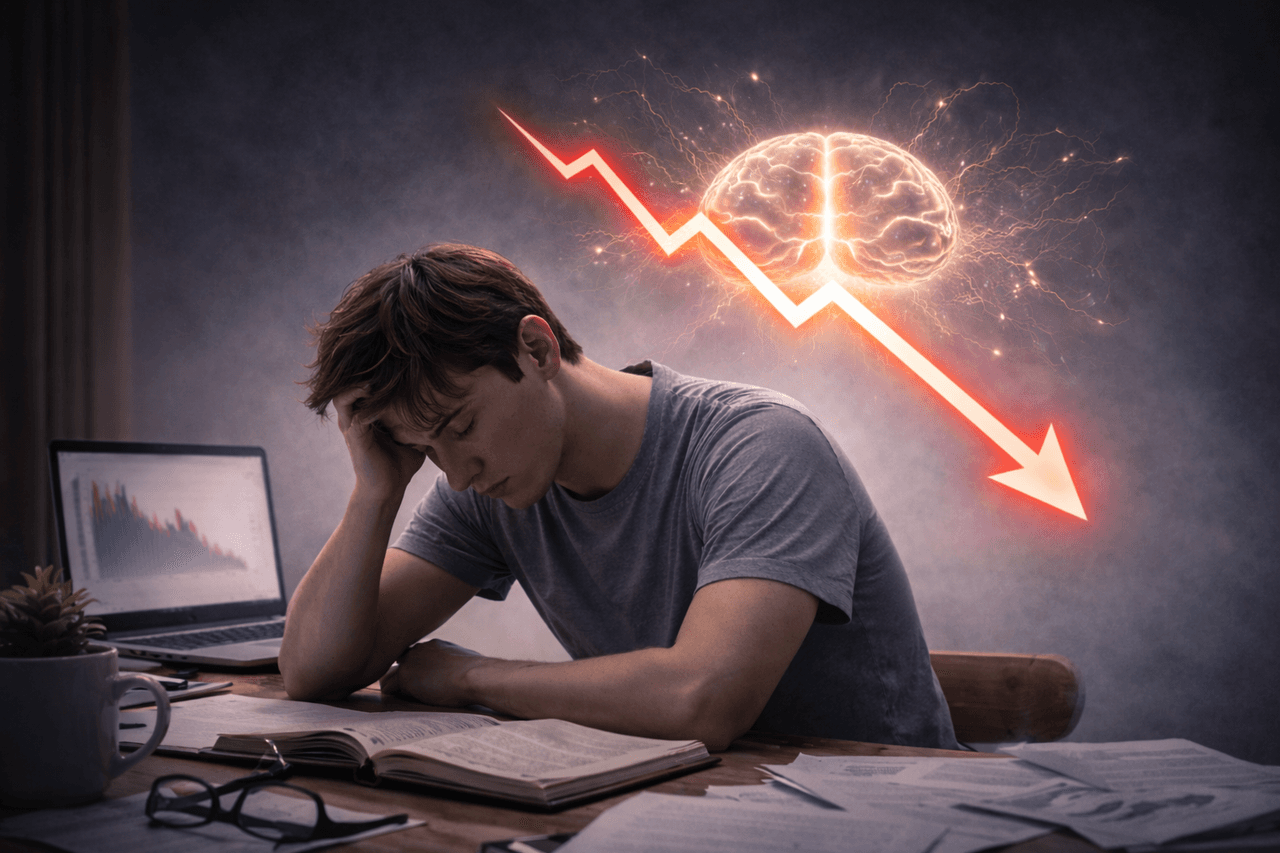
Representative Visual Illustrating the Impact of Mental Fatigue on Performance (Generated by Artificial Intelligence)
Mental fatigue has produced noticeable effects on individual performance. Studies in sports have shown that mental fatigue reduces endurance performance and negatively affects technical skills. Decision-making processes become impaired and perceptual-cognitive performance declines.
In team sports, the constant need for attention and rapid decision-making intensifies the impact of mental fatigue on performance. This leads to increased error rates in technical execution and reduced in-game activity.
In individual sports, mental fatigue particularly increases the perceived level of difficulty and affects the individual’s perception of their own performance. However, no significant changes have been observed in certain physiological parameters. This indicates that mental fatigue operates primarily through psychophysiological mechanisms.
Mental fatigue is not confined to sports performance; it also has significant consequences in professional life. It reduces attention and concentration in the workplace, and is linked to performance decline and loss of motivation.
High levels of mental fatigue and stress negatively affect an individual’s attitude toward work and reduce their level of engagement. This leads to decreased work productivity and a weakening of psychological well-being.
Studies in healthcare have shown that mental fatigue negatively affects decision-making processes. In professions requiring high levels of attention, mental fatigue increases the risk of errors and has significant safety implications.
A close relationship exists between mental fatigue and stress. Excessive use of cognitive resources and rising environmental demands elevate an individual’s stress levels. This results in reduced attention and memory capacity and negatively impacts cognitive performance.
As stress increases, the way individuals perceive environmental demands changes, accelerating the onset of mental fatigue. Thus, mental fatigue and stress form a mutually reinforcing cycle.
Various strategies have been applied to manage mental fatigue. These include short breaks, sleep, regulation of attentional distraction, and mindfulness practices.
Additionally, interventions such as caffeine and carbohydrate intake have been found to produce positive effects on performance in certain situations. These approaches are considered among the methods aimed at mitigating the effects of mental fatigue.
Managing mental fatigue is regarded as a crucial factor in sustaining individual performance and preserving cognitive capacity.
Accessed November 26, 2025. https://www.aa.com.tr/tr/kultur/ahlatta-acilan-kurslarla-geleneksel-tas-isciligi-yasatiliyor/3116279.
Canikli Temel, Nisanur, and Yusuf Soylu. “Voleybolda Dar Alan Oyunlarında Zihinsel Yorgunlukla Başa Çıkma Stratejilerinin Psikofizyolojik Cevaplar ve Teknik Aktivite Üzerindeki Etkisi.” *Uluslararası Spor, Egzersiz ve Antrenman Bilimi Dergisi* 11, no. 2 (2025): 178–190. Accessed April 12, 2026. https://dergipark.org.tr/en/download/article-file/4908667
Derdiyok, Şeyma. Zihinsel Yorgunluk Bulgularının Fizyolojik Sinyallere Dayalı Analizi. Master's thesis, İstanbul Kültür Üniversitesi, Lisansüstü Eğitim Enstitüsü. Accessed April 12, 2026.
Güven, Betül, and Özlem İbrahimoğlu. “Ameliyathane Hemşirelerinde Zihinsel Yorgunluk ile Klinik Karar Verme Arasındaki İlişkinin İncelenmesi.” Sağlık Bilimleri Üniversitesi Hemşirelik Dergisi 5, no. 3 (2023): 237–244. Accessed April 12, 2026. https://dergipark.org.tr/tr/download/article-file/3279057
Kılıç, Göktürk Samet, and Erşan Arslan. “Zihinsel Yorgunluğun Amatör Genç Tenis Oyuncularının Psikofizyolojik ve Kinematik Performans Cevapları Üzerindeki Etkileri.” *Uluslararası Spor, Egzersiz ve Antrenman Bilimi Dergisi* 12 (2026): 33–39. Accessed April 12, 2026. https://dergipark.org.tr/tr/download/article-file/5598843
Türkmen, Ozan Bahadır, and Arzu Genç. “Sporcularda Zihinsel Yorgunluğun Performans Üzerine Etkileri.” *Bandırma Onyedi Eylül Üniversitesi Sağlık Bilimleri ve Araştırmaları Dergisi* 5, no. 2 (2023): 203–211. Accessed April 12, 2026. https://dergipark.org.tr/tr/download/article-file/3053930
Öktem Özgür, Ayşenur, and Tunç Demirbilek. “Fiziksel ve Zihinsel Yorgunluk ile Algılanan Stresin İşe Tutkunluk Üzerine Etkisi.” *Uluslararası İktisadi ve İdari İncelemeler Dergisi*, no. 42 (2024): 37–60. Accessed April 12, 2026. https://dergipark.org.tr/en/download/article-file/2907167


Mental Fatigue (Generated with Artificial Intelligence)
Definition(s) | A state resulting from prolonged mental effort. | ||||||||
|---|---|---|---|---|---|---|---|---|---|
Solution | Rest, sleep, awareness. | ||||||||
Stress | Increased stress is observed. | ||||||||
Health Field | Decision-making weakens. | ||||||||
Work Life | Productivity decreases, errors increase. | ||||||||
Performance | Decision-making and skill decline. | ||||||||
Physical Condition | Muscle strength remains unchanged. | ||||||||
Emotional Effect | Reduced motivation, low energy. | ||||||||
Cognitive Effect | Decreased attention, slowed thinking. | ||||||||
Factors | Social media, tests, video games. | ||||||||
Reason | Continuous attention and cognitive load. | ||||||||
The Concept of Mental Fatigue
Formation Process and Causes
Symptoms and Cognitive Effects
Effects on Performance
Effects on Work and Daily Life
Relationship Between Mental Fatigue and Stress
Strategies for Managing Mental Fatigue