


This article was automatically translated from the original Turkish version.
+2 More
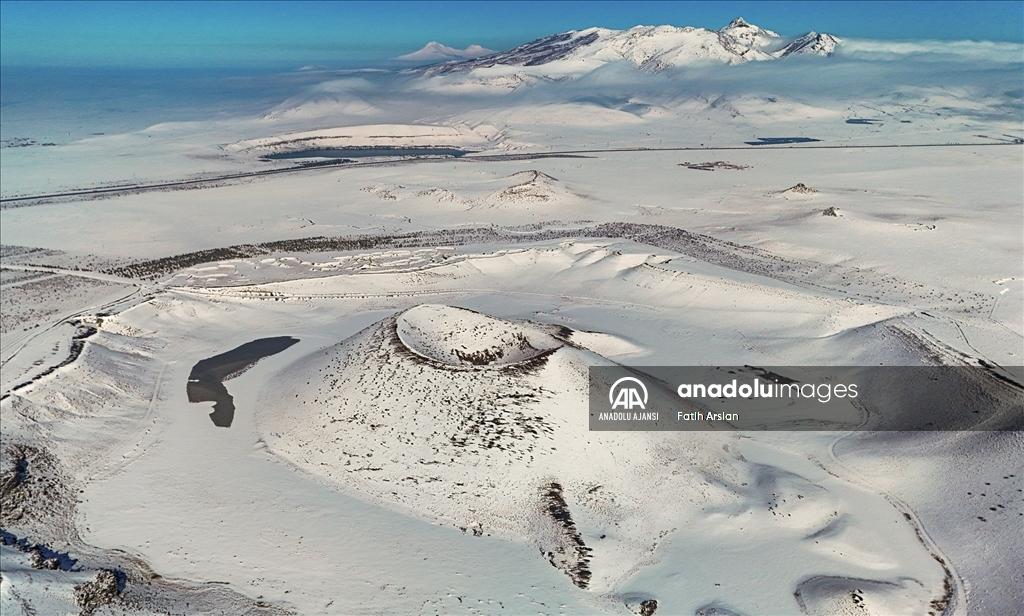
Meke Lake
Name | Meke Lake (Meke Maar Lake) | ||||||||
|---|---|---|---|---|---|---|---|---|---|
Location | 2 km inside from the turnoff at the 7th km of the Karapınar-Ereğli road Konya Karapınar District | ||||||||
Elevation | 981 meters above sea level | ||||||||
Size | Main lake: 800 m length 12 m depth; Central cone lake: 25 m depth (brackish water) 500 m width | ||||||||
Formation | Crater formation by volcanic eruption 4-5 million years ago (Pleistocene epoch); Central cone formation by a second eruption 9,000 years ago | ||||||||
Geological Features | Volcanic maar lake, pyroclastic cone, basalt and andesite materials | ||||||||
Nickname | The Eye of the World (bird’s-eye view resembling a nazar boncuğu) | ||||||||
Meke Lake is a volcanic maar lake located in the Karapınar district of Konya province, Türkiye. It is known as the “Eye of the World” due to its geological structure and aerial view, which resemble a nazar boncuğu (evil eye amulet). The lake formed when a dormant volcano crater filled with water following a gas explosion, and it contains small islands formed by volcanic cones in its center. Located 2 kilometers off the 7th kilometer mark of the Karapınar-Ereğli road, the lake lies at an elevation of 981 meters above sea level. The main lake is 800 meters long, 500 meters wide, and 12 meters deep. The secondary lake situated on the central volcanic cone is 25 meters deep and contains saline water. This natural wonder, named after the meke birds that inhabit the surrounding area, is one of migratory birds’ key stopover sites in Türkiye and was included in the Ramsar Convention list in 2005.
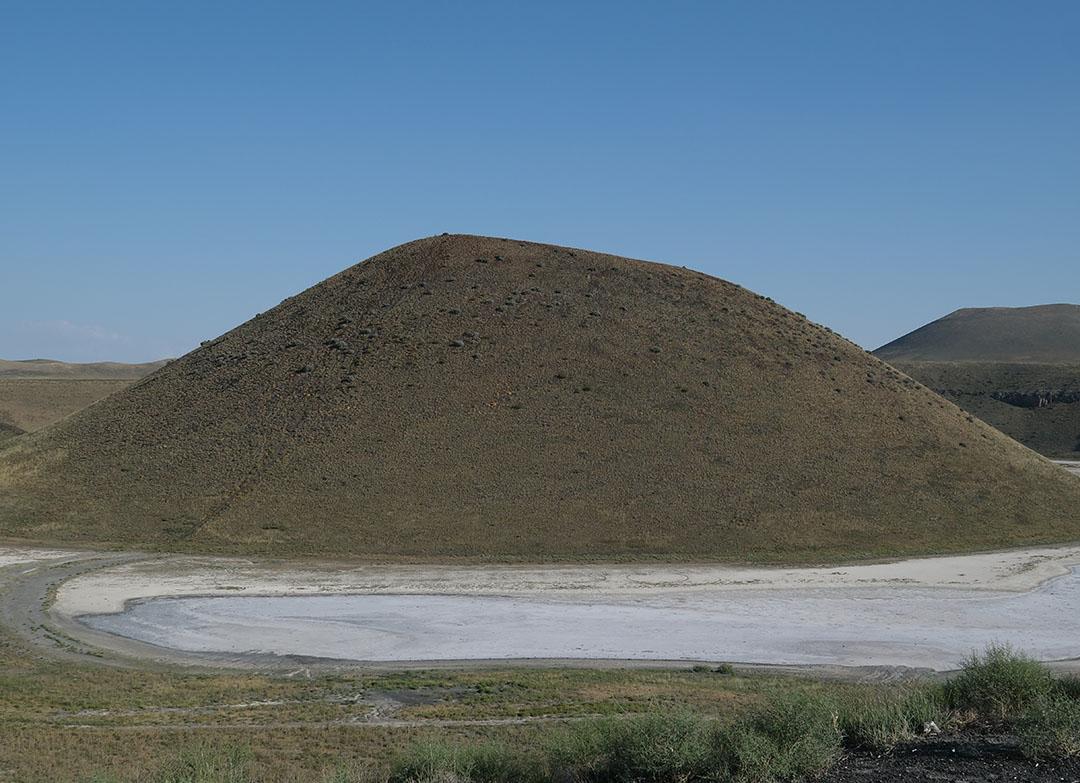
Meke Lake (karapinargezirehberi)
The formation of Meke Lake began with a volcanic eruption approximately 4 to 5 million years ago during the Pleistocene epoch. This eruption, linked to the Karacadağ volcanic activity, created a large crater (pyroclastic cone) that gradually filled with water to become a lake. About 9,000 years ago, a second volcanic eruption formed a new volcanic cone in the center of the lake; when this cone also filled with water, the lake acquired its distinctive nazar boncuğu appearance. The main cone rises 120 meters above the lakebed, and three additional parasitic cones surround it. The lake and its surroundings consist of basalt, andesite, lapilli tuff, volcanic bombs, and ash and other pyroclastic materials. The region’s geological units include metamorphic rocks dating from the Paleozoic to the present, Paleogene and Neogene sedimentary layers, and Miocene-Pliocene volcanic rocks.
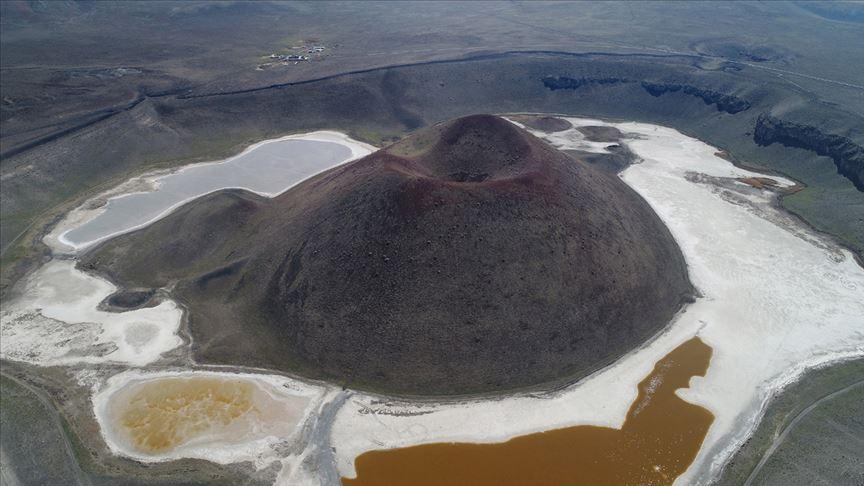
Meke Lake (Anadolu Ajansı)
In recent years, Meke Lake has faced severe threats due to increasing drought and unsustainable exploitation of groundwater. Located in the Konya Closed Basin, the lake receives low annual rainfall (average 320 mm) and has experienced a significant drop in groundwater levels, leading to 99 percent desiccation. Salt crystals and layers have formed on the dried lakebed, while the remaining small water pools have turned red due to microbial activity. According to Assoc. Prof. Dr. Fetullah Arık, this red coloration results from microbial residues commonly found in saline and soda lakes. The lake’s former splendor, when it was fully covered with water in the early 2000s, has been replaced by complete desiccation as of 2015. Drought, unregulated agricultural irrigation, and illegal wells have prevented the lake from being replenished by groundwater.
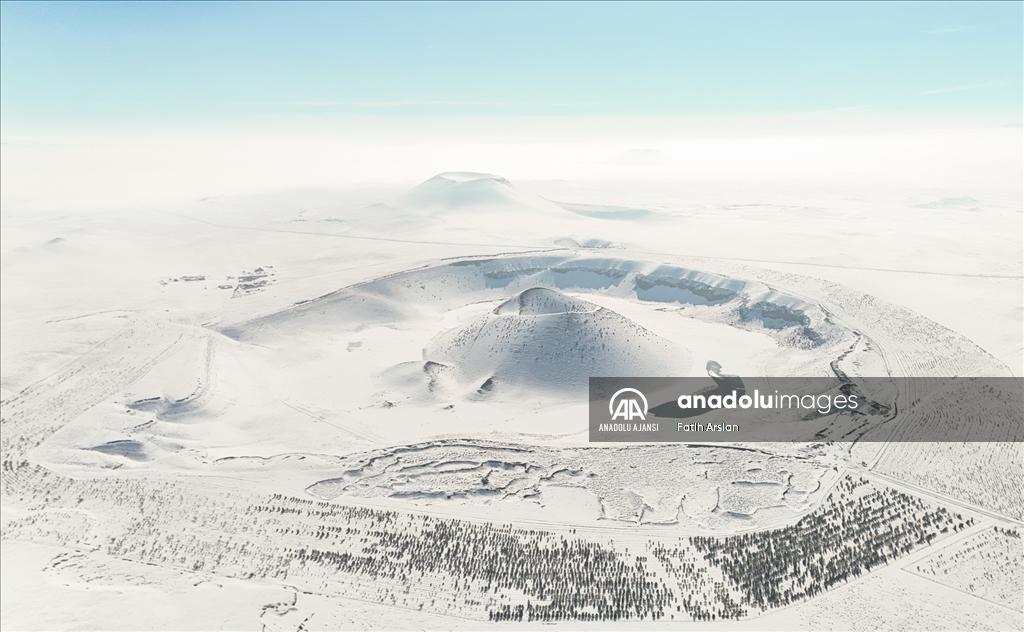
Meke Lake (Anadolu Ajansı)
Meke Lake holds major ecological importance due to its biodiversity and role as a habitat for migratory birds. In the past, it provided shelter for numerous bird species including the meke bird, sakar meke, angıt, water rail, and rock eagle; however, most of these species have now abandoned the area due to desiccation. From a tourism perspective, the lake attracts both domestic and international visitors because of its geotourism potential. Prof. Dr. Tahir Nalbantçılar has noted that Meke is among the world’s few significant geological structures and could become a major attraction with effective promotion. The lake’s nazar boncuğu appearance becomes particularly prominent during wet seasons when it is filled with water or snow.
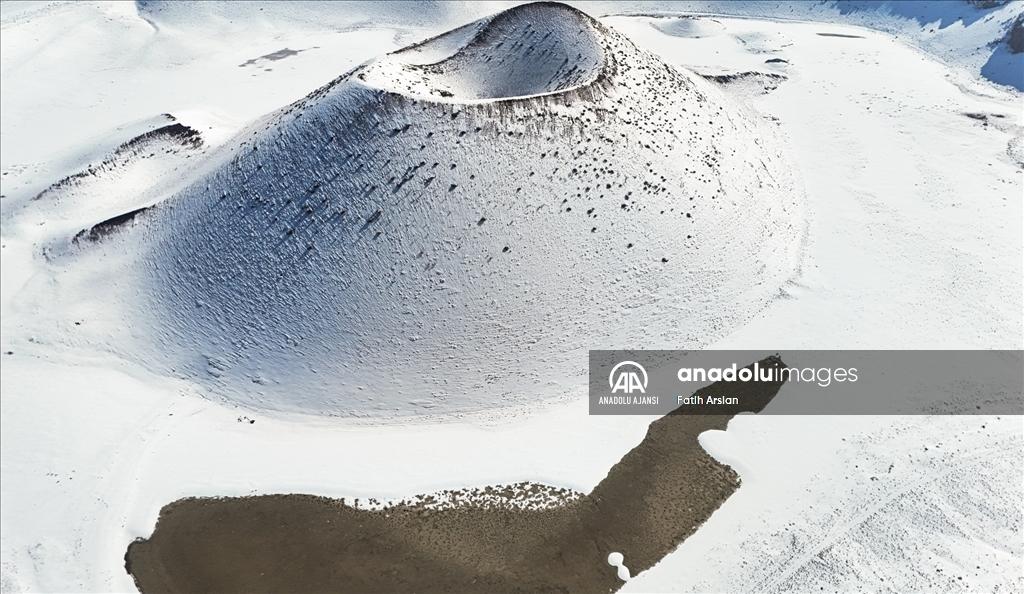
Meke Lake (Anadolu Ajansı)
To restore Meke Lake to its former glory, the Konya Metropolitan Municipality has launched the “Project for Replenishing Meke Lake with Recovered Wastewater.” The Wastewater Recovery Facility, constructed adjacent to the Karapınar Wastewater Treatment Plant, has reached 75 percent completion as of 2025. Under the project, 7,000 cubic meters of treated water per day will be transferred to the lake via an 8.5-kilometer pipeline. This facility aims to maintain the lake’s water level and irrigate surrounding green areas. Mayor Uğur İbrahim Altay emphasized that the project is being implemented with support from the Ministry of Environment, Urbanization and Climate Change and will restore life to the lake.
Meke Lake is one of Türkiye’s most unique natural heritage sites due to its geological, ecological, and touristic value. However, it faces the threat of disappearance due to drought, excessive groundwater extraction, and unsustainable agricultural practices. Its preservation is possible through the widespread adoption of modern irrigation techniques, prevention of illegal wells, and sustainable management of water resources.
Anadolu Ajansı. “8 Bin Yıllık Doğal Güzellik: Meke Gölü.” Anadolu Ajansı, March 5, 2019. Accessed April 2, 2025.https://www.aa.com.tr/tr/turkiye/8-bin-yillik-dogal-guzellik-meke-golu/1433348
Arık, Fetullah, and others. “Yokolan Nazar Boncuğumuz: Meke Maar Gölü.” TMMOB Jeoloji Mühendisleri Odası. Accessed April 2, 2025.https://www.jmo.org.tr/genel/bizden_detay.php?kod=7167&tipi=2&sube=0
Karapınar Gezi Rehberi. "Meke Krater Gölü." Karapınar Gezi Rehberi. Accessed April 2, 2025.https://karapinargezirehberi.com.tr/turlar/meke-krater-golu/
Konya Büyükşehir Municipality. "Mayor Altay: We Will Bring New Life toMeke Gölü." Konya Metropolitan Municipality, date of last update not specified. Accessed April 2, 2025.https://www.konya.bel.tr/haber/baskan-altay-meke-golune-yeniden-hayat-verecegiz
TMMOB Jeoloji Mühendisleri Odası. "Meke Maarı’nın Oluşumu ve Jeolojik Özellikleri." *Haber Bülteni*, no. 11-18. Ankara: TMMOB Jeoloji Mühendisleri Odası, 2010. PDF. Accessed April 2, 2025. chrome-extension://efaidnbmnnnibpcajpcglclefindmkaj/https://www.jmo.org.tr/resimler/ekler/5a366e769b1cde8_ek.pdf?dergi=HABER%20B%DCLTEN%DD

Meke Lake
Name | Meke Lake (Meke Maar Lake) | ||||||||
|---|---|---|---|---|---|---|---|---|---|
Location | 2 km inside from the turnoff at the 7th km of the Karapınar-Ereğli road Konya Karapınar District | ||||||||
Elevation | 981 meters above sea level | ||||||||
Size | Main lake: 800 m length 12 m depth; Central cone lake: 25 m depth (brackish water) 500 m width | ||||||||
Formation | Crater formation by volcanic eruption 4-5 million years ago (Pleistocene epoch); Central cone formation by a second eruption 9,000 years ago | ||||||||
Geological Features | Volcanic maar lake, pyroclastic cone, basalt and andesite materials | ||||||||
Nickname | The Eye of the World (bird’s-eye view resembling a nazar boncuğu) | ||||||||
Formation and Geological Features
Environmental Condition and Degradation Process
Ecological and Touristic Significance
Conservation and Restoration Efforts