


This article was automatically translated from the original Turkish version.
Mediatization is a concept that describes how media technologies and communication practices in modern societies have fundamentally transformed the functioning of social institutions and individuals’ everyday lives. Originating from the German term “Mediatisierung,” this concept addresses the relationship between media and society not merely at the level of content or influence but as a much deeper and structural transformation. Mediatization implies that fields such as politics religion education and culture are increasingly shaped according to the logic of media and that decision-making processes are structured around visibility and representation.
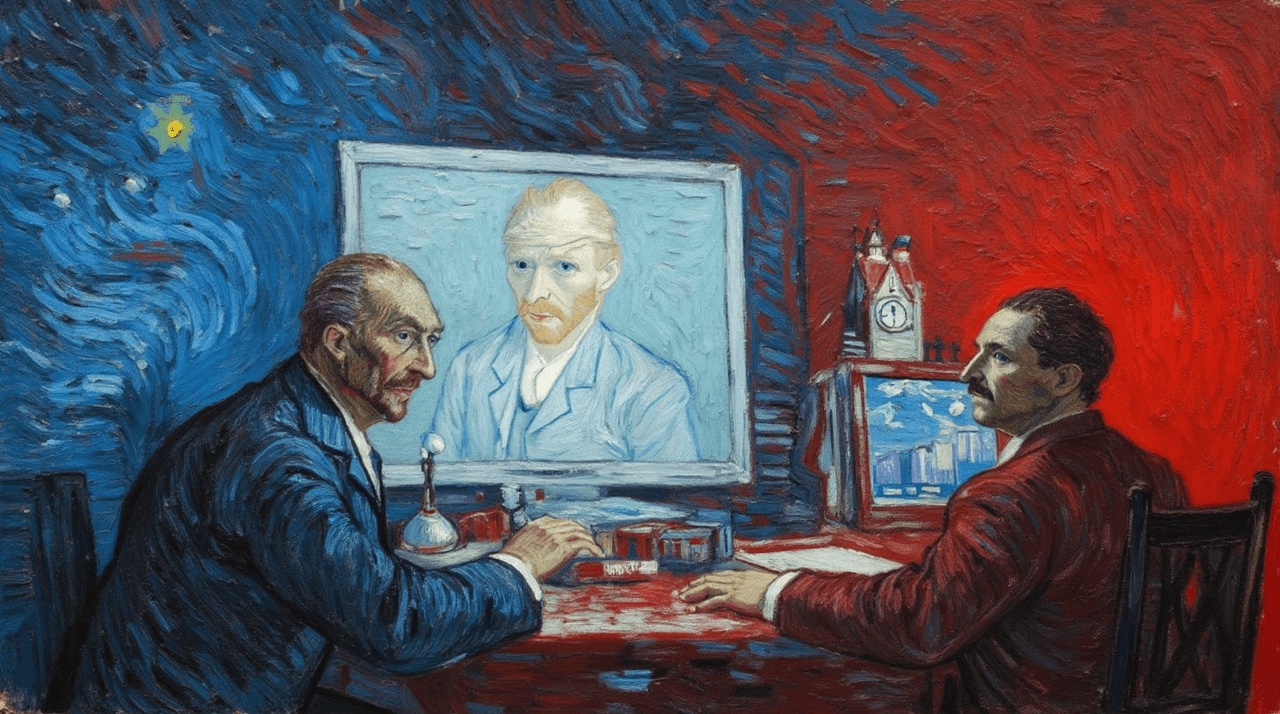
Yapay zeka ile oluşturulan görsel
The mediatization approach emerged in the late 1990s as a theoretical necessity within the historical development of media studies. Traditional media research long progressed along three main axes: analysis of media texts economic-political analysis of production processes and studies of audience reception. However these approaches began to prove inadequate in explaining the comprehensive impact of media on social structures. Especially with the acceleration of digitalization media ceased to function merely as a content medium and became a structural element that directly shapes the functioning of everyday life institutions and cultural patterns. At this point the concept of mediatization was introduced to account for this multi-layered transformation.
Theoretically the mediatization approach has been shaped by the convergence of different intellectual traditions. According to Friedrich Krotz’s pioneering framework mediatization must be understood as a meta-process in which media change and everyday life evolve together. Andreas Hepp interprets this process as a restructuring in which cultural structures and social institutions are compelled to adapt to the logic of media. Nick Couldry’s contribution focuses on viewing media influence not only at the level of content but also at the level of how the media order shapes social reality. Within this framework mediatization is not merely a communication process but the media-centered reconstruction of social experience. The theoretical roots of this approach extend to Roger Silverstone’s concept of “mediation” Jürgen Habermas’s theory of communicative action and Michel Foucault’s understanding of power and dispersed networks.
Mediatization exerts a transformative effect not only at the institutional level but also on individuals’ daily practices identity formation and cultural meaning systems. Today media has become a fundamental social environment that directly shapes how individuals perceive the world construct relationships with others and express themselves. According to Andreas Hepp culture is no longer defined solely by patterns of production and consumption but by realities experienced indirectly through media. Consequently cultural life is being restructured through the models representations and aesthetic forms offered by media.
The mediatization of everyday life manifests itself across numerous dimensions from time management to social relations. The emergence of social media platforms as the primary channel of daily communication has led individuals to define their social identities by metrics such as “number of followers” and “like rates” clearly demonstrating how media culture transforms subjective experience. According to Krotz media is no longer merely a tool but a framework that organizes life: time spent at home workplace relationships and family communication have all been reshaped according to the rhythms of media technologies.
This transformation also generates a tension between cultural homogenization and critical thinking practices. Hepp emphasizes that media culture is pervasive yet too multi-layered to be reduced to a single mass culture. Mediatized culture is shaped by complex communication systems arising from the interaction of diverse media platforms. In this sense media culture constructs individuals’ perception of reality not only through information provision but also through framing and directional mechanisms.
Couldry, Nick, and Andreas Hepp. "Conceptualizing Mediatization: Contexts, Traditions, Arguments." *Communication Theory* 23, no. 3 (August 2013): 191–202.Link.
Krotz, Friedrich. "Explaining the Mediatisation Approach." *Javnost – The Public* 24, no. 2 (2017): 103–118.Link.
Kıvrak, Ali. "Medyatikleşme Çağında Politika, Kültür ve Toplum." *Açık Medeniyet*, 2019.Link.
Zamur Tuncer, Rabia. "Medyatikleşen Kültürler Üzerine Eleştirel Bir Okuma." İstanbul Üniversitesi İletişim Fakültesi Dergisi 2016, no. 2 (2016).Link.

Origins and Theoretical Foundations
Mediatized Culture and Everyday Life