


This article was automatically translated from the original Turkish version.
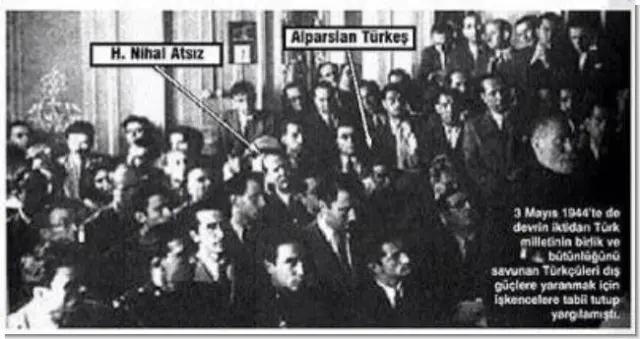
May 3 Turkishness Day
History | 3 May 1944 | ||||||||
|---|---|---|---|---|---|---|---|---|---|
May 3 Turkishness Day is a symbolic day observed annually on May 3 by various civil society organizations, academic circles, and nationalist groups, representing a pivotal moment in the political, cultural, and intellectual history of Turkish nationalism. This day is directly linked to the demonstrations held in Ankara on May 3, 1944 and the subsequent Racism-Turanism Trial. The events are viewed as a reflection of Turkish nationalism’s trajectory during the war years, the political climate of the era, and the relationship between the state and nationalism.
May 3 emerged as a day of reaction amid growing tensions between nationalist intellectuals and the state, during a period when Türkiye pursued a balancing policy under the conditions of World War II. In this context, the polemic between Nihal Atsız and left-leaning writer Sabahattin Ali directly contributed to the emergence of this date. Atsız’s writings, which expressed Turanist and nationalist critiques, were perceived by the state as threats; the subsequent trials, arrests, and public reactions transformed this day into a historical symbol within the nationalist community.
Each year, this day is commemorated through ceremonies, panels, declarations, and social media campaigns by various nationalist organizations and individuals, notably Turkish Hearths and Idealist Hearths. In this sense, May 3 has come to be recognized in the memory of Turkishness as a symbolic day of intellectual struggle and resistance. It is not merely a day of remembrance but also a day that functions as the moment when the ideological framework of Turkish nationalism was shaped, historical memory was reconstituted, and political orientations were linked to cultural memory.
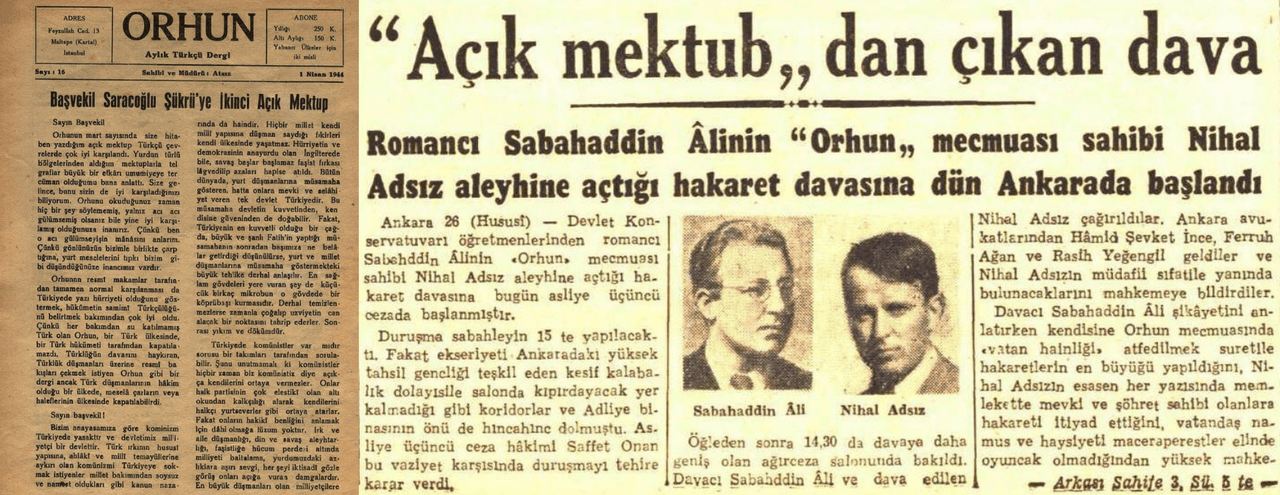
Orhun Dergisi Yazısı ve Olay Üzerine Çıkan Gazete Haberi (ÜlküTek)
Türkiye’s foreign policy during World War II must be understood within the context of rising nationalist tendencies domestically and the strained relationship between these tendencies and the state. The war, which began in 1939, placed Türkiye in a precarious position, and the country sought to remain neutral. On one hand, Türkiye signed a non-aggression pact with the Soviet Union; on the other, it attempted to balance relations with major powers such as Germany and Britain. This policy created fertile ground for diverse ideological currents to emerge within domestic politics.
In the early 1940s, particularly under the influence of Germany’s early wartime successes, Turanist ideas became more visible among certain political and intellectual circles in Türkiye. In this period and context, “Turan” referred to an ideological framework based on the unity of Turkic peoples. During this time, numerous articles on Turanism appeared in journals and books, and these ideas were embraced within university circles, youth groups, and certain political cadres. In particular, Nihal Atsız emerged as one of the most prominent figures of this intellectual world through his writings.
However, the state’s official ideology at the time contradicted Turanism. As the course of the war shifted and relations with Germany cooled, Turanist rhetoric began to be perceived as a threat. In 1944, articles written by Nihal Atsız in the journal Orhun, especially his accusations against Sabahattin Ali and his harsh criticism of the government, caused an open rupture between nationalist circles and the state. The concrete manifestation of this rupture was visible in the marches and demonstrations organized in Ankara on May 3, 1944 by supporters of Atsız.
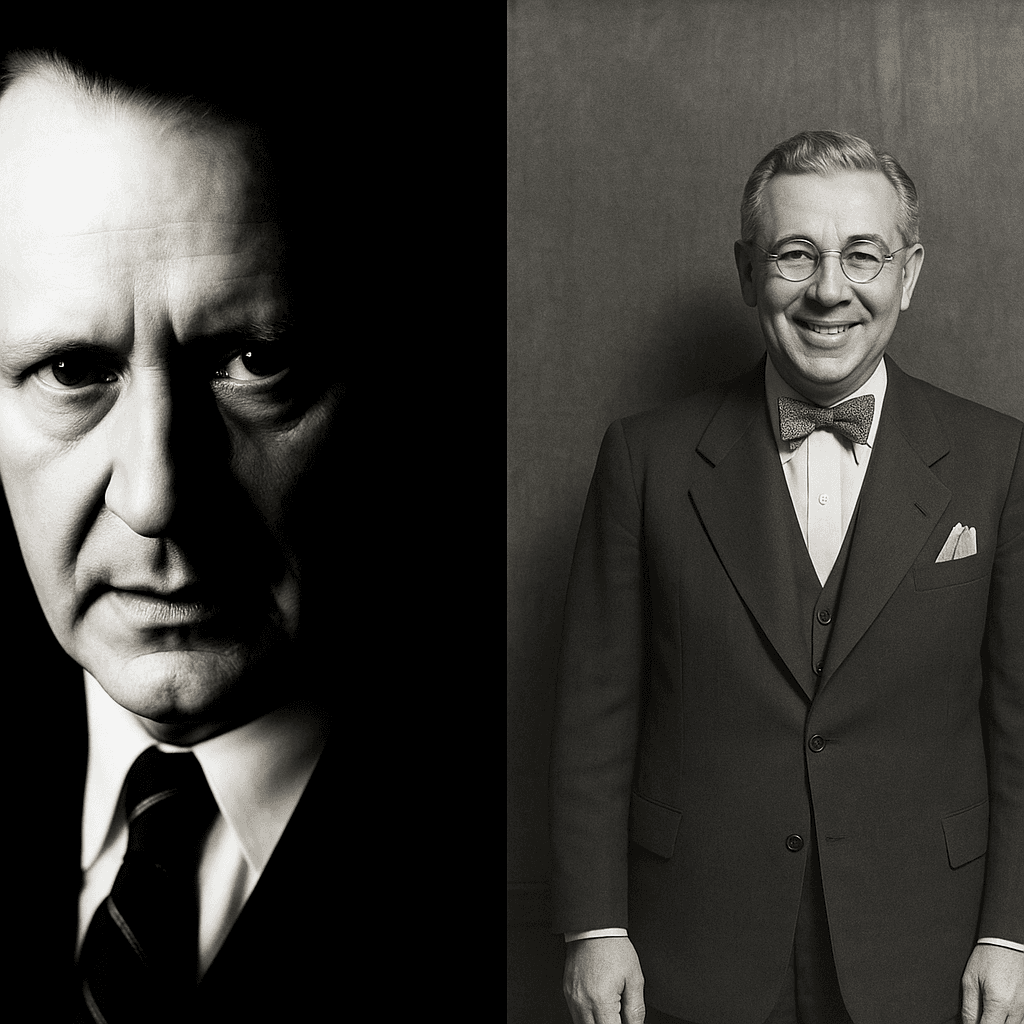
Nihal Atsız-Sabahattin Ali (ÜOEKV, Yapay Zeka İle Düzenlenmiştir.)
In articles published in the journal Orhun and especially in the 1944 issue of Tanrıdağ, Nihal Atsız openly accused Sabahattin Ali of being a “communist” and of treason. Atsız also strongly criticized the fact that Sabahattin Ali, who had been previously arrested for political reasons, was reinstated into state service by then Minister of National Education Hasan Âli Yücel. According to Atsız, this situation proved that “communist cadres” were being organized within the state.
One of the most notable texts was Atsız’s 1944 article in Orhun titled “Traitor to the Homeland.” In it, he cited numerous points—from Ali’s writings expressing admiration for Germany in the 1930s to his perceived sympathies with the Soviet Union—to portray him as un-patriotic and an ideological threat.
In response to these accusations, Sabahattin Ali filed a lawsuit against Nihal Atsız in 1944 on grounds of defamation and slander. The case generated widespread attention in the Turkish press and public opinion. Courtrooms were filled during hearings; verbal disputes between the parties occasionally escalated into physical tension. Atsız’s nationalist speeches addressed to crowds during the trial were met with enthusiasm among youth circles, and youth groups supporting Atsız organized marches in the streets of Ankara. Hundreds of demonstrators participated in the march, marching from Ulus Square to Sıhhiye with slogans such as “Down with Communism,” “Long Live Turkishness,” and “National State, Nationalist Türkiye.” Demonstrations held in front of the home of then Prime Minister Şükrü Saracoğlu further heightened the political dimension of the events. During the march, clashes occurred with security forces, and numerous demonstrators were detained on charges of throwing stones at public buildings. Ultimately, 23 individuals, including Nihal Atsız, Alparslan Türkeş, Zeki Velidi Togan, and Cemal Oğuz Öcal, were charged in the “Racism-Turanism Trial.” These events marked the beginning of what would later be commemorated as May 3 Turkishness Day.
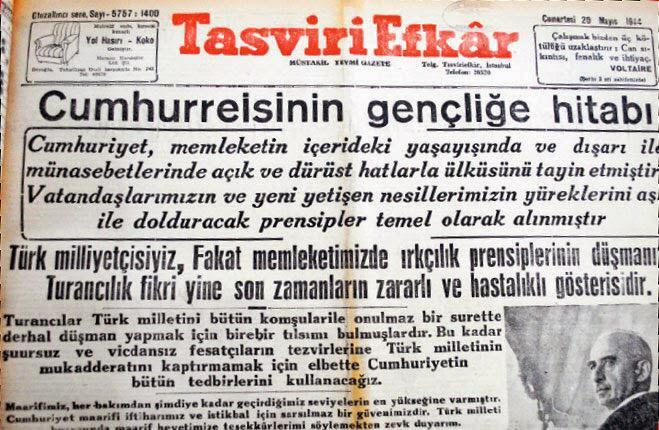
Newspaper headline image of the statement made by Şükrü Saraçoğlu (ÜOEKV)
The investigation initiated after the May 3, 1944 events quickly evolved into a large-scale trial. The case was framed within the political climate of the time by accusations of “regime opposition,” “fascist propaganda,” and “organized activity under the guise of combating communism.” In this context, 23 individuals were prosecuted, including leading Turkish nationalists and young officers. Hearings took place at the Ankara State of Emergency Court and attracted significant public attention.
At the verdict hearing on March 29, 1945, the court acquitted 13 defendants, while 10 received various prison and exile sentences. According to the ruling:
The verdict received extensive coverage in the newspapers of the time and sparked debate across various segments of society. The trial was not merely an individual judicial process; it became a significant example of the boundaries drawn between nationalist discourse and the state’s official ideology. Simultaneously, these events led to increased political and bureaucratic pressure on nationalist thinkers and officers, resulting in the removal of many individuals from their posts or their reassignment to passive roles.
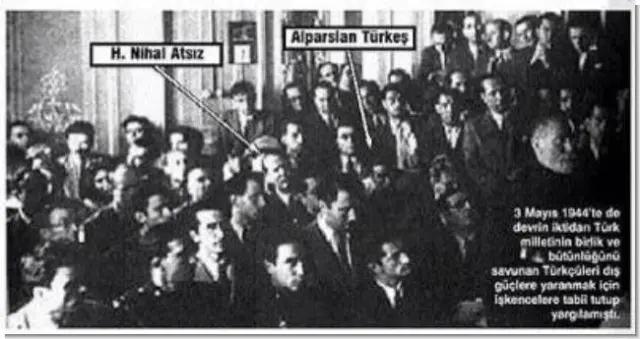
Duruşma Salonundan Bir Görsel (ÜOEKV)
The 1944 Racism-Turanism Trial went beyond being a mere judicial process and significantly influenced the social and political visibility of nationalist thought movements in Türkiye. Although the trial process, under the single-party regime’s ideological boundaries, imposed intense pressure on nationalist intellectuals and young officers, leading many to face prolonged detention, it did not weaken the public influence of Turkishness ideology. On the contrary, the emergence of this trial within the political climate of the 1940s created favorable conditions for the further adoption and spread of Turkishness among youth and other circles.
The student demonstrations of May 3, 1944, and the subsequent developments acquired symbolic importance for Turkish nationalism and became one of the reference points for nationalist movements in later years. One of the prominent figures to emerge from this period, Alparslan Türkeş, continued his career in the Turkish Armed Forces after serving his sentence and later became one of the key figures who brought Turkish nationalism into the political arena. In 1969, he assumed an active role in Turkish politics as the founder of the Nationalist Movement Party (MHP). Meanwhile, many of those prosecuted in the trial contributed to the institutionalization of Turkishness ideology in academia, publishing, literature, and political thought, helping to build the intellectual literature in this field.
Gezen, Bünyamin. "3 Mayıs Türkçülük Günü." Serbest makale. Academia.edu. Accessed April 29, 2025.
Hüseyin Nihal Atsız. “23 Mayıs 1040 ve 3 Mayıs 1944.” *huseyinnihalatsiz.com*. Accessed April 29, 2025.https://huseyinnihalatsiz.com/makale/23-mayis-1040-ve-3-mayis-1944/
Hüseyin Nihal Atsız. “Sorgu ve Savunması.” huseyinnihalatsiz.com. Accessed April 29, 2025.https://huseyinnihalatsiz.com/sorgu-ve-savunmasi/
Sefercioğlu, Necmeddin. *3 Mayıs 1944 ve Türkçülük Dâvâsı*. Türk Ocakları Ankara Şubesi Yayınları: 43, Araştırma Dizisi: 8. Accessed April 29, 2025.http://ulkunet.com/UcuncuSayfa/3Mayis1944_4832.pdf
Öztekin, H. “1944 Irkçılık - Turancılık Davası ve Basındaki Tartışmalar.” *Selçuk İletişim* 11, no. 1 (2018): 212–236. Accessed April 29, 2025.https://doi.org/10.18094/josc.345500
“3 Mayıs 1944 ve Irkçılık-Turancılık Davası.” *İstanbul Ülkü Ocakları Eğitim Birimi*. Accessed April 29, 2025.https://istanbululkuocaklariegitimbirimi.wordpress.com/2019/04/29/3-mayis-1944-ve-irkcilik-turancilik-davasi
“3 Mayıs Türkçülük Günü: Türklük Düşünce Tarihinin Dönüm Noktası.” *Ülkütek İstanbul*. Accessed April 29, 2025.https://ulkutekistanbul.org/3-mayis-turkculuk-gunu-turkluk-dusunce-tarihinin-donum-noktasi/

May 3 Turkishness Day
History | 3 May 1944 | ||||||||
|---|---|---|---|---|---|---|---|---|---|
No Discussion Added Yet
Start discussion for "May 3 Turkishness Day" article
Historical Background
Events of May 3, 1944
Racism-Turanism Trial
Consequences and Impacts