


This article was automatically translated from the original Turkish version.
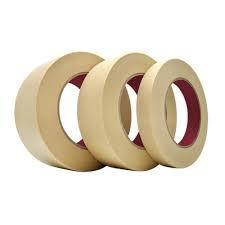
Masking Band
Type(s) | Surface protective tape | ||||||||
|---|---|---|---|---|---|---|---|---|---|
Structure(s) | Crepe paper + adhesive layer | ||||||||
Width Options | 18 mm – 48 mm range | ||||||||
Purpose of Use(s) | Prevention of paint transfer | ||||||||
Standards | TS EN 1942, ISO 29862 | ||||||||
Masking tape is a specialized type of tape designed to protect specific areas during painting, varnishing, plastering, and similar surface treatments. It adheres to surfaces without causing damage and can be easily removed. It is manufactured by applying a special acrylic or rubber-based adhesive onto a paper or thin plastic backing. It is widely used to ensure clean edge lines and prevent paint bleed or splatter during painting and surface finishing processes.
Masking tape can be applied to a wide range of surfaces. The most suitable surfaces include:
Millî Eğitim Bakanlığı (MEGEP). *Sanat ve Tasarım: Yüzey Hazırlıkları*. Ankara: MEB Yayınları, 2014. Accessed June 17, 2025. .
Millî Eğitim Bakanlığı (MEGEP). *İnşaat Teknolojisi: Boyaya Hazırlık*. Ankara: MEB Yayınları, 2013. Accessed June 17, 2025. .
Millî Eğitim Bakanlığı (MEGEP). *İnşaat Teknolojisi: Dekoratif Boya*. Ankara: MEB Yayınları, 2013. Accessed June 17, 2025. https://megep.meb.gov.tr/mte_program_modul/moduller_pdf/Dekoratif%20Boya.pdf.
Ministry of National Education (MEGEP). *Yüzey Hazırlama ve Boya Uygulama Ekipmanları*. Ankara: MEB Yayınları, 2013. Accessed June 17, 2025. .

Masking Band
Type(s) | Surface protective tape | ||||||||
|---|---|---|---|---|---|---|---|---|---|
Structure(s) | Crepe paper + adhesive layer | ||||||||
Width Options | 18 mm – 48 mm range | ||||||||
Purpose of Use(s) | Prevention of paint transfer | ||||||||
Standards | TS EN 1942, ISO 29862 | ||||||||
Features
Application Surfaces
Application Areas
Application Techniques
Usage Method
Advantages
Limitations