

+2 More

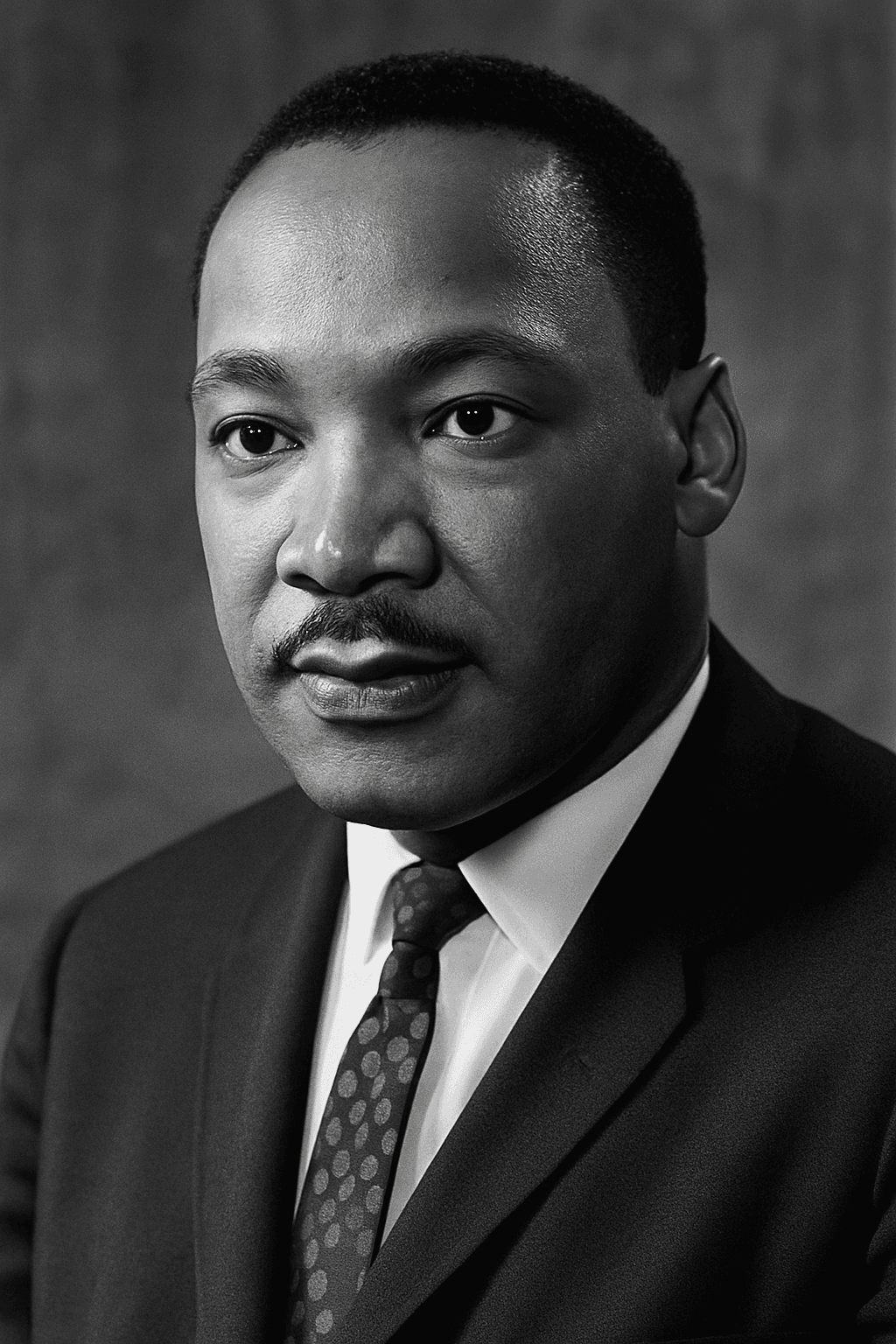
Martin Luther King Jr.
Spouse | Coretta Scott King | ||||||||
|---|---|---|---|---|---|---|---|---|---|
Date of Birth | January 15, 1929 | ||||||||
Place of Birth | Atlanta, Georgia, USA | ||||||||
Date of Death | April 4, 1968 | ||||||||
Place of Death | Memphis, Tennessee, USA | ||||||||
Occupation | Baptist pastor Human rights activist | ||||||||
Education | Morehouse College (Philosophy) Boston University (Ph.D.) Crozer Theological Seminary (Theology) | ||||||||
Child | Four children (2 girls 2 boys) | ||||||||
Notable Struggles | Montgomery Bus Boycott (1955–1956) March on Washington (1963) Selma March (1965) Poor People's Campaign (1968) | ||||||||
Award | Nobel Peace Prize (1964) | ||||||||
Cause of Death | Assassination | ||||||||
Martin Luther King Jr., a human rights advocate who lived in the 20th century, proclaimed social justice, equality, and nonviolent resistance not only across the United States but throughout the world. King, who combated institutionalized racism through peaceful means, played a pivotal role in the struggle of African Americans to attain their fundamental rights and freedoms.
His leadership significantly influenced the civil rights movement of his time and contributed to the development of modern protest methods, moral leadership concepts, and strategies of passive resistance.
Born on January 15, 1929, in Atlanta, Georgia, Martin Luther King Jr. was the child of a family with deep religious and intellectual traditions. His father, Martin Luther King Sr., was a long-serving pastor at the Ebenezer Baptist Church in Atlanta alongside his own father. Within this context, King’s intellectual and ethical development began to take shape in childhood. After completing high school at age 15, he pursued a degree in philosophy at Morehouse College in Atlanta. During this period, he focused intensely on the nature of humanity, justice, equality, and the concept of God.
In 1951, he graduated with distinction from Crozer Theological Seminary. He continued his academic career at Boston University, where he earned a doctorate in systematic theology in 1955. The years he spent in Boston were transformative not only academically but also emotionally. There he met Coretta Scott, whom he married in 1953. The couple had four children.
King’s intellectual identity deepened through the connection he forged between Christian theology and social justice. In particular, Mahatma Gandhi’s philosophy of nonviolent resistance formed the foundation of the struggle strategy he would later adopt.
When Martin Luther King Jr. was appointed pastor of the Dexter Avenue Baptist Church in Montgomery, Alabama, in 1954, racial discrimination in the United States was still protected by law. The Montgomery Bus Boycott, which began in 1955 after Rosa Parks refused to give up her seat to a white passenger, brought King national recognition. This boycott lasted 381 days and ultimately led the U.S. Supreme Court to declare segregation on buses in Alabama unconstitutional. During the boycott, King was both threatened and arrested, but his determination earned him widespread public support.
As president of the Southern Christian Leadership Conference (SCLC), founded in 1957, King adopted an approach that united religious leadership with social justice. The SCLC aimed to defend the rights of not only African Americans but all oppressed groups through peaceful means. Between 1957 and 1968, King delivered over 2,500 speeches across the United States, traveled thousands of miles, and organized hundreds of mass actions against racial discrimination.
These campaigns included the Albany Movement (1961), Birmingham Campaigns (1963), March on Washington (1963), and the Selma to Montgomery marches (1965).
The 1963 March on Washington, led by King, became one of the symbolic moments in American civil rights history. His speech at the Lincoln Memorial, "I Have a Dream", is regarded as one of the most powerful examples of American political rhetoric, not only for its content but also for its poetic language and emotional intensity. In the speech, he emphasized that the promise of freedom for African Americans had yet to be fulfilled, while expressing hope that one day all people would live together as equals.
Another significant text is his letter written from the Birmingham Jail in 1963. There he argued that nonviolent resistance is not merely a legal tactic but a moral imperative. King grounded passive resistance in theological and ethical principles with the assertion that "an unjust law is no law at all". This letter has become a classic reference in the literature of civil disobedience.
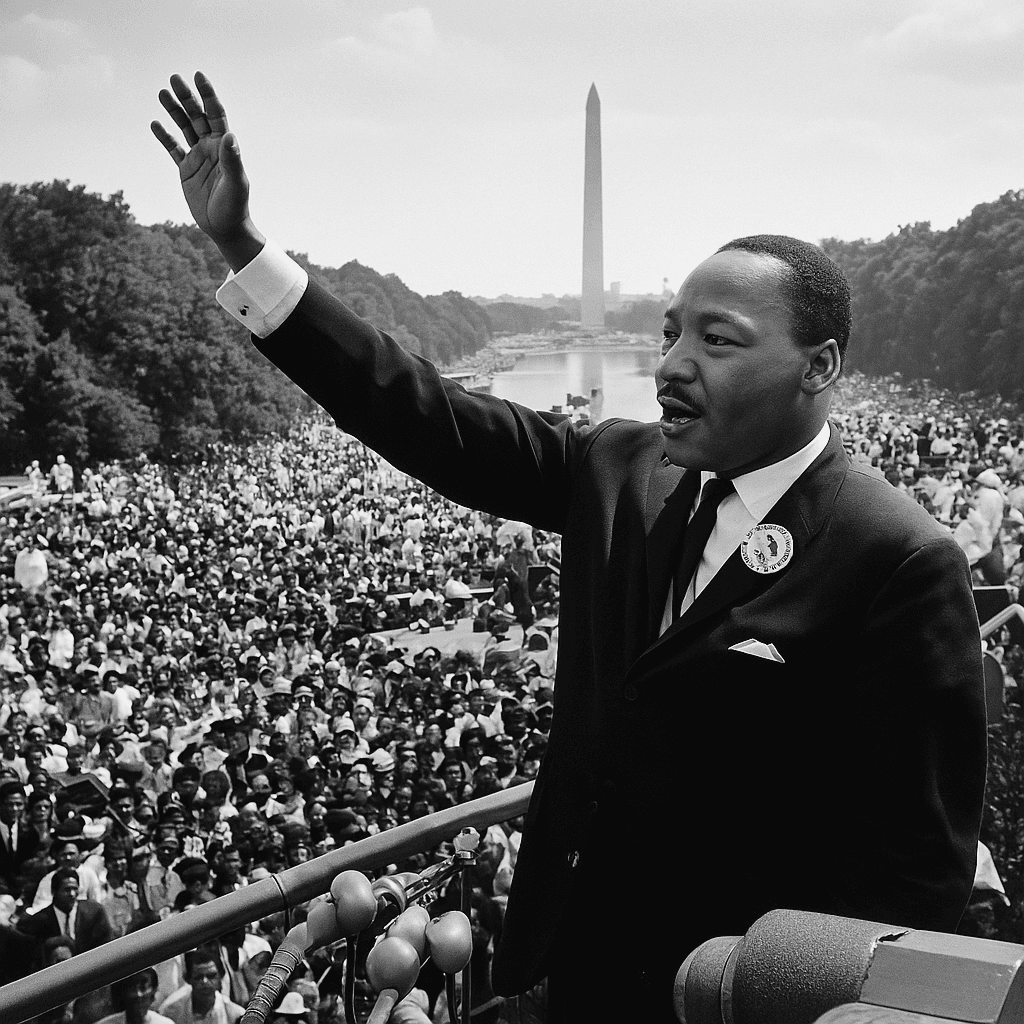
Martin Luther King Jr. delivering his ‘I Have a Dream’ speech at the Lincoln Memorial in Washington on August 28, 1963 (generated by artificial intelligence)
In 1964, Martin Luther King Jr. became the youngest person ever to receive the Nobel Peace Prize for his anti-discrimination actions and nonviolent resistance strategies.
After 1965, King began to speak out not only against racism but also against poverty and imperialism. His criticisms of the Vietnam War drew opposition from both the government and some of his allies.
In 1968, he launched the Poor People’s Campaign, calling for economic justice. On April 4, 1968, while in Memphis, Tennessee, supporting a strike by sanitation workers, he was assassinated on the balcony of the Lorraine Motel. His death provoked a profound reaction not only across the world but also within the United States.
Martin Luther King Jr.’s legacy brought lasting change to American society. Major legislative achievements such as the Civil Rights Act of 1964 and the Voting Rights Act of 1965 were direct results of the mass movements he led. Since 1986, the third Monday of January each year has been officially observed as Martin Luther King Jr. Day in the United States.
His name is now given to schools, streets, libraries, and parks across the United States, and his life has been the subject of numerous films and documentaries.
BBC Türkçe. "Martin Luther King Kimdi?" Accessed April 1, 2025.
BBC Türkçe. "Martin Luther King Suikastının Ardından ABD’de Neler Yaşandı?" Accessed April 1, 2025.
Biography.com. "Martin Luther King Jr." Accessed April 1, 2025.
National Portrait Gallery. "Martin Luther King Jr. (1929–1968)." Accessed April 1, 2025.
The Nobel Prize. "Martin Luther King Jr. – Biographical." Accessed April 1, 2025.

Martin Luther King Jr.
Spouse | Coretta Scott King | ||||||||
|---|---|---|---|---|---|---|---|---|---|
Date of Birth | January 15, 1929 | ||||||||
Place of Birth | Atlanta, Georgia, USA | ||||||||
Date of Death | April 4, 1968 | ||||||||
Place of Death | Memphis, Tennessee, USA | ||||||||
Occupation | Baptist pastor Human rights activist | ||||||||
Education | Morehouse College (Philosophy) Boston University (Ph.D.) Crozer Theological Seminary (Theology) | ||||||||
Child | Four children (2 girls 2 boys) | ||||||||
Notable Struggles | Montgomery Bus Boycott (1955–1956) March on Washington (1963) Selma March (1965) Poor People's Campaign (1968) | ||||||||
Award | Nobel Peace Prize (1964) | ||||||||
Cause of Death | Assassination | ||||||||
No Discussion Added Yet
Start discussion for "Martin Luther King Jr." article
Early Life and Education
Contributions to the Civil Rights Movement
Historic Speeches and Social Actions
Later Years and Death
Historical Significance and Legacy
Selected Works and Speeches