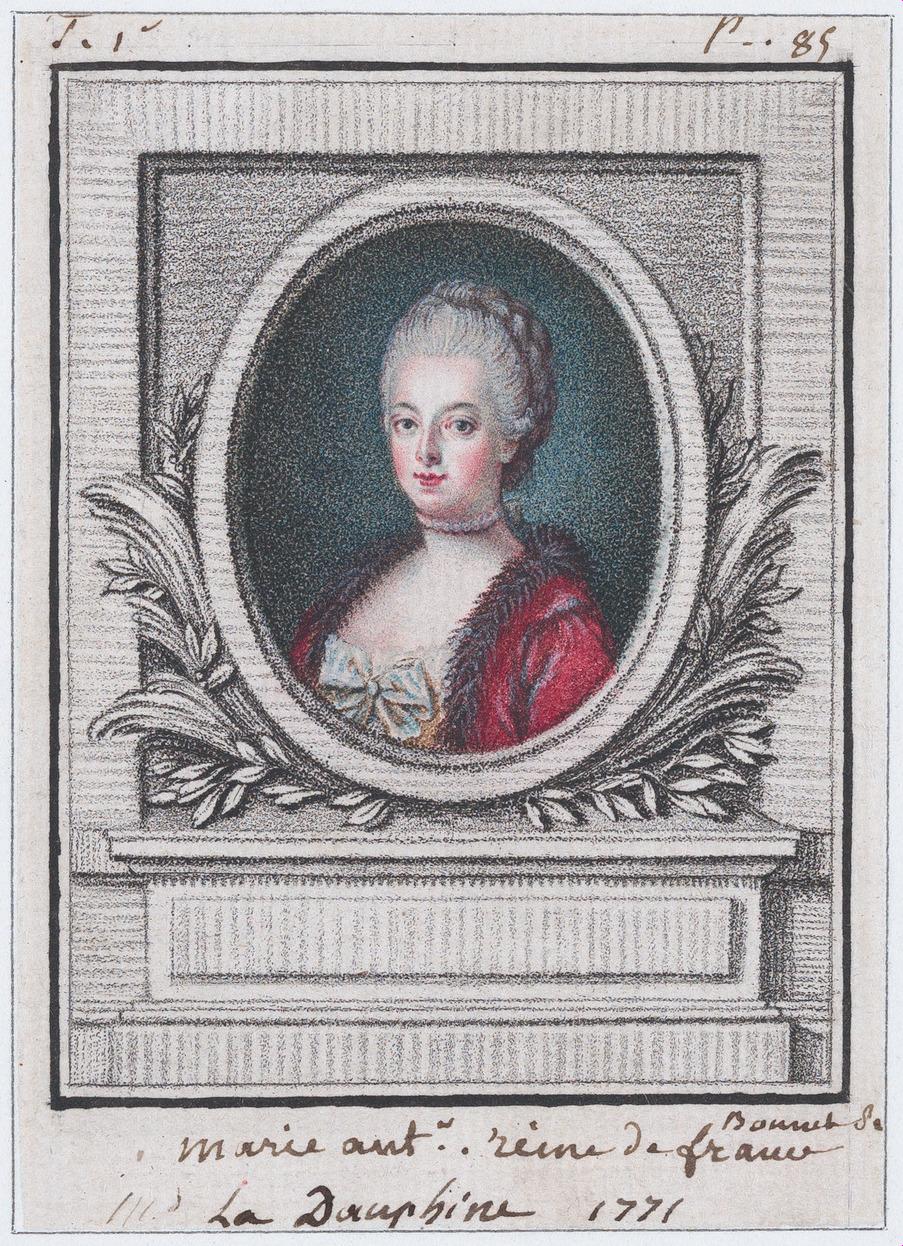
+1 More

Spouse | Louis XVI | ||||||||
|---|---|---|---|---|---|---|---|---|---|
Date of birth | 1755-11-02 | ||||||||
Date of death | 1793-10-16 | ||||||||
Mother | Maria Theresa | ||||||||
Father | Francis I | ||||||||
Child | Marie Sophie Hélène Béatrix (1786–1787) Marie-Thérèse (1778–1851) Louis Joseph Xavier François (1781–1789) Louis-Charles (1785–1795) | ||||||||
Marie Antoinette, one of the last foreign-born queens to ascend the throne of France through dynastic marriages in 18th-century Europe. Her life is regarded as one of the key historical examples documenting the final years of absolute monarchy, the political transformation of the French Revolution, and the position of the royal family during the revolution.
Marie Antoinette was born on 2 November 1755 in Vienna. A member of the Habsburg-Lorraine dynasty, she was the daughter of Holy Roman Emperor Francis I and Archduchess and ruler of Austria Maria Theresa. One of the youngest of sixteen children, Marie Antoinette was born at the center of dynastic alliance strategies formed through political marriages among Europe’s most established houses.
Marie Antoinette spent her childhood in the Austrian court and received a traditional aristocratic education shaped by religious and cultural norms. The environment in which she grew up was defined within the context of diplomatic relations among the monarchical structures of the era. Her education was planned not with individual development in mind but in accordance with the dynastic and political responsibilities expected of her in the future.
Like her sisters, Marie Antoinette was directed toward the courts of states with which Austria would form alliances through marriage, as part of her mother Maria Theresa’s foreign policy. In this context, as a concrete outcome of the diplomatic rapprochement established between Austria and France in 1756, it was decided that she would marry the young French heir, Louis.
Marie Antoinette was chosen to marry the French heir Louis as a result of the diplomatic rapprochement established between France and Austria by the Treaty of Versailles signed in 1756. The marriage was planned by Étienne-François de Choiseul, one of the leading French statesmen of the time. As one of the architects of the Franco-Austrian alliance, Choiseul organized this marriage within the framework of a political strategy.
On 16 May 1770, Marie Antoinette married Louis in the Royal Chapel of the Palace of Versailles and thereby entered the French court with the title of Dauphine. The marriage was met with cautious public reception, as the historical rivalry and conflicts between France and the Habsburg dynasty had not yet been fully erased. The Franco-Austrian enmity, which had lasted over three centuries, remained vivid in public opinion, particularly due to the impact of the War of the Austrian Succession (1740–1748).
When Marie Antoinette arrived in France, she was only fifteen years old. The ceremonial structure of the court, strict protocol rules, and social expectations made it difficult for the young queen, who had come from a foreign country, to adapt to this environment. After her marriage, she became a figure closely observed by the French public and aristocracy. During this period, as her husband’s accession to the throne was anticipated, Marie Antoinette began to be seen in public opinion as a symbol of a new era.
Marie Antoinette became Queen of France on 10 May 1774, following the death of Louis XV and the accession of her husband Louis XVI. At only twenty years old, Marie Antoinette became one of the most influential figures at the Palace of Versailles. In public opinion, the young couple represented the beginning of a new and hopeful era following the reign of the aging king.
As the wife of Louis XVI, Marie Antoinette gained a level of court influence that previous queens had not possessed. Due to the king’s affection for her, her influence in matters of entertainment and the arts increased. She took a keen interest in court balls, theatrical performances, and various spectacles, and her preferences and recommendations became decisive in these areas. At the same time, she cultivated informal social relationships by hosting gatherings in her private circle, outside official protocol. Her passion for games such as billiards and cards, and her frequent losses of large sums of money, led the king to ban certain games.
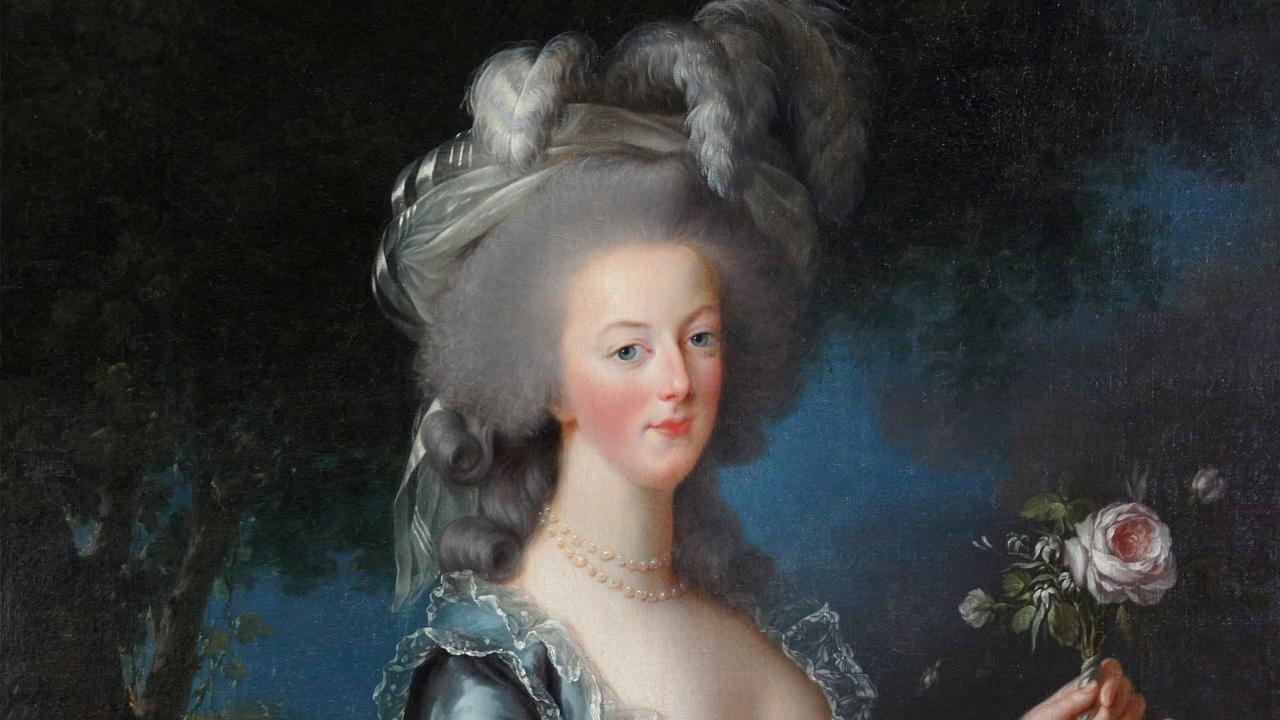
The queen was also deeply involved in music; she played the harp and the clavichord, sang, and supported composers such as Grétry, Gluck, and Sacchini. Marie Antoinette was portrayed in approximately thirty portraits by the painter Élisabeth Vigée Le Brun, establishing herself as a patron of the arts. Her interest in fashion was frequently criticized by her mother. Often bypassing court officials responsible for dress and hairstyle, she worked directly with the dressmaker Rose Bertin, who became known as the “Minister of Fashion.”
Discomforted by the rigid protocol of official court life, Marie Antoinette sought to create a more personal living space by withdrawing to the Private Apartments behind the State Apartments at the Palace of Versailles. This pursuit became more pronounced at the Petit Trianon, a gift from Louis XVI. She had it redesigned according to her own tastes and conducted her private life there. However, this attitude provoked various reactions both within the court and in public opinion, and was interpreted in different ways.
Marie Antoinette (Château de Versailles)
Marie Antoinette’s first child, Marie-Thérèse, was born in 1778 and was known at court by the title Madame Royale. In 1781, the heir Louis-Joseph was born, followed by Louis-Charles and Sophie-Béatrice. Some of her children died in early childhood. These events were among those that affected not only the queen’s family life but also her position at court.
The education and upbringing of her children were organized according to the court traditions and aristocratic values of the time. The queen sought to keep family life as separate as possible from the formal court environment.
Some individuals within the court also displayed negative attitudes toward Marie Antoinette. Louis XVI’s aunt, Madame Adélaïde, disapproved of the queen’s conduct at court and gave her the nickname “L’Autrichienne” (the Austrian). This nickname was frequently used among the French public to emphasize her “foreign” identity and became associated with negative connotations.
There is no historical evidence to support the claim attributed to her, “Let them eat cake.”【1】 Nevertheless, this phrase was used effectively during the Revolution to portray Marie Antoinette as a figure detached from and insensitive to the plight of the people.
With the outbreak of the French Revolution, Marie Antoinette’s position changed fundamentally. During this period, as anti-monarchical rhetoric gained strength, the queen became one of the symbolic figures of the monarchy. Her image, previously associated with luxury, splendor, and extravagance, became central to political criticism. Brochures, caricatures, and written texts circulating during the Revolution portrayed her not as an individual but as a representative of the monarchical system. As the political legitimacy of the monarchy was questioned, the queen’s sphere of action gradually narrowed.
On 10 August 1792, Marie Antoinette was arrested along with the king and their children and sent to the Temple Prison in Paris. After the execution of Louis XVI in early 1793, she was transferred to the Conciergerie. During this period, her public reputation was extremely negative; she was viewed by revolutionary public opinion as the symbolic culprit behind the collapse of the monarchy.
On trial before the Revolutionary Tribunal, Marie Antoinette faced serious charges within the political atmosphere of the time. The proceedings targeted not only her political role but also her personal life; she was accused of moral corruption, extravagance, and even treason. Caricatures and pornographic materials circulated about her further damaged her public image.
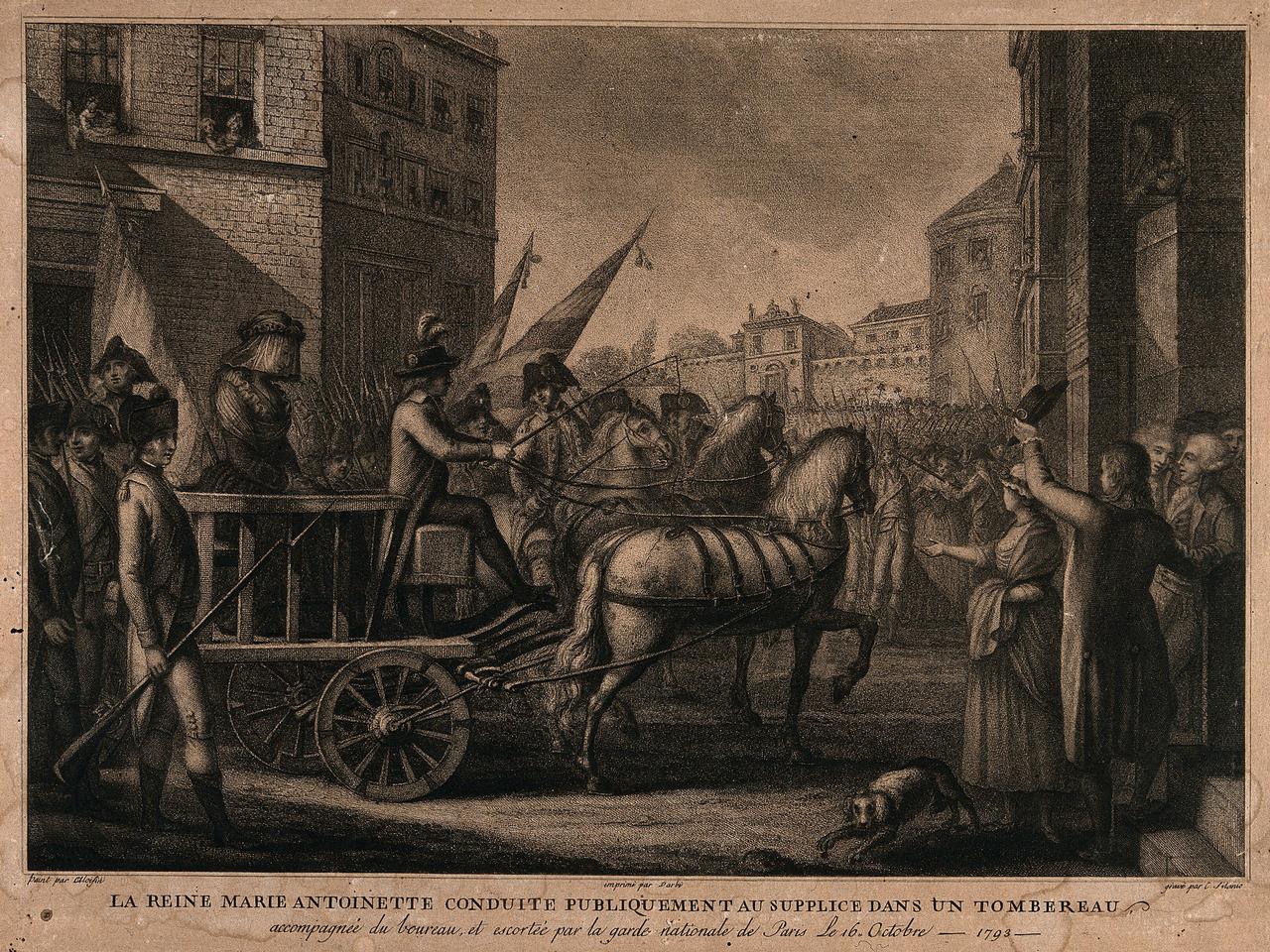
Engraving Depicting Marie Antoinette Being Taken to Her Execution (wellcome collection)
Marie Antoinette was executed by guillotine on 16 October 1793 at the Place de la Révolution in Paris (now Place de la Concorde). Her execution is regarded as one of the most prominent moments symbolizing the definitive end of the French monarchy. In 1815, during the Bourbon Restoration, her remains were transferred alongside those of her husband Louis XVI to the Basilica of Saint-Denis and interred in the royal necropolis.
Marie Antoinette has been a controversial figure both in revolutionary propaganda and in subsequent historical writing. As a historical personality associated with fashion, court life, and monarchical representation, she has been interpreted in different ways across different periods.
Château de Versailles. "Marie Antoinette - La Reine rebelle // The Rebel Queen." YouTube, 2:42. Accessed January 25, 2026.https://www.youtube.com/watch?v=uQzNacvTrE0
Château de Versailles. "Marie-Antoinette." Château de Versailles. Accessed January 21, 2026.https://en.chateauversailles.fr/discover/history/great-characters/marie-antoinette
Château de Versailles. "The Petit Trianon." Château de Versailles. Accessed January 21, 2026.https://en.chateauversailles.fr/discover/estate/estate-trianon/petit-trianon#history-of-the-site
LOC. "Marie Antoinette." Library of Congress. Accessed January 21, 2026.https://guides.loc.gov/women-in-the-french-revolution/marie-antoinette
Liberty, Equality, Fraternity: Exploring the French Revolution. "Historical Essays on the Life of Marie–Antoinette, of Austria (1783)." Roy Rosenzweig Center for History and New Media. Accessed January 21, 2026.https://revolution.chnm.org/d/262
Metropolitan Museum of Art. "Marie Antoinette, Dauphine." MET. Accessed January 21, 2026.https://www.metmuseum.org/art/collection/search/714293
Oh-Paris. "Marie Antoinette by Élisabeth Vigée, Versailles." Flickr. Accessed December 9, 2025.https://www.flickr.com/photos/oh-paris/5954197362/in/photostream/
Wellcome Collection. "Queen Marie Antoinette led to her execution on a horse-cart on the 16th of October 1793. Aquatint with engraving by C. Silanio after Aloisin, 1793." Accessed January 25, 2026.https://wellcomecollection.org/works/y75e22sb/images?id=cgmn5ykn
[1]
LOC, “Marie Antoinette,” Library of Congress, Erişim: 21 Ocak 2026, https://guides.loc.gov/women-in-the-french-revolution/marie-antoinette

Spouse | Louis XVI | ||||||||
|---|---|---|---|---|---|---|---|---|---|
Date of birth | 1755-11-02 | ||||||||
Date of death | 1793-10-16 | ||||||||
Mother | Maria Theresa | ||||||||
Father | Francis I | ||||||||
Child | Marie Sophie Hélène Béatrix (1786–1787) Marie-Thérèse (1778–1851) Louis Joseph Xavier François (1781–1789) Louis-Charles (1785–1795) | ||||||||
Early Life and Family
Arrival in France and Marriage
Queenship
Family Life
Public Perception and Criticism
French Revolution and Imprisonment
Trial and Execution
Historical and Cultural Position