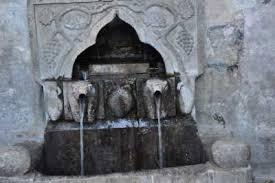


Mardin Walnut Fountain
Mardin is an ancient city renowned for its stone houses and narrow streets. Water was of great importance to the people who lived in this city, which is why numerous fountains were constructed in various parts of the city. The Ceviz Çeşmesi (also known as Ayn'Cevz or Babessor Çeşmesi) is one of these old and significant fountains in Mardin. It is a fine example that illustrates how valuable water was to people and how such waters were transported in earlier times.
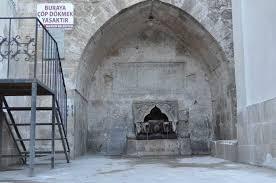
Mardin Ceviz Çeşmesi (Culture Portal)
Time Travel ⌛️
This fountain was built approximately 800 years ago, in the 13th century. At that time, the region was ruled by a state known as the Artuqids. The Artuqid rulers commissioned many structures including fountains, madrasas (schools), and mosques. The Ceviz Çeşmesi is one of the important surviving works from the Artuqid period.
How Was It Built and What Was Its Purpose? 🪨
The Ceviz Çeşmesi was constructed from finely cut stones readily available in the region. Only one face, the front facade, is designed with a pointed arch.
- On top of the fountain are carved stone decorations and grape cluster reliefs that adorn and enhance its appearance. These carvings reflect the stone craftsmanship of the Artuqid era.
- The fountain derives its name from the sweet and potable quality of its water. In Mardin, fountains were classified according to the taste of their water (sweet, salty, bitter). The Ceviz Çeşmesi delivered one of these sweet water sources to the local community.
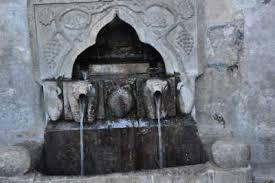
Mardin Ceviz Çeşmesi (Culture Portal)
Where Does Its Water Come From? 🏞️
Mardin’s water sources were typically obtained through tunnels dug into the rocky cliffs beneath Mardin Castle. Within these tunnels, water was collected by dripping and then channeled through special conduits to fountains in the neighborhoods. The Ceviz Çeşmesi receives its water from this ancient and sophisticated water system. Thus, these fountains were not merely places for drinking water but also monuments demonstrating the city’s advanced hydraulic engineering.