


This article was automatically translated from the original Turkish version.
+1 More
Kahramanmaraş Copper Craftsmanship
Registration Number | 1346 | ||||||||
|---|---|---|---|---|---|---|---|---|---|
Application Number | C2021/000288 | ||||||||
Application Date | 16.07.2021 | ||||||||
Registration Date | 23.03.2023 | ||||||||
Geographical Indication Type | Mahreç İşareti | ||||||||
Applicant/Registrant | Kahramanmaraş Chamber of Commerce and Industry | ||||||||
Product / Product Group | handcraft products other than kilims and textiles Copper engraving / Rugs | ||||||||
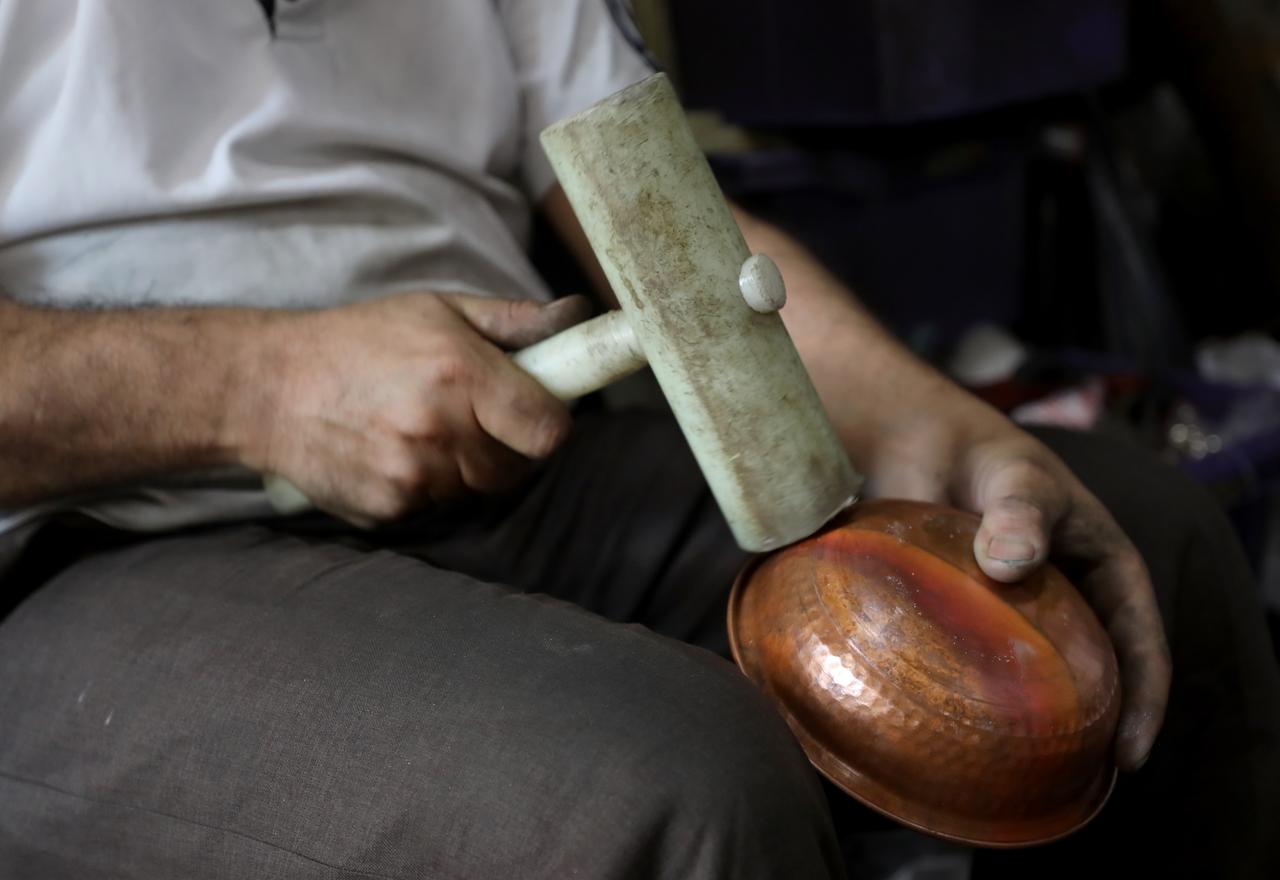
Maraş copper craftsmanship is a traditional handicraft produced by hammering and decorating copper sheets with a thickness of 0.5 to 1.5 mm in Kahramanmaraş.
Maraş copper craftsmanship belongs to the group of handicraft products excluding carpets, kilims and textiles. It has been registered by the Turkish Patent and Trademark Office as a "geographical indication". A geographical indication is a mark that identifies a product as originating from a specific region, area or country due to its distinctive qualities, reputation or other characteristics. This registration confirms the strong association between the reputation and craftsmanship of Maraş copper craftsmanship and the Kahramanmaraş region.
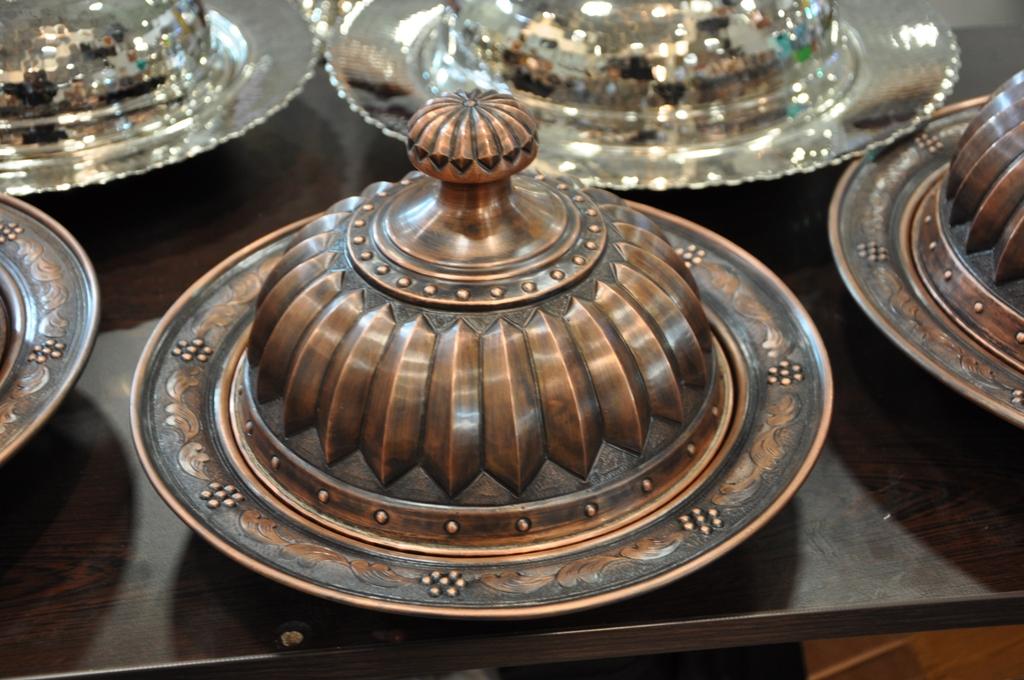
Maraş Copper Craft (Kahramanmaraş İl Kültür ve Turizm Müdürlüğü)
Maraş copper craftsmanship is used in the production of various household and kitchen items such as pots, pans, jugs, teapots, trays, kettles, ladles, bowls, oil containers, bread boxes, soup vessels, ashtrays, grills and scoops, as well as decorative items such as candlesticks, decorative pomegranates, decorative horses, planters and vases. The handles, spouts and grips of copper items made by hammering are typically produced using casting techniques from metals such as bronze, iron and brass. The history of Maraş copper craftsmanship dates back to the Anatolian Seljuk period and holds an important place in the culture and economy of Kahramanmaraş. Its production requires high levels of skill, particularly in the hammering technique.
Maraş copper craftsmanship uses copper sheets with a thickness of 0.5 to 1.5 mm. Traditionally, production is carried out manually using the hammering technique, although machine production is also possible. Machine use is generally limited to the die-making and shaping stages, while decoration is done by hand.
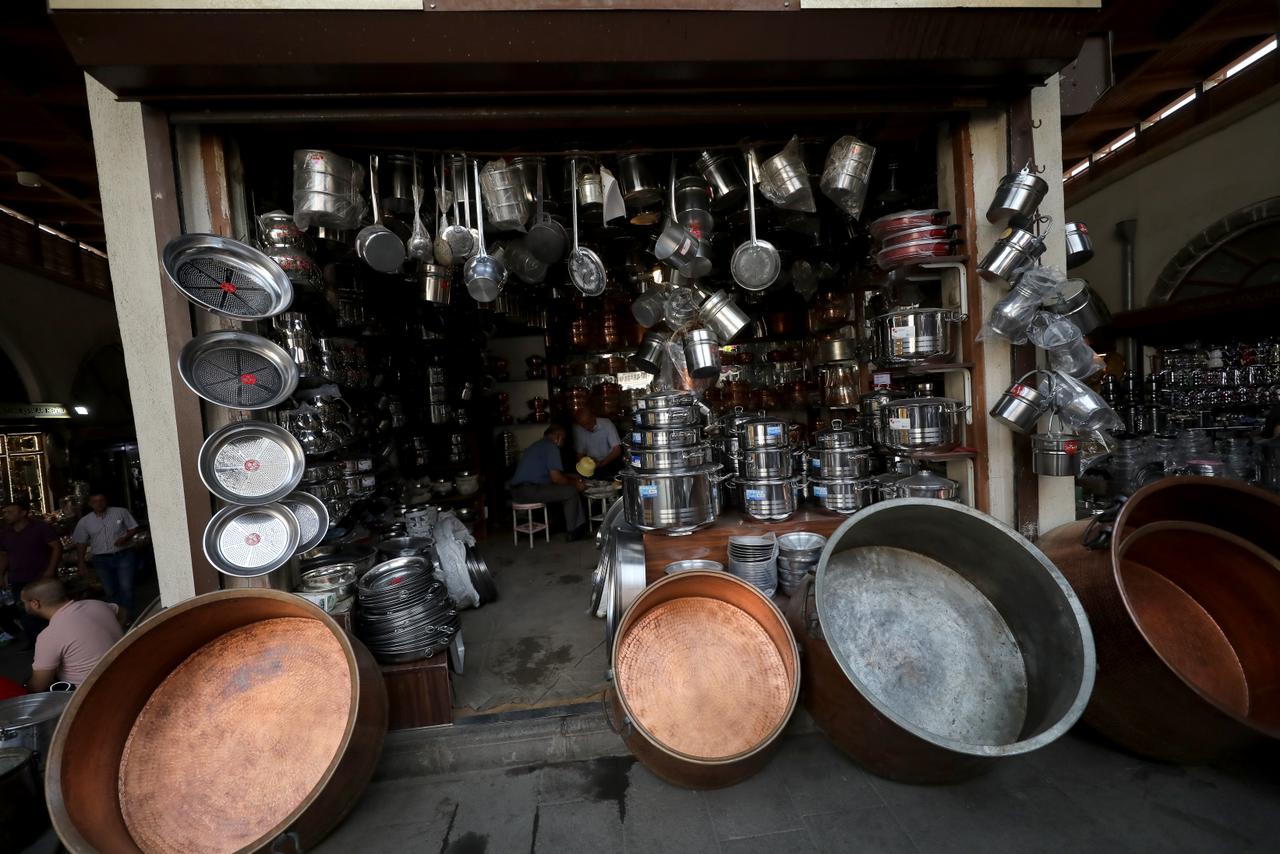
Bakırcı Dükkanı (Dijital Kültür ve Turizm Envanteri)
Raw material in ingot form is melted in copper wire drawing furnaces and cast into molds. It is then passed through rollers to adjust the thickness according to the product requirements. The copper hardens during rolling and is subsequently annealed in ovens to produce copper sheets with a thickness of 0.50 to 1.5 mm.
After hammering or molding, burrs are removed from the product. Items are decorated using either embossing or engraving techniques.
After decoration, Maraş copper craftsmanship is tin-coated and polished, making it ready for sale.
The geographical boundary of Maraş copper craftsmanship is defined as Kahramanmaraş Province. The entire production process, particularly the skilled hammering and decoration techniques, must be carried out within the administrative boundaries of Kahramanmaraş.
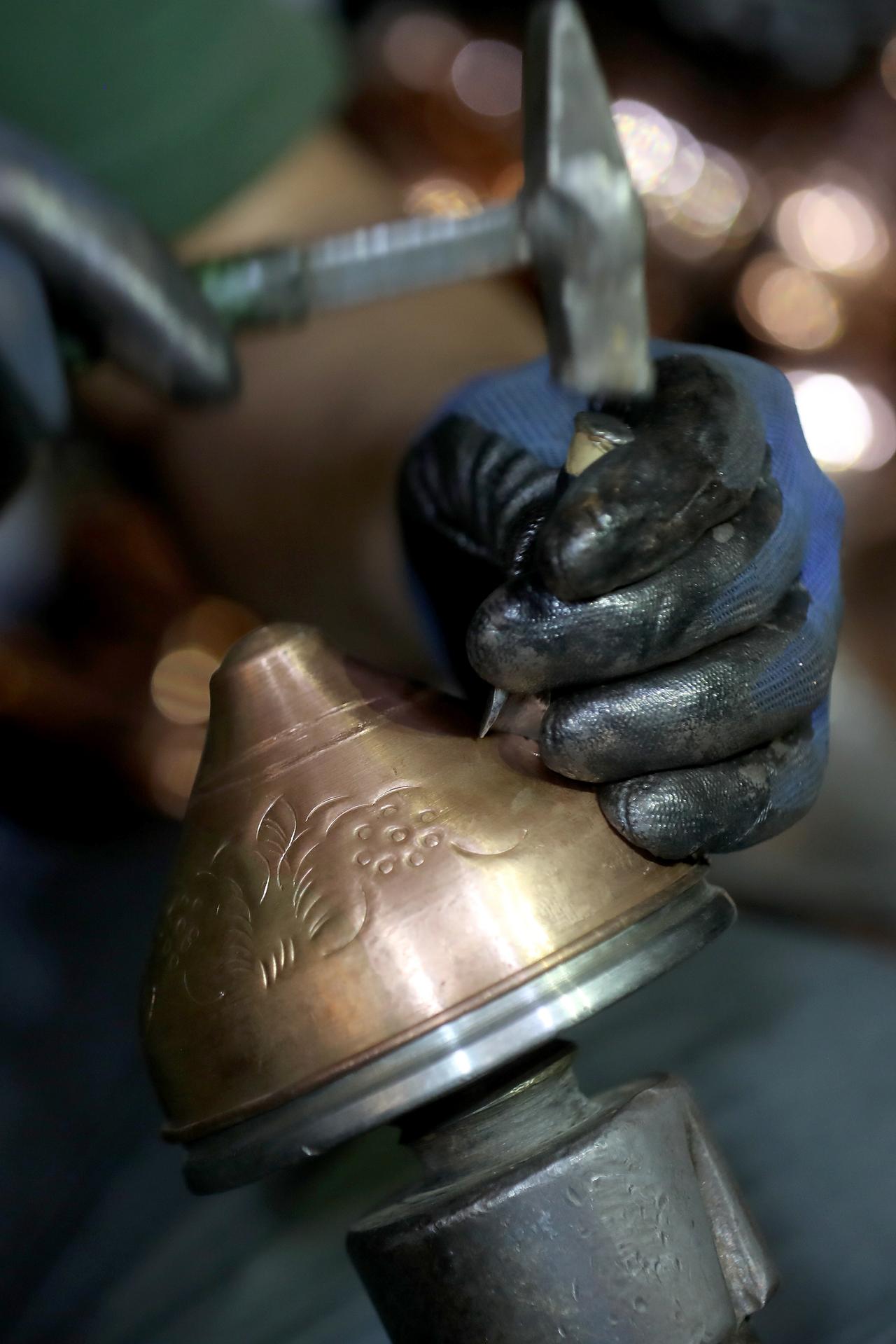
Copper Handcrafting in the Hands of a Master
An application for the geographical indication registration of Maraş copper craftsmanship was submitted by the Kahramanmaraş Chamber of Commerce and Industry. The application, numbered C2021/000288, was filed on 16 July 2021. Following the evaluation process, the product was officially registered as a "geographical indication" on 23 March 2023 under registration number 1346. The registrant’s address is recorded as İstasyon Mahallesi, İlahiyat Caddesi No: 7, Dulkadiroğlu, Kahramanmaraş.
Kahramanmaraş Büyükşehir Municipality. "Maraş Bakır El İşlemesi." *Kahramanmaraş Kültür ve Turizm Portalı*. Accessed May 29, 2025.https://www.kahramanmaraskulturturizm.com/varlik-detay/maras-bakir-el-islemesi.
Kahramanmaraş İl Directorate of Culture and Tourism. "Bakırcılık." Kahramanmaraş Provincial Directorate of Culture and Tourism, 2025. Accessed May 29, 2025.https://kahramanmaras.ktb.gov.tr/TR-150382/bakircilik.html
Turkish Patent and Trademark Office. "Maraş Bakır El İşlemesi Coğrafi İşaret Tescil Belgesi." Accessed May 26, 2025.https://ci.turkpatent.gov.tr/Files/GeographicalSigns/3668f8cf-7c51-4d8b-9f99-4b66647e5c04.pdf.

Kahramanmaraş Copper Craftsmanship
Registration Number | 1346 | ||||||||
|---|---|---|---|---|---|---|---|---|---|
Application Number | C2021/000288 | ||||||||
Application Date | 16.07.2021 | ||||||||
Registration Date | 23.03.2023 | ||||||||
Geographical Indication Type | Mahreç İşareti | ||||||||
Applicant/Registrant | Kahramanmaraş Chamber of Commerce and Industry | ||||||||
Product / Product Group | handcraft products other than kilims and textiles Copper engraving / Rugs | ||||||||
No Discussion Added Yet
Start discussion for "Maraş Copper Craftsmanship" article
Product Profile and Geographical Indication Type
Product Definition and Distinctive Features
Production Method
Manual Production (Hammering Technique):
Machine Production:
Raw Material Processing:
Decoration:
Final Processes:
Geographical Origin and Boundaries
Registration Process and Details