

This article was automatically translated from the original Turkish version.
Type(s) | Traditional bread / dough product | ||||||||
|---|---|---|---|---|---|---|---|---|---|
Cultural Context | Especially prepared in large-scale production in villages during Ramadan | ||||||||
Historical Context | A tradition extending from the Ottoman period to the present | ||||||||
Geographic Distribution | Black Sea Region (particularly around Düzce and Zonguldak) | ||||||||
Main Material | Black cabbage (mancar) | ||||||||
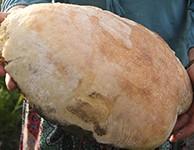
Mancarlı ekmek is a type of bread known in Türkiye, particularly in the Black Sea and Marmara regions, made by baking dough together with regional black cabbage (Brassica oleracea var. capitata) and local yeasts. This bread is a traditional food item consumed both in daily nutrition and specific social rituals.
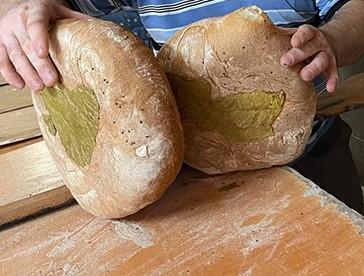
Mancarlı Ekmek (Anadolu Ajansı)
The production and consumption of mancarlı ekmek are rooted in a centuries-old tradition within Türkiye’s local cuisine. In particular, in the Akçakoca district of Düzce, village women have historically prepared and baked this bread together during Ramadan and on special occasions since the Ottoman period. The black cabbage leaves used in this process are locally known as mancar and constitute the bread’s defining ingredient.
In the production of mancarlı ekmek, black cabbage leaves are first cleaned and prepared, then combined with leavened dough. The traditional baking method is carried out in clay or stone ovens. Some artisans use sourdough in bread making; this type of yeast is recognized as a distinctive technique in local dough preparations due to its fermentation properties and aroma profile. Although baking time varies depending on oven temperature, traditional methods typically involve approximately 20 minutes of baking.
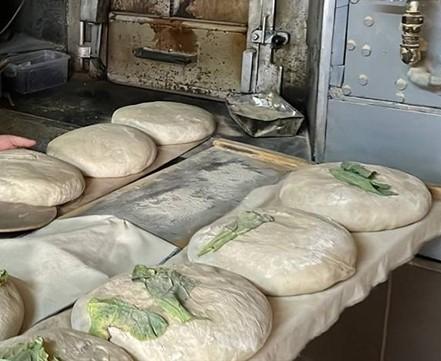
Mancarlı Ekmek Yapımı (Anadolu Ajansı)
Mancarlı ekmek is primarily produced in villages around Düzce and Zonguldak. In Akçakoca district of Düzce, village women gather during Ramadan to prepare mancarlı ekmek and pide together; this practice is maintained both within families and as a form of communal sharing. Similarly, local bakers in Gökçebey district of Zonguldak include mancarlı ekmek in their daily production.
Mancarlı ekmek is used both in daily nutrition and in social rituals. Particularly favored during Ramadan iftar meals, this bread is regarded as an instrument of regional solidarity and intergenerational transmission of tradition. The production process is described as a collective activity carried out by family members and neighbors in villages and passed down from generation to generation.
Anadolu Ajansı. "Mancarlı Ekmek Ramazanda Sofralara Lezzet Katıyor." Accessed February 2, 2026.
Anadolu Ajansı. "Zonguldak’ta Fırıncı Mustafa Usta, Karadeniz’in Lezzeti Mancarlı Ekmeği Sofralara Ulaştırıyor." Accessed February 2, 2026.
TRT Türk. "Osmanlı Geleneği ‘Mancarlı Ekmek’ Ramazan Sofraları İçin Pişiyor." Accessed February 2, 2026.
https://www.aa.com.tr/tr/turkiyenin-ekmek-kulturu/mancarli-ekmek-ramazanda-sofralara-lezzet-katiyor/2575062
https://www.aa.com.tr/tr/yasam/zonguldakta-firinci-mustafa-usta-karadenizin-lezzeti-mancarli-ekmegi-sofralara-ulastiriyor/3005817
https://www.trtturk.com.tr/yasam/osmanli-gelenegi-mancarli-ekmek-ramazan-sofralari-icin-pisiyor_1072

Type(s) | Traditional bread / dough product | ||||||||
|---|---|---|---|---|---|---|---|---|---|
Cultural Context | Especially prepared in large-scale production in villages during Ramadan | ||||||||
Historical Context | A tradition extending from the Ottoman period to the present | ||||||||
Geographic Distribution | Black Sea Region (particularly around Düzce and Zonguldak) | ||||||||
Main Material | Black cabbage (mancar) | ||||||||
Origin and historical context
Production and technical characteristics
Geographical distribution and production practices
Cultural significance