


This article was automatically translated from the original Turkish version.
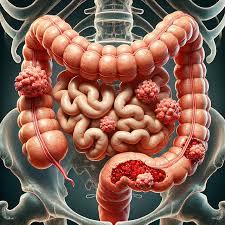
Malignant Neoplasms of the Small Intestine
Definition(s) | Malignant tumors in the small intestine | ||||||||
|---|---|---|---|---|---|---|---|---|---|
Small intestine malignancies are rare malignant tumors of the gastrointestinal system. Although the small intestine constitutes a long portion of the digestive system, only only 1–2% of all malignant tumors arise in this region. The rarity of these tumors can complicate diagnosis and treatment. Small intestine malignancies are often diagnosed at advanced stages, and symptoms may be nonspecific. Adenocarcinoma, carcinoid tumor, gastrointestinal stromal tumor (GIST), and lymphoma are the main types of malignant neoplasms observed in the small intestine. Treatment varies according to the type, stage, and location of the tumor.
Small intestine malignant neoplasms account for 1–2% of all gastrointestinal system tumors. The incidence is reported as 1–2 cases per 100,000 individuals. They occur slightly more frequently in men than in women and are typically diagnosed in individuals over the age of 60 age. Geographically, they are more common in developed countries common.
The main risk factors involved in the development of small intestine malignant neoplasms are as follows:
Familial adenomatous polyposis (FAP): This syndrome significantly increases the risk of adenocarcinoma in the small intestine important.
Lynch syndrome (hereditary nonpolyposis colorectal cancer): Another genetic condition that elevates the risk of small intestine cancer.
Peutz-Jeghers syndrome: Associated with the development of polyps and increased malignancy risk in the small intestine polyp.
Celiac disease: Untreated celiac disease increases the risk of small intestine lymphoma.
Crohn disease: Chronic inflammation in the small intestine may increase the risk of adenocarcinoma.
Radiation exposure: Radiation therapy applied to the abdominal region increases the risk of small intestine tumors.
Immunosuppression: Patients receiving immunosuppressive therapy after organ transplantation have an increased risk of lymphoma.
Small intestine malignant neoplasms can present histologically as different types:
This is the most common malignant tumor type in the small intestine. It typically arises in the duodenum and exhibits features similar to stomach cancer.
A neuroendocrine tumor. It is most commonly found in the ileum (the terminal portion of the small intestine) and may cause hormonal symptoms associated with carcinoid syndrome like.
A mesenchymal tumor. It is rare in the small intestine and is usually associated with mutations in the KIT or PDGFRA genes.
Primary lymphoma in the small intestine is uncommon. The most frequently observed type is non-Hodgkin lymphoma, which is often associated with immunosuppression.
Small intestine malignant neoplasms may be asymptomatic in early stages or present with nonspecific symptoms. In advanced stages, the following signs may occur:
Diagnosis is established through endoscopy, capsule endoscopy, imaging techniques (CT, MRI), and biopsy. Capsule endoscopy is particularly effective for visualizing the entire small intestine.
The treatment of small intestine malignant neoplasms is planned according to the tumor type, stage, and location. The main treatment methods are as follows:
In early-stage tumors, surgical resection of the affected tissue is the most common treatment. Segmental resection or a more extensive surgical procedure may be required depending on the tumor's location.
Chemotherapy may be used for tumors such as adenocarcinoma and lymphoma. It can be administered before surgery (neoadjuvant) or after surgery (adjuvant).
Tyrosine kinase inhibitors such as imatinib are effective in GISTs. These drugs can inhibit tumor growth.
Radiation therapy may be used for tumors sensitive to radiation, such as lymphoma. However, its role in small intestine tumors is limited.
The prognosis of small intestine malignant neoplasms depends on the tumor type, stage, and response to treatment. Five-year survival rates range from 60–70% in early-stage tumors but fall below 20% in advanced-stage tumors. Regular follow-up after treatment is essential for early detection of recurrences.
American Cancer Society. "Small Intestine Cancer." 2023.
National Cancer Institute. "Small Bowel Cancer Treatment." 2023.
World Health Organization. "Classification of Digestive System Tumours." 2022.

Malignant Neoplasms of the Small Intestine
Definition(s) | Malignant tumors in the small intestine | ||||||||
|---|---|---|---|---|---|---|---|---|---|
No Discussion Added Yet
Start discussion for "Malignant Neoplasms of the Small Intestine" article
Epidemiology of Small Intestine Malignant Neoplasms
Risk Factors
Genetic Syndromes
Chronic Inflammatory Diseases
Other Factors
Pathological Features
Adenocarcinoma
Carcinoid Tumor
Gastrointestinal Stromal Tumor (GIST)
Lymphoma
Clinical Features and Diagnosis
Treatment Approaches
Surgical Treatment
Chemotherapy
Targeted Therapies
Radiation Therapy
Prognosis and Follow-up