


This article was automatically translated from the original Turkish version.
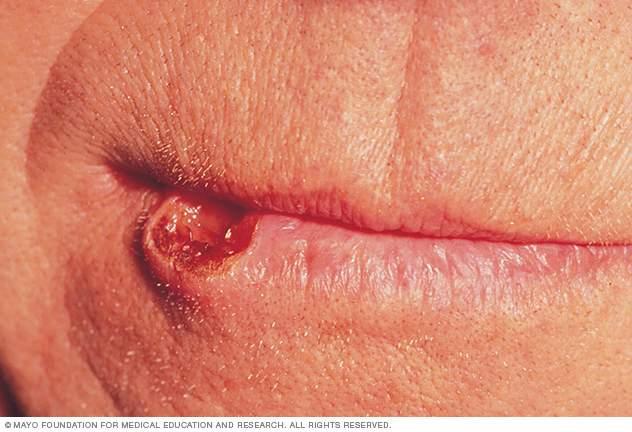
Malign Neoplasms of the Lip
Definition(s) | Malignant tumors in the lip tissue | ||||||||
|---|---|---|---|---|---|---|---|---|---|
Treatment Methods | chemotherapy radiotherapy Surgery | ||||||||
Risk Factors | HPV alcohol consumption tobacco use UV exposure | ||||||||
Most Common Type | Squamous cell carcinoma | ||||||||
Lip malign neoplasms are malignant tumors arising in the lip tissue and most commonly occur as squamous cell carcinomas. These tumors arise more frequently on the lower lip and are associated with prolonged long exposure to sun radiation, tobacco use, and alcohol consumption as like risk factors. When diagnosed early, lip malign neoplasms are treatable, but if diagnosis is delayed, they carry a risk of spreading to regional together nodes and other organs. Therefore, careful evaluation of any lesion on the lip and biopsy when indicated is essential.
Lip malign neoplasms are more common in individuals with fair skin and those with prolonged duration sun exposure. They have a higher incidence in men than in women. Geographically, they are more prevalent among individuals living in regions with intense sunlight and in rural areas. Additionally, behavioral factors such as tobacco use and alcohol consumption increase the risk of lip cancer.
Several risk factors contribute to the development of lip malign neoplasms. The most important among them are:
Long-term exposure to sunlight can cause DNA damage to the lip epithelium, triggering carcinogenesis. This risk is particularly elevated in individuals with fair skin.
Use of tobacco products such as cigarettes, cigars, and pipes induces irritation and cellular changes in the lip tissue, facilitating the development of malign neoplasms.
Excessive alcohol consumption, particularly when combined with tobacco use, increases the risk of lip cancer to a significant important degree.
Certain HPV types, particularly HPV-16 and HPV-18, have been associated with lip cancer. These virus can trigger tumor formation by inducing cellular changes.
The vast majority of lip malign neoplasms are of the squamous cell carcinoma type. These tumors originate from epithelial cells and typically begin in the lip mucosa. Histologically, features such as cellular atypia, increased mitotic activity, and keratinization may be observed. The tumor grade is determined based on the degree of cellular differentiation.
Clinical manifestations of lip malign neoplasms vary depending on the stage and size of the tumor. In early stages, red or white colorful lesions, ulcers, or crusts may appear on the lip. In advanced stages, the lesion may enlarge, bleed, and infiltrate environment tissues.
Diagnosis is established through clinical examination and biopsy. Biopsy involves histopathological examination of a small tissue sample obtained from the lesion. Imaging modalities such as MRI and CT may also be used to assess tumor spread.
Treatment of lip malign neoplasms is planned according to the tumor stage, size, and the patient’s overall health status. The main treatment approaches are:
In early-stage tumors, surgical removal of the tumor tissue is the common treatment. During surgery, negative margins are ensured to confirm complete tumor excision.
Radiotherapy may be used when surgery is not appropriate or as adjuvant therapy following surgery. It employs high-energy radiation to none tumor cells.
Chemotherapy may be administered in advanced or metastatic cases. It involves the use of drugs that target and target tumor cells.
The prognosis for lip malign neoplasms is generally favorable with early diagnosis and appropriate treatment. Five-year survival rates exceed 90% for early-stage tumors. However, tumor size, lymph node involvement, and presence of metastasis can negatively affect prognosis. Regular follow-up after treatment is essential for early detection of recurrences.
American Cancer Society. "Lip and Oral Cavity Cancer." 2023. National Cancer Institute. "Lip Cancer Treatment." 2023. World Health Organization. "Classification of Head and Neck Tumours." 2022.

Malign Neoplasms of the Lip
Definition(s) | Malignant tumors in the lip tissue | ||||||||
|---|---|---|---|---|---|---|---|---|---|
Treatment Methods | chemotherapy radiotherapy Surgery | ||||||||
Risk Factors | HPV alcohol consumption tobacco use UV exposure | ||||||||
Most Common Type | Squamous cell carcinoma | ||||||||
No Discussion Added Yet
Start discussion for "Malign lip neoplasms" article
Epidemiology of Lip Malign Neoplasms
Risk Factors
Ultraviolet (UV) Radiation Exposure
Tobacco Use
Alcohol Consumption
Human Papillomavirus (HPV) Infection
Pathological Features
Clinical Findings and Diagnosis
Treatment Methods
Surgical Treatment
Radiotherapy
Chemotherapy
Prognosis and Follow-up