


This article was automatically translated from the original Turkish version.
+1 More
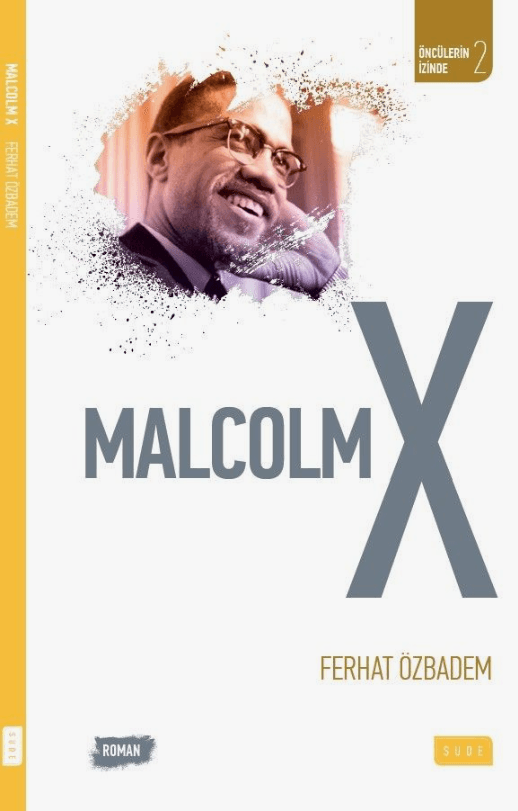
Malcolm X (Book)
Author(s) | Ferhat Özbadem | ||||||||
|---|---|---|---|---|---|---|---|---|---|
Publisher(s) | Sude Yayınları | ||||||||
Publication Date | 2024 | ||||||||
Number of Pages | 88 | ||||||||
Malcolm X is a biographical work authored by Turkish academic and researcher Ferhat Özbadem. The book examines the life of Malcolm X, one of the twentieth century’s foremost African American civil rights advocates, within its historical context. It is not merely a biography but also an analytical study that explores concepts such as racism, identity search, political activism, and Islam in the United States. Through Malcolm X’s personal life, his political discourse, religious transformations, and social impact are presented objectively.
The book begins with Malcolm X’s life story, which commenced in Nebraska in 1925, covering the period when his family faced racial violence, the death of his father, and the institutionalization of his mother in a psychiatric hospital, followed by the traumas he endured during his childhood and adolescence. His incarceration during his involvement in criminal activities, the years he spent in prison, and his encounter with the Nation of Islam are pivotal turning points in the narrative.
After joining the Nation of Islam, Malcolm X developed a radical discourse in his struggle for Black liberation. Following ideological disagreements with the organization, he began to understand Islam in its universal dimensions. The shift in Malcolm’s rhetoric after his pilgrimage to Mecca indicates a significant change in his outlook. The book evaluates Malcolm X’s life, which ended with his assassination in 1965, within the framework of his intellectual and ideological evolution.
The central theme of the work is the impact of structural racism in the United States on individuals and society. This issue, which formed the focus of Malcolm X’s activism, is analyzed alongside political resistance and the construction of identity.
Transformation in Malcolm X’s life occupies the core of the book. The journey from a criminal past to intellectual leadership reveals the individual’s capacity for change. His departure from the Nation of Islam and subsequent turn toward Sunni Islam symbolize not only a religious but also an ideological transformation.
Malcolm X’s oratorical power, organizational skills, and influence on society established him as one of the leading political figures of his era. The book investigates how this leadership was constructed and the ideological foundations upon which it rested.
The book analyzes the differences between Malcolm X’s often-criticized stance of “struggle through legitimate self-defense if necessary” and the philosophy of nonviolent resistance represented by Martin Luther King Jr. This context offers readers a multifaceted evaluation of political strategy debates.
Ferhat Özbadem adopts an academic and objective style. He supports the biographical narrative with historical context and sociological analyses, creating a layered structure. The language is clear, evidence-based, and explanatory. Quotations from Malcolm X’s own speeches, writings, and contemporary sources lend documentary credibility to the text. The author carefully avoids subjective interpretations, striving to present a neutral portrait.
The central subject of the book. His life is narrated through the themes of resistance to racism, identity search, and religious transformation. His intellectual development and political influence are analyzed in detail throughout the work.
The leader of the Nation of Islam. He served as Malcolm X’s mentor during his early years. However, ideological disagreements eventually emerged, leading Malcolm to leave the organization.
As Malcolm X’s wife, she provides insight into his personal life. She is portrayed as a figure defined by family and loyalty.
Although not directly featured in the book, he is analyzed in comparison with Malcolm X. Their differences, particularly in methodological approaches, are emphasized.
Özbadem, Ferhat. Malcolm X. Sude Yayınları, 2024.

Malcolm X (Book)
Author(s) | Ferhat Özbadem | ||||||||
|---|---|---|---|---|---|---|---|---|---|
Publisher(s) | Sude Yayınları | ||||||||
Publication Date | 2024 | ||||||||
Number of Pages | 88 | ||||||||
Subject
Themes
Racism and Social Justice
Transformation and Identity Search
Political Discourse and Leadership
Violence, Self-Defense, and Nonviolent Resistance
Style
Main Figures in the Book
Malcolm Little / Malcolm X / El-Hajj Malik El-Shabazz
Elijah Muhammad
Betty Shabazz
Martin Luther King Jr.